Secret US-Iran Talks Derailed by Raisi's Sudden Death
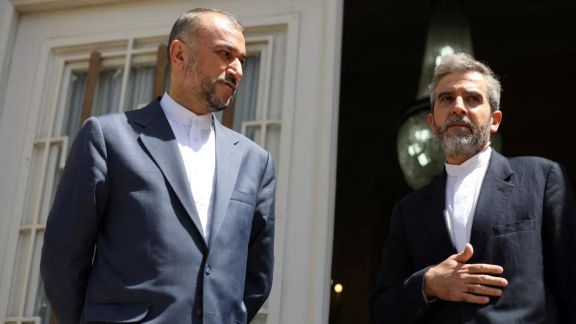
Secret negotiations between Iran and the United States have been disrupted by the unexpected death of Iranian President Ebrahim Raisi.

Secret negotiations between Iran and the United States have been disrupted by the unexpected death of Iranian President Ebrahim Raisi.
Sources revealed to Middle East Eye, that the talks, held in Oman, where crucial discussions previously paved the way for the 2015 nuclear agreement, faced a sudden halt following the helicopter crash on Sunday that claimed the lives of several top Iranian officials.
Brett McGurk, President Joe Biden's senior Middle East adviser, and Ali Bagheri Kani, Iran’s lead negotiator, had been making progress in the first talks since January.
The discussions, which took place against a backdrop of escalating regional tensions, focused on several critical issues, including a mutual interest in altering the Israeli government, ending the Israeli military actions in Gaza, and preventing the conflict from spreading further in the Middle East. Analysts close to the Iranian regime suggested the talks might have also touched on a potential ceasefire between the US and Iran’s allies.
With the sudden leadership vacuum in Tehran, and with Iran poised to conduct presidential elections on June 28, the future of the high-stakes negotiations remains uncertain. The United States is also approaching its presidential elections in November, adding to the diplomatic standstill.
Sources also hinted that discussions might have extended to Iran's nuclear ambitions and the potential easing of oil sanctions, echoing elements of the previous nuclear deal, which the Trump administration abandoned in 2018. Despite a temporary agreement last year involving a prisoner exchange and the return of confiscated Iranian oil revenues, broader negotiations remain fraught with political challenges.

A recently released video from the funeral procession of Mohammad-Ali Ale-Hashem, the Friday Imam of Tabriz who died in the helicopter crash which killed President Ebrahim Raisi, showcased disorder within the ranks of the Iranian army.
The footage from the event, which took place on Wednesday morning in Tabriz, was one of a series of events this week which has revealed the military's incompetencies as they struggled to maintain formation while carrying Ale-Hashem's coffin to the cemetery where he was buried.
The video has ignited a firestorm of controversy and mockery online, with many users critiquing the Islamic Republic for its inability to manage a straightforward military parade, despite its frequent displays of military prowess.
Adding to the embarrassment, during a live broadcast of a separate funeral held in Tehran for Ebrahim Raisi and his companions on Wednesday, another mishap occurred when an Iranian Army honor guard accidentally ripped his pants while carrying the coffin of Iran's Foreign Minister Hossein Amir-Abdolahian, who also died in the crash.
One social media user sarcastically suggested that former Foreign Minister Mohammad Javad Zarif might blame the low-quality pants on sanctions after Zarif pointed fingers at American sanctions for impacting Iran's aviation capabilities, attributing the helicopter crash to the United States.

The late Iranian President, Ebrahim Raisi, is set to be buried in a grave surrounded by precious gold, marble, and a historic crystal chandelier, causing fury among a population now beset by poverty amid the worst economic crisis in decades.
According to reports from IRNA, the Islamic Republic's official state media, the designated site, located in the Dar al-Salam portico of Imam Reza's shrine in Mashhad, starkly contrasts the economic struggles faced by many Iranians.
The burial site boasts a marble floor and a door crafted from "precious gold," elements that highlight the regime's penchant for grandiosity. Adding to the splendor, a massive crystal chandelier, over 200 years old, with 144 branches and weighing approximately two tons, hangs above, symbolizing the official's disconnect from the populace.
Despite Raisi's supporters dubbing him the "Man of the Deprived," the lavishness of his final resting place paints a different picture. No official data on the cost of Raisi's grave is available, but graves in similar porticos reportedly sell for hundreds of billion rials, with some nearing ten billion rials (about $20,000).
Such extravagance comes at a time when at least one third of Iranians are now living below the poverty line, the crisis exacerbated by sanctions and government mismanagement. The Astan Quds Razavi website, which also notes that Raisi will be buried near Hashem Najafabadi, the maternal grandfather of Supreme Leader Ali Khamenei, further ties the lavish burial site to the entangled webs of power within Iran's political elite.
The opulent interment not only underscores the hypocrisy within the ranks of Iran's leadership but also fuels the growing discontent among its citizens who see a regime increasingly out of touch with the people it claims to serve.

Iranian daily Ham-Mihan has lambasted the government for providing "misleading and ambiguous information" regarding the helicopter crash that killed President Ebrahim Raisi and his entourage.
The editorial titled "Continuing Weaknesses" delves into a series of government oversights and the opaque handling of the crash details that have fueled public distrust.
Raisi and his companions died in a freak helicopter crash in East Azarbaijan province on Sunday, with the cause of the crash still undetermined.
Highlighting reports from Turkish journalists who arrived at the crash site ahead of official rescue teams and noting the presence of civilian motorcyclists at the scene before any official forces, the reformist Iranian newspaper underscored the chaotic and slow response to the incident.
The editorial questioned the feasibility of the overloaded helicopter choosing a hazardous mountainous route over a safer main road trajectory, suggesting “negligence” on the part of the flight planners.
The editorial concluded by lamenting the proliferation of rumors and the government's sluggish response, which has only served to deepen public suspicions and confusion.
Simultaneously, Jomhuri Eslami, a conservative outlet, speculated on the potential of a "foreign conspiracy" in the helicopter crash, specifically pointing to the proximity of the crash site to the Iran-Azerbaijan border and the alleged presence of Israeli military and intelligence infrastructure in Azerbaijan. The publication suggested that the unique circumstances of Raisi's helicopter being the only one of three to crash might indicate more than just an accident.
Jomhuri Eslami further explored scenarios including possible “sabotage or disruption of the helicopter’s radar and navigation systems,” intensifying the discourse around external involvement.

President Ebrahim Raisi's burial at the Imam Reza Shrine in Mashhad marks the culmination of days of nationwide processions following his death over the weekend in a helicopter crash.
Before his interment at Iran's largest Shiite shrine in Mashhad, the northeastern city of his birth later on Thursday, a funeral service was conducted in the eastern city of Birjand. There, thousands of supporters gathered to pay their respects and bid farewell to a president whose legacy will remain one of brutality.
While some attendees, such as state employees and those fulfilling their compulsory military service, are usually required to be present, the absence of a spontaneous outpouring of public grief, as seen on some previous occasions, was notable.

Unlike the vast gatherings that mourned the death of Revolutionary Guard General Qasem Soleimani in 2020, following his killing in a US drone strike in Baghdad, the attendance at these ceremonies was far from the same scale, the president associated with a failed economy and a period of intensified and ever more brutal oppression since coming to the role in 2021.

Already, media in Tehran is publishing reports and analysis on the upcoming presidential election in June. Names of possible candidates and predictions of who has a better chance circulate. However, everyone within the regime or among the public know that the Supreme Leader Ali Khamenei and his loyalists largely control the electoral system.
Raisi himself was elected in a highly controlled vote, with all serious rivals barred from running against him, including former President Mahmoud Ahmadinejad and former Parliament Speaker Ali Larijani.
Three days of mourning ceremonies and politics
The initial procession commenced in Tabriz on Tuesday, following the helicopter crash near the Azerbaijan border over the weekend which also killed the foreign minister and six others.
Raisi's remains were transported from Tabriz, the nearest major city to the remote crash site, to Tehran airport before proceeding to the city of Qom, a Shiite religious center. From there, the journey continued back to the capital, where his casket lay in repose at Tehran's Grand Mosalla Mosque.
Abdolreza Davari, a former confidant of ex-president Mahmoud Ahmadinejad, shared on social media that he estimated the attendance of mourners at approximately 5% of the population in Tabriz, 9% of the population in Qom, and 12% in Tehran, the latter only considering those over the age of 15 in the city. But there are no independent estimates. These numbers means lress than one 1.5 million people. Many Iranians on social media argued that attendance was much lower, in thousands or a few tens of thousands.
On Wednesday, accompanied by his delegation, Raisi's body was transferred to Azadi Square from Tehran University, where the Supreme Leader led prayers. Subsequently, a ceremony ensued in the presence of "high-ranking foreign delegations."
However, three former presidents—Mohammad Khatami, Mahmoud Ahmadinejad, and Hassan Rouhani—were notably absent at Tehran's funeral. Despite sending messages of condolence for Raisi's death, they were not seen in photographs from the ceremony.
Khatami and Rouhani referred to Raisi as a "martyr" in their messages, having died during an official government trip, whereas Ahmadinejad, in alignment with the Supreme Leader, extended condolences without using the term "martyr."
In addition to refraining from labeling Raisi as a 'martyr,' analysts took notice of Khamenei's callous remarks regarding him and the country's future in the hours leading up to the announcement of Raisi's passing. "The Iranian people need not worry; there will be no disruptions in the country," Khamenei said with a cold demeanor. This reinforced the argument of critics who increasingly regard the Iranian presidency as more of a ceremonial post, with major decisions made in Khamenei's headquarters.
Leaders and officials from Iran’s allies and terror-affiliated groups were present at Wednesday's funeral ceremony in Tehran. Notably absent were Syrian President Bashar Assad and Russian President Vladimir Putin.
The absence of Western democratic leaders and dignitaries underscored Iran’s isolation on the global stage. Many democracies worldwide have imposed sanctions on Iran for its military support of Russia in the Ukraine conflict, its backing of terror groups, its nuclear program, and its dismal human rights record.
Meanwhile, the ceremony was attended by controversial Iran-backed terror group figures such as Naim Qassem, deputy secretary general of Lebanese Hezbollah, and Ismail Haniyeh, the political chief of Hamas.

An independent United Nations expert has issued a warning regarding Iran's ongoing efforts to target Iranian and Iranian-origin journalists working abroad, particularly those associated with foreign Persian-language media outlets.
In her comprehensive report to the UN General Assembly, Irene Khan, a prominent human rights advocate, detailed the extensive pressures these journalists face as part of Tehran's broader campaign to suppress dissenting voices globally.
Khan's findings reveal a trend of increased exile among journalists who flee their home countries to escape persecution and continue their work in an environment free from state interference.
“Fearing for their own safety or that of their families back home and struggling to survive financially and overcome the many challenges of living in a foreign country, many journalists eventually abandon their profession,” she said.
The situation for Persian-language journalists is particularly dire, with numerous reports of threats and physical attacks on individuals and their families. The case of Pouria Zeraati, a presenter for Iran International who was stabbed in London, alongside the IRGC's plots to assassinate two anchors from the same network in 2022 during anti-government protests in Iran, underscores the perilous circumstances faced by Iranian journalists abroad.
Khan's report calls on host countries to provide stronger legal protections, work permits, and more robust support mechanisms to safeguard the journalists' rights and well-being.
She emphasized the need for an international response that not only shields journalists from physical and digital threats but also ensures they can continue their crucial role in fostering transparency and accountability without fear of retribution from their home countries or their proxies.