Iran's energy crisis halts electricity exports to Iraq

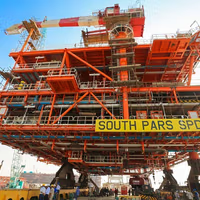
Shortly after Turkey began exporting electricity to Iraq this week, Iran ceased its deliveries to its neighbor due to an increasingly worsening domestic power deficit.
Oil, gas and Iran economic analyst

Shortly after Turkey began exporting electricity to Iraq this week, Iran ceased its deliveries to its neighbor due to an increasingly worsening domestic power deficit.
The National Iraqi News Agency cited an official source on July 23, reporting that the country’s Diyala province experienced a massive power outage due to the cessation of Iranian electricity deliveries from both transmission lines for unknown reasons. The report suggests that Iran has stopped supplying 250 megawatts (MW) of electricity, while the region requires 900 MW due to rising temperatures.
The two transmission lines from Iran to Diyala have a combined transmission capacity of 550 MW. However, until July 20, Iran had only been delivering 250 MW to Diyala due to an intensified domestic deficit.
According to Iran's Ministry of Energy statistics archive, the country’s net electricity exports have drastically decreased from 2012 to 2022, indicating a substantial reduction in the surplus of electricity available for export. The country imported about three terawatt-hours (TWh) of electricity from Turkmenistan and Azerbaijan while exporting 4 TWh in 2022, with the majority going to Iraq. This puts Iran’s net electricity export at 1 TWh, which is eight times less than the 2012 level.
Iran's Ministry of Energy halted public access to its statistics in June 2023. However, some Iranian officials have stated that the country’s electricity trade balance has been zero since last summer, meaning that the Islamic Republic has been exporting electricity equal to its imports. It now appears that Iran's summer electricity deficit has reached a point where it cannot sustain its exports at the same level as its imports.
Meanwhile, Turkey's Energy Minister announced on July 22 the commencement of exporting 300 MW of electricity to Iraq. Additionally, since March 2024, Baghdad has begun importing electricity from Jordan. The country is also negotiating deals with Saudi Arabia and Oman to import electricity, though these agreements have not yet been finalized.
In 2023, Turkey launched 2,800 MW of solar and wind power plants. According to the latest statistics from Turkey's Energy Market Regulatory Authority, it added 3,500 MW of new solar and wind farms, as well as 600 MW of hydroelectric capacity, to its power generation during January-May 2024.
Turkey's growth in renewable electricity generation capacity in the first four months of 2024 exceeds more than twice the total electricity generation growth of Iran from all types of power plants over the past year. The country plans to add 7,000 MW of renewables this year.
In contrast, the Iranian government targeted the launch of 2,850 MW of solar and wind power plants last year but only achieved 2% of this goal. Most of Iran's newly launched power plants last year were steam and gas types with efficiencies of only 29% to 33%. This year, Iran faces a summer electricity deficit of 14,000 to 18,000 MW, equivalent to 20% to 25% of the country's electricity demand.
Iraq’s power plants also heavily rely on Iranian gas imports. The Iranian state, however, faces a significant gas deficit in winters and halts gas deliveries to its western neighbor. As a result, Iraq loses 4,000 to 5,000 MW of its electricity generation capacity in winters due to these interruptions.
Though Iraq recently extended a gas import deal with Iran for the next five years, it has been striving to diversify its energy import sources, including importing gas from Turkmenistan through Iran.
Iraq has also set a goal to stop gas flaring by 2028 and achieve energy self-sufficiency by 2030. The country is working to reduce its heavy reliance on Iranian energy supplies, which are subject to sanctions that necessitate the US to issue waivers every four months.

Iranian authorities have accused four women of "armed rebellion", a sentence carrying the death penalty, as the country's execution spree continues.
The four women have been identified as Pakhshan Azizi, Sharifeh Mohammadi, Varisheh Moradi, and Nasim Gholami Simiyari.
While Azizi and Mohammadi have received a death sentence in recent weeks, the verdicts for Moradi and Simiyari are pending. However, given the armed rebellion charges they face, activists have warned that they could be at high risk of execution.
Article 287 of the Islamic Penal Code states that any group taking up arms against the Islamic Republic is considered a rebel and "its members shall be sentenced to death.”
Rights groups, activists, and Evin Prison inmates have condemned the authorities' actions, sparking widespread protests on social media and from human rights organizations against the Islamic Republic's harsh treatment of female activists.
Varisheh Moradi

Accordin to Iran International sources, the second court session for Varisheh Moradi on the charge of "armed rebellion" is scheduled for August 4 at Tehran’s Islamic Revolution Court, presided over by Judge Abolqasem Salavati.
This date was set without allowing her lawyers access to review her case. During her first court session on June 13, Salavati, infamously known as the "Judge of Death" for his severe human rights violations and death sentences on dubious charges, did not permit Moradi's lawyers to defend her.
Nasim Gholami Simiyari

On Saturday, a court session was held for Nasim Gholami Simiyari, a protester of Iran’s 2022 nationwide "Woman Life Freedom" uprising, on the charge of "armed rebellion" in a joint case.
The session took place at Branch 26 of the Tehran Revolutionary Court, presided over by Judge Iman Afshari, notorious for human rights violations. Afshari was sanctioned by the UK in 2022 for being "involved in the commission of serious human rights violations in Iran, namely being responsible for serious violations with respect to the right to a fair trial and the right to freedom of expression of political protesters."
Simiyari is currently detained at Tehran’s Evin prison and awaits a verdict. She was arrested on May 18, 2023, by IRGC intelligence agents in Tehran. Initially held in solitary confinement in Ward 1A, she was interrogated before being moved to the notorious Ward 2A and finally to the women's ward of Evin Prison on September 26, 2023.
After five months, she was charged with "assembly and collusion against national security," "propaganda against the regime," and "armed rebellion" in a joint case. US-based Human Rights Activists News Agency (HRANA) citing Gholami Simiyari’s friend reported that she endured psychological and physical torture, resulting in forced confessions recorded on camera under duress.
Pakhshan Azizi

Political prisoner, Pakhshan Azizi was sentenced to death and an additional four years in prison on charges of "armed rebellion." The verdict was handed down by Judge Afshari of Branch 26 of the Tehran Revolutionary Court, with her lawyers being informed of the judgment on July 23.
On Saturday, Norway-based Iran Human Rights urged the International community to demand charges against Pakhshan and all others detained for their peaceful civil activities to be dropped.
“Pakhshan Azizi’s death sentence has no legal basis and was issued by the Islamic Republic’s non-independent judicial system at the behest of the security forces in order to suppress civil movement. The international community must react to her sentence in the strongest terms,” Iran Human Rights Director, Mahmood Amiry-Moghaddam said in a statement.
Sixty female political prisoners at Tehran’s Evin Prison staged an overnight sit-in on Wednesday to protest against Azizi’s death sentence.
The Instagram accounts of Nobel Laureate Narges Mohammadi, Iranian civil rights activist Golrokh Iraee, and German-Iranian rights activist Nahid Taghavi jointly announced that Evin's women unanimously demand the annulment of the Iranian-Kurdish political prisoner's death sentence.
Sharifeh Mohammadi

Labor activist Sharifeh Mohammadi was sentenced to death in early July on charges of "armed rebellion" by Judge Ahmad Darvish Goftar of Branch 1 of the Revolutionary Court of Rasht.
The Campaign to Defend Mohammadi stated on Instagram that the sentence is "based on the pretext of Mohammadi's membership in an independent, public, and legal labor organization a decade ago, demonstrating the baselessness of the verdict."
Rights groups and activists have been campaigning against Mohammadi’s death sentence since it was issued in July.
Last year, 834 prisoners were executed in Iran, including at least 22 women, marking the highest number since 2014, according to Iran Human Rights, making Iran the world's leading executioner of women.

In a vague statement on Sunday, Iran denied any role in a rocket attack that killed 12 children and teenagers on a soccer field in a Druze village in Golan Heights, which Israel says was carried out by Tehran-backed Hezbollah.
Israeli military spokesman Daniel Hagari said on Saturday the rocket used in the deadly attack was an Iranian-made Falaq-1 fired by Hezbollah.
Iran's Foreign Ministry spokesman Nasser Kanaani dismissed the accusations on Sunday, stating, "Israel's statements will not be heeded by others." However, Kanaani did not make it clear whether he means no Iranian rocket was used in the attack or the Iranian proxy group did not fire any munition at the civilian target.
Israel has vowed to respond to the suspected Hezbollah attack, with the country's national broadcaster Kann News citing officials as saying that the Israeli response to the attack "might lead to several days of intense fighting."
The attack has also sparked widespread reactions across the world.
The White House condemned the attack and blamed Hezbollah for it, saying, "It was their rocket, and launched from an area they control." It added that Washington has been in discussions with Israeli and Lebanese officials since Saturday's attack, which it described as "horrific."
US Secretary of State Anthony Blinken also said that all signs point to Hezbollah's involvement, emphasizing Israel’s right to self-defense while stating that the United States does not seek an escalation of regional conflicts. At a press conference in Tokyo, Blinken expressed condolences for the loss of life and reiterated the US stance against terrorism.
“There is no justification for terrorism, period, and every indication is that indeed the rockets were from or the rocket was from Hezbollah. We stand by Israel’s right to defend its citizens from terrorist attacks,” he added.
The Saturday attack has left the community of Majdal Shams in deep mourning. Thousands gathered for the funeral of the victims, marking a day of profound sorrow. At the funeral on Sunday, weeping men wearing traditional, red-topped white hats carried 10 white-covered caskets through the crowded streets. Women dressed in black abaya robes cried as they laid flowers on the caskets, with some mourners carrying large photos of the deceased children.

Fadi Mahmud, a 48-year-old resident, in an interview with AFP described the incident as a significant loss for the close-knit community. "It was the first time Majdal Shams had experienced such a loss during the war." "Our community is very close-knit. These children are like children of everybody in the village."

In the early 1980s, Iran established Hezbollah in Lebanon as a proxy force to confront Israel. In 2018, the US government reported that Iran annually provides Hezbollah with an estimated $700 million. Earlier, in a 2016 speech, Hezbollah's leader, Hassan Nasrallah, publicly stated that Iran is the source of his organization’s funding. The financial support bolsters Hezbollah’s substantial military capabilities, including an arsenal of roughly 150,000 missiles and rockets targeted at Israel.
Full-blown Israel-Hezbollah war
The deadly attack blamed on Hezbollah has stoked fears of a full-fledged war between Israel and the Lebanese group, with Lebanon's Middle East Airlines delaying some of its Beirut flight arrivals, and several European countries advising citizens to leave Lebanon.
However, Mohammad Ghaedi, a lecturer in international relations at George Washington University, believes a full-scale war between Israel and Hezbollah is unlikely due to the prohibitive cost.
“Despite the threats being made, my analysis is that we are far from a full-scale war between Israel and Hezbollah for several reasons," Ghaedi told Iran International.
He said the 2006 war between Israel and Lebanon cost around three and a half billion dollars. “Today, an attack on Hezbollah could cost more than 50 billion dollars. Additionally, Hezbollah's enhanced capabilities, including precision missiles, position them to retaliate effectively against Israeli targets.”
According to security sources, Hezbollah has preemptively evacuated several key sites in southern Lebanon and the eastern Bekaa Valley in anticipation of a potential attack by Israel.
Ghaedi believes that Israel will likely conduct limited strikes in response to Hezbollah, aiming to resolve political differences within Israel and seek international condemnation of Hezbollah.
He referred to the rocket used in the attack, allegedly an Iranian-made Falaq, as a central point of tension. “If confirmed, it could prompt small-scale Israeli responses within Iran, following Naftali Bennett’s ‘thousand cuts’ strategy against the Islamic Republic."
The conflict might have broader implications, potentially involving other powers such as the United States and Iran. However, Ghaedi finds it unlikely that Iran-backed forces in Iraq and Syria will enter a conflict under current circumstances.

The 2024 US presidential campaign is being closely followed in Iran, as many Iranians believe the outcome will directly impact their lives, especially with Donald Trump once again on the ballot.
Trump’s last tenure was highly 'eventful' for Iranians. The former president withdrew the US from the 2015 nuclear deal, ordered the killing of Qasem Soleimani—arguably Iran’s second most powerful figure after the Supreme Leader — and imposed extensive oil sanctions that put unprecedented pressure on Iran’s economy.
It’s little surprise, then, that many seem to dread Trump’s potential second term. The annual inflation rate is already ‘back-breaking’, as we say in Persian, hovering above 40% for three years. Corruption is rampant. Another round of Trump’s “Maximum Pressure” would push millions off the cliff – or drag the country into war. And still, many say they’d like Trump to win. It is impossible to say how many, but it’s a sizable chunk of the population.
“Trump may be bad for us, but he’s worse for the regime,” says Farhad, an IT technician looking for a job. He was “kicked out” of work after he was arrested during the 2022 protests. “Trump is no Biden,” he says, “and his Iran advisers are not [former Iranian FM] Zarif chums. The pressure he’d exert could hasten the collapse of the regime.” What about ordinary Iranians, I ask, what if there’s a war, what would happen to their lives? “You call this a life?” he snaps back.

Farhad is 23. He’s visibly angry and has little to lose –materially at least. Those who do have something to lose, the ‘better-off’, see things differently.
“People have suffered enough these past years. We need the sanctions lifted, and that’s more likely with a Democratic administration. Trump has shown no goodwill towards Iran,” says Arash, an engineering student who actively campaigned for Iran’s new president, Masoud Pezeshkian. “Iran cannot prosper with anti-Americanism. I voted for Pezeshkian because he seems less aggressive and might be able to negotiate a deal with the US and attract the foreign investment our country desperately needs.”
That may very well be wishful thinking, given what US officials have said on record and the fact that Iran’s foreign policy is dictated by Supreme Leader Ali Khamenei, not the president. Still, many Iranians share Arash’s hope for a miracle. However, a Trump victory this November seems much more likely. This prospect terrifies Arash as much as it thrills Farhad.
And then there’s Farkhondeh, a 29-year-old journalist who avidly follows US politics. She believes both the fear and hope that Trump would put more pressure on Iran may be exaggerated, if not entirely misplaced. “I think Trump is as likely to enter negotiations with Iran as [Kamala] Harris,” Farkhondeh says. “Trump’s record is not that of a warmonger. He’s a businessman. I think he wouldn't hesitate to talk to Khamenei if the latter was willing. That said, I don’t think any good for ordinary Iranians would come out of such a negotiation. Both sides would be more than happy to sell us out for their own interests.”
Curiously, almost everybody I talked to focused on Trump. There are no polls on this, but it seems rather clear that most Iranians believe the former US president would win again. Neither in social networks nor among my acquaintances have I seen anyone who sees Harris defeating Trump. This could be a result of Trump’s aggressive demeanor, which makes his opponent appear weak, or it could be because he’s a former president. But it’s also because Harris is a woman.
Sex or gender may be less of an issue in the US, but it remains significant in Iran, where no woman has ever passed the vetting process to enter a presidential race. The highest position a woman has reached in the Islamic Republic is Minister of Health—and that only once. Strangely, many view this as a ‘capability’ issue rather than a direct result of fanatical religious orthodoxy.
“America and Iran may differ socially, but I think being a woman will work against a candidate even there.” Sima, a 40-year-old woman who works at a publishing house said. She regularly posts about women's rights on Instagram, but takes little interest in the US election, even though a woman is in the race. “I like Harris to win,” Sima says, “but it won’t make much difference to us here either way.” She believes the impact of US elections on Iran is “exaggerated” – and it benefits the government.
“Iranian officials fuel this notion by constantly referring to the US as the enemy,” Sima says. “America is a scapegoat for their incompetence and corruption. Many have bought this idea, thinking that either disaster or redemption awaits us if Trump wins. Both are misguided, in my view. We better focus on our own rulers and let the Americans worry about theirs.”

Following widespread public outcry, Iranian writer and anti-hijab activist Sepideh Rashnu, has had her prison sentence postponed.
Rashnu was summoned to begin serving three-years and 11-months on Saturday for defying mandatory hijab laws.
However, writing on X on Saturday, her brother, Saman, announced that the execution of her prison sentence has been deferred until August 3. He added that a request for a second retrial has been filed while expressing hope that the sentence would not be enforced.
Despite Iranian authorities bringing forward multiple cases against her, Rashnu appeared before Evin prison on Saturday without wearing the mandatory hijab, risking further fines and charges.
On Friday evening, rights groups and Iranians flooded social media with protests against Rashnu's summons to begin her prison term. The surge of support followed a video she released in which she announced that, having exhausted all legal avenues, she was forced to turn herself in at Tehran’s Evin Prison on Saturday.
“I haven't committed any act that justifies being removed from the city and the streets, denied my education, and imprisoned. Evil has such a grip on our lives that our bodies, our individuality, and our existence have been criminalized,” Rashnu added in the video in a post on her Instagram.
Despite being summoned to prison, Rashnu stated that what is more important than her prison sentence, is supporting political prisoners facing the death penalty in Iran.
“Right now, many prisoners in various prisons are going on hunger strikes every Tuesday to voice their protest against the death penalty to society, and they will continue until they bring society and humanity along with them. I believe the most important issue now is to end this evil as soon as possible,” Rashnu stated.
Support has been global. On Friday, the US-based Abdorrahman Boroumand Center for Human Rights in Iran condemned Rashnu’s prison sentence, stating that her case “highlights the ongoing suppression of women's rights and freedom of expression in the Islamic Republic.”
PEN America also voiced its support for Rashnu, stating that "Dissidents like Sepideh embody the role that writers and artists often play in defending human rights."
Criticizing the sentence as based on "fabricated national security charges", the US-based Center for Human Rights in Iran (CHRI) also expressed support for Rashnu.
Human rights activist and former Evin detainee, Atena Daemi wrote on X on Friday that in Iran “the war against powerful women continues,” adding that women like Rashnu “continue to fight and civil disobedience despite imprisonment and repression.”
Rashnu was first arrested on July 16, 2022, a few days after national “Hijab and Chastity Day” on 12 July, following the circulation of a video that went viral on social media showing her on a bus without the mandatory hijab.
The video also captured her in an argument with a woman identified as Rayeheh Rabi’i - an Islamic Republic loyalist, who was attempting to force her to wear a hijab. During the altercation, Rashnu was assaulted by Rabi’i.
Following her arrest state-run television (IRIB) aired a forced confession of Rashnu on July 30, 2022, showing visible signs of torture with bruised eyes and reportedly taken to hospital after the video was recorded.
On August 15, 2022, Rashnu’s case was referred to Tehran Revolutionary Court for charges including "gathering and colluding against national security", "propaganda against the state" and “promoting immorality and prostitution.”
Rashnu was eventually released on a bail of eight billion rials ($27,000 according to exchange rates at the time) on August 30, 2022.
An undergraduate painting student at Alzahra University, she was detained for several hours on June 20, 2023, for allegedly not complying with mandatory hijab laws on campus. She was released on bail and subsequently suspended for two semesters for her non-compliance with the hijab mandate.
On November 22, she received a sentence of three years and seven months for “gathering and colluding against national security,” and an additional four months for “propaganda against the state.” She was acquitted of "promoting immorality and prostitution."
In October, Rashnu was denied entry to her trial in Tehran after announcing on social media that she would not wear the hijab during the court session. A new case was opened against her for “unveiling in public,” resulting in a fine of 15 million rials (approximately $260).
Following the postponement of her prison sentence on Saturday, Rashnu took to Instagram to urge support for Iranian prisoners faced with executions.
"I think I can bear these delays, harassments, and even imprisonment but I can't bear watching people lose their lives...let us advocate for the life of those who are in danger of receiving a death sentence or have been sentenced to death," she wrote.

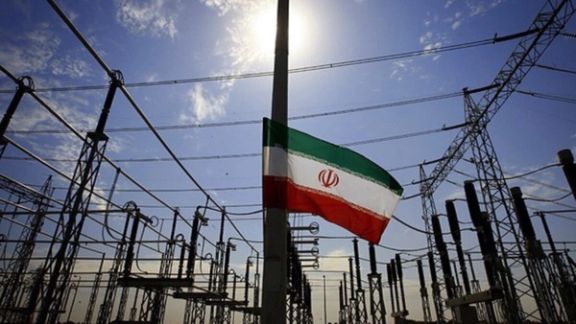
Iran’s President Masoud Pezeshkian has appointed Mohammad-Reza Aref, a ‘reformist’ known for his aloof conduct as a lawmaker, as his first vice president, contrary to earlier reports suggesting a top economist would get the post.
The announcement came immediately after Pezeshkian received his seal of approval from Supreme Leader Ali Khamenei during an inauguration ceremony on Sunday morning, officially assuming the position of President.
Aref, who was the leader of the Reformists in parliament between 2016-2020, became known as the “Sultan of silence” after remaining indifferent to major upheavals in the country. Not only he was less than visible in legislative affairs, he failed to rally his faction when government forces quashed anti-regime protests in 2017-2918 and 2019 killing more than 1,500 civilians.
Aref’s inaction as Reform Front’s Chairman was a major reason why ‘reformists’ lost political credibility with the electorate and received only three percent of the vote in the 2021 presidential election. Hardliners who had already purged others in the 2020 parliamentary elections, were able to put Ebrahim Raisi in the presidential office in August 2021. One result of this major takeover of power was the failure of nuclear talks with the West in 2021-2022.
On Saturday, Nameh News, a major new website had reported that Pezeshkian’s choice for vice-president was Ali Tayyebnia, a respected economic official, who was minister during President Hassan Rouhani’s administration. This scenario would mean that Tayyebnia would coordinate all economy-related agencies at a time when to most pressing problem is to partially improve the ailing economy.
Tayyebnia can still be appointed in the cabinet, but the likelihood that he would expect to return to the same position as he held earlier seems less likely. He could also be appointed as vice-president for economic affairs, since president in Iran have several deputies.
By appointing Aref, Pezeshkian has chosen the least problematic ‘reformist’ from his perspective, as well as that of Khamenei. The new president has repeatedly vowed full allegiance to the Supreme Leader’s agenda, despite attempts by many regime insiders to portray him as a reformist himself.
Pezeshkain reiterated his allegiance to Khamenei once again during his inauguration on Sunday, and his religious devotion by lengthy recitations of Quranic verses in Arabic. An Iranian on social media commented that the ceremony sounded more like an inauguration taking place in Saudi Arabia.
The 73-year-old Aref was a revolutionary university student in the 1970s and was arrested by the secret police for his anti-Shah activities. He studied electronics in Tehran University and then continued his studies at Stanford University, where he received a master’s degree and a PhD in electrical and communication engineering in 1980. He represents the generation that many Iranians now derisively call the "79-ers", referring to those who overthrew the monarchy in 1979.