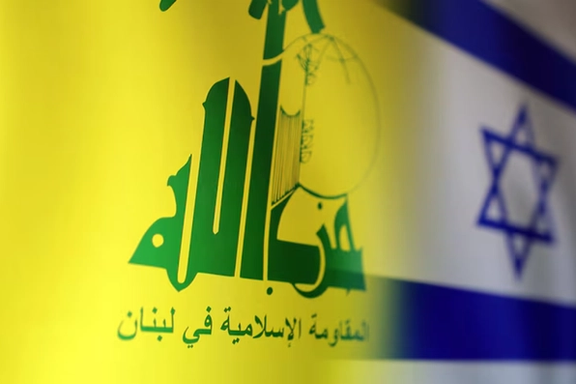
Hezbollah and Israel flags are seen in this illustration taken, October 15, 2023. REUTERS/Dado Ruvic/Illustration/File Photo
Israel and Hezbollah have stepped back from a regional war—for now. While daily rocket barrages persist along the Israel-Lebanon border, no clear winners have emerged, and the situation remains fragile and uncertain.
It was August 25 around 4:30 in the morning when Sarit Zehavi heard loud explosions.
"Literally the ground was shaking."
She didn't know what was happening.
"The blasts were truly something that we have never heard in the past."
It was the IDF launching preemptive air strikes in Southern Lebanon to thwart a major attack after Israeli intelligence gathered information on the incoming threat, according to IDF officials.
Israel prevented Hezbollah's full response to the killing of its Chief of Staff Fuad Shukr on July 30 from materializing.
Iran's proxy was meant to reportedly carry out hundreds of rockets and UAV strikes in Israel, while also firing accurate missiles at security targets near Tel Aviv. It was described as a large-scale ariel attack by Hezbollah, according to the IDF.
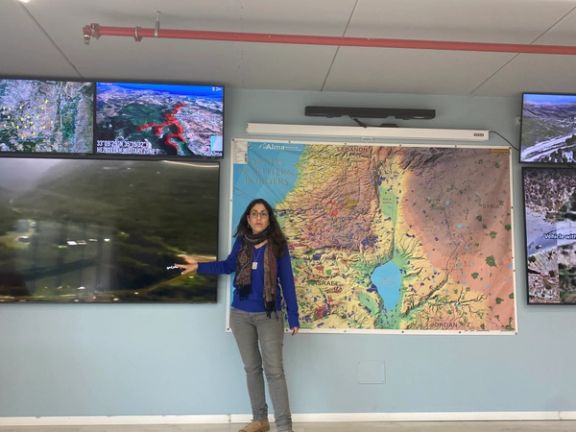
Sarit Zehavi specialized in the IDF's military intelligence and now runs an organization researching and analyzing Israel's security challenges in the North, but above all she is an Israeli Northern citizen herself, who lives with Hezbollah just 9 kilometers from her doorstep.
Sarit Zehavi at the Alma Research Centre in Northern Israel.
This is her reality. Since October 7, there have been daily attacks in the North and more than 60 thousand Northern Israeli residents are refugees in their own country.
And that also affects the economy with thousands of Northerners not at work, and those who remain, risking their lives to cultivate the fields and farm. The ongoing war against Hamas has tested Israel's economy, and opening up a second front with Hezbollah could cripple it.
"All of us civilians of the North that morning ran to the bomb shelters, including myself and my family. It just didn't stop for about more than an hour. Since this war started, I was very much afraid of a scenario of fire to all over the borderline, because I was afraid that with this scenario, we will see an infiltration as well," said Zehavi.
There has been a weekly average of 60 Hezbollah attacks in the North since the start of the war 10 months ago, which amounts to 2,804 attacks so far, according to Zehavi.
Hezbollah and its allies have been threatening a retaliatory attack since the assassination of Shukr, which Israel claimed responsibility for. The Iran-backed Hezbollah said in a statement that this “first phase” of retaliation was “successfully completed”.
Nasrallah made a televised speech after the heavy exchange of fire. In it, he said the main focus of Hezbollah’s attack was the Glilot base north of Tel Aviv, which is home to the Mossad and the military intelligence group Unit 8200.
Hezbollah leader Hassan Nasrallah speaks in a televised address after Israel and Hezbollah exchanged heavy fire [Handout/Al-Manar TV via Reuters]
He rejected statements by Israeli officials that the attack had failed, saying that Israel was keeping information on the damage “a secret”.
Many of Hezbollah's rockets are unguided, but it also has precision missiles, drones and anti-tank, anti-aircraft and anti-ship missiles. Since the 2006 war with Israel, Hezbollah has advanced its capabilities.
Defense Minister Yoav Gallant said Hezbollah was “thrown off balance” and its attempted attack on Israel. He said Israel prevented Hezbollah’s attack minutes before it was supposed to be carried out.
Iran's Foreign Ministry Spokesperson Nasser Kanaani posted to X that Israel has lost its "deterrent" power, saying it was unable to anticipate the time and place of Hezbollah's "limited and managed attack."
Any real winners?
With both sides claiming victory, there appears to be no real winners.
Zehavi referred to Israel's operation as a "success" and "achievement" with "limitations."
According to IDF statements, Israel attacked 270 Hezbollah targets, destroyed a few thousand launcher barrels, being careful to not cripple all of Hezbollah capacities in an effort to prevent a full-scale war.
Both parties can't risk a regional war - at least not yet.
"I think that Nasrallah is not interested in a full-scale war. But the problem is it is willing to take the risk?" said Zehavi.
The Iran-backed group possesses upwards of 150,000 missiles and rockets, according to the World Factbook of the US Central Intelligence Agency.
"It's something about Armageddon. We are not frightened from that. Israel is capable to defend itself," said Beni Sabti, a researcher in the Iran program at INSS.
Sabti said Israel's weekend strike likely hit around less than 1 percent of all the ammunition Hezbollah has, but since most of their rockets are short range, the key is to keep pushing Hezbollah farther from the border.
Hezbollah said it has rockets that can hit all areas of Israel with precision, but the majority of their arsenal are unguided and short range.
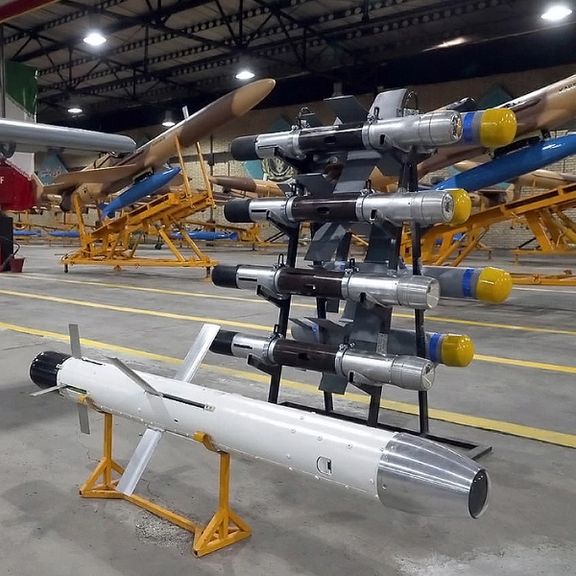
Iranian-made guided missile al-Mas on display
"I think that Iran regime and also Hezbollah understood that they have a limit," said Sabti.
He said Iran's government and Hezbollah leaders wouldn't also want to risk losing wealth and power amassed over the years.
Hezbollah, is listed as a terrorist entity in the US and Canada, but has participated in national elections since 1992 and has become a major political presence in Lebanon and would not want to jeopardize its political authority in the country.
The Lebanese currency was devalued by more than 98% between January 2023 and March 2024, with an annual inflation rate of 221.3% in 2023, according to the World Bank.
Iran's foreign minister told his Qatari counterpart on Monday that the Islamic Republic will support any ceasefire deal agreed by Hamas.
“We will support any agreement that our friends in the Palestinian resistance and Hamas approve”, Iran’s foreign minister Abbas Araghchi told Qatar’s Foreign Minister and Prime Minister Mohammed bin Abdulrahman Al Thani, according to the Iranian Foreign Ministry.
This could be read as a sign that Iran isn't going to retaliate against Israel, understanding as Sabti pointed out, their so-called limitations. Despite that the US is continuing to boost its military presence in the region in anticipation of a major escalation.
White House national security spokesman John Kirby said on Monday, "We must assume Iran remains postured and prepared to attack Israel." He described Hezbollah's attack on Israel over the weekend as "sizeable."
The preemptive attack doesn't signal a change in Israel's strategy and likely prevented anything big from happening, showing success by acting on intelligence, said Sabti.
A game of political theatre?
Robert Springborg, an academic and Middle East expert, described Israel and Hezbollah's conflict as "political theatre" with "a lot of collateral damage."
"Each side is playing to its own constituency and trying to demonstrate to its enemy that it has potential, which it can escalate at any time. They've been engaged in shadowboxing now, basically since October 7th of last year. This is yet another round of that. Neither side believes that they could triumph without huge cost to themselves," said Springborg, an adjunct professor at Simon Fraser University [SFU], and fellow at the Italian Institute of International Affairs.
He believes that full-blown war was never a real option on the table for either party, saying that the regional actors are playing a "role" and can't take major risks.
Springborg pointed to Iran's first-ever direct attack on Israel in April, with an unprecedented number of ballistic missiles fired in a single military operation. The retaliation came nearly two weeks after Israel's attack on an Iranian consulate in Syria, which killed two top Iranian generals.
While on one hand Iran's move opened up the prospect of further escalation, it also involved extensive advance warning to Israeli air defenses. That ultimately allowed enough time for the majority of the drones and missiles to be intercepted before reaching their targets. He saw that as part of the political theatre.
"I don't think a bigger regional war was ever on the cards," he said.
North Korea has unveiled a new ‘suicide’ drone that bears a striking resemblance to notorious Iranian drones “Shahed” which Russia have been using to attack Ukraine.
The new unmanned aerial vehicle (UAV) was unveiled in a military test overseen by North Korea's leader Kim Jong Un. The images broadcast by the North Korean state channel are blurred but experts say there's enough to see the resemblance to the Iran-made Shahed and the Russia-made Lancet-3.
The relationship between the three countries has deepened since the start of Russia’s invasion of Ukraine. Both Iran and North Korea are accused of helping the Russian war efforts by sending weapons, including missiles and drones.
“We understand that some gifts [drones] were given in an exchange between North Korea and Russia in the past,” a spokesperson for South Korea's joint chiefs of staff said Monday when asked about the similarities. “We need to analyze various measures to see if those have improved performance.”
South Korea may be most concerned about North Korea’s military advancements. But the United States would also watch carefully for such signs of close cooperation between Russia, Iran and North Korea.
Iran has invested heavily in its missile and drone program, testing several iterations of its flagship drone, Shahed, which has been used by Russia to attack Ukraine, and was used by Iran to attack Israel in April.
The North Korean ‘suicide’ drone tested on Monday “can fly over 1,000 km,” a South Korean scientist told Agence France-Presse. “They are demonstrating their capacity to strike targets at both tactical and strategic levels.”
The expanding drone fleet of nuclear-armed North Korea will “be deployed within various striking ranges to target any enemy on land or at sea," the North Korean official news agency (KCNA) claimed following the test Monday.
Kim was shown smiling at the drones’ reported effectiveness. He called for “more suicide drones” to be made, according to KCNA.
In 2022, North Korea sent drones across the border that the South Korean military failed to shoot down.
Suicide (or kamikaze) drones are UAVs carrying explosives that are guided remotely to crash into targets, effectively acting as guided missiles.
Iran will support any ceasefire deal agreed by Hamas, the country’s foreign minister told his Qatari counterpart Monday, as diplomatic efforts to free the hostages and bring an end to the Israeli onslaught on Gaza continue without tangible progress.
The ceasefire talks were halted after Hamas leader Ismail Haniyeh was assassinated in Tehran. Iran vowed to "avenge" his blood but has so far held back, partly because of US pressures and also because it doesn’t want to “jeopardize” ongoing negotiations.
“We will support any agreement that our friends in the Palestinian resistance and Hamas approve”, Iran’s foreign minister Abbas Araghchi told Qatar’s Foreign Minister and Prime Minister Mohammed bin Abdulrahman Al Thani, according to the Iranian Foreign Ministry.
Qatar has been playing a key role in the ceasefire talks and Al Thani has traveled to Tehran to inform the Iranian government of the latest developments and efforts towards a ceasefire deal –led by his country alongside Egypt and the US.
The Qatari prime minister also met Iran’s president Masoud Pezeshkian on Monday, stressing the need to exert diplomatic pressure on Israel and to advance the Palestinian cause. He is the first senior foreign official to visit Iran and meet president Pezeshkian and his top diplomat, Araghchi.
“The two sides affirmed the importance of ending the occupation forces' crimes against Palestinians, the war on the Gaza Strip, and the terrorism practiced by settlers in the West Bank, to spare the region the risks of escalation,” according to a summary of Al Thani’s meeting with Iran’s foreign minister.
Arab countries are most worried that the Iranian-Israeli tensions would lead to an all-out regional war. Iran has so far refrained from its promised retaliatory attack against Israel, while repeating the claim that it has not abandoned the plan to take revenge for the Haniyeh killing.
“Taking revenge for this criminal act, whether by the axis of resistance, or by the Islamic Republic of Iran, is certain,” Major General Mohammad Bagheri said Monday. “Members of the axis of resistance, each based on their capabilities and considerations, will carry out their revenge, some of which we witnessed yesterday,” he added, referring to the attacks on Israel by Hezbollah during the weekend.
Bagheri’s remarks can be read as a sign that Iran could opt out of an attack against Israel from its soil and limit its response to ‘proxy’ operations by Hezbollah and other armed groups in the region. Still, the US is continuing to boost its military presence in the region in anticipation of a major escalation.
On Monday, the Pentagon confirmed that the US thinks the risk of an Iran-led attack against Israel persists. “I would point you to some of the public comments that have been made by Iranian leaders and others,” Pentagon spokesperson Air Force Major General Patrick Ryder told reporters. “We continue to assess that there is a threat of attack.”
Later in the day, White House national security spokesman John Kirby said, "We must assume Iran remains postured and prepared to attack Israel. He described Hezbollah's attack on Israel over the weekend as "sizeable" and said Washington was continuing to maintain a robust force posture in the region.
US Defense Secretary Lloyd Austin has directed two aircraft carrier strike groups to remain in the Middle East, bolstering the US military presence amid Iran-Israel tensions, the Pentagon announced on Sunday.
Nigerian police reported a deadly attack in the capital, Abuja, on Sunday, where two officers were killed and three others left unconscious following an assault by the Islamic Movement of Nigeria (IMN), a Shia group with strong ties to Iran.
The attack, involving machetes, knives, and improvised explosive devices, took place at a police checkpoint and was described as unprovoked by police spokesperson Josephine Adeh.
The attackers, members of the IMN, also set police vehicles on fire during the assault.
Meanwhile, the Islamic movement, in a counter statement alleged that the police attacked the Arbaeen Symbolic Trek in Abuja and killed numerous mourners. Arbaeen is a Shiite religious ceremony invented and financed by Iran's Islamic government, mainly to counter the main Sunni Muslim Hajj pilgrimage to Saudi Arabia.
IMN has a history of violent confrontations with Nigerian authorities and was banned in 2019 after a series of protests demanding the release of its leader, Ibrahim Zakzaky, who has visited Iran and met with Supreme Leader Ali KHamenei.
IMN’s roots trace back to the late 1970s, inspired by Iran’s Islamic Revolution. Despite being outlawed, the group has maintained close relations with Tehran, leading to frequent clashes with Nigeria's secular government. The Nigerian army has previously accused the group of plotting to assassinate a former chief of army staff, which led to a police operation in 2015, resulting in the deaths of over 300 IMN members and the imprisonment of Zakzaky.
Sunday’s attack, condemned by Abuja’s police commissioner Benneth C. Igweh, led to several arrests. Igweh vowed that those responsible would be brought to justice, stating, "The situation is presently under control and normalcy restored."
During his imprisonment, Zakzaky was charged with various crimes, including murder and unlawful assembly, charges to which he pleaded not guilty. He is also accused of receiving ideological and financial support from Iran.
Nigeria’s population of 180 million includes about 50% Muslims, predominantly Sunni, with a small Shia minority, alongside 40% Christians and 10% adherents of indigenous beliefs. The continued activities of IMN, coupled with its connections to Iran, remain a concern for Nigeria’s national security and its relationship with Western allies.
Russia has carried out another round of large-scale attacks on Ukraine, using Iranian-supplied drones and possibly North Korean missiles to strike important infrastructure and cities across the country.
The sound of explosions rang out in central Kyiv on Monday morning during rush hour as Ukraine's military warned of a massive Russian missile attack following waves of drone attacks in the early hours. According to reports by Ukraine’s air force, Russia had 11 TU-95 strategic bombers in the air to launch cruise missiles.
At least three people were killed, and several were wounded with reports of damage to energy infrastructure.
The Russian military launched missiles from the Caspian Sea, with aircraft taking off from several airfields. Additionally, missiles were launched from Black Sea carriers, and a massive raid by Russian attack drones was reported in various regions in Kyiv and other cities.
Firefighters work at the site of a Russian missile strike, amid Russia's attack on Ukraine, in Odesa region, Ukraine August 26, 2024.
More than a half of Ukraine's regions were struck Ukraine's Prime Minister Denys Shmyhal said.
"Today, 15 regions were affected by a massive Russian attack. The enemy used various types of weapons: drones, cruise missiles, and Kinzhals (supersonic missiles). There are wounded and dead," Shmyhal said on the Telegram messaging app.
President Volodymyr Zelenskyy said that Russia attacked Ukraine with over 100 missiles, and about 100 drones, confirming that the country’s energy sector saw a lot of damage.
Russia primarily employs Iranian drones, particularly Shahed models, as suicide drones in its conflict against Ukraine. The exact number of Shahed drones used in the Monday attack is not released yet. Iran's support for Russia's military actions has drawn significant international scrutiny.
Since mid-2022, Iran has reportedly supplied Russia with over a thousand kamikaze Shahed UAVs, which have been extensively used to target civilian infrastructure and cities across Ukraine.
In March, British Defense Secretary Grant Shapps accused Iran of supplying Russia with ballistic missiles for use in Ukraine, claiming the regime is a "bad influence" not only on the Middle East but also in Europe.
Approximately 15 missiles and 15 drones targeting the capital of Kyiv were downed, Serhiy Popko, head of Kyiv's military administration, wrote on Telegram Monday.
Additionally, the Ukrainian president's chief of staff, Andriy Yermak, called on Kyiv's allies to allow long-range attacks on Russia with Western-supplied weapons. "Such a decision will accelerate the end of Russian terror," Yermaksaid on Telegram messenger.
The Operational Command of the Polish armed forces said on X that Polish and allied aircraft had been activated after Russia launched the attack which also targeted regions in Ukraine's west near the Polish border.
Ukrainians have been expecting a major Russian missile attack for some time. The US embassy issued a warning last week of an elevated risk of attack around Ukrainian Independence Day, which Ukraine marked on Saturday.
Ukraine has itself stepped up its long-range drone attacks on Russia striking military and industrial targets. Ukraine had no powerful long-range weapons at the start of the war, but has since developed many models of long-range attack drone and used them to hit targets deep inside Russia, ranging from oil refineries, weapons depots, to military airfields.
Over the weekend, Zelenskiy said Ukraine had developed a new "drone missile" that had been used to attack Russia and was more powerful and faster than other hardware in Kyiv's arsenal.
An Iranian journalist who exposed a security flaw in a key government online system has become the target of legal action launched by the Ministry of Roads and Urban Development.
Rather than addressing the serious vulnerabilities exposed in the National Real Estate and Housing System, the Ministry of Roads and Urban Development has opted to file a complaint against the journalist who revealed them. The name of the journalist has not been disclosed to media.
The response underscores the Islamic government’s tendency to punish truth-tellers instead of confronting its own shortcomings.
The incident began when Eghtesad Online, an Iranian news outlet, conducted an investigation into the government's much-touted National Real Estate and Housing System—a platform supposedly designed to bring transparency and accountability to property ownership in Iran.
What they uncovered was not just a glitch, but a security failure: anyone with basic information like a postal code and a national ID could register any property, even that of the Ministry itself, as their own.
To prove the point, the journalist listed the ministry’s headquarters for sale on a popular online marketplace called Divar, turning the issue into a matter of public ridicule and laughter.
Instead of responding with the urgency such a security breach demands, the Iranian government has resorted to its usual playbook of using pressure tactics. The Ministry of Roads and Urban Development’s decision to press charges against the journalist, rather than fix the broken system, is a sign of the system's priorities. This response, according to critics, sends a message to the media and to all Iranians: exposing the truth will not be tolerated, especially when it reveals the government's incompetence.
Over the past few years, the country has suffered a series of cyberattacks that have laid bare the government's inability to safeguard its most sensitive systems. Hacktivists have breached the judiciary's servers, infiltrated the notorious Evin Prison’s surveillance network, and even accessed servers belonging to the Islamic Republic of Iran Broadcasting (IRIB).
Since the 2022 uprising, which shook the foundations of the Islamic Republic, there has been an increase in such activities.
The targeting of a journalist for exposing a security flaw is just the latest example of how the Iranian government prefers to shoot the messenger rather than confront the uncomfortable truths that are increasingly coming to light.

![Hezbollah leader Hassan Nasrallah speaks in a televised address after Israel and Hezbollah exchanged heavy fire [Handout/Al-Manar TV via Reuters]](https://i.iranintl.com/images/rdk9umy0/production/b835514082f7d7363370693c2da69e111ce62017-807x575.png?rect=21,0,767,575&w=576&h=432&q=80&fit=max&auto=format)