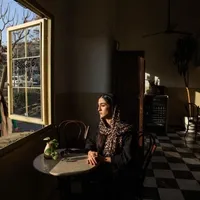
Nikki Namdar is a left-leaning, liberal activist, who believes in a woman’s right to choose. She’s also Iranian- American and Jewish but in 2024 she’s voting for Donald Trump.
Shahin Milani is also an Iranian-American and traditionally voted Democrat but this year he’s not voting at all, saying he’s disappointed in both candidates.
In a special election interview onEye for Iran, with Iran International, both Milani and Namdar—despite their differing views—agree on one thing: disappointment with the Biden-Harris administration’s policies on Iran.
Milani said he would have voted Democrat had they taken a tougher stance on the Islamic Republic. He cited a lack of creativity of going beyond the Iran Nuclear Deal and gave examples where he felt the current administration downplayed human rights abuses in Iran.
But when it comes to Trump, he said he just can’t vote for him.
“Voting for Donald Trump was also not an option because he did not accept the results of the last election and for me the peaceful transfer of power is the most important thing. It's the bedrock of Western liberal democracy,” said Milani.
He said he doesn’t feel like either party belongs to him, describing himself as being politically homeless.
Not voting, he believes is his only course of action.
Namdar made a shift away from the Democrats, and once a never-Trumper, she has now turned into one of an advocate of the former US president. For her, it was a grieving process to get her to that point.
“I've been historically anti-Trump,” said Namdar.
But the October 7, 2023, Hamas invasion of Israel changed everything for her.
She lost friends over disagreements after the attacks and what she described as a lack of sympathy from her friends.
“I don't agree with Trump on everything, but the fact that the biggest issue here is the Islamic Republic of Iran. That's the most important thing.”
•
•
In 2024, she's a single-issue voter, focused squarely on the traditional Republican “maximum pressure” approach to Iran versus what she sees as the Democrats' policy of appeasement.
The US intelligence community warned on Monday that American adversaries like Iran are intensifying disinformation efforts around the elections by promoting false narratives. In the summer, US authorities announced that Iran was funneling money to influence anti-Israel college campus protests. That for Namdar and experiencing antisemitism was a redline.
While the Iranian vote is not going to make a difference in the outcome of the US elections, this year’s candidates had a huge impact on the Iranian-American electorate and has been life changing for some like Namdar and Milani.
For more on the discussion, you can watch the full interview onYouTube or listen on Spotify, Apple, Castbox, or Amazon.
A few days after a university student in Iran was bundled into an unmarked car by security forces for removing her clothes in an apparent protest at hijab-enforcers on campus, her identity and fate remain unknown.
A few days after a university student in Iran was bundled into an unmarked car by security forces for removing her clothes in an apparent protest at hijab-enforcers on campus, her identity and fate remain unknown.
She was filmed by other students from afar as she was forcibly bundled into an unmarked car. Then came the questions. Who was she? What happened?
Little is known about her. Some users on social media have identified her as Ahou Daryaei, a senior student in French Literature. But nothing is confirmed. For now, most people call her "the girl from Science and Research,” after her school. Now, she’s become a nameless household name.
“I’ve been there many times, just that one step away from losing it,” says Fatemeh, 29, who runs a small business from home. “Life is hard for many of us. We’re squeezed enough already, financially, politically and socially. And then some moron stops you to tell you how to dress. It’s crossed my mind many times to just remove all my clothes and go ‘there!’ but I’ve never been brave enough.”
This is a sentiment shared by many Iranian women on social media. If Ahou is crazy, we are all mad, is a widely shared theme.
Witness reports, including even one carried by IRGC-linked Fars News, say that campus security confronted her about her outfit. In protest, she stripped to her underwear and walked around the campus. The rest, and her eventual detention was captured on mobile phones.
“After being handed over to the police by university security, she is now hospitalized in a psychiatric facility," wrote the daily Farheekhtegan, affiliated with the parent university of the college she attended. The report denied any altercation between her and the campus security.
“The authorities call dissenters crazy and their treatment is torture,” says Bahram, 32, a charity worker and activist. “They bank on the social stigma associated with mental illness. But it’s no longer effective."
"They said Vida Movahed was mentally ill, and look what happened: women and girls followed her steps and turned her act of solidarity into a widespread movement against the mandatory hijab,” he said.
Vida Movahed was the woman who in December 2017 climbed up a utility box in central Tehran, put her white scarf on a stick, and waved it in complete silence. This was four years before the widespread protests that followed the death in custody of Mahsa Amini, sparking the movement now known as the Woman, Life, Freedom.
Soraya, a 36-year old nurse, sees the Girl from Science and Research as yet another link in the chain of events that is transforming Iran’s society. “I remember the day the video of Vida on that box went viral,” she says. “It was hard to believe. And it’s hard to believe it was only seven years ago. Stroll in the same street today and a girl with no headcover walks by you every other minute.”
Public attitudes toward the hijab - and religion, in general - has shifted dramatically in the last decade. In a state-sponsored nationwide survey conducted after the 2022 protests, 72% of respondents had said they favored a secular government .The findings were supposed to be classified but were leaked. So those in power know. They can see, but refuse to believe, let alone concede. They’d rather twist reality.
Homa Darabi was a psychiatrist who set herself on fire in protest to Iran's hijab laws in 1994.
“Of course they say Ahou has mental issues. They said it about Vida too,” Soraya adds. “In their minds a sane woman is an obedient woman. You’re crazy if you rebel. Homa Darabi was dubbed crazy many years before Vida."
Darabi was a child psychiatrist and a university professor in Tehran. She was banished from academia for her views on the hijab and she set herself on fire in protest in 1994.
“You can only truly understand Homa, Vida or Ahou if you live this madness that pushes us women to the brink everyday,” Soraya says.
The Islamic Republic doubled down on the hijab after the 2022 protests. Women are routinely cautioned and detained if their outfit is deemed inappropriate. Cars are impounded if spotted with hijab-free passengers.
A female student wandering around campus in her underwear is not a scene you see everyday in the West. In Iran, where patriarchy is codified, it’s an even greater shocker. Not everybody is supportive. Some - especially older people - see the act as excessive and provocative.
“Whatever the circumstances, one should not give the government an excuse for more repression,” Sara says her mother told her. She’s a university student herself. “My mum, bless her, does not have to pass by those beasts' booth every morning to attend a class.”
“What disappointed me was the lack of support for her,” Sara adds. “In the mobile footage, you can see dozens of bystanders, students supposedly. They could have at least attempted to protect her and prevent her arrest.”
The reaction - or lack thereof - of those seen in the footage has sparked mixed reactions among Iranians. Some say men have become mature enough to avoid staring at a half-naked woman, while others attribute it to fear or indifference.
“I don’t know what I would have done if I had been there at that moment. I’d like to think I wouldn't stand by, but who knows,” said Masoud, 48, who co-owns a mechanic shop .“During the 2022 protests, everybody would rush to help those who were being taken by the thugs. But that was a unique moment maybe. A student witnessing Ahou being taken away knows that getting involved could ruin the future they’re toiling to build. Life here is hard enough as it is.”
Everybody here is anxious. It’s either money, health, or war. You might expect the government to give people a break on their looks. But you’d be wrong. They fear defiant women more than they fear Israel. Perhaps they should.
As Americans head to the polls to elect a new president, voices on Iranian state media largely dismissed the impact of the result on an economy battered by US-led sanctions.
From economists to lawmakers, commentators asserted that Iran's economy has become resilient to external pressure and whether Donald Trump or Kamala Harris is elected will make little difference.
Iran’s economy remains under severe strain due to decades of mismanagement and international pressure. The economic landscape is marred by high inflation, low growth, and strained relations with the West with no end in sight.
Seyed Yousef Hosseini, former head of the Currency Committee at the Iran Chamber of Commerce, urged domestic media to focus on budget analysis rather than what he sees as sensationalism around the US polls.
“While the US election might have a limited, short-term psychological effect on Iran’s economy at the beginning of the new US administration, its overall impact is minimal,” he told ISNA.
“Some even suggest that if Trump wins, Iran’s economy will suffer major negative consequences. If Trump had the power to effect substantial change, he would have done so during his previous term when he was at the peak of his influence,” he said in a separate appearance on Mehr News, which operates under the state’s Ministry of Culture and Islamic Guidance.
Economist Mohammadreza Ranjbar Fallah also said there is little difference in Democratic and Republican policies toward Iran.
In an interview with the state-controlled Tasnim agency, Fallah said the US election results will not significantly alter the sanctions landscape, suggesting that all possible sanctions have already been applied and that little new damage is likely.
President Barack Obama and President Joe Biden's democratic administrations prioritized a deal over Iran's disputed nuclear program, which under the former provided sanctions relief. Republicans under Donald Trump favored a maximum pressure approach which deepened Iran’s economic pain.
"Not much value"
In contrast, Fada-Hossein Maleki, a member of the Iranian Parliament's National Security Commission, told a domestic outlet that it does matter whether Trump or Harris becomes the next US president.
“One clear fact remains: the Americans did not fulfill their JCPOA commitments," the senior Iranian lawmaker added, referring to the nuclear deal. "For Trump to bring us back to the negotiating table, he would need to pay a heavy price.”
Agreeing with that viewpoint, economist and University of Tehran professor Albert Baghzian suggested that although US election outcomes may affect sanctions and diplomatic tensions, Tehran should not rely on external shifts for economic relief.
"If Republicans regain power, they will likely continue strict policies toward Iran, including increased sanctions … Democrats may follow similar policies but tend to pursue less aggressive means," Baghzian said.
Foreign Minister Abbas Araghchi joined the chorus attempting to downplay the relevance of the election, saying on Tuesday that Tehran’s foreign policy will remain unchanged.
"We do not place much value on the US presidential election or on who is elected, and it has no impact on Iran's fundamental and strategic positions," Araghchi said.
Hamid Hosseini, a domestic expert on the country’s oil and gas industry and a member of the Iran-Iraq Chamber of Commerce, told ISNA that Iran’s alliance with China acts as a buffer against Western pressures, particularly in the oil sector.
“With Iran’s strategic relations with China, there’s no need to worry that the US election will disrupt our oil exports,” Hosseini said.
Outside of Iran, Reza Pahlavi, the son of Iran’s former monarch, told podcaster Patrick Bet-David recently that the economic pressure exerted on Tehran by former President Donald Trump almost made the Islamic Republic fall.
Pahlavi argued that with the Republican sanctions regime, the momentum was “in the right direction” to help Iranians overthrow the clerical state.
Republicans, including Senator Ted Cruz, have highlighted that Iran's oil exports are now at their highest levels since 2018, blaming the Biden administration for strengthening Iran rather than weakening it.
Democrats, on the other hand, argue that they have imposed one of the toughest sanctions regimes on Tehran to curb its influence in the region.
US presidential candidate Donald Trump said Tuesday he does not intend to do damage to Iran but remains firm that Tehran can’t have nuclear weapons.
Trump made the remarks while speaking to reporters in Florida after casting his vote in the 2024 presidential election.
“My terms are very easy,” Trump said, adding that Iran "can't have nuclear weapons." "I’d like them to be a very successful country,” he added, but declined to detail specific plans for US-Iran relations should he return to office.
The candidate’s comments echo his stance during his presidency, highlighting the ongoing friction between Washington and Tehran over the latter's disputed nuclear program.
Tensions spiked in 2018 when Trump withdrew the United States from the 2015 Joint Comprehensive Plan of Action (JCPOA), an agreement aimed at limiting Iran's nuclear program in exchange for economic relief.
The withdrawal led to the reimposition of US sanctions on Iran, straining the country's economy and prompting Iran to step away from its nuclear restrictions.
Though Iran insists its nuclear program remains peaceful, enrichment levels have risen significantly, alarming both the United States and the International Atomic Energy Agency (IAEA). The IAEA has called on Iran to allow more inspections and transparency, while Tehran seeks sanctions relief as a condition for further diplomatic engagement.
Trump’s potential return has drawn both anticipation and concern about US-Iran relations as his approach to foreign policy, particularly on the Middle East, has been hawkish.
A 16-year-old girl in Tehran took her own life following a confrontation with a school principal over wearing jeans instead of a required uniform during a field trip, her grieving father told a local news outlet.
In an interview with Tehran-based Rokna News, the father said the school told him that his daughter, Arezou, had left the premises without permission.
Later, he learned she had jumped from the sixth floor of a friend's residential building.
The father held the school responsible for her death through its overreaction, adding that the family has filed a formal complaint against the principal. The incident was not isolated and her hijab had been disputed by the school previously, he said.
The outlet cited the father's surname as Khavari, but in common news writing practice did not provide a first name.
“Last year, they also tried to prevent her enrollment, using excuses like having too many friends or letting a bit of her hair show,” he told Rokna News.
Her death follows the dramatic disrobing by a female student at Tehran’s Islamic Azad University, in an act a student news outlet and even the official Fars News agency said followed an altercation with Islamic dress code enforcers.
Efforts to enforce stringent dress codes for women have intensified since a September 2022 uprising. That movement, dubbed Woman, Life, Freedom, was ignited by the death of 22-year-old Mahsa Amini while in police custody for alleged hijab violations.
Despite widespread public resistance, the government has escalated measures to uphold mandatory hijab norms, leading to the closure of businesses and the impounding of vehicles linked to hijab infractions.
A state-backed hijab enforcement plan called Project Noor - "light" in Persian - was launched on April 13 and has led to increased deployment of paramilitary Basij units and plainclothes officers in public spaces.
Universities like Al-Zahra in Tehran have even implemented facial recognition at entry gates to ensure compliance.
During his campaign, Iranian President Masoud Pezeshkian criticized the initiative as a "Darkness Plan" and pledged to end morality police patrols and violence against women.
Despite this, in October, the Guardian Council approved a controversial new Hijab and Chastity bill, which remains under parliamentary review.
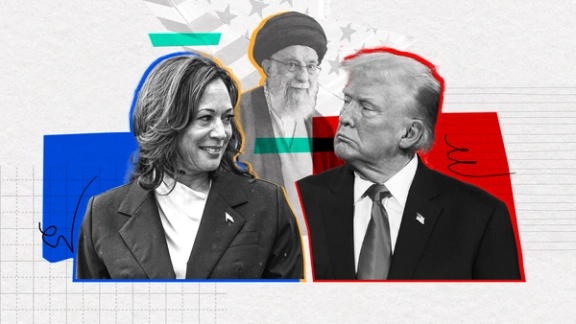
As Americans head to the polls on Tuesday, many in Iran are closely watching the election, with some hoping Harris will pursue rapprochement and ease economic hardship while others count on Trump to renew maximum pressure and degrade the ruling system.
Many who voted for Massoud Pezeshkian in the June presidential election did so largely due to his central promise to address economic issues through diplomacy and the lifting of US sanctions.
Noting Iranians' keen interest in the US election, former Foreign Ministry spokesperson and ex-ambassador to Baku, Seyed Abbas Mousavi, posted on X: "Our valuable experience over the past 45 years shows it hardly matters who wins the election. Unless Iran or the United States shifts its core foreign policy principles, there is little chance for lasting reconciliation or a comprehensive solution to Iran's problems."
Iranians are looking to the new US president to bring them prosperity and security—an expectation they might otherwise hold for their own president. However, they likely understand that Pezeshkian is in no position to resolve these issues. Even former President Hassan Rouhani once expressed hope that a US president could help alleviate Iran’s financial troubles. Ahead of Iran’s 2017 presidential election, Rouhani likened the world to a village, with the US president as its chief, suggesting that Iran’s problems could be addressed by engaging with this “village chieftain.”
However, many Iranians completely opposed to the Islamic Republic, prefer the presidency of Donald Trump, hoping that his tough stance toward Tehran can fatally weaken the political and military establishment and lead to its downfall.
Although Iranian officials often pin their hopes on a US president to help solve the country’s challenges, they are too proud—or ideologically restrained—to openly seek American goodwill. They prefer a resolution that doesn’t compromise their dignity. Rather than directly calling on the United States to lift sanctions, Iranian presidents, including former President Ebrahim Raisi and his successor Massoud Pezeshkian, have instead promised “to have the sanctions lifted,” carefully avoiding mention of who would actually lift them to sidestep acknowledging dependence on the US.
Iranians proudly assert that Iran is one of the world’s oldest nations. Whenever neighboring countries challenge its sovereignty—such as by claiming ownership of the three Persian Gulf islands—Iranian media, officials, and citizens remind them that while Iran boasts thousands of years of documented history, most of its neighbors lack even a century as established states. As a testament to this heritage, Shah Mohammad Reza Pahlavi held a grand celebration in Persepolis marking 2,500 years of Iranian monarchy, with leaders from over 100 nations in attendance.
Iranian officials, including former Presidents Mahmoud Ahmadinejad and Hassan Rouhani, have frequently reminded not only their regional counterparts but also US officials that Iran is home to a rich civilization spanning several millenia. Despite the Islamic Republic’s poor record on human rights, its leaders often highlight that the world’s first known human rights charter was inscribed in stone by none other than Cyrus the Great. Conveniently, however, they overlook the fact that while Iran is an ancient nation, the Islamic Republic itself is less than half a century old.
This distinction should alert the new US president to a key demand voiced by Iranians in the streets: the need to differentiate between Iran as a nation and the Islamic Republic as a regime. When responding to actions by the Islamic Republic, US and other Western officials should take care not to attribute those actions to Iran and its people, if they wish to avoid deeply offending them.
Over the past 45 years, whenever the Islamic Republic and the United States sought to blame each other for their strained ties, the US cited "Iran’s" 1979 seizure of the US embassy and the 444-day hostage crisis, while the Islamic Republic pointed to the US-backed 1953 coup against Prime Minister Mohammad Mossadegh.
Notably, the Islamic Republic overlooks that it outlawed Mossadegh’s supporters shortly after the 1979 revolution and quickly renamed a Tehran street dedicated to him by the people. It also tends to forget that in March 2000, former Secretary of State Madeleine Albright offered a statement of regret, though some argue her wording fell short of a full apology.
While Iranian officials frequently speak of “having the sanctions lifted,” the only concession they seem prepared to offer is a return to the 2015 nuclear deal, which is effectively defunct. They also avoid mentioning that US demands include ceasing support and funding for militant groups like Hamas and Hezbollah and ensuring that Iranian-backed proxies stop threatening US interests and allies in the region.
Before 1979, Iran was the United States' closest ally and largest trade partner in the Middle East. Returning to that level of friendship and cooperation seems nearly impossible now. The looming threat of a broader regional conflict makes resetting ties even more unlikely, especially with forces both inside and outside Iran determined to prevent any rapprochement.