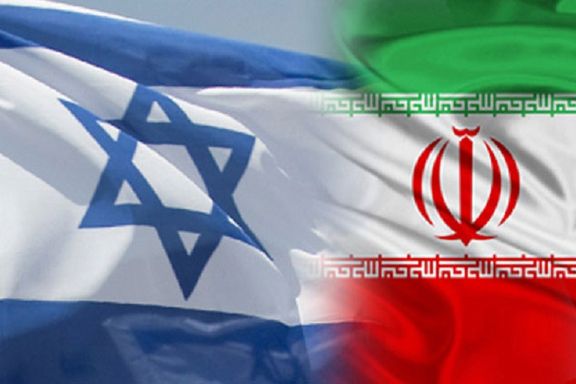
Iran and Israel may eventually halt their back-and-forth strikes, but this could remain the reality for both sides for months or even years, an Israeli insider and former Air Defense Commander (2015-2018) told Iran International.
Brigadier General Zvika Haimovich said he can predict what’s next by examining the history of strikes between Iran and Israel.
One thing is certain: the next round will escalate further, with more missiles and greater complexity—a safe assumption, he added.
“They are never going back. The volume becomes much higher than before. Just look at the last the two events with Iran, April 14th and October 1st. April 14th there were 110 ballistic missiles. In October we found ourselves with almost 200 missiles, double that,” said Haimovich.
He referred to this as the formula based on his background in the Israeli military. He held a senior command in 2018 of the Juniper-Cobra joint exercise between Israeli and US Forces.
Patrick Clawson, a Research Counselor at The Washington Institute, told Iran International neither Israel nor Iran wants a full-scale war, but each is determined to show it can inflict sufficient damage to cause on side to pause.
But in doing that, Iran's supreme leader Ayatollah Ali Khamenei threatened Israel and the US with “a crushing response” over Israel’s strikes in Iran.
“The enemies, whether the Zionist regime or the United States of America, will definitely receive a crushing response to what they are doing to Iran and the Iranian nation and to the resistance front," Khamenei said on November 2.
While things could only get worse, Haimovich believes at some point, this will end, but the million-dollar question is what will stop one side.
“Somebody will stop somewhere in the future. The question is to what will force them to stop,” he lamented.
External pressure could be one factor.
The transition period over the next couple of months to incoming President Donald Trump will be crucial—a sensitive time for Israel and Iran, during which major decisions are unlikely, Haimovich said.
•
•
“For one side, it's very sensitive and the other side, it's a very dangerous time to take decisions.”
Israeli Prime Minister Benjamin Netanyahu announced on Sunday that he recently spoke three times with US President-elect Donald Trump, emphasizing that they share a common view on Iran, seeing “eye to eye on the Iranian threat.”
Beyond the US, other external factors in the Middle East could influence the duration and intensity of direct strikes between Iran and Israel.
Leaders from the Arab and Muslim world met in Riyadh on Monday for a summit focused on the conflicts in Gaza and Lebanon, with Iran and Trump on their minds.
Saudia Arabia had been on the verge of formalizing relations with Israel, but October 7 and the ensuing wars in Gaza and Lebanon negatively impacted that prospect. The Kingdom has recently found itself warming up to Tehran.
“We call on the international community to compel Israel to respect Iran’s sovereignty and not to attack its territory,” the Saudi King told those attending the summit.
Israel has several fronts to the war that has been raging for more than a year. The longer that goes on, the more complex it becomes and the more difficult to de-escalate, said Brigadier General Zvika Haimovich.
The former Commander of the Israeli Air Force told Iran International that all roads lead back to the Islamic Republic. "What does Israel have with the Houthis in Yemen or the militias in Iraq? Nothing."
He said Iran’s stated goal of destroying Israel is exactly why they have influence in Syria and Iraq and formed proxies just at the border with the Jewish State.
The dangerous tit for tat between the two foes is not sustainable but Israel may switch gears from other war fronts to focus their attention on Iran and its nuclear program, according to Haimovich.
Israel’s new defense minister Israel Katz has said Iran’s nuclear sites are more vulnerable than ever after Israel’s airstrikes on its air defense sites last month.
“Iran today is more exposed than ever to damage to its nuclear facilities. There is a possibility to achieve the most important goal, to thwart and remove the threat of annihilation from hanging over the State of Israel,” said Katz.
The US military announced on Monday that it conducted air strikes on nine targets associated with Iranian-affiliated groups in Syria that periodically target US forces.
According to the statement, the strikes targeted two specific locations in Syria and were a response to multiple attacks on US personnel within the previous 24 hours.
The US has periodically launched strikes against Iranian-linked targets in Iraq and Syria, after they launch arracks against US targets in Syria or Iraq. Earlier this year in February, the US carried out airstrikes on more than 85 sites connected to Iran’s Revolutionary Guard (IRGC) and its allied militias, following a fatal attack on US forces. After the US strike, attacks by Iran-backed forces that had surged to 200 incidents since October 2023, stopped for a long period.
“These strikes will reduce the ability of Iranian-backed groups to plan and carry out future attacks on U.S. and Coalition forces,” the US military stated regarding the recent action.
Currently, the US has approximately 900 troops stationed in Syria and an additional 2,500 in Iraq, primarily tasked with advising and supporting local forces to prevent a resurgence of ISIS, which once held large territories across both countries before being defeated.
Following the outbreak of the Israel-Hamas conflict on October 7, the US has deployed warships and fighter jets to the region as a deterrent to Iran and its affiliated groups. Additionally, US forces have assisted in intercepting projectiles launched by Iran toward Israel this year. Tehran has also threatened to launch a third ballistic missile attack against Israel in retaliation for an Israeli air strike last month targeting military sites within Iran.
Israel’s new defense minister said Monday the nuclear facilities of the Islamic Republic are now more vulnerable than ever, following Israel’s October 26 airstrikes which targeted Iran’s key air defense systems.
The Israeli air raids last month knocked out Iran's last three Russian-provided S-300 air defense missile systems, Fox News reported on October 30 citing US and Israeli officials. The surface-to-air S-300s were the last in the Islamic Republic's arsenal after one was destroyed in an attack in April also likely carried out by Israel.
“Iran today is more exposed than ever to damage to its nuclear facilities," Defense Minister Israel Katz said.
In late October, US President Joe Biden's adviser for the Middle East Amos Hochstein said in an internal phone call that "Iran is essentially naked", according to Fox News.
Israel carried out the airstrikes in the early hours of October 26 in retaliation for a ballistic missile barrage from Iran on Oct. 1. One Iranian civilian and four military personnel were killed, Iranian media said, and officials have pledged a response.
Threat of Israel’s annihilation
In his Monday remarks, Israel’s defense minister said the vulnerability of Iranian nuclear sites has made it more plausible for Israel “to achieve the most important goal, to thwart and remove the threat of annihilation from hanging over the State of Israel."
Iranian authorities have consistently called for Israel's destruction, and until now, refused to call it anything other than 'the Zionist entity'.
The same person accused of engagement in an assassination attempt on President-elect Donald Trump and Iranian-American activist Masih Alinejad also planned on targeting Israeli tourists in Sri Lanka, an unsealed US Justice Department indictment revealed.
Farhad Shakeri, an Afghan national with ties to Iran, was instructed by an Islamic Revolutionary Guards Corps (IRGC) official to carry out a mass shooting in the touristy area of Arugam Bay, a popular destination for Israeli travelers, according to the US indictment.
The attacks were to be carried out in October 2024 and included the supply of AK-47 rifles and other weapons.
“Sri Lankan authorities reported having arrested three individuals in connection with the threat. One of the individuals arrested was identified as CC-2,” the indictment read.
CC- 2 was allegedly told to monitor Arugam Bay and worked with Iranian intelligence officials to gather information and carry out the attack, Shakeri told the FBI according to the unsealed document.
Shakeri advised US federal agents that he and CC- 2 had served time together in prison. Shakeri, identified by US authorities as residing in Tehran, immigrated to America as a child and was deported around 2008 after serving 14 years in prison for a robbery conviction. He developed a network of criminal associates during his prison sentence.
The indictment also states that as part of the plot, he planned to assassinate two American Jews described as "supporters of Israel." Shakeri was instructed to locate the victims in New York and said he was promised $500,000 to kill each of them.
An Iran International exclusive report revealed that an assassination plot targeting Israelis in Sri Lanka had been foiled last month according to police sources in Colombo familiar with the matter. The plot was linked to the ongoing Iran-Israel conflict.
A police source in Sri Lanka told Iran International that 577 Israelis were under "maximum security" in an operation which spanned the police and military.
The Justice Department also charged two others allegedly recruited to kill Alinejad, an outspoken critic of Iran. The other individuals were identified as Carlisle Rivera, also known as "Pop", 49, from Brooklyn, and Jonathon Loadholt, 36, from Staten Island. The unsealed indictment alleges that Shakeri instructed them to kill the journalist.
The US government said Shakeri has not been arrested and is believed to be in Iran. The Islamic Republic said claims about Iran's involvement in the alleged plots are baseless. It is unclear why Shakeri was not arrested despite being questioned by the FBI.
Saudi Crown Prince’s call on Israel to “respect the sovereignty” of Iran and to “cease all hostile actions on Iranian territories” could be the signal of a turning point in Tehran-Riadh relations.
Prince Mohammed Bin Salman, the de facto ruler of Saudi Arabia, made the remarks in his address to the joint meeting of the Arab League and the Organization of Islamic Cooperation (OIC) on Monday according to the official Saudi news agency (SPA).
Bin Salman also condemned the Israeli army’s recent attacks in northern Gaza “in the strongest terms” and accused Tel Aviv of “ethnic cleansing” of Palestinians in his speech.
Iran's President Masoud Pezeshkian, who had been invited by the Saudi King to participate in the summit, called Bin Salman Sunday evening to apologize for not attending the summit due to his “heavy executive duties.” He also informed Bin Salman that First Vice-President Mohammad-Reza Aref was already on his way to Riyadh as his representative.
Iran's state media have also reported that Bin Salman hailed “the historical turning point” in Tehran-Riyadh relations and expressed hope that bilateral ties are promoted to the highest levels in all areas.
Rapid advancements in Saudi Arabia's rapprochement with Iran’s Shia-led government come as observers anticipate President-elect Donald Trump will renew efforts to facilitate open relations between Saudi Arabia and Israel.
According to Iran's state media, Bin Salman invited Pezeshkian to visit Riyadh at a later point and welcomed a similar invitation from the Iranian President.
The report of the phone call by the Saudi official news agency (SPA) did not include a reference to the invitations or the phrase "historical turning point".
Earlier on Sunday, the Saudi Armed Forces Chief of Staff, Fayyad al-Ruwaili, paid a rare visit to Tehran for talks with his Iranian counterpart Major General Mohammad Bagheri.
According to Iranian media, Bagheri has invited the Saudi navy to join Iranian naval exercises as participants or observers next year.
Meanwhile, Vice-President Aref was received by Bin Salman in Riyadh Monday evening and reported in an Instagram post he had emphasized in the meeting that “good bilateral relations" between the two countries was "irreversible”.
“The Islamic Republic of Iran does not favor war in the region and has never initiated a war but will always defend Iran's territorial integrity. The two countries of Iran and Saudi Arabia can play an important role in peace and stability in the region,” he wrote.
The recent warming up in Tehran-Riyadh relations is a big achievement for Pezeshkian’s government, Istanbul-based Iran analyst Mehrdad Farahmand told Iran International TV on Monday. Iran's regional position has become precarious given the weakening of its proxy forces, Hamas and Hezbollah, US sanctions and Israel's military advantage in confronting Tehran.
Farahmand noted that the warming of relations between the two regional rivals, after years of open hostility, began under Ebrahim Raisi’s government with Chinese mediation. However, the process has accelerated since Pezeshkian took office and is now “beginning to bear fruit.”
Farahmand observed that this shift in Tehran-Riyadh relations has surprised Arab media, who view recent developments as a diplomatic win for Saudi Arabia. They interpret it as Riyadh successfully demonstrating to Iran that it needs Saudi support to address its conflict with Israel, while also elevating Saudi Arabia’s leadership role in the Arab world.
Farahmand added that, given its economic importance to President-elect Donald Trump, Saudi Arabia is uniquely positioned to mediate between Iran and the United States under Trump’s leadership.
News of a possible ceasefire between Israel and Iran-backed Hezbollah dominated the news in Iran on Monday as the Israeli military reported scores more projectiles from the militia reaching Israeli territory.
Iranian news outlets covered the news extensively, focusing on Israel's coordination with the US and potential Russian involvement to prevent Hezbollah’s rearmament via Syria.
Hezbollah confirmed that it has not received any formal truce proposal. "So far, according to my information, nothing official has reached Lebanon or us in this regard," the head of Hezbollah's media office, Mohammad Afif, said in news conference in the southern suburbs of Beirut on Monday.
Iranian sources such as Rouydad24, Aftabnews, and Mehr News Agency expressed growing optimism around the potential for a ceasefire in the conflict which has seen hundreds of thousands of Lebanese displaced and tens of thousands more on the Israeli side.
On Monday, Israel's new Foreign Minister, Gideon Saar, highlighted the importance of securing Israel's northern border by ensuring Hezbollah’s forces remain north of the Litani River—a critical demarcation roughly 30 kilometers from Israel.
The lines were drawn by UN Resolution 1701 in 2006, designed to create a buffer zone between Israel and south Lebanon, but they have not been adhered to in spite of the presence of UN peacekeepers.
The Resolution stipulated that all armed militias leave the designated area and disarm. Neither of which has happened in the nearly two decades since.
Leader of the New Hope party Gideon Saar and his wife Geula walk outside a polling station during a general election in Tel Aviv, Israel March 23, 2021.
Saar said Israel is working with the US and is determined to return the 63,000 displaced residents home. "We can be there [the north] when we all know first of all that Hezbollah is not on our border, that it is north of the Litani River, and that Hezbollah will not be able to re-arm itself with new weapon systems through Syria."
He said that enforcing the conditions would be Israel’s primary challenge, adding: “Lebanon belongs to the citizens of Lebanon, not to Iran ... I am sure that most Lebanese citizens do not want to be an Iranian extension.”
Iran's Parliament Speaker Mohammad Bagher Ghalibaf spoke with Lebanese Parliament Speaker Nabih Berri on Monday. According to Mehr News Agency, Ghalibaf stressed Iran’s readiness to aid peace efforts in both Lebanon and Gaza.
As the fallout from Israel's war of attrition with Iran's biggest militia has led to massive destruction and displacement across Lebanon, Ghalibaf added that Iran’s support for Lebanon comes from the highest levels, including the Supreme Leader, the government, and the parliament. He said: “Iran is prepared to extend both political and humanitarian assistance as needed.”
Lebanon's Health Ministry says over 3,000 Lebanese citizens have been killed since the group deemed terrorists by nations including the US, launched attacks on Israel. The numbers do not differentiate between militants and civilians.
In Israel, which is protected by sophisticated air defense systems, there have been 74 civilian deaths, including 31 soldiers.
The ceasefire discussions have also included active US mediation, with Israeli and Lebanese representatives reportedly exchanging draft agreements via US envoy Amos Hochstein.
The proposed terms would see Hezbollah’s withdrawal north of the Litani River while the Israeli military's repositioning along the international border, as reported by Israel's Yedioth Ahronoth.
Meanwhile, Hezbollah spokesperson Mohammad Afif said that in spite of the involvement of "Washington, Moscow, Tehran, and other capitals", there is still no timeline or concrete plan.
“I believe that we are still in the phase of testing the waters and presenting initial ideas and proactive discussions, but so far there is nothing actual yet but so far there is nothing actual yet," he said.
As of 3pm local time, the Israeli military reported 75 projectiles crossing into Israeli territory on Monday while operations in Lebanon continued at full pace.