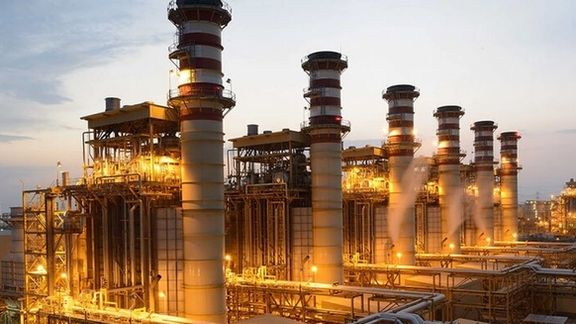
Iran's growing gas deficit stems from rising consumption, driven by 8,000 MW of new thermal power plants and increased household use, while gas production growth in the past three years has slowed to a third of the previous decade's rate.
This has resulted in chronic power shortages, blackouts, and significant industrial production losses, compounding the country's struggles under US sanctions. Inflation has remained above 40% for five years, the national currency has halved in value over two years, and at least 30 million citizens now live below the poverty line.
Loss of natural gas production
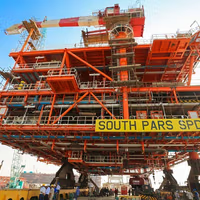
The South Pars gas field in the Persian Gulf, which accounts for 75% of Iran’s production, has entered the second half of its lifecycle and is experiencing declining output. Due to sanctions, Iran is unable to attract Western companies to install large-scale production platforms equipped with compressors, forcing the country to accept reduced production levels.
Iran holds the world’s second-largest natural gas reserves after Russia and ranks as the third-largest producer, following the United States and Russia. According to BP's statistics, Iran's gas production increased from approximately 157 billion cubic meters in 2010 to 252 billion cubic meters last year, but the growth rate has slowed.
Iran also experiences an annual loss of 28 billion cubic meters of gas during production and distribution stages—a figure not included in the above production figures.
Around 70% of Iran’s energy consumption also depends on natural gas, with no viable alternatives to make up for the shortage. The country is also grappling with deficits in gasoline and diesel supplies, while the highly polluting mazut consumption has tripled in recent years.
The government could potentially compensate a part of energy shortages by halting exports of 6.5 million tons of LPG and 12 billion cubic meters of natural gas annually. However, it heavily relies on revenue from gas and LPG exports.
Impact of gas shortages on industries
This summer, due to electricity shortages, the government halved electricity supplies to industries. According to the , Iran’s steel production fell by 45% in summer compared to spring, dropping to 4.7 million tons (Q3 2024). Since last month, the government has also cut gas supplies to the steel industry by half.
Cement production has also suffered by 7% because of electricity and gas shortages. Plants have not been able to produce the raw material and have used reserves during the summer. However, with an 80% reduction in gas supplies to the cement industry since late September and dwindling raw material stocks, a significant drop in cement output is expected in autumn and winter.
The petrochemical sector, the most gas-dependent industry, operated at only 70% of the capacity last year due to gas shortages. This year, with worsening imbalances, further production declines are anticipated. Iran, which is a small cement exporter, now has to cut back on construction or become an importer.
Last year Iran exported $8 billion worth of crude steel and steel products and $19.5 billion in petrochemical products. Together, the steel and petrochemical sectors accounted for 55% of the country’s total non-oil exports.
Effects on citizens’ lives
Natural gas shortages have forced the government to reduce supplies to power plants, resulting in widespread blackouts. Since early November, rolling blackouts in residential areas of major cities have sparked public anger. The electricity shortage has also disrupted commercial activities, reduced household incomes, and caused industrial production losses, further impacting employment levels.
With the onset of winter, the natural gas-induced power shortages will worsen, affecting citizens more dramatically. While planned gas price increases could boost government revenues, domestic gas prices are so low that even doubling them would barely affect household consumption.
Iran’s daily gas consumption in the fall has reached 820 million cubic meters, with the residential, commercial, and small industrial sectors accounting for 440 mcm/d. During peak winter months, this figure is expected to rise to 650 mcm/d.
Even at current consumption levels, Iran faces a gas deficit of 90 mcm/d. This shortage is projected to reach 300 mcm/d in winter, meaning the government will be unable to meet one-fourth of the country’s gas demand.
Unyielding hardliners in Iran, who hold significant sway over decisions regarding lifting internet access restrictions, have left the public uncertain about when they might no longer need anti-filtering software.
Nearly four months have passed since President Masoud Pezeshkian took office, pledging to lift internet restrictions. However, despite ongoing negotiations behind closed doors among politicians and multiple government agencies, no decisions have been announced.
Khabar Online, a news website close to moderate conservative politician and former Parliament Speaker Ali Larijani, reported on Thursday that President Pezeshkian has so far been unable to overcome hardliners’ resistance. Supporters and opponents of filtering remain locked in a battle within the Supreme Cyberspace Council over a final decision.
The website also accused the Council’s ultra-hardliner spokesman, Hossein Dalirian, of playing a major role in the secrecy surrounding the Council’s proceedings.
Iranian media say members of the Council and Dalirian who was appointed by Pezeshkian’s predecessor, Ebrahim Raisi, refuse to comment on the Council’s discussions or the decisions being taken behind closed doors.
The news website also said government sources claim that the Council’s members who insist on the continuation of censorships have ignored Pezeshkian’s order to form a committee to investigate the matter.
Lifting internet filtering would be a welcome relief for many Iranians, whose online experience—whether for business, education, or personal use—is persistently hindered by blocked access to thousands of websites and all major social media and messaging platforms.
Over eighty percent of Iranians use one or several paid anti-filtering software to access these websites and platforms.
Removing this obstacle would significantly boost Pezeshkian’s confidence and help his government avoid growing voter discontent. Many perceive him as powerless against hardliners, especially amid the economic and security crises gripping the country—challenges for which the president lacks immediate solutions.
Mohammad Mohajeri, a conservative politician and journalist, highlighted that internet filtering and the mandatory hijab are the two key issues Pezeshkian’s voters most expected him to resolve. Earlier this week, he urged the president to instruct his telecommunications minister to “push the button and end it all,” warning that continuing on the current path would only deepen societal disappointment and despair.
“This is not inflation, liquidity growth, or sanctions to be a hard thing to fix,” he insisted.
But making the final decision on the removal of filtering lies with the Supreme Cyberspace Council.
As president, Pezeshkian leads the Council which includes several key cabinet members, such as the ministers of telecommunications, intelligence, culture and Islamic guidance, science and technology, education, and defense.
The Council has around twenty other members including the commander of the Revolutionary Guards, the chairman of the Parliament’s Cultural Committee, and the head of the State Propaganda Organization. Nearly all of them are hardliners who oppose the removal of filtering. The President and his cabinet, therefore, are a minority in the Council.
Pezeshkian said earlier this week that he had reached an agreement with the Parliament Speaker Mohammad-Bagher Ghalibaf and Chief Justice Gholam-Hossein Mohseni-Ejei, two other members of the Council, about ending the restrictions but did not offer any further details.
The International Atomic Energy Agency's (IAEA) 35-nation Board of Governors passed a resolution on Thursday criticizing Iran and ordering better cooperation with the UN nuclear watchdog.
Iran condemned the move and ordered the activation of advanced centrifuges in response.
The resolution, backed by Western nations including France, Germany, and the United Kingdom (E3), follows months of heightened tensions over Iran’s uranium enrichment.
It cites ongoing violations of a 2015 international deal called the Joint Comprehensive Plan of Action (JCPOA), with Tehran now holding a stockpile of enriched uranium more than 32 times the limit under the agreement.
Nineteen countries voted in favor and three - China, Russia and Burkina Faso - against, with 12 abstaining during the quarterly meeting of the Board of Governors.
Iran bashed the resolution, saying it lacked the support of nearly half of the IAEA's member states and was pushed through by the United States and the three European sponsors to advance their political agendas.
Referring to a recent visit to Tehran by IAEA chief Rafael Grossi, Iran's foreign ministry said on X: "This politicized, unrealistic, and destructive approach undermines the positive atmosphere created and the understandings that have resulted from it."
The statement added that Iran was activating advanced centrifuges in retaliation but that the country's nuclear program would remain peaceful.
The resolution follows a similar IAEA rebuke in June calling on Iran to step up cooperation with the watchdog and reverse its recent barring of inspectors despite concerns Tehran would respond by boosting its activities.
The IAEA Board of Governors
E3 flags nuclear escalation
In a joint statement delivered to the IAEA board, France, Germany, and the UK expressed alarm over Iran’s stockpile of uranium enriched to 60%, a level well beyond civilian use and close to weapons-grade.
“Iran now has well over four IAEA significant quantities of uranium enriched up to 60%, the approximate amount of nuclear material from which the possibility of manufacturing a nuclear explosive device cannot be excluded,” The E3 said.
The statement said that over the past five months, Iran had installed six additional cascades of advanced centrifuges at its Natanz facility, significantly increasing its enrichment capacity.
It also criticized Iran’s continued restrictions on IAEA inspectors, including the de-designation, or revocation of accreditation, of experienced personnel which has impeded the Agency’s ability to verify Tehran’s claims of peaceful intentions.
Iran responds with warnings
Iranian officials had previously dismissed the resolution, accusing the E3 and their allies of undermining recent diplomatic efforts. Foreign Minister Abbas Araghchi told his French counterpart on Wednesday that the move complicates matters and contradicted the "positive atmosphere created between Iran and the IAEA.”
International Atomic Energy Agency (IAEA) Director General Rafael Grossi arrives on the opening day of the agency's quarterly Board of Governors meeting at the IAEA headquarters in Vienna, Austria, November 20, 2024.
Tehran had recently proposed halting its enrichment of uranium to 60% but only after accumulating a stockpile of 185 kilograms. While this offer was mentioned in Grossi’s latest report, Western diplomats dismissed it as insufficient, noting that the material could easily be further enriched for weapons purposes.
Iran has maintained that its nuclear program is solely for peaceful purposes, a claim met with skepticism by Western powers citing Iran’s lack of transparency and history of non-compliance.
Long-running disputes
The IAEA resolution also addressed unresolved issues, including the presence of unexplained uranium traces at undeclared sites and limited access for inspectors to critical facilities. Grossi’s recent trip to Tehran aimed to persuade Iranian leaders to improve cooperation and return to broader negotiations.
The resolution is seen as a step toward potentially referring Iran’s nuclear dossier back to the UN Security Council, where Western nations could trigger a so -called snapback mechanism to reinstate international sanctions lifted under the JCPOA.
Iran delayed cash subsidy payments for the last Iranian calendar month by a day citing insufficient funds, resulting in late payments for over 50 million people and underscoring the country's persistent economic malaise.
The government's Targeted Subsidies Organization, overseen by the Planning and Budget Organization, said on Thursday that the necessary funds from oil and gas revenues were not transferred to the government treasury, causing the delay.
Tasnim news agency quoted informed sources within the Planning and Budget Organization as saying that the Oil Ministry owes the Targeted Subsidies Organization approximately $700 million.
The monthly subsidy for Iran’s middle-income group, comprising 51 million people, is 3,000,000 rials (about $5) per person, requiring a monthly budget of about $255 million. The government also provides 4,000,000 rials (about $7) per month to low-income households, approximately 28 million people.
This means that the government needs a total amount of $440 million per month – or about $5.3 billion annually -- for the cash handouts. This is more than 6 percent of the total government annual budget.
With soaring inflation and a depreciating currency, the cash handouts have become almost meaningless for the vast majority of recipients.
In 2010 when then-President Mahmoud Ahmadinejad introduced the cash handout scheme, the amount was 450,000 rials, a huge boon at roughly $45 a person or nearly $200 a month for a family of four.
The average income of an Iranian wage earner was equivalent to about $350 then. Today, the amount is about $150 to $250.
The budget deficit for subsidies has been a persistent problem for the government over the past year. The budget bill for the current Iranian year starting March 20 mandates the removal of subsidies for so-called ineligible households.
The definition of households ineligible for government support includes those classified as high-income. Specific examples of such households are those with members residing abroad or those who take five or more international trips annually.
Labor and Social Affairs Minister Ahmad Meydarihas said that this process will be gradual but has not indicated any plans to increase subsidies for the needy.
Iran’s state media have undermined the impact of the previous sanctions on Iran's maritime carrier by suggesting that the new ones by the European Union and the United Kingdom are not important.
“Investigations show that the sanctions imposed on the maritime carrier in the past two decades have not stopped or reduced the [shipping] group’s activities and the company has been able to set unprecedented recording in shipping cargo,” the ultra-hardliner Kayhan newspaper which Supreme Leader Ali Khamenei’s office funds wrote Wednesday.
An article entitled “Immunity of Iran’s shipping industry to illegal sanctions” published by Press TV, the English Channel of the Islamic Republic’s state broadcaster, also claimed Wednesday that the maritime carrier has made “big leaps” in equipment and infrastructure development despite previous sanctions.
The EU and the UK imposed fresh sanctions targeting Iran's shipping and aviation industries on Monday, accusing the Islamic Republic of Iran Shipping Lines (IRISL) Group of transporting drones and military equipment for the Revolutionary Guards (IRGC) to aid Russia in its war against Ukraine.
Iranian authorities vehemently deny supplying ballistic missiles to Russia and summoned the UK envoy to the foreign ministry on Tuesday, hours after summoning the Hungarian ambassador whose country is currently the rotating president of the EU, to protest.
Kayhan and Press TV have cited the shipping group’s gasoline delivery to Venezuela in May 2020, despite the US Navy threatening to seize the cargo, as one of the IRISL group’s achievements.
A few months later, however, the US said it had successfully disrupted another multimillion-dollar fuel shipment by the Revolutionary Guards bound for Venezuela and published a video of a failed Iranian attempt to recover the seized petroleum.
Iranian cargo ship destinations are now mainly limited to ports in China, Russia, India, and the United Arab Emirates. Of the forty-five major Chinese ports, Iranian ships are only allowed to use three due to the fear of problems arising from US sanctions as well as Iranian vessel’s use of polluting fuel according to some officials.
“Our shipping has been under embargo for 20 years. Our ships have not docked in European ports for the recent show embargo to affect us,” Aftab News, a news website close to former President Hassan Rouhani quoted IRISL’s secretary general Masoud Polmeh, as saying on Tuesday.
Nevertheless, Polmeh admitted that the sanctions have taken their toll on Iran's cargo shipping industry.
“I’m not saying [like some politicians] that sanctions are scraps of paper. The reality is that it has increased maritime transportation costs by up to one hundred percent in some instances,” he added.
The company was first sanctioned by the United States in 2008 for its nuclear and missile programs followed by the United Nations sanction as part of United Nations Security Council Resolution 1929 and separate EU sanctions in 2010.
The 2015 nuclear deal with world powers lifted all the sanctions imposed on IRISL but the United States reimposed its sanctions in 2018 when Donald Trump unilaterally withdrew from the said deal.
The US has since then also sanctioned some Chinese companies in China, the United Arab Emirates (UAE), and Iran for doing business with the Iranian maritime carrier.
IRISL is a publicly traded company. It currently ranks 18 in Alphaliner's Top 100 maritime operators list. The shipping group’s fleet of 150 has a share of 0.5 percent of the total container capacity. This is down by 0.1 percent from 2022 when it stood at 14th place.
Some Iranian analysts expect President-elect Donald Trump to pursue maximum pressure on Iran, while others see a chance for negotiations, though they admit talks with Trump would likely be difficult.
Foreign policy analyst Amir Ali Abolfath told the conservative Nameh News website in Tehran that Trump is almost certain to adopt a maximum pressure policy toward Iran. He noted that Trump would likely leverage the strength of the US economy and international bodies, such as the IAEA Board of Governors, to advance his hardline approach.
According to Nameh News, nearly all of the pessimistic assessments made by Iranian pundits are based on the combination of hardline political figures who have been named as the likely members of Trump's cabinet.
Abolfath stated that Trump believes his maximum pressure policy against Iran was not sustained under President Joe Biden and seeks to reinstate it. However, he questioned its potential effectiveness, remarking, "What Trump says is not important; we need to see what he can do."
Meanwhile, foreign policy analyst Qasem Mohebali told another Tehran website that the period of neither war nor peace for Iran’s Islamic government is over. Now it is time for either peace or war. Mohebali added, "Trump will most certainly offer to negotiate with Iran and will wait for Tehran's response. The situation is more complicated than eight years ago, and Iran needs to be careful not to turn the opportunity for negotiation into a threat."
Iranian commentator Qasem Mohebali. File photo
Mohebali said, "Eight years ago, Trump's policy hinged on harnessing Iran's nuclear activity and its influence in the region. With his maximum pressure policy, he tried to prevent Iran's access to financial resources needed to facilitate the country's development. However, that policy led to an escalation of tensions in the region and in Iran-US relations. Nonetheless, he is likely to resume his previous policy." Mohebali did not mention that Iran also needed the financial resources to maintain its proxy groups in the region that target Israel and US interests.
He noted that for the first time in 30 years, Republicans now control all key pillars of decision-making in the United States, a dynamic that could influence Tehran's relations with Washington. Mohebali suggested that this alignment might benefit Iran if Trump secures an agreement favorable to Tehran, as no one within the US political structure would be positioned to oppose or block his decision. Over the past three decades, Congress often had the power to obstruct deals made by presidents and their administration.
Over the next two months, Iran must consider all possibilities and prepare to negotiate if President Trump presents terms for a deal. Referring to Khamenei's "neither war nor negotiations" policy following Trump's 2018 withdrawal from the nuclear agreement, Mohebali suggested, without directly naming Khamenei, that this era has ended. He argued that Iran now faces a critical choice between war and peace, with Trump having the freedom to pursue either path.
Mehdi Motaharnia, another Iranian foreign policy analyst, said he believes the Trump administration will enter negotiations with Iran with all of its power. But this is going to be a negotiation much more difficult than holding talks with the Obama or Biden administrations.
Iranian analyst in Tehran, Mehdi Motaharnia
Motaharnia remarked that in his second term, "Trump aims to leave a lasting legacy both domestically and internationally. His team is made up of like-minded conservatives, and negotiating with Iran is a key objective of his foreign policy. However, he negotiates on his own terms, presenting both opportunities and threats during the process. These talks are unlikely to focus solely on the 2015 nuclear deal; instead, he seeks to broaden the scope to include other issues, aiming to extract as many concessions as possible."
However, Motaharnia cautioned that if Iran refuses to negotiate, the situation could become significantly more challenging. In such a scenario, the Trump administration may strengthen its ties with Tel Aviv, ensuring increased pressure on Tehran. This could leave Iran vulnerable to a range of difficulties.
The Iranian government appears to have its own conditions for potential negotiations. In an interview with the Mossallass website, Iranian government spokesperson Elias Hazrati stated, "Iran can negotiate with Trump if the United States refrains from interfering in Iran's internal affairs and does not target our interests. Since 1979, the United States has consistently sought to harm Iran with the intention of regime change."
This stance contrasts with Trump’s assertion that he does not pursue a policy of regime change in Iran.