Syria may be the next battleground in the ongoing conflict between Iran and Israel.
Syria could be the next theater in the evolving struggle between the Islamic Republic and the Jewish state, former Israeli intelligence official and advisor on Arab affairs Avi Melamed told the Eye for Iran podcast.
Syria may be an overlooked player in Israel's regional contest with Iran, especially after a US-brokered ceasefire paused its fight Hezbollah in neighboring Lebanon.
But with Hezbollah nursing deep wounds from a 14-month war, the Iran-backed group's ability to continue buttressing Syria's beleaguered government may be in doubt, possibly accelerating Damascus's alignment with moderate Arab states.
“The story of Syria is going to become enormously significant because it cannot be detached from the story of Lebanon,” said Melamed.
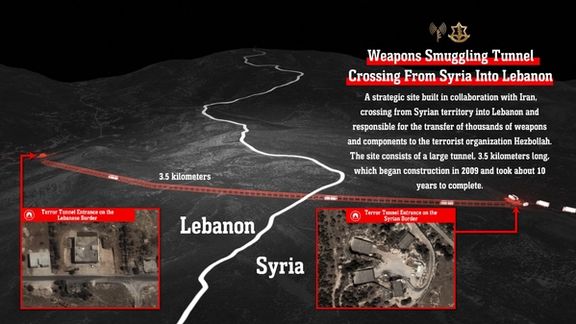
Israeli forces last week announced they had carried out a series of airstrikes in Syria targeting what it called a Syrian-backed smuggling route for Iranian weapons bound for Hezbollah.
Islamist forces from Hayat Tahrir al-Sham (HTS) - designated a terrorist group by the United States - and allied rebel fighters launched a surprise offensive on Wednesday, capturing several towns and villages in northwest Aleppo province, a region controlled by Iran-backed President Bashar al-Assad.
The offensive has abruptly shaken up the conflict after years of relative military stalemate.
As a former Arab affairs advisor to the Israeli government and intelligence officer who specialized in the Arab world, Melamed has field experience and insight into regional trends.
“The Assad regime in Syria is a very significant component in this whole structure that the Mullah regime [Iran] has been building, known as the axis of resistance,” he added.
The Axis of Resistance is an Iran-led coalition in the Middle East, comprising of both Sunni and Shia Muslim groups and governments in Yemen, Syria, Lebanon, Gaza and Iraq. The network includes Hamas, Hezbollah, Assad’s government, the Houthis of Yemen and armed militia in Syria and Iraq.
What happens to the Axis of Resistance after the ceasefire?
Hezbollah operatives supported Assad during the years-long Syrian civil war that began in 2011 and continues today in sporadic pockets in Northern Syria.
Rebels in Northern Syria launched their unexpected offensive after the blows Iran’s proxies faced from Israel in recent months. Aleppo has been controlled by Bashar Al-Assad, the president of Syria who has been backed pro-Iranian militias and military advisors since 2016.
Turkey controls parts of Northern Syria and exercises a large measure of influence on Syrian rebel forces.
The anti-government rebels may seek to capitalize on the weaknesses of the Iranian axis, with a vacuum left by a weakened Hezbollah.
The rebels said the offensive was launched to deter the Syrian government and Iran-backed proxies. It also killed a senior commander of Iran’s Islamic Revolutionary Guard Corps (IRGC).
Iranian state media reported that Brigadier General Kioumars Pourhashemi was killed in Aleppo during an overnight attack Thursday by Islamist forces opposed to the Syrian government.
The IRGC-affiliated Tasnim News said he was killed by “Takfiri terrorists,” a term widely used in Shiite-majority Iran to refer to jihadists or supporters of radical Sunni Islam.
Amid a backdrop in fighting and shifting alliances, Assad could seek to distance himself from Iran and the axis of resistance.
"I think that would be a very interesting and very significant to follow what will happen with the Assad regime and the way that it will maneuver down the road, giving to this reconfiguration of the landscape of the region," said Melamed.
Melamed said such a move could signify something much greater, one that is set to impact the stability of the axis, geopolitical alliances, and limit just how much Iran influences the region at large.
“One interesting thing is to see that for the last year, and particularly against the background of the Israeli-Hezbollah collision and the Israeli-Iran collision, Assad totally remained on the sidelines. He didn't say anything,” said Melamed.
In addition to staying quiet during Iran’s conflicts with Israel, Assad did not attend the funeral of Iranian president Ebrahim Raisi who died in a helicopter crash in May of this year.
Assad understands that there’s a shift in power, according to Melamed who referred to him as a shrewd, cynical politician.
“Assad is trying to see where exactly he could benefit the best in this re-configuration of this region,” he added.
The Syrian leader was reinstated in the Arab League in May 2023 after his nation was suspended for more than 10 years.
There is little chance of Saudi and Persian Gulf nations providing financial aid to Damascus amid its economic struggles due to Syria’s relationship with Iran in the axis of resistance, said Melamed.
Iran, Russia and Hezbollah were key supporters of Assad during the civil war, and injected billions of dollars to help save his leadership - money that Melamed said Syria cannot afford to pay Iran back.
Israeli strikes in Syria amid ceasefire
The Iran-backed axis developed what they describe as a unity of fronts strategy to engulf Israel, and Syria is a key component of that alliance. But that could soon change if Assad shifts allegiances.
Hezbollah provided a critical boost to Syrian forces against the original rebel uprising and still operates there, with the Israeli military saying the group’s elite unit 4400 transfers Iranian weapons to Lebanon under the oversight of Syria's Military Security.
Melamed said frequent Israeli air strikes on Iran-controlled forces and bases in Syria will not stop even after the recent ceasefire with Hezbollah in Lebanon. Since 2017, Israel has conducted hundreds of air strikes to contain Iran's presence and shipment of arms to Hezbollah.
An IDF illustration of the alleged Iranian arms smuggling route
The Israeli military announced in a press conference Wednesday that they would continue to prevent weapons delivers to Hezbollah both in Lebanon and Syria. Recent strikes, it said,served as a warning to Damascus that the Jewish state will stop the Iran-backed militia from rearming.
“We struck on Syrian soil all attempts to transfer weapons to Hezbollah. If we detect intentions to transfer weapons to the organization — we will act,” IDF Spokesman Rear Admiral Daniel Hagari said in Wednesday’s press conference.
The US-brokered ceasefire stipulates that the Lebanese army will control and monitor the country’s border crossings to prevent unauthorized arms entries. It also has the power to confiscate weapons it finds in the area south of the Litani River near the de-facto border between the two nations.
“One of the articles (of the ceasefire) basically says that Israel has the right to continue and to intercept the shipments of armament to Lebanon,” said Melamed on the Eye for Iran podcast.
To watch the full Eye for Iran episode featuring Avi Melamed, the CEO of Inside the Middle East Intelligence Perspectives, on YouTube. Or listen on Spotify, Apple, Amazon, Castbox or any major podcast platform.
Iran conveyed its continued support for the Syrian government on Friday as rebel fighters entered Syria's second-largest city Aleppo for the first time since it was recaptured by government forces in 2016.
A fresh ceasefire in neighboring Lebanon between Iran-backed Hezbollah and Israel could make Syria, Tehran's main ally in the Arab world, a more important theater in the Islamic Republic's long confrontation with the Jewish state.
Iranian Foreign Minister Abbas Araghchi, in a phone call with his Syrian counterpart Bassam Sabbagh, reaffirmed Tehran’s backing for the Syrian government, saying it stands by the country in combating what he called terrorism, according to a statement from Iran’s foreign ministry on Friday.
Araghchi described the resurgence of Syrian rebels’ activities in the country as part of a US-Zionist scheme while Sabbagh said Syria was determined to “thwart the sinister plans of terrorists and their supporters”.
Iran's ambassador to Damascus Mojtaba Amani also said Friday that Tehran has a military presence in Syria and, along with Russia and the "Resistance" groups, will continue to support the Assad government against armed opposition groups.
The Syrian army is engaged in clashes with armed groups opposing Assad and has been able to contain them "to some extent", said Amani.
In a separate statement, Iran's parliament speaker, Mohammad Bagher Ghalibaf, said the Islamic Republic and its allied groups in the region will continue to stand with the Syrian government.
"After defeating the Zionist regime, [we] will continue to stand, as always, with the Syrian government," he said in a post on X, adding that the new movements of Syrian rebels are part of the designs of the United States and Israel.
Iran has played a major role in the Syrian civil war, aligning itself with President Bashar al-Assad's government against various opposition groups since the conflict began in 2011.
Tehran provided substantial military support, including advisors, ground troops, and militia fighters from across the region, helping Assad win back much of the territory his forces had lost.
On Wednesday, Syria’s armed opposition factions, including the Islamist group Hay’at Tahrir al-Sham (HTS) - designated a terrorist organization by the United States - launched an incursion on Wednesday into a dozen towns and villages in the northwest Aleppo province against forces backed by Bashar al-Assad and allies.
The rebel forces pierced the outskirts of Aleppo, HTS declared in a statement and anti-government monitors said.
On Friday, Russian and Syrian air forces carried out 23 airstrikes on the Idlib region, targeting armed groups opposing Bashar al-Assad, according to the Syrian Observatory for Human Rights.
Earlier on Thursday, Reuters reported, citing sources from both the Syrian military and rebel groups, that Russian and Syrian warplanes targeted rebel-controlled areas near the Turkish border in an effort to push back insurgents.
27 civilians, including eight children, have been killed in the fighting since the rebels incursion into northwest Syria, Reuters reported Friday quoting United Nation’s Deputy Regional Humanitarian Coordinator for the Syria Crisis, David Carden.
US president-elect Donald Trump is gearing up for his second term, pursuing a national security doctrine rooted in principles forged during his first term: a blend of pragmatism and resolute America First ideology.
A taster of the blend was presented by Trump’s nominee for National Security Adviser, Mike Waltz, in his interview with CNBC on November 26 2024, where he said the Middle East is key to resolving the Russia-Ukraine conflict.
Waltz contends that Trump will mobilise all resources to dismantle Iran’s destabilising hegemony, emboldened under Biden’s administration. This aligns with Trump’s broader strategy to untangle the global crises bogging down American power.
To achieve this, Waltz suggests leveraging Russia’s influence over Iran’s IRGC praetorian guard to advance lasting peace in the Middle East, a vision epitomised by the Abraham Accords. This necessitates a face-saving resolution to the Russo-Ukrainian War, safeguarding American interests in Europe while enabling détente with Russia. Waltz confirms collaboration between the Biden and Trump teams to address these crises—as suggested by the author a few weeks back.
Trump's November Days: a pivotal moment in American history?
The span of 5–26 November 2024—Trump’s November Days— can be compared to the critical days of the Cuban Missile Crisis in 1962. Though the world public opinion may not be apprised of the threat the outbreak of a world war, Trump seems to be convinced, and he has so exclaimed several times, if left uncontained both the conflict in the Middle East and the Russo-Ukraine War could lead to World War III.
Putin’s Russia just tested a “conventional” multi-warhead missile, Oreshnik, against Ukraine. Not only has lowered the threshold of Russia’s nuclear doctrine but he has also threatened to use Oreshnik against Kiev.
These weeks reflect a reckoning for America’s allies and adversaries. Through calls with the leaders of Israel, Ukraine and Russia, president-elect Trump signals a readiness to address global crises with bold leadership. Equipped with intelligence uncovering Iranian plots against his life, Trump could cite Iran’s machinations in his talks with the Russian president Vladimir Putin, who has been Tehran’s biggest ally in recent years.
Trump appears to be steadfast in his conviction that the delicate bifurcation of a proactive strategy—one that seeks to neutralise Iran’s regional by co-opting Putin—can be achieved only through a blend of transactional acumen and the unyielding application of military strength. Put simply, to Trump, providing Putin with a dignified exit from his Ukrainian quagmire may well furnish the United States with a potent “Russian leverage” to counter Tehran’s ambitions with the greatest efficacy.
Trump’s National Security Strategy
Trump is, above all, guided by the America First ideology. This conviction was first vividly displayed in his interview with CNN’s Larry King on September 2, 1987, a day after the publication of his now-famous advertisement condemning America’s foreign defence policies as profligate and misguided.
At that moment, Trump offered a glimpse into his vision of America’s place among its allies—particularly the oil-rich monarchies of the Persian Gulf and Japan—and its adversaries, laying bare his disdain for arrangements he deemed unequal and detrimental to the American taxpayer. His first term cemented this doctrine, articulated in his 2017 National Security Strategy as "peace through strength."
An image of Trump's open letter criticizing US foreign policy in 1987
Trump’s approach—transactional, unpredictable, and grounded in interpersonal chemistry—relies on the judicious use of economic sanctions, military power, and alliances. His approach to Iran showcased his strategy: withdrawing from the 2015 nuclear deal to counter Iran’s ambitions, imposing tough sanctions to curb its regional activities, and authorising the elimination of IRGC top commander Qassem Soleimani following attacks on US forces.
His pragmatism also allowed reluctant alignment with Iran against ISIS, contrasting with Obama’s reliance on the nuclear deal. Through the Abraham Accords between Israel and Arab monarchies, Trump fostered a regional alignment against Iran. In stark contrast, Joe Biden’s de-escalation policy emboldened adversaries, culminating in Hamas’s October 2023 attack on Israel and the collapse of Saudi-Israeli negotiations.
Nominees as emissaries and instruments of strategy
Trump regards loyalty not as blind fealty but as the bedrock of an effective administration, especially in what he perceives to be one of the most critical junctures in American history. His nominees reflect this concern, embodying a calculated alignment of expertise and allegiance to his vision.
Beginning with Mike Waltz as National Security Adviser, Trump has assembled a cadre of officials poised to execute his agenda with precision. Among his appointees is Keith Kellogg, a highly decorated retired general and former advisor to Vice President Pence, who will serve as Trump’s special envoy for Ukraine and Russia. Kellogg’s extensive military experience positions him as Trump’s most trusted ambassador plenipotentiary, tasked with navigating delicate negotiations at the intersection of European and Middle Eastern crises.
The suite of nominees also includes Senator Marco Rubio as Secretary of State, Congresswoman Elise Stefanik as Ambassador to the United Nations, and John Ratcliffe as CIA Director. The trio of Waltz, Rubio and Stefanik share Trump’s vision for containing Iran, including Tehran’s influence network in DC, and securing regional stability, demonstrated through their congressional leadership.
Ratcliffe’s prior tenure as Director of National Intelligence further equips him to advance Trump’s agenda with strategic insight. Tulsi Gabbard's nomination as Director of National Intelligence is a bold but contentious choice, reflecting Trump’s embrace of unconventional diplomacy—and perhaps a green light to Putin. Complementing her are Mike Huckabee, named Ambassador to Israel, and Steven Witkoff, special envoy for the Middle East, both exemplifying Trump’s transactional and results-driven strategy.
The Road Ahead
Trump’s return takes shape amidst unyielding crises: the Russo-Ukrainian War rages in Europe, while tensions between Israel and Iran threaten to ignite the Middle East. This world, far more intricate than the one he left in 2020, demands sharp strategy and steadfast resolve.
In these November Days, Trump has been gathering a team that he hopes can achieve what the Biden administration could not: to square the national security circle between the Middle Eastern maelstrom and the stalemated Russo-Ukrainian conflict. Guided by America First and peace through strength, his loyal and expert nominees offer him an opportunity to steer the world from chaos toward a semblance of stability and peace.
The deputy coordinator of Iran’s Revolutionary Guards on Friday announced a pivot to proxy warfare against Israel as Tehran finds itself in the spotlight following crippling setbacks suffered by Hezbollah and Hamas.
“Many inquire about the fate of Operation True Promise 3. That is not my concern,” Mohammad-Reza Naghdi said. “We, as Basij forces, are focused on pursuing Al-Aqsa Storm 2 to bring an end to Israel, and that day is fast approaching.”
Tehran refers to its direct strikes on Israel as Operation True Promise, with the first taking place in April and the second in October. Additionally, Tehran has referred to Hamas's attack on Israel last year as Al-Aqsa Storm.
Naghdi’s comments come after the IRGC’s leadership took a stronger tone last month. IRGC commander Hossein Salami hinted at the possibility of more direct involvement in actions against Israel, reflecting intense Israeli attacks in the region.
Meanwhile, the United States is preparing to renew strict measures against Iran under President-elect Donald Trump. According to The Wall Street Journal, Trump’s administration plans to revive the “maximum pressure” campaign aimed at reducing Iran’s economic capacity to fund armed groups and other adversarial activities.
On Tuesday, Mike Waltz, Trump’s soon-to-be national security adviser, also said, “The change you’re going to see is more focus on Iran.” During his previous term, Trump’s administration implemented extensive sanctions targeting Iran’s oil industry, aimed at curbing its nuclear program and weakening its regional influence.
Iran’s proxies have faced notable losses over the past year. In September, a precision Israeli strike in Beirut killed Hezbollah leader Hassan Nasrallah and several senior commanders. Israeli military sources estimate that around 3,000 Hezbollah operatives have been killed since October 2023, while Reuters reports the figure could be as high as 4,000.
Meanwhile, Hamas has also faced significant challenges in Gaza. Over a year of Israeli bombardment has caused severe damage to the group’s infrastructure, reportedly killing more than 17,000 operatives since last year’s offensive began, according to Israeli military sources.
On Wednesday, a 60-day ceasefire brokered by the United States and France between Israel and Hezbollah took effect. This agreement aims to pause 14 months of fighting that began following Hamas’s October 2023 invasion of Israel. During this period, Hezbollah fired more than 17,000 projectiles at Israel in support of Hamas.
Armed opposition factions in Syria including the Islamist group Hay’at Tahrir al-Sham (HTS) killed a top Iranian military commander and pierced the outskirts of Aleppo in recent days, jolting the stalemated fight against President Bashar al-Assad’s forces.
These movements have highlighted an unexpected strength within the opposition, placing pressure on the Iranian-backed Syrian authorities amid an already complex political and military landscape.
These developments come at a critical time for the Syrian government, which is grappling with deep internal pressures due to a deteriorating economy and growing public discontent. Externally, Assad faces diminishing Russian support as Moscow remains preoccupied with the conflict in Ukraine, alongside mounting battlefield losses among Iranian-backed allies.
These shifts on the ground appear to signal a change in the rules of engagement in Syria, raising questions about the ability of both local and international actors to adapt to these changes and what they might mean for the country’s political future.
Unexpected military tactics
The operations were launched with meticulous coordination among different factions of Islamist groups and the Syrian National Army (SNA), focusing on strategic targets. Although the timing of the attacks was unexpected, evidence suggests that preparations had been underway for months, bolstered by advanced weaponry.
Armed drones and other sophisticated tools played a pivotal role, enabling the opposition to effectively manage the conflict and secure rapid territorial gains into Aleppo, Syria’s second-largest city.
Within hours, opposition forces seized key strategic locations, including stretches of the M5 highway and major military bases such as Brigade 46 and Regiment 46. These swift gains highlighted the opposition’s ability to challenge Assad’s forces—and even Russian troops—when sufficiently supported. Notably, the operations set aside internal factional disputes, presenting a rare display of unified military coordination.
The opposition’s treatment of prisoners added a notable dimension to their strategy, as humane practices are rarely observed in the Syrian conflict. Even HTS, an internationally designated terrorist organization, appeared to adopt a more calculated approach in handling detainees. This shift may reflect an effort to send a positive signal to the international community and position themselves for potential political transformation and broader acceptance on the global stage.
International stakeholders
The Syrian government finds itself in a precarious position, suffering heavy losses among its troops and allied militias. Iranian-backed militias, a critical pillar of support for Assad, have faced significant setbacks, including the death of a senior Iranian advisor and members of Hezbollah. These developments underscore Iran’s continued direct military involvement in Syria, despite mounting losses that reflect the depth of its entanglement in the conflict.
Meanwhile, Russia, a steadfast supporter of Assad, appears increasingly constrained in its ability to intervene decisively to restore balance, largely due to its focus on its invasion of Ukraine and growing international pressures. This could prompt Moscow to scale back its direct military support for Assad, opening the door to unpredictable military and political changes.
On the other hand, Turkey’s role in these operations cannot be overlooked. Analysts suggest that Ankara aims to achieve strategic objectives, including facilitating the return of thousands of Syrian refugees to safe zones in northern Syria and pressuring Assad to accept a political settlement on new terms.
Despite their field successes, extending the conflict to other regions, such as Deir ez-Zor, appears unlikely. The Syrian Democratic Forces (SDF), backed by the international coalition, control territories east of the Euphrates, while areas west of the river remain dominated by Iranian militias and Assad government forces. Any military advance into these regions would require significantly greater logistical support and troop numbers.
Shifting balance of power
These developments indicate that the Syrian conflict may be entering a new phase of escalation, potentially compelling Assad and his allies to reconsider their military and political strategies. As domestic and international pressures on the government intensify, the urgency for political solutions has grown, likely requiring terms that differ significantly from those previously proposed.
Iran: Official reactions and battlefield losses
On the official level, Iran has expressed deep concern over what it describes as the resurgence of “terrorist takfiri groups” in Syria. Iranian Foreign Ministry spokesman Esmail Baghaei warned that these developments pose a serious threat to regional stability, accusing the United States of orchestrating a “malicious plot” to destabilize the region. Iran called on regional countries to enhance cooperation to thwart these threats, framing them as part of a broader strategy to undermine Syria’s and the region’s stability.
Tehran blamed the armed factions for violating de-escalation agreements established under the Astana process, in which Iran, Turkey, and Russia serve as guarantor states. It described recent attacks near Aleppo and Idlib as blatant breaches of these accords, warning that continued operations could jeopardize the progress made in reducing violence over recent years.
Iran reaffirmed its unwavering support for the Assad against what it considers “takfiri terrorism” and praised the sacrifices of its “resistance martyrs.” The killing of senior military advisor General Kioumars Pourhashemi during recent clashes in rural Aleppo was framed as evidence of Iran’s commitment to safeguarding regional security. Iranian officials stressed that such losses would not deter Tehran from continuing its support for the Syrian government until full security and stability are restored.
A New Chapter in the Syrian crisis
Amid these rapid and complex developments, Syria’s landscape appears set for a significant shift in military and political power dynamics. The recent changes underscore evolving strategies by both local and international players, reigniting the Syrian crisis on new fronts.
As the Assad government and its allies face growing pressures, the opposition is striving to consolidate its gains, bolstered by limited but strategic support. The central question looms: will these developments open the door to a political resolution that could end the suffering of the Syrian people, or is the country destined for prolonged escalation, further entrenching the tragedies of the conflict?
A senior commander of Iran's Revolutionary Guards (IRGC) was killed in Syria's Aleppo province during an overnight attack by Islamist forces opposed to the Syrian government, Iranian media reported Thursday.
Brigadier General Kioumars Pourhashemi, also known as Haji Hashem, was a senior military advisor in Syria, the IRGC-affiliated Tasnim News reported, adding that he was killed by “Takfiri terrorists,” a term widely used in Shiite-majority Iran to refer to jihadists or supporters of radical Sunni Islam.
Islamist militants from US-designated Hayat Tahrir al-Sham (HTS) and allied rebel groups launched an offensive on Wednesday, seizing control of several towns and villages in northwest Aleppo province, a region under the control of Iran-backed supporters of the Bashar al-Assad government.
The attack marks the most significant operation since March 2020, when a ceasefire negotiated by Russia, a key ally of Assad, and Turkey, a supporter of the rebels, brought an end to years of fighting that had uprooted millions of Syrians opposed to Assad's rule.
The Syrian army reported heavy losses among the attackers, whom it described as "terrorists" operating across a broad front. The army also said it was working with Russia and unnamed "friendly forces" to regain territory and reestablish previous lines of control.
The UK-based Syrian Observatory for Human Rights reported that at least 130 people have been killed in the fighting, including 65 members of the HTS, 18 allied fighters, and 49 Syrian government soldiers.
Referring to the Wednesday attack, Iran's Foreign Minister Abbas Araghchi said the unrest in Syria was part of a US-Israeli design aimed at destabilizing the region’s security, during a phone call with his Lebanese counterpart Abdullah Bou Habib, Iran's Foreign Ministry quoted him as saying.
Russian warplanes, alongside Syrian fighter jets, have bombarded opposition positions near the Turkish border as part of efforts to repel the attack, Reuters reported on Thursday.
Syrian opposition forces are said to be operating near Aleppo within the boundaries of the Idlib de-escalation zone established in a 2019 agreement between Russia, Iran, and Turkey, the Reuters report added citing Turkish security sources.