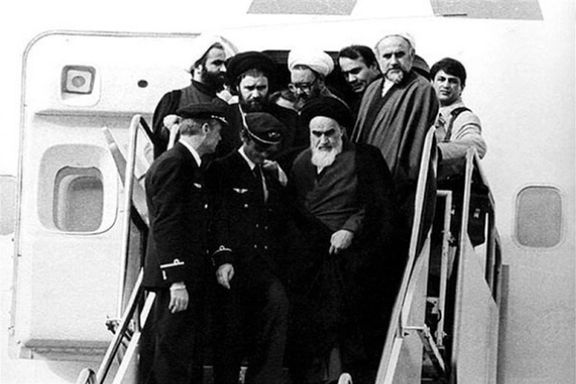
Khomeini arrived in Tehran from Paris on February 1, 1979
In 1979, just ten days passed between Ayatollah Ruhollah Khomeini’s return from exile in France and the fall of the monarchy, paving the way for the establishment of the Islamic Republic under his and other clerics' control.
Known as Dahe-ye Fajr (“Ten Days of Dawn”), this period is officially commemorated annually with various ceremonies. Due to differences between the Iranian and Western calendars, this period can begin on January 31 or February 1 and end on February 10 or 11.
For supporters of the Islamic Republic, Fajr (“Dawn”) symbolizes the "new era" in Iran’s history marked by the fall of the monarchy and the establishment of an Islamic governance.
Ayatollah Ruhollah Khomeini's arrival at Mehrabad Airport, February 1, 1979
Q: What are the key ceremonies during Dahe-ye Fajr?
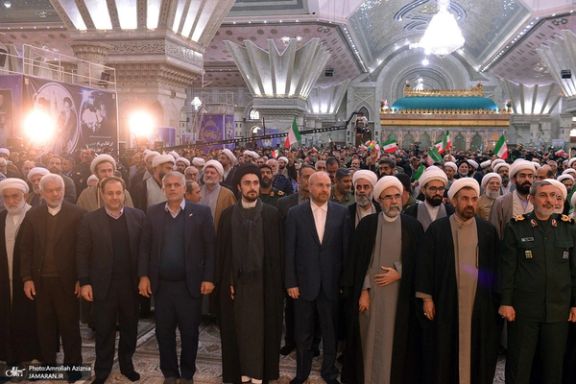
On the first day of the ten-day "Dawn" period, a ceremony takes place at Khomeini’s mausoleum in southern Tehran, commemorating his return to Iran after 14 years in exile, the majority of which he spent in Iraq.
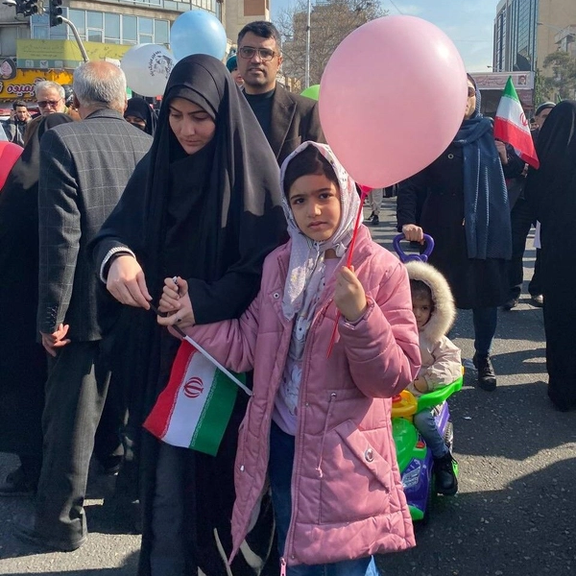
On the final day, state-sponsored rallies take place nationwide to mark the Islamic Revolution's victory. The president addresses participants at Azadi Square (“Freedom Square”) in Tehran, and the day is observed as a public holiday.
State dignitaries as Khomeini's mausoleum, February 1, 2023
Q: How does the state’s media cover the events?
State-run television channels extensively cover all the ceremonies of Dahe-ye Fajr, particularly the Revolution Day rallies. These broadcasts often feature large crowds, which Iranian state officials claim reflect widespread support for the Islamic Republic and its Supreme Leader.
State-sponsored Revolution Day (22 Bahman) rally in Tehran, February 11, 2024
Q: What criticisms have been raised about the media coverage of these events?
Individual critics and opposition groups argue that participation in these rallies has significantly declined in recent years.
They also say that state authorities use incentives like gifts, paid leave, or implicit threats to compel attendance – particularly among civil servants, soldiers, students, and workers.
Q: How did the monarchy fall in 1979?
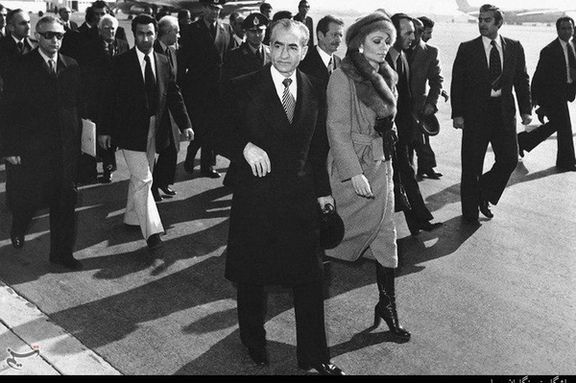
Months of massive protests forced King Mohammad-Reza Pahlavi, the Shah of Iran, to leave the country with his family on January 16, 1979.
He entrusted a Regency Council and opposition Prime Minister Shapour Bakhtiar to manage the country in his absence.
Khomeini had vowed to return to Iran. Bakhtiar initially attempted to block his return by closing Iran's airports.
However, widespread protests, led by both Islamists and leftist groups, compelled him to reopen them.
King Mohammad-Reza Pahlavi and Queen Farah departing for Egypt, January 16, 1979
Q: What happened when Khomeini returned to Iran?
On February 1, Khomeini arrived in Tehran on a chartered Air France plane, accompanied by opposition figures who had supported him during his exile.
Upon arrival, millions of Iranians flooded the streets to welcome the 76-year-old cleric.
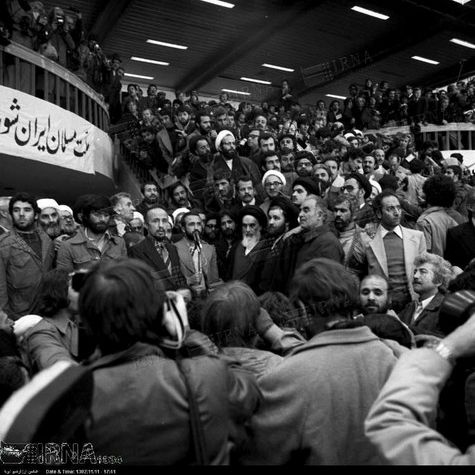
Khomeini traveled directly to Behesht-e Zahra, Tehran’s largest cemetery, to honor the “martyrs of the Revolution.”
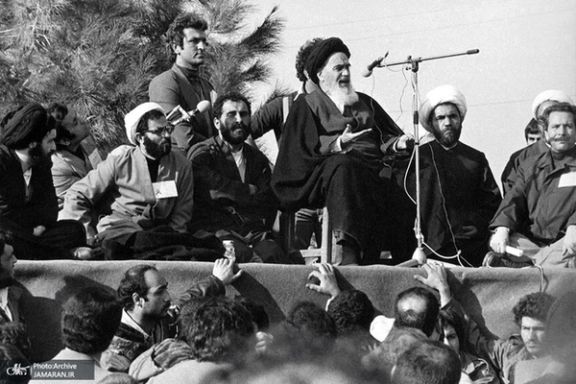
In a fiery speech, he declared the Shah-appointed Bakhtiar government "illegal" and announced his intention to establish a new administration.
“I will appoint a government. I will slap this government on the mouth. I will establish a government with the support of the nation because the nation has accepted me,” Khomeini proclaimed.
Ruhollah Khomeini's first speech after arrival in Tehran at Behesht-e Zahra cemetery, February 1, 1979
Q: What did Khomeini do after his return to Iran?
A few days after that speech, Khomeini appointed Mehdi Bazargan, a moderate Islamist scholar and politician, as prime minister.
By February 11, revolutionary forces had seized control of all government institutions. The state broadcaster officially announced the monarchy's collapse the same day.
Q: What happened to Khomeini’s closest aides after his return?
Ironically, many of Khomeini’s close aides from his time in exile were later accused of treason or marginalized – and ultimately faced tragic fates.
Sadegh Ghotbzadeh, who served as foreign minister between November 1979 and August 1980, was accused of plotting to assassinate Khomeini and of attempting a coup to topple the newly established Islamic Republic in April 1982. He was executed by firing squad in September of the same year.
Another aide, Hassan Banisadr, who was elected as the Islamic Republic’s first president (from February 1980 to June 1981), was impeached and deposed by Parliament, allegedly for opposing the clerics in power. He went into hiding and later escaped to France, where he lived until his death in Paris in 2021.
In the now-infamous photos of Khomeini descending the stairs from the Air France plane upon his return to Tehran, state-run news outlets have edited out several of his aides who were by his side.
Today, the only individual still visible next to Khomeini in the official photos is the airliner’s pilot, holding his hand.
An Iranian daily criticized Foreign Minister Abbas Araghchi, arguing that his recent diplomatic approach toward the United States, particularly his demands for the release of blocked funds, has been misguided.
In a Sunday editorial, Ham-Mihan, a newspaper aligned with Iran’s Reformist faction, argued that the Foreign Ministry’s performance over the past six months has led to a diminished and weakened position in at least three key areas.
The newspaper pointed to Iran’s handling of overtures for negotiations with the United States as a key concern.
Iran’s policy toward Washington has long been a sensitive and contentious issue, especially after the US withdrawal from the JCPOA nuclear deal in 2018 and the imposition of sanctions. With President Donald Trump’s return, many Iranian politicians and commentators are voicing concerns over the possibility of harsher sanctions as the country struggles with a deep economic crisis.
Ham-Mihan said that efforts at engagement—whether overt or behind closed doors—have consistently encountered resistance from hardliners in both Tehran and Washington.
Beyond internal challenges, Ham-Mihan warned that Trump’s different view of foreign policy makes Iran’s diplomatic messaging particularly sensitive.
“One of Trump’s main arguments for withdrawing from the JCPOA was the lack of economic benefits for American companies,” the paper added, suggesting that any new diplomatic overtures must be framed in a way that aligns with Trump’s priorities.
Araghchi, however, has been criticized for failing to take such dynamics into account. The newspaper pointed to his recent interview with Al Jazeera, in which he asked for the release of frozen Iranian assets as a confidence-building measure.
Ham-Mihan argued that this approach misjudged Trump’s negotiating style and contrasted it with other Iranian officials who have suggested offering American companies investment opportunities in Iran instead.
The newspaper also expressed alarm over the apparent disarray within Iran’s foreign policy structure. Unlike the administration of President Hassan Rouhani where the foreign ministry led negotiations, figures like former Supreme National Security Council Secretary Ali Shamkhani and Strategic Council on Foreign Relations President Kamal Kharrazi now seem to be pursuing independent agendas, leading to confusion.
Iranian Foreign Minister Abbas Araghchi and Syrian President Bashar al-Assad (right) meet in Damascus on December 1, 2024.
Additionally, Ham-Mihan criticized some of Araghchi’s recent regional visits, suggesting they have become more about symbolic appearances than meaningful diplomatic efforts.
The paper particularly highlighted his trips to Beirut and Damascus right before Bashar al-Assad's fall, arguing that they failed to achieve meaningful results to bolster Iran's influence and instead reinforced the country's image as a passive observer rather than an influential actor.
The newspaper urged Araghchi to reassess his approach, warning that without a more unified and strategic direction, the Foreign Ministry risks becoming increasingly sidelined in shaping Iran’s diplomatic agenda.
A surge in counterfeit drugs has worsened Iran’s strained medicine market, forcing many with serious conditions to rely on the black market for scarce medication.
The shortage has deepened in recent months, driving prices ever higher. More than 100 essential medications, including treatments for cancer and rare diseases, are either scarce or entirely unavailable.
While Iran has long had an underground market for imported medicine, prices have soared since late summer, and reports of counterfeit drugs are rising.
Investigations by Iran International reveal that counterfeit medications are being sold at exorbitant prices—often reaching hundreds of dollars—right in the heart of Tehran. Cancer patients, in particular, face an increasingly dire situation.
“Not only have cancer and rare disease medications become shockingly expensive, but some have completely disappeared from pharmacies and even the underground market,” a pharmacist in Tehran said on condition of anonymity. “As original medicines grow scarce, counterfeit sales have increased.”
He noted that cancer drug prices range from 150 million rials ($180) to as much as four billion ($4800).
“A breast cancer patient had to pay 900 million rials ($1,100) for just 56 pills,” the pharmacist added. “She could have had a lower-quality Indian version a bit cheaper, but she was desperate to get the best on offer. We’ve had patients selling their property to get cancer treatment for themselves or loved ones.”
Buying drugs on the black market isn’t just costly—it’s dangerous. The pharmacist recalled a case where a patient needed Zavicefta, an antibiotic unavailable in pharmacies. Desperate, they turned to the underground market, paying 3 billion rials ($3600).
“The patient brought the drug to me and I could tell immediately it was fake. The real version comes in sealed packaging but theirs had been tampered with,” he said. “Imagine paying that much money and getting a counterfeit.”
A lawmaker on Iran’s parliamentary health committee had warned of the crisis a month earlier, reporting 116 scarce medications and predicting the number could increase tenfold within months without government intervention.
Iran International contacted several pharmacies in Tehran to inquire about various medications, and all confirmed the scarcity of imported drugs. Even major state-run pharmacies, such as 13-Aban and the Red Crescent, had limited or no stock.
Some Iran-made drugs are also becoming scarce due to shortages of raw materials and hoarding by suppliers who benefit from rising prices.
A young art student who lost her sister to leukemia shared her experience.
“My sister’s doctor prescribed German-made drugs, saying local alternatives wouldn’t be as effective and would make chemotherapy even harder. My father, two brothers, and I spent everything we had on her medication, but in the end, we lost her.”
She described the excruciating process of hunting for medication.
“For months, we visited 13 Aban and Red Crescent pharmacies every other day, only to be told they didn’t have it. We often had to buy from the black market. Some drugs, like Endoxan, we never found.”
For patients with rare conditions like hemophilia, MPS, and SMA, the situation is even worse. Patients and their families have staged several protests outside the Health Ministry and Iran’s Food and Drug Organization.
Such medication is not produced in Iran because it is not economically viable, Hamidreza Edraki, head of Iran’s Rare Diseases Foundation, told ILNA last month. Imports are stuck in customs for so long that they often expire before reaching patients, he added.
Those in charge are yet to address the situation despite warnings from all stakeholders.
On January 28, Iran’s Health Minister Mohammad Reza Zafarghandi announced that the price cap on several drugs would have to be raised because pharmaceutical companies could no longer afford production costs.
This policy may help increase supply gradually. The impact it had on prices, however, was immediate. For those Iranians in urgent need of treatment, things are looking to get a lot worse before getting any better.
Prominent Iranian cleric Mohsen Qara’ati offered an interpretation of a Quranic verse on divorce, applying it to the long-standing tensions between Iran and the United States and the possibility of a rapprochement.
In a recent address to a group of imams, Qara’ati, known for his accessible and often unconventional interpretations of religious texts, cited the verse "Al-Talaqu marratan" (Divorce is twice).
It refers to the Islamic practice of allowing two revocable divorce pronouncements before a final, irrevocable one, giving the couple a chance to reconcile. If the third declaration of divorce happens, it becomes irrevocable. He argued that this principle holds wisdom for international relations as well.
"The verse teaches us that even when ending a relationship or in conflict, one shouldn't destroy all bridges at once," he explained. "There should always be a path for return."
He pointed out that despite decades of strained relations and severed diplomatic ties, both Iran and the US maintain offices for the protection of their respective interests in each other's countries. "We've had a quarrel with America for 40-50 years," he noted, "yet both the Iranian interests section in the US and the American interests section in Iran remain open."
He implied that maintaining some level of communication, even through back channels, is crucial for keeping open the possibility of future reconciliation.
Earlier in the day, Supreme Leader Ali Khamenei defended the slogan ‘Death to America,” about a week after he tacitly gave the green light to possible talks with the US.
Infighting among rival factions in Tehran continues over potential US negotiations. Several key politicians who previously opposed talks with the US are now repositioning themselves.
Despite Khamenei hinting at a willingness to negotiate, his representatives across the country criticized the government's approach and voiced their opposition to talks with Washington.
Mehdi Nasiri, a political activist and former editor of the hardline Kayhan newspaper, was arrested on Sunday in Mashhad.
Nasiri previously served as Supreme Leader Ali Khamenei’s representative at Kayhan and was its chief editor during the late 1980s and early 1990s. Over the past two years, Nasiri has been a vocal critic of the Islamic Republic and its Supreme Leader.
The reason behind the arrest has not been announced, but several outlets have attributed it to recent remarks in which he called for a broad coalition of opponents of the Islamic Republic, ranging from monarchists to reformists within the country. He also urged all opposition factions to accept the leadership of exiled Prince Reza Pahlavi for a transitional period in order to move beyond the Islamic Republic.
Iran’s Supreme Leader Ali Khamenei praised the nation's boldness in standing up to what he called global arrogance, a term mainly referring to the United States.
"The Iranian nation has the courage to say, 'Death to America,'" Khamenei told an audience gathered at his headquarters on Sunday.
Noting that Iran is not alone in the global struggle against oppressive powers, he said, “The difference between the Iranian nation and others is that it has the courage to say this reality that America is aggressive, a liar, a deceiver, and a colonialist and is not committed to any of the principles of humanity; therefore, it says 'Death to America,' but others do not have the courage to express these truths and stand against America and fulfill their share in the fight against arrogance.”
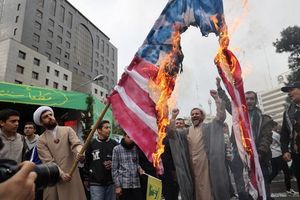
Since its establishment 46 years ago, Iran’s Islamic government has promoted the slogan "Death to America." However, many Iranians on social media and commentators within the country advocate for improved relations and criticize such rhetoric.
Khamenei added that the Iranian nation not only did not suffer a blow and remained unscathed in its 46-year confrontation with the world's arrogant powers but also grew and progressed in all spheres. "Today's Iran is not the Iran of 40 years ago and has grown in all directions; the Iranian nation has been patient and striving and has made progress."
Tehran's confrontation with the United States has brought on harsh economic sanctions that have gradually weakened the country's economy, creating high, double-digit inflation and reduced international trade and investment.
Iran’s Supreme Leader Ali Khamenei during a meeting with a group of Quran reciters in Tehran on February 2, 2025
The Supreme Leader also pointed to the recent war in Gaza between its Palestinian ally Hamas and Israel, as an example of the defeat of Iran's two archenemies.
"No one could have imagined it: Gaza, a small and besieged territory, standing victorious against the combined might of Israel and the United States. This extraordinary outcome was only possible through divine intervention."
Since a ceasefire deal in Gaza last month, Iranian officials claim victory for Hamas, while their critics point to the large-scale destruction and loss of life among Palestinians.
Infighting among rival factions in Tehran continues over potential US negotiations following Khamenei’s implicit green light earlier this week—though tempered by his deep-seated distrust of America.
Meanwhile, several key politicians who previously opposed talks with the US are now repositioning themselves, adjusting their stances.
Despite Khamenei hinting at a willingness to negotiate, his representatives across the country criticized the government's approach and voiced their opposition to possible US talks.