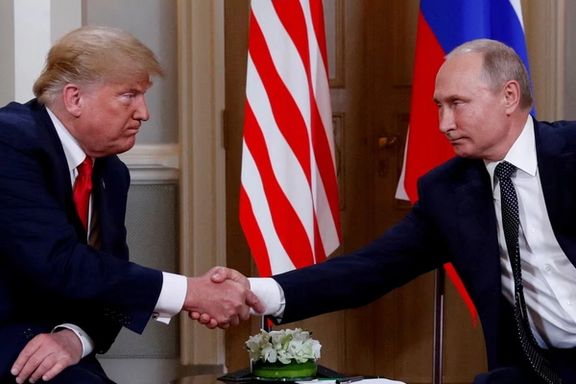
Donald Trump meeting Vladimir Putin during his first presidential term.
Iranian politicians and commentators have been making conflicting comments on Russia's stated preparedness to mediate between Iran and the United States regarding Tehran's controversial nuclear program.
While the deputy chairman of the Iranian parliament's national security committee appears to be adamant that Russia will consider Iran's interests in its negotiations with America, the committee's former chairman has once again expressed concern that "Russia might sacrifice Iran for its own interests."
The remarks of Abbas Moghtadaei, deputy chairman of the Majles national security committee, suggested that Iran's interests factor into Russia’s calculations. "In its negotiations with the United States, Russia also considers Iran's interests," he said.
He argued that Russia would take Iran’s interests into account, citing the recently signed strategic cooperation agreement between the two countries and asserting that Moscow will "consider its ally's interests in its foreign relations." However, Russia has repeatedly stated in the past that Iran is not a strategic ally.
Foreign Minister Sergey Lavrov and other officials have repeatedly referred to Iran as a partner, distinguishing their relationship from Russia’s formal alliances, such as with China or members of the Collective Security Treaty Organization (CSTO). In August 2022, Kremlin spokesman Dmitry Peskov acknowledged the strength of Russia-Iran relations but stopped short of calling Iran a strategic ally.
The hardline Raja News, the pro-reform Fararu website, and the pro-Pezeshkian Etemad newspaper have also rejected the notion of Iran being a strategic ally of Russia. However, Moscow is still likely to back Tehran when it serves its interests, using Iran as regional and international leverage in its dealings with the West.
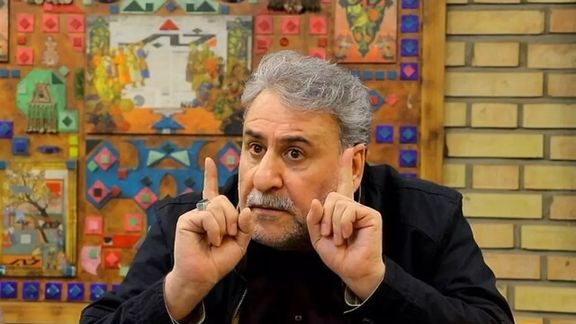
Former lawmaker and commentator Falahatpisheh in Tehran.
Meanwhile, in an interview with Etemad, Heshamatollah Falahatpisheh, former chief of the Iranian Parliament's national security and foreign relations committee, stated, "The revival of the 2015 nuclear deal between Iran and world powers was sacrificed for Russia's war in Ukraine. I fear Iran may now be sacrificed for Russia’s peace with Ukraine."
He was referring to the West’s reluctance to negotiate with Iran following Russia’s invasion of Ukraine, which led to the suspension of nuclear talks in March 2022. Since then, Tehran has supported Russia’s war effort, supplying weapons used against Ukraine.
Asked about the likelihood of Iran's interests being compromised in talks between Moscow and Washington, Falahatpisheh said, "Political developments since 2021 have shown that international variables directly affect Iran's nuclear diplomacy and its position in global affairs."
He recalled that three years ago, when Iran and the West were close to reaching a nuclear deal, Russia formally urged the United States to exempt Iran-Russia trade from US sanctions on both countries. However, Washington rejected the request, viewing it as an attempt by Moscow to exploit the nuclear negotiations for its own benefit.
The politician accused Russia of deceiving Iran and obstructing the revival of the 2015 JCPOA nuclear deal at the time. Expressing concern over Russian Foreign Minister Sergey Lavrov’s recent visit to Iran, he warned, "Once again, the Russians might use Iran as leverage in their dealings with Washington."
Meanwhile, Iranian foreign policy analyst Qasem Mohebali told the conservative Nameh News website that "Russia's mediation between Iran and the United States is unlikely to benefit Iran."
"It appears that the Americans have promised certain concessions to Russia regarding the Ukraine war, and in return, Russia has agreed to offer some concessions to Washington concerning Iran," Mohebali said.
However, he argued that this arrangement is not in Iran’s best interest, as "Russia is likely to use Iran as a bargaining chip in its negotiations with the United States over Ukraine." He also questioned the effectiveness of mediation by a country that is itself engaged in negotiations to resolve its own challenges.
"Iran is in an ambiguous international position," Mohebali concluded. "However, the disputes between Europe and the Arab states on one side and the United States on the other, along with the divide between Russia and America, provide Iran with an opportunity to extract some concessions. Still, Moscow's mediation is unlikely to serve Tehran’s interests."
Russian President Vladimir Putin's agreement to mediate between the United States and Iran over Tehran's nuclear program adds new layers of complexity to an issue which already threatened to add a new war front to a conflict spanning Eurasia.
Moscow's entrance onto the scene either flips an Iranian ally against its nuclear ambitions or provides a spoiler which drags out talks and buys the Islamic Republic a breather from looming Israeli strikes.
The initiative follows a direct request from US President Donald Trump during a phone call on February 12, 2025, with subsequent discussions taking place between top officials from both administrations in Saudi Arabia.
The Kremlin has expressed its commitment to facilitating peaceful negotiations between Washington and Tehran. This positions Russia as a key intermediary, leveraging its established relationships with both nations.
Historically, Switzerland has been acting as a diplomatic conduit between Tehran and Washington since the early 1980s. Several Arab states have also offered their mediation services on various occasions, including the Sultanate of Oman, Qatar, and, more recently, the Kingdom of Saudi Arabia.
Russia’s diplomatic involvement, however, presents a different dynamic.
Deep state access
As a global power and a permanent member of the UN Security Council, Russia has cultivated a strong security partnership with Iran, particularly since the onset of the Ukraine war in February 2022.
Russia’s unique access to Iran’s deep state provides President Putin with significant leverage to pressure Iranian decision-makers into making nuclear concessions—an essential step in preventing military escalation in the coming months.
From Iran’s perspective, Russian involvement in resolving the “Iranian nuclear problem,” as Russian officials term it, presents both an opportunity and a challenge.
Under Russian diplomatic oversight, Supreme Leader Ali Khamenei may find it more difficult to maintain his strategy of nuclear escalation vis-à-vis the Trump Administration, including rhetorical threats to withdraw from the Non-Proliferation Treaty (NPT) and outright rejection of negotiations.
Tehran might become more open to indirect and discreet dialogue with Washington if Moscow encourages it to do so.
Unlikely boon
Beyond the potential impact on Iran’s nuclear strategy, Russia’s mediating role offers the Iranian political establishment a means to achieve its primary goal: avoiding both war and substantive nuclear or regional negotiations with Washington during Trump’s second term (2025-2029).
A Russian diplomatic intermediary could help ensure the security and survival of the Islamic Republic, deterring a potential US-backed Israeli attack on Iran’s nuclear infrastructure. But the shifting balance of power following a US-Russia rapprochement means Iran could once again become a bargaining chip in renewed US-Russian diplomatic negotiations at the presidential level.
In other words, a closer Trump-Putin relationship could reduce Tehran’s strategic relevance in Moscow’s eyes. This short-term marginalization of Iran does not signify the end of its pragmatic partnership with Russia but rather the potential reemergence of US influence over Iranian decision-making through Russian mediation.
Since the early 2020s, Iran has advanced its uranium enrichment activities, prompting international concerns over possible nuclear weapon development—claims that Tehran consistently denies despite growing internal political debate on potential nuclear militarization.
The US remains steadfast in preventing Iran from acquiring nuclear weapons, working closely with allies like Israel to address these concerns. The 2015 Joint Comprehensive Plan of Action (JCPOA), designed to limit Iran’s nuclear capabilities in exchange for sanctions relief, has been under strain, especially following the US withdrawal from the agreement in 2018.
This led Iran to deviate from its commitments. A potential future Russian mediating role could temper the Trump Administration’s inclination to align with Israel’s hardline approach against Iran’s nuclear advancements, potentially reducing the likelihood of an Israeli military strike on Iranian nuclear infrastructure.
Mideast: Russian returns
Beyond the Iranian nuclear issue and regional policy, Russia’s recent diplomatic manoeuvres underscore its ambitions to reassert its role in Middle Eastern affairs in the post-October 7 era.
This potential return is facilitated by its ongoing rapprochement with Washington and the possibility of a ceasefire in Ukraine in 2025.
Russia and Iran signed a comprehensive 20-year strategic partnership agreement in January 2025
The proposal to restore direct air links between the US and Russia, discussed during negotiations in Istanbul, signifies a potential thaw in relations. Talks also addressed the normalization of embassy operations, reflecting a mutual interest in improving diplomatic and economic ties.
However, Russia’s deepening ties with Iran add complexity to its role as a mediator, especially in the context of rising military tensions between Iran and Israel, the US’s primary ally in the region.
In January 2025, Russia and Iran signed a comprehensive 20-year strategic partnership agreement covering defense, technology, energy, and trade sectors. While this partnership strengthens bilateral relations, it may also compromise Russia’s impartiality in mediating US-Iran tensions.
Looking ahead, Russian mediation could lead to renewed negotiations aimed at reviving or restructuring a nuclear agreement that addresses the shortcomings of the JCPOA.
Such an agreement could ease some economic sanctions on Iran while implementing stricter nuclear oversight. However, the success of these efforts will depend on the willingness of both the US and Iran to engage in constructive dialogue and make necessary concessions.
Russia's strategic interests and geopolitical priorities—particularly in the event of a ceasefire in Ukraine—will play a crucial role in shaping the outcomes of these diplomatic initiatives in the coming months.
The administration of US President Donald Trump is considering a plan to inspect Iranian oil tankers under an international accord designed to curb the spread of weapons of mass destruction, six sources familiar with the matter told Reuters.
The move would be part of US President Donald Trump’s renewed "maximum pressure" campaign, aimed at cutting Iran’s oil exports to zero.
More than half of the tankers sanctioned three days ago by the United States for carrying Iran's oil have ceased operations outside Chinese or Iranian terminals, an investigation by Iran International last month revealed.
Since returning to office, Trump has imposed fresh sanctions targeting companies and the so-called shadow fleet of older oil tankers transporting Iranian crude without Western insurance.
Sources said the administration is exploring ways for allied countries to stop and inspect vessels in key maritime chokepoints, including the Malacca Strait in Asia.
“You don’t have to sink ships or arrest people to have that chilling effect that this is just not worth the risk,” one source said. Another added: “The delay in delivery … instills uncertainty in that illicit trade network.”
The US is examining whether the inspections could be carried out under the Proliferation Security Initiative, signed by over 100 countries, a 2003 multinational framework aimed at stopping the trafficking of weapons of mass destruction.
John Bolton, who helped establish the initiative, said: “It would be fully justified” to use it against Iranian oil shipments, arguing that Tehran relies on crude revenue to fund nuclear activities and militant groups.
Two sources said the White House National Security Council is reviewing the proposal, but it remains unclear if Washington has approached any governments to gauge their willingness to participate. The National Security Council declined to comment as reported by Reuters. Iran's oil and foreign ministries also did not respond.
Iranian President Masoud Pezeshkian, addressing parliament on Sunday, acknowledged Trump’s latest sanctions, saying Iran’s tankers now face uncertainty in unloading their cargo. Iran has previously retaliated when its oil shipments were seized.
In 2023, the US tried to interdict two Iranian oil cargoes under Biden, prompting Iran to seize foreign vessels, including one chartered by Chevron.
Despite past US sanctions, Iran’s oil exports brought in over $50 billion annually in recent years, largely from sales to China. Meanwhile, European countries have raised concerns about environmental risks from tankers but have taken little action to inspect Iranian oil shipments.
Since early September, Iran’s national currency, the rial, has lost half of its value due to military and geopolitical setbacks in the region and Trump’s election, as he has pledged to significantly cut Tehran’s oil exports.
A US diplomat will attend a meeting in Baghdad Thursday focusing on resuming Kurdish oil exports via Turkey, sources told Reuters, as Washington pushes Iraq to boost global supply while curbing Iranian oil exports.
The talks, hosted by Iraq's oil ministry, come as the US increases pressure to restart the pipeline, seeking to reduce Iranian oil's market share while Iran views Iraq as a key economic lifeline.
US President Donald Trump's administration is pressuring Iraq to allow Kurdish oil exports to restart to help offset a potential fall in Iranian oil exports, Reuters reported last month, citing eight sources with direct knowledge of the matter.
In early February, Trump reinstated the so-called maximum pressure campaign on Iran from his first term, with the stated aim of pushing down Tehran's oil sales to zero.
Meanwhile, during a meeting in Tehran on Wednesday, Iran’s Oil Minister Mohsen Paknejad and Iraq’s Electricity Minister Ziyad Ali Fadel voiced their commitment to expanding energy cooperation across oil, gas, petrochemicals, and electricity sectors.
Iraq’s oil minister announced late in February that exports from the Kurdistan region would resume next week.
Sources cited by Reuters said Trump’s administration was a key force behind the announcement.
Reuters cited two US administration officials confirming that the US had asked the Iraqi government to resume Kurdish exports. One of them said the move would help dampen upward pressure on oil prices, the report added.
Iran has been a major recipient of cut-price Kurdish oil. Last July, a Reuters report detailed how the closure of the pipeline transporting Kurdish crude to Turkey in 2023 led to an increase in oil smuggling to Iran, with an estimated 200,000 barrels per day being transported by truck.
In December 2024, Reuters also reported on a fuel oil smuggling network generating at least $1 billion annually for Iran and its military allies, which had flourished in Iraq since Prime Minister Mohammed Shia al-Sudani took office in 2022.
Iran said on Thursday that Britain must be held accountable for making what it called baseless accusations against the country following the UK’s move to tighten restrictions on Tehran following allegations of foreign interference.
"Any government that makes baseless accusations against the Iranian nation or takes hostile actions against them must be held accountable," Iranian foreign ministry spokesperson Esmail Baghaei said in a post on X on Thursday.
Baghaei was responding to the UK government's decision to place the Islamic Republic’s intelligence and security establishment on the highest tier of its foreign influence watchlist, citing concerns over Tehran’s political interference.
Under the new designation, Iran and any individuals acting on its behalf will be required to register their activities in the UK or face possible prison sentences of up to five years.
Referring to past British involvement in Iran’s internal affairs, Baghaei added, "You accuse Iran of what you yourselves are skilled at: interfering in the internal affairs of nations! But this is no longer the 19th century."
In his post, he mentioned the 1953 Iranian coup d'état during which Prime Minister Mohammad Mosaddegh was removed from power. The event, historically understood as a US and British-instigated operation, involved the Iranian military and resulted in the consolidation of power by Mohammad Reza Pahlavi, the last monarch of Iran.
The Islamic Republic says the objectives of this action were to safeguard British oil interests in Iran, following the Iranian government's refusal to accede to Western demands regarding oil concessions.
Baghaei accused Britain of trying to distract from its own record. "The UK insists on its irrational and hostile mindset toward Iranians, aiming to cover up its crimes as a supporter of the genocide of the Palestinian people and backer of anti-Iranian terrorism," he said.
Russia is taking Iran's interests into account during its talks with the United States, a senior Iranian lawmaker said, highlighting the closeness of Tehran and Moscow in the wake of the war on Ukraine.
"Russia, in negotiations with the United States, also considers Iran's interests," said Abbas Moghtadaei, deputy head of parliament's national security and foreign policy committee. "The Russians have a strategic agreement with us and will take our interests into account."
He dismissed concerns that Iran's interests could be compromised as part of wider US-Russia talks, particularly over Ukraine.
"Iran's position and Ukraine's position on the international stage are completely different," he said.
"Therefore, comparing our country with Ukraine and presenting this analysis that the US and Russia can negotiate about Iran's interests as they bargain about Ukraine's interests, is fundamentally flawed."
Moscow and Tehran have become ever closer in the wake of Russia's invasion of Ukraine in 2022, during which Iran has been sanctioned by global powers such as the US, UK and EU, for supplying Russia with drones used to target civilian populations in Ukraine.
The two nations, along with China, have carried out multiple military drills since the war began, in addition to signing long-term strategic agreements, which Moghtadaei said has cemented the alliance between the three countries.
"Those who analyze that the US and Russia will trade on Iran's interests the same way they negotiate over Ukraine, do not have a deep understanding of our country and its capabilities," he added.
The Kremlin confirmed on Wednesday that Russia suggested to the United States that the two powers should hold talks focused on Iran's nuclear program, with Russian media reporting this week that President Vladimir Putin has agreed to mediate nuclear talks between Washington and Tehran.