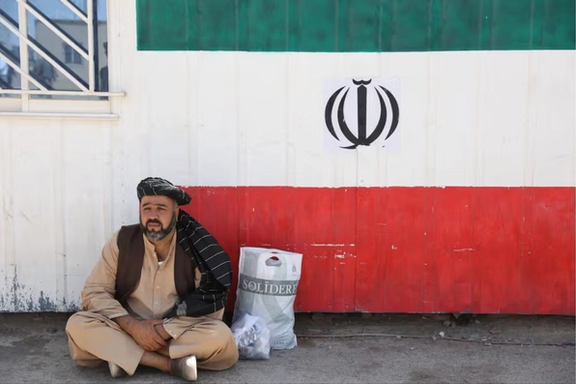
An Afghan man sits at the Dowqarun border crossing between Iran and Afghanistan, Razavi Khorasan Province, Iran August 29, 2021.
With inflation and unemployment mounting, some Iranians and officials are stepping up calls to expel the millions of undocumented and impoverished Afghans in their midst to claw back jobs and government handouts for citizens.
“They have taken many job opportunities,” Interior Minister Eskandar Momeni said during a meeting of provincial governors on Monday, addressing public concerns that foreign nationals were crowding Iranians out of the job market.
Momeni added that more than 1.2 million undocumented immigrants were repatriated in the past Iranian calendar year ending on March 20.
At the same meeting, the head of the Foreign Nationals and Immigrants Affairs Center at the ministry Nader Yarahmadi said 6.1 million Afghans currently reside in Iran. The actual number may be far higher, or up to 15 million, according to unofficial tallies by Iranian lawmakers and media outlets.
Iranian officials and media outlets frequently use the term foreign nationals as a euphemism specifically referring to Afghan citizens.
Afghans began arriving in Iran as refugees in the early 1980s, later joined by economic migrants. Until the Taliban's return to power in Afghanistan in 2021, their numbers rarely exceeded two million.
Around 780,000 Afghans hold official refugee status and are not considered undocumented. A small minority of non-refugees are wealthier Afghans who fled after the Taliban’s takeover, while the majority are undocumented economic migrants who provide low-cost labor in sectors such as agriculture and construction and live with or without their families.
Anti-Afghan sentiment has grown significantly in recent years, especially on Persian-language social media, where hashtags such as “Expulsion of Afghans is a national demand” frequently trend.
Advocates for the expulsion of Afghan nationals accuse the government of allowing them to benefit from billions of dollars in subsidies for food, fuel, and other essential services, including healthcare and education.
In addition to monthly cash payments to nearly 90 million Iranians, the government heavily subsidizes basic goods such as bread and fuel. The current fiscal year’s budget allocates 2,500 trillion rials out of 64,000 trillion rials to bread subsidies alone.
No official data quantifying the subsidies specifically received by Afghan immigrants exists.
However, Hamidreza Azizi, a lawmaker representing Eghlid in southwestern Fars Province, said in a recent parliamentary speech that the government spends approximately 7,000 trillion rials on subsidies for energy, food, medicine, and education for Afghan children. “In my constituency, Afghan nationals have taken over the entire job market from Iranians,” Azizi told Parliament.
Meanwhile, at least one-third of Iranians live below the poverty line, and workers’ strikes over unpaid wages continue in various sectors.
During his campaign, President Masoud Pezeshkian pledged to tighten border controls, register undocumented immigrants and seek support from European countries—either by encouraging them to accept some refugees or to provide financial assistance.
The relatively moderate President argued that Western policies in Afghanistan have driven millions of Afghans to Iran and that those responsible should share the burden.
“There is no reason the Iranian people should bear the costs of others’ failed policies,” Pezeshkian wrote in a series of tweets prior to the election.
Iran's Supreme Leader has approved the foreign minister and commander of the Revolutionary Guard’s extraterritorial force joining the board of trustees of the country’s main war heritage foundation, signaling deeper integration of foreign policy and regional military strategy.
The appointments were made to the board of the "Foundation for the Preservation and Publication of Sacred Defense Values," which oversees efforts to commemorate Iran’s eight-year war with Iraq in the 1980s.
In a separate decision, the foundation’s name has officially been changed to include the term “Resistance.”
The change was proposed by the board and approved by Ali Khamenei, reflecting Iran’s broader framing of its support for regional armed groups known as Iran's 'axis of resistance'.
The Quds Force is responsible for the IRGC’s overseas operations, and its inclusion alongside the foreign ministry signals a deeper institutional integration of Iran’s foreign policy and regional military strategy with the country’s war-time legacy narrative.
The foundation plays a prominent role in shaping public opinion and political discourse around what Iran refers to as the "Sacred Defense," a term used to describe the Iran-Iraq war (1980–1988).
Its activities often glorify martyrdom and stress the importance of ideological continuity, a concept which has been greatly challenged since the 2022 uprising when the Iranian government has faced its lowest levels of support since the founding of the Islamic Republic in 1979.
Enforcing Iran's new hijab law is the top priority for the parliamentary cultural committee, its spokesperson said as authorities come under mounting conservative pressure to implement legislation expanding surveillance and penalties.
“A group of devout citizens has a rightful demand, and that is the enforcement of the hijab law — a demand that holds value for the Islamic system,” said spokesman Ahmad Rastineh on Thursday.
The law was passed by parliament in September 2023 but is yet to be fully enforced as the government tries to avoid mass backlash. It mandates harsh penalties for women and girls who defy compulsory veiling and has been branded by the UN as amounting to gender apartheid.
Punishments under the strict new law include travel bans, social media restrictions, prison sentences, lashes, and fines. It also criminalizes promoting hijab resistance.
The legislation was introduced following mass protests triggered by the death of Mahsa Amini in police custody in 2022 which led to nationwide hijab rebellion and a loss of control by authorities.
Although the law’s enforcement was postponed in December following public outcry and international pressure, calls for its immediate implementation have intensified.
Last month, a group of pro-hijab activists staged a sit-in outside parliament, demanding the law be enacted. The protest, which coincided with Quds Day, was dispersed by police on the grounds that it lacked official authorization.
As measures to enforce hijab continue, a recent cooperation agreement was signed between Iran’s police and the education ministry which has sparked outrage from teachers’ unions.
Critics say the deal, which allows police input on school policies, could militarize schools and enforce hijab compliance among students.
“Teachers across the country will not allow schools to be turned into military barracks,” said the Iranian Teachers' Trade Association.
“This is a degrading and alarming stance,” added Mohammad Habibi, the group’s spokesman, accusing the education minister of surrendering the civilian space of education to security forces.
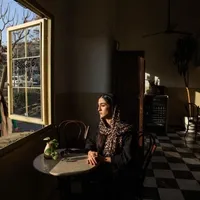
Many women around the country now openly reject the compulsory headscarf, long tunics, and trousers mandated by Iran’s Shariah law. Acts of defiance have become increasingly visible, with women frequently seen unveiled, singing, and dancing in public as a challenge to the religious establishment.
Iranian state television dismissed several senior staff members and triggered a legal crackdown after a segment insulting Sunni Islamic figures was broadcast, drawing public outrage and prompting official apologies to contain the fallout.
The controversial broadcast aired Wednesday on Channel One and featured a guest reciting verses disparaging Abu Bakr, the first caliph in Sunni Islam, during a midday segment.
The footage was quickly deleted from IRIB-affiliated platforms, as the broadcaster scrambled to contain the crisis.
In a joint statement from Sunni majority Sistan and Baluchestan, the province's governor Mansour Bijar and the Supreme Leader’s regional representative Mostafa Mohami condemned the broadcast, describing it as offensive to the sacred beliefs of the Sunni community and a source of distress and anger across the Muslim world.
Sunnis make up at least 10 percent of Iran's 88 million population, and Sistan and Baluchestan is one of the few Sunni-majority regions in a predominantly Shiite country.
While they welcomed the swift dismissals and referral of those responsible to the judiciary, they urged systemic reforms and punitive measures to prevent recurrence and called on the judiciary to ensure “deterrent accountability and public transparency,” IRNA reported.
The state broadcaster has removed the channel’s programming director and head of production. Additionally, eight individuals involved in the show’s creation now face criminal charges, as reported by state media.
A special committee comprising representatives from IRIB’s security, legal, and inspection branches has been tasked with investigating the incident further.
“Sowing discord in the Islamic community has no defenders among true Muslims, whether Shia or Sunni,” IRIB chief Peyman Jebeli said. “The error of extremist ignorants is unforgivable."
IRIB chief Peyman Jebelli
The network also aired a string of unity-themed documentaries on Wednesday featuring Sunni figures, a move seen as an effort to contain the backlash and reaffirm the state’s emphasis on intra-Muslim unity amid sensitive diplomatic engagement with Sunni-led Saudi Arabia as Shia majority Iran tries to cultivate closer ties to its Sunni neighbors.
This is not the first time IRIB has drawn criticism over sectarian or politically provocative content. Last week, Nasim TV apologized for airing a satirical segment mocking Saudi Arabia’s foreign minister just days after a rare visit by the kingdom’s defense chief to Tehran.
A screengrab from a program mocking Saudi Arabia’s foreign minister on Iran's state TV.
In 2019, IRIB announced the dismissal of the director and broadcast manager of Channel Five following the unvetted airing of controversial remarks by a eulogist during a religious program.
The decision came at the directive of then-IRIB chief Abdolali Ali-Asgari, who said that “safeguarding the dignity of the Islamic ummah” remained a core principle of the broadcaster under the leadership of the Supreme Leader.
Among those dismissed was Javad Ramazannejad, who had been appointed to lead Channel Five less than a year prior to the incident.
With a budget now larger than that of ten ministries and a steadily eroding domestic audience—polls show viewership plummeting from 57% to just 11%—Iran’s state broadcaster faces intensifying scrutiny over its legitimacy, oversight, and role in shaping national identity.
Sunnis, though legal in Iran as a branch of Islam, are among the country's religious minorities which rights groups say are routinely oppressed.
Last year, Human Rights Watch reported that Iranian law denies freedom of religion to minorities such as Baha’is and discriminates against them.
"The government also discriminates against other religious minorities, including Sunni Muslims, and restricts cultural and political activities among the country’s Azeri, Kurdish, Arab, and Baluch ethnic minorities," the report added.
Former Iranian President Hassan Rouhani said that a near-final agreement with the United States was within reach in the spring of 2021, but was ultimately derailed by hardliners’ opposition seeking to undermine his administration.
During a meeting on Monday, Rouhani urged the current government to make the best use of the present opportunity for negotiations with the US, emphasizing the importance of preventing war.
"We must make the most of this window for negotiations. Our fundamental duty is to prevent war, not because we are afraid of it, but because war benefits no one – not the United States, not Iran, and not the region... We must not give Trump any excuse, nor let Netanyahu take advantage of the current regional situation,” he said.
Rouhani said that his former negotiating team, led by Abbas Araghchi -- now foreign minister, had secured a favorable agreement that would have lifted not only pre-existing sanctions but also those imposed by the Trump administration.
He alleged that the US had "almost agreed" to remove the Islamic Revolutionary Guard Corps (IRGC) from its list of terrorist organizations.
"At that time, I said in the government that if they allow us, we will finish it today. Only one signature remained for Mr. Araghchi to complete," Rouhani said, accusing domestic opponents of blocking the deal to ensure his administration's failure.
He said while no agreement has been reached in the ongoing round, the talks have already offered hope to Iran's currency and gold markets, as well as public morale.
Rouhani also addressed the internal debate surrounding negotiations with the West, criticizing those who advocate for confrontation and disengagement from international organizations. He argued that while international bodies are not always fair, dialogue and diplomacy are essential for reducing tensions.
The man who shot dead two Iranian Supreme Court judges in a rare assassination of top officials in January has been identified as Farshid Asadi, a 31-year-old court service aide, a source familiar with the matter told Iran International.
Asadi, originally from Razan in Iran's Western Hamedan Province, worked at the Supreme Court in Tehran providing refreshments to judges and staff, said the source who spoke on condition of anonymity due to the sensitivity of the matter.
The assailant was initially assigned to the court’s fifth floor but was later relocated to the first floor after Judge Mohammad Moghiseh moved his office there.
On January 18, veteran judges Moghiseh and Ali Razini were shot and killed inside the Supreme Court building in central Tehran. The incident shocked the judiciary and remains largely unexplained by authorities.
The two clerics were central figures in Iran's theocratic establishment who had handed down death sentences and other harsh punishments on dissidents for decades. Supreme Leader Ali Khamenei led their funerals.
Their deaths marked a rare attack on senior officials as discontent over political repression and economic malaise festers in Iran.
The source told Iran International that Asadi first entered the room of a security guard and injured him before proceeding to the judges’ office. There, he shot Razini once, killing him instantly. As Moghiseh attempted to flee, Asadi fired again, striking him in the hand and then fatally in the back, piercing his heart.
Asadi, the source added, also intended to target another senior judicial figure, Mahmoud Toliyat, a former Revolutionary Court judge, but changed his mind for unknown reasons. He then turned the weapon on himself and died at the scene.
The full name, age and intended third target of the attacker was not previously reported.
Initial reporting by state-affiliated media suggested the attacker may have been an outsider or “armed infiltrator.” However, conflicting accounts followed, with judiciary-linked outlets later confirming the assailant was employed inside the court complex.
Following the shooting, several of Asadi’s relatives—including his father, uncle, maternal uncle, and two female cousins—were detained at different times by Iran’s Ministry of Intelligence, the source told Iran International.
It remains unclear how many are still in custody.
Separately, former political prisoner Bijan Kazemi has been held incommunicado for over 100 days in connection with the case. Authorities are reportedly attempting to extract a confession linking Kazemi to the firearm used in the attack. Asadi’s father is under pressure to admit involvement, the source added.
Judges Razini and Moghiseh, both clerics, were widely known for their roles in high-profile security cases and for issuing harsh sentences against political dissidents.
They were also involved in the mass execution of political prisoners in 1988, a chapter heavily criticized by human rights organizations.