Around 30 percent of Iranians live under the poverty line now
The administration of Iranian President Masoud Pezeshkian is preparing to disqualify wealthier citizens from the country’s long-running cash handout program to save government funds as economic headwinds mount.
The program has persisted, with various reforms, for 15 years despite being blamed for distorting the economy and stoking inflation.
Now, Pezeshkian’s government is poised to introduce its own changes to ease the strain on a budget hollowed out by years of sanctions and economic mismanagement.
The proposed exclusion of wealthier households signals a shift towards a more needs-based support system as Iran grapples with persistent economic challenges.
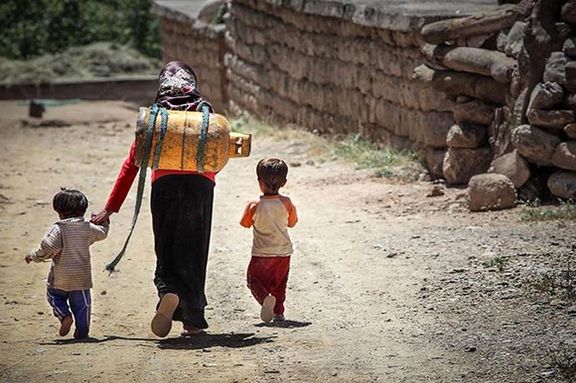
About 30 percent of Iranians live below the poverty line. By removing roughly 18 million recipients from the program, the government aims to reduce fiscal pressure and redirect funds toward low- and middle-income families hardest hit by years of 30-40 percent annual inflation.
In the current fiscal year Pezeshkian’s government has allocated 3,240 trillion rials or about $4 billion at the current open market exchange rate, for cash subsidies.
The figure is separate from the extensive indirect subsidies provided to keep prices of fuel, electricity, water, essential foods, and medicine low.
Since the introduction of the latest subsidy reforms by former president Ebrahim Raisi's administration in May 2022, the rial has devalued by around 185 percent, from 280,000 to approximately 800,000 rials per US dollar as of April 27, 2025.
Consequently, the real value of monthly cash payments has fallen dramatically, now worth just about $3.74 to $5 per person for target groups.
Origins of Iran's cash subsidy program
The cash subsidy system began in 2010 under the populist government of Mahmoud Ahmadinejad, building on a controversial proposal made by his reformist opponent Mehdi Karroubi during the disputed 2009 presidential election.
Karroubi had promised a universal cash payment of 500,000 rials (around $50 at the open market exchange rates at the time) per person without a clear funding plan, drawing sharp criticism over its potential inflationary effects.
Ahmadinejad’s administration launched the Targeted Subsidy Reform Plan in late 2010, paying 450,500 rials (about $40) monthly to each citizen.
Funded by cuts to energy and utility subsidies, the program initially boosted Ahmadinejad’s popularity but quickly lost value as inflation and currency devaluation took hold. By August 2013, the real value of the handout had dropped to about $15 per person.
Rouhani’s response: the livelihood subsidy
Hassan Rouhani’s moderate administration (2013–2021) attempted several times to remove higher-income households from the universal program, but efforts faltered due to the absence of a transparent tax database.
As economic pressures mounted, the government introduced an additional "livelihood subsidy" in late 2019 after a sharp increase in fuel prices triggered widespread unrest.
This new subsidy targeted lower-income groups, offering payments based on household size to about 60 million Iranians.
Single-member households received 550,000 rials per month (just over $4 at the time), with smaller amounts paid per person to members of larger families.
Raisi’s changes: new tiers and e-vouchers
Facing deepening economic challenges, Ebrahim Raisi’s hardline government restructured the cash subsidy system in May 2022.
Monthly payments to the highest-income 10 percent of the population were eliminated, while remaining recipients were divided into two groups: the poorest 30 percent received 4 million rials (around $14) monthly, and the middle 60 percent received 3 million rials (about $11).
To further curb inflationary pressures, in February 2023 Raisi’s administration introduced a voluntary scheme allowing families to receive their subsidies as store credit instead of cash.
Participants could use their credits to purchase a list of 11 subsidized essential food items such as rice, cooking oil and dairy products from designated stores.
New satellite imagery obtained by Iran International shows a huge crater left by the April 26 explosion at Iran's Rajaei port, which killed at least 70 people according to official figures.
According to the photos take on April 30, the large crater has been formed in front of the administrative building of Sina Marine and Port Services Development Company, which was the epicenter of the explosion.
Epicenter of explosion in front of the administrative building of Sina Marine and Port Services Development Company
In the images, the complete destruction of the building—located in the northwest section of the compound—can be also clearly seen, along with the adjacent warehouses and at least three other buildings. The trees in the area also appear to be completely burned.
Destruction of buildings adjacent to Sina Marine and Port Services Development Company
The images also show a large number of shipping containers crushed on both sides of the explosion site, highlighting the extent of the destruction.
Crushed containers belonging to Sina Company
Iran International had previously reported that the 15-hectare Sina yard, which could accommodate between 12,000 to 20,000 twenty-foot containers, was entirely destroyed. The latest satellite photos confirm the previous report.
Complete destruction of Sina Company's 15-hectare yard in comparison with a photon taken a month before the explosion
The new images also reveal the total destruction of a large administrative building in the nearby Onik yard, located to the north of the Sina area. Damage to this building has not been previously reported.
Complete destruction of a large administrative building in the Onik yard
Khazar Qeshm Company: 10 hectares
To the west of the Sina yard lies the yard of Khazar Qeshm Company, with an area of 10 hectares, which has been almost completely destroyed. The images show that the roof of the company’s warehouse, which is located approximately 500 meters from the explosion's epicenter, has been completely torn apart.
The three Iranian newspapers closest to the heart of power have adopted a maverick stance against talks with Washington, signaling that the theocracy's most powerful institutions remain deeply skeptical of diplomacy with their arch-nemesis.
While the Culture Ministry, the Supreme Council of National Security and the Press Supervisory Board issue ad hoc directives to newspaper editors about what to publish, three newspapers consistently defy those and often escape with a gentle caution.
They are Kayhan, Javan and Vatan-e Emrooz, linked respectively to the Supreme Leader’s office, the Islamic Revolutionary Guard Corps (IRGC) and the ultraconservative Paydari Party, all of which continue to criticize the negotiations with the United States – in apparent disregard of the highest office of the realm.
Earlier this week, Kayhan, known for its staunch anti-Americanism, attacked those who back talks with Washington, accusing them of turning a blind eye on the harm done to Iran by US sanctions.
"Why should we trust Trump, a man even his allies do not trust," the paper asked, using some unusually provocative language to describe Israel’s prime minister Benjamin Netanyahu.
Ultraconservative daily Vatan-e Emrooz also cautioned in its editorial against advancing the talks in a way that would make withdrawal or retreat from any agreement impossible.
The negotiating team should be wary of leaving Iran vulnerable to exploitation, the editorial warned.
The admonitions and the critiques may not be as harsh as they were a couple of weeks ago – prior to Khamenei’s cryptic backing of negotiations. But the very fact that they keep flowing after the leader’s blessing of diplomacy is significant.
"Speaking without restraint at times ... our unnecessary objections, our lack of patience, and our flawed analyses of situations can have historical consequences,” Khamenei cautioned last week with no direct reference to the ongoing negotiations.
“Therefore, we must be very careful," he said. But the trio appear to have not received the memo. Or maybe they have.
The three dailies not only represent powerful factions within the Islamic Republic’s polity, but they also enjoy direct access–with varying degrees–to Khamenei’s office.
It may be easier, therefore, to explain their editorials as necessary objections, contingencies for a potential policy shift should the interests of the leadership require one.
No surprise, perhaps, that IRGC-linked Javan, the daily closest to and representing actual power, has shown the most balanced approach to the negotiations in recent weeks.
"Iran may wish to maintain its image as an anti-imperialist warrior. But who says an agreement limited to eliminating sanctions against reducing enrichment levels will tarnish that image,” Javan asked in an editorial this week.
"We have done this before. Why shouldn't we do it again...? No country in the world will characterize this as Iran relinquishing its ideals."
Unlike other outlets in Iran, which face severe consequences for minor errors, these three dailies roam carefree on the theocracy’s political plane. Whether or not their tone is part of a grand strategy by the topmost officialdom remains unknown.
"Some say that Trump is unpredictable,” Javan concluded its editorial. “Well, we are not that predictable either!"
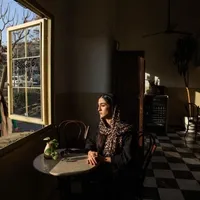
Dozens of women in Tehran and Shiraz have reported receiving personalized text messages in recent days from Iran's Headquarters for the Promotion of Virtue and Prevention of Vice warning them about hijab violations.
What began as a pilot surveillance project in the conservative city of Isfahan is now quietly extending its reach to the Iranian capital.
The emergence of these messages in Tehran and Shiraz has triggered widespread concern that Iran’s hardline factions are laying the groundwork for a high-tech nationwide surveillance system to enforce mandatory hijab laws.
“I was visiting my father’s grave in the early hours of the morning when I received the warning,” wrote one woman posting under the handle @jesuisminaaa on X. “I sat there, crying and crushed. Someone there had reported me. How can a person think only about my headscarf in a place filled with grief?”
The message she and others received is stark: remove your hijab in public, and you may face legal action.
From cars to the streets
Since 2023, Iran’s police have used traffic cameras to detect unveiled women in cars. Registered vehicle owners receive automated warnings. If three warnings are logged, the car is impounded for up to four weeks. Tens of thousands of cars have been seized under the measure.
Many male owners report that no women—veiled or unveiled—were in their cars on the dates cited in the warning messages. Some female drivers also say they were not using their vehicles at the time the alleged violations occurred.
According to multiple experts and reports on social media, the institution is now identifying individuals by cross-referencing surveillance footage with mobile phone geolocation data, smart card usage including subway and bank cards as well as government identity databases.
The result: personalized messages delivered to women’s phones within hours of their appearances in public spaces.
Legal and ethical questions
The scale and precision of the operation have provoked an outcry from legal experts, activists and ordinary citizens.
“Law experts, please answer this: does the Headquarters for the Promotion of Virtue and Prevention of Vice even have legal access to people’s personal data?” wrote Abdollah Ramezanzadeh, a reformist former government spokesman and law professor on X. “Let the country be in peace!”
The head of the powerful, hardline institution is appointed by Supreme Leader Ali Khamenei and appears to operate independently of the government.
Both the Minister of Telecommunications, Sattar Hashemi, and government spokesperson Fatemeh Mohajerani have denied the administration’s involvement or authorization for the expanded surveillance.
“It has been proven that the use of force in the realms of culture and society leads to counterproductive results. In the field of education, police and judicial measures have not been effective and will not be,” the president’s deputy chief of staff for communications said in a post on X.
“Blaming the administration and the president for the costs of repeating failed experiences is both inaccurate and unethical,” Mehdi Tabatabai added.
But critics argue that even if the government, parliament and the judiciary have no direct control and are not formally endorsing the measures, they are doing little to intervene.
Iran’s multi-billion-dollar bid to rebuild postwar Syria and cement long-term influence has collapsed following the ouster of President Bashar al-Assad, according to documents obtained by Reuters from Tehran’s ransacked embassy in Damascus.
Modeled on the US Marshall Plan that helped rebuild post-WWII Europe, Tehran’s strategy sought to create political and economic dependency through reconstruction projects, religious diplomacy, and trade.
A 33-page Iranian policy study found in the looted embassy explicitly referenced America’s postwar blueprint, describing Syria as a "$400 billion opportunity" for Iran.
Instead, with Assad deposed by rebel forces in December and exiled to Russia, Iran’s assets in Syria were swiftly dismantled. Embassies were looted, paramilitaries withdrawn, and dozens of projects—including power plants, religious sites, and railways—abandoned.
Pieces of shredded documents are scattered on the floor of the Iranian embassy in Damascus, Syria, December 16, 2024.
Reuters reporters uncovered contracts, correspondence, and financial records showing Iran’s deep economic footprint and how it unraveled amid Western airstrikes, corruption, and internal mismanagement. The news agency used artificial intelligence tools to analyze nearly 2,000 documents.
One key project, a €411 million Latakia power plant built by Iran’s Mapna Group, remains half-finished. Other efforts, such as an oil venture in eastern Syria and a $26 million Euphrates rail bridge, were destroyed or halted. At least $178 million in unpaid debts to Iranian firms remain, though estimates of total losses exceed $30 billion.
The collapse comes as Iran faces regional setbacks, including heavy losses among its allies Hezbollah and Hamas, and growing diplomatic pressure from the US.
An exterior view of the abandoned Iranian embassy in Damascus, Syria, December 16, 2024.
“The Syrian people have a wound caused by Iran, and we need a lot of time to heal,” said new Syrian President Ahmed al-Sharaa, a former rebel leader, in an interview.
Iran’s foreign ministry declined to comment. Many Iranian officials involved, including Revolutionary Guard commander Abbas Akbari, did not respond to Reuters' inquiries.
For Syrians who worked on Iran-backed projects, the exit is bittersweet. “Iran was here, that was just the reality, and I made a living from it for a while,” said a Syrian engineer who worked on the stalled Latakia project.
A picture of Iran's Supreme Leader Ali Khamenei hangs on a wall in the Sayyida Zaynab neighborhood, in Damascus, Syria, December 14, 2024.
Labor Day in Iran was marked by demonstrations by teachers and heightened security in several cities across the country with allegations of violent suppression of protesters by security forces.
A group of active and retired teachers gathered outside the Ministry of Education headquarters in Tehran on Thursday to mark International Workers’ Day.
The protest, organized by the Coordinating Council of Iranian Teachers' Trade Associations, was met with a heavy security response.
According to a statement from the council, “Security forces violently dispersed demonstrators,” preventing any photography and arresting an unspecified number of participants.
“The security atmosphere was so heavy that even the right to take pictures was denied,” the group said. “Teachers were beaten and forced to leave.”
Similar gatherings were reported in other cities under tight security. Authorities did not immediately comment on the reported arrests or use of force.
Meanwhile, Iranian government officials sought to reassure workers facing mounting economic hardship in a bid to calm tensions.
Iranian government spokeswoman Fatemeh Mohajerani
Government spokeswoman Fatemeh Mohajerani acknowledged the ongoing economic challenges, citing recent inflation estimates and the impact on workers’ purchasing power as two thirds of the country now live below the poverty line.
She also announced the government’s intention to maintain healthcare coverage for 75 days after insurance cancellation — a policy seen as crucial for many precarious workers.
Mohajerani also addressed wage concerns, saying that although a 45% increase in minimum wages was approved by the Supreme Labor Council for the current Iranian year that started on March 21, “inflation has eroded much of that gain.”
The minimum salary of Iranian workers is about 100 million rials, about $125 at today’s rate. The inflation rate in Iran is about 45%, according to official data, with prices of food and housing increasing at higher rates.
To mitigate the impact on lower-income households, she said the government continues to promote “remedial policies” such as food coupons and subsidies for vulnerable groups, including mothers and pregnant women.
On pension reform, Mohajerani said the second phase of salary adjustments for retirees would proceed as outlined in the national budget. “The government is legally bound to fulfill its obligations, even if at times delays occur due to unforeseen conditions,” she added.
In a nod to one of the long-standing demands of workers, Mohajerani highlighted government efforts to improve access to housing. “Agreements have been made between the Ministry of Roads and Urban Development and industrial zones to help workers live closer to their workplaces,” she said.
She also addressed delays in the passage of legislation to organize public employment contracts, noting the complexity of balancing workforce rights with the legal mandate to limit the size of government under Iran’s development plan. “The government's approach is to support the private sector rather than expand itself,” she said.
On the broader economic picture, labor economist Alireza Heidari said taming inflation remains the number one priority for workers, who have been protesting ever worsening conditions in recent years. Complaints include wage cuts, unpaid wages and worsening working conditions.
“In recent years, workers’ livelihoods have become directly tied to inflation,” he told ILNA. “The vast majority of wage earners fall within the seven lowest-income deciles of society, and they have been hit hardest.”
He warned that recent wage increases may be neutralized by future price hikes. “We ended last year (March 20) with the (exchange rate for one) dollar hovering at 1,000,000 rials. If this affects prices further, even a 45% wage increase won’t prevent a real income decline.”
Heidari stressed that structural reforms are essential to curbing inflation. “Experience shows that inflation in Iran is largely driven by the government’s lack of financial discipline,” he said. “Though the new administration is making efforts, the challenge is deeply structural.”
He cautioned against linking economic mismanagement solely to external factors or international negotiations. “Some officials try to attribute all issues to foreign policy, but many of the problems are internal and systemic.”
He said that without tackling inflation, any other policy amendments are redundant. “We talk about insurance, safety, and union rights, but it all comes back to the issue of livelihoods,” he added.