"Triggering snapback at this juncture is the right decision. Iran remains far out of compliance with its JCPOA and safeguards obligations and there is no near term prospect of any nuclear deal, especially given that Iran refuses to meet with the U.S." former US National Security Council director for counterproliferation Eric Brewer said.
"It is not a decision to be celebrated. One can catalog the list of policy failures that led us to this place, not least of which is the U.S. withdrawal from the JCPOA. Nor is snapback some panacea that will cause Iranian capitulation," Brewer, also a former deputy national intelligence officer for weapons of mass destruction, wrote on X.
"Indeed, there will likely be a major gap between the sanctions that exist on paper and their implementation by key players in practice," added Brewer, who is currently vice president at the Nuclear Threat Initiative.
"Snapback, should it happen, is more about avoiding loss rather than trying to secure immediate strategic gain. It’s a least worst option."
Wall Street Journal reporter and veteran nuclear diplomacy watcher Laurence Norman wrote on Thursday that Iran's reaction to a European move to renew UN sanctions was measured but that diplomatic confrontation looms.
"Iran tells E3 to back a Russian plan to extend 2231 with no SnapBack provision and no real Iranian steps to meet conditions," he wrote on X. "If they were gonna do that, they wouldn’t have triggered SnapBack. That suggests diplomatic confrontation."
"Iran SnapBack statement full of attacks on E3 and reiteration of what Tehran says is illegal and baseless move by Europeans. But relatively light on specific threats. Says will “seriously undermine” talks with IAEA, though that’s vaguer than @Gharibabadi comments earlier," he added, referring to Iran's deputy foreign minister.
"And (Iran) warns of an “appropriate” response. So all options remain open. But it’s not closing off any immediate diplomatic paths. Which is worth at least noting."

Iranian President Masoud Pezeshkian visited Belarus this week, a heavily sanctioned Russian ally, in a trip that highlighted how Tehran’s “Look East” strategy ties it more closely to Moscow and Beijing and their sanctioned partners.
Tehran has framed the August 20 visit as part of a concerted move against Western pressure.
Iran newspaper, the administration’s mouthpiece, wrote that the president’s decision to visit Minsk was a logical continuation of Tehran’s foreign policy—a policy emphasizing a multipolar world, national sovereignty, independence, and resistance to coercion.”
Similarly, Nour News, close to Ali Khamenei's top advisor Ali Shamkhani, described the trip as a “clear message against global unilateralism and sanctions.”
Consolidating the 'Look East' strategy
For many observers, the choice of Belarus as one of Pezeshkian’s first foreign destinations after the 12-day war with Israel was a deliberate statement of intent.
Esfandiar Khodaee, a foreign relations commentator, wrote in Khabar Online that the visit showed the “Looking East” policy was no longer just a legacy of Mahmoud Ahmadinejad or Ebrahim Raisi, but “a standing pillar of the Islamic Republic’s foreign policy.”
The approach traces back to Ahmadinejad’s presidency, when Tehran expanded ties with China, Russia, India, and members of the Shanghai Cooperation Organization. Supreme Leader Ali Khamenei reaffirmed the policy in 2018 with the slogan “Looking East,” emphasizing reliance on non-Western partners as sanctions mounted.
Analysts note that Europe’s hardened stance on Iran’s nuclear file—coupled with escalating US sanctions—has pushed Tehran further into Russia’s orbit.
As a commentary published by Moj News Agency put it, “Tehran’s choice of Belarus at this moment highlights its prioritization of ties with anti-Western, pro-Russian states—especially as Europe in recent months has shown no flexibility in its dealings with Iran.”
"Those who say we shouldn’t work with China and Russia — do they mean we should stand alone?" Ali Larijani, the secretary of Iran's Supreme National Security Council said in an interview with Khamenei's website published on Friday.
"Well, when the Westerners don’t work with us, we work with China, we work with other countries," he added.
A message of resilience
Belarus, like Iran, is heavily sanctioned and has faced sharp international isolation since aligning with Moscow over the war in Ukraine. Both states thus share an interest in showcasing resilience against sanctions.
Alireza Salimi, a member of parliament’s presiding board, told ISNA that the president’s visits to Armenia and Belarus sent a message that Iran is “sanctions-proof”.
The rhetoric was reinforced by the agreements signed in Minsk. Foreign Minister Abbas Araghchi announced that Tehran and Minsk were upgrading their Comprehensive Cooperation Roadmap for 2023–2026 into a strategic partnership agreement.
The two sides also discussed closer alignment within the Eurasian Economic Union, BRICS, and the Shanghai Cooperation Organization.
Military and security undertones
Though economic cooperation was highlighted, the military dimension loomed large. Tehran and Minsk have quietly expanded security ties in recent years: an August 2023 defense memorandum paved the way for Belarusian forces to join Iranian drills in 2024, and Iran opened its first military attaché office in Minsk in 2025.
Belarusian officials have recently discussed ramping up missile production, including exploring nuclear-capable options for their Polonez rocket systems. Iran’s expertise in missile development makes it a potential partner and could raise concerns in Western capitals.
Both governments also maintain open support for Moscow’s war effort, a stance that has drawn sharp condemnation from Ukraine and NATO states. Kyiv in particular has repeatedly denounced Tehran’s supply of drones to Russia.
Trade remains modest but symbolic
Despite official optimism, trade between the two countries remains limited. Araghchi said bilateral exchanges totaled $140 million in the first half of 2025—a 14 percent increase from last year, but quite modest.
Even if current volumes are low, both sides see such arrangements as politically symbolic and vital to their shared sanctions-circumvention strategies.
Both governments also see potential in expanding connectivity. Reza Masroor, head of Iran’s Supreme Council of Free and Special Economic Zones, noted that Belarus could gain access to open waters via Iran’s free zones through the Makhachkala–Caspian Port route.
This, he argued, would allow Minsk to bypass Baltic restrictions and connect to the North–South Corridor, enabling exports of potash, agricultural goods, and industrial products to markets in the Middle East, Africa, and beyond.

A reformist call to suspend uranium enrichment, release political prisoners, and curb the Revolutionary Guards’ power has intensified debate over Iran’s future at a moment of heightened pressure.
The Reformist Front’s 11-point statement, released just weeks after the 12-day war with Israel, demanded sweeping shifts in both foreign and domestic policy, including reconciliation with the West and curbs on the IRGC’s role in politics and the economy.
The appeal was the boldest in years from a faction once central to Iranian politics but now largely marginalized.
Hardline outlets responded with fury.
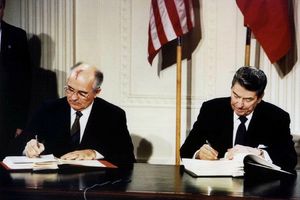
Kayhan daily branded the proposals “capitulation,” while IRGC-linked Tasnim News Agency warned of a “Gorbachev moment” that could unravel the state. The backlash underscored how sensitive the demands were, cutting at the very pillars of Supreme Leader Ali Khamenei’s power structure.
Alex Vatanka of the Middle East Institute says that reformists are testing the waters precisely because they sense the Islamic Republic is battered by sanctions and the war with Israel.
“The Islamic Republic is under strain like never before,” he told Iran International, “but reformists don’t have the street behind them.”
The moderates are laying the groundwork for further challenges if ignored, Vatanka said, insisting the letter should not be read as mere symbolism but as a signal of intent.
“This is just the beginning,” he added, cautioning that without broad public support, their leverage remains limited.
Others place the statement in the context of succession politics.
Historian and author Arash Azizi described it as part of a “post-Khamenei world,” with rival factions already maneuvering for influence after the 85-year-old leader.
By openly calling for suspending enrichment and curbing the Revolutionary Guards, he argued, reformists are staking out ground in anticipation of change at the top.
They are not naïve,” Azizi said. “They know these demands won’t be met tomorrow. But they want to shape what comes next.”
But the gulf between elite politics and public sentiment remains wide.
Behnam Ben Taleblu of the Foundation for Defense of Democracies (FDD) cautioned that while such statements attract attention in Washington, they resonate little inside Iran.
“This is politically significant in the sense of who said it, but it won’t have impact,” he said.
For many Iranians, he added, the reformist project has lost credibility after years of unmet promises.
A vision beyond hardline rule
The Reformist Front’s roadmap also included calls to end the house arrests of Green Movement leaders Mir-Hossein Mousavi and his wife Zahra Rahnavard.
Whether such demands gain traction will depend on whether they can move beyond closed-door debates and find resonance in a weary society.
Meanwhile, pressure on Tehran is mounting.
European governments have threatened to trigger the UN’s snapback sanctions if nuclear talks stall, a move that could plunge Iran deeper into recession.
Inflation and power and water shortages are already hitting daily life, while the war with Israel exposed vulnerabilities in Iran’s defenses and weakened its standing abroad.
Despite the boldness of their demands, few expect Iran’s ruling elite to bend.
The Supreme Leader has shown little tolerance for compromise, and the Revolutionary Guards remain entrenched across politics and the economy.
Yet Azizi argues the statement with its sweeping demands should not be dismissed as irrelevant.
“It is a mini earthquake,” Azizi told Iran International. “Even if it doesn’t lead to immediate change, it tells us how reformists are imagining a post-Khamenei Iran.”
Whether the letter proves to be a turning point or just another forgotten appeal may depend less on reformist leaders than on whether ordinary Iranians are willing to rally behind them.

Iran may be heading into even greater financial strain as fresh data points to a worsening outlook for global oil markets, threatening the country’s most vital source of revenue.
The International Energy Agency (IEA) says global demand in 2025 will grow by less than 700,000 barrels per day (bpd), while supply is set to rise by 2.5 million bpd— leaving a surplus of more than 1.8 million bpd.
The imbalance will likely push prices down, with the US Energy Information Administration (EIA) forecasting Brent crude to average just $51 in 2026.
Already under heavy US sanctions and burdened by chronic budget deficits, Tehran now faces the prospect of falling oil prices and growing supply gluts.
Iran would need oil at roughly $164 per barrel to balance its budget this year and next, according to the International Monetary Fund (IMF).
‘Little hope for growth’
Iran exported around 2.5 million bpd of crude and condensates before the Trump administration withdrew from the 2015 nuclear deal and reimposed sanctions in 2018.
That figure has dropped to about 1.6 million bpd in the first seven months of this year, based on Kpler data—nearly 90% bound for China.
Homayoun Falakshahi, a senior analyst at Kpler, told Iran International that even a lifting of sanctions would do little to improve Tehran’s export capacity.
“Falling reservoir pressure and surging domestic consumption mean any meaningful growth in exports is unlikely,” he said.
Iran’s domestic consumption has climbed by around 400,000 bpd since the return of US sanctions. Around 80% of output comes from aging fields that lose 5–8% annually, with little new capacity developed in recent years.
Deeper discounts, mounting debt
Iran’s reliance on small independent Chinese refiners, or “teapots,” leaves it vulnerable to price shifts.
These buyers already demand steep discounts, and the IEA projects global markets will face an additional surplus of 1.2 million bpd in 2026.
Such a glut—the deepest since the COVID-19 collapse—will make sanctioned oil harder to sell. Tehran is likely to be forced into offering even deeper discounts, further eroding revenues.
With crude still the backbone of government revenue, lower export earnings will aggravate Tehran’s fiscal crisis.
IMF data shows public debt has soared 85-fold since 2011, reaching $150 billion roughly—or 37% of Iran’s GDP.
The IMF projects debt will reach nearly 42% of GDP in 2026 and exceed 45% by 2030.

With the supreme leader’s retreat from view since the 12-Day War with Israel, Iran’s Revolutionary Guards (IRGC) appear to have taken on his role as political disciplinarian, nudging senior figures to keep their feuds out of public view.
It’s a task Ali Khamenei once handled directly — intervening to rein in factions and reassert unity — but his low profile in recent weeks has left a vacuum.
Not long before this “visible invisibility,” Khamenei publicly warned against the perils of political loose talk.
“Our shortcomings, our tongue wagging, our pointless bickering, our lack of patience, our incorrect analysis of the situation, sometimes change the course of history,” he said on April 24.
At the time, the remarks were read as a reprimand to officials for lax security and for letting their rivalries spill into the open, weakening Tehran’s hand in dealings with adversaries, above all Israel and the United States.
Now, those same dynamics are on display again, but it’s the IRGC playing nanny, sweeping up the shards of political infighting while Khamenei focuses elsewhere.
The clerical establishment is trying to thread an impossible needle: secure sanctions relief, or at least stave off a European “snapback” of UN sanctions, through diplomacy, while rebuilding its triple deterrence— missile and drone stockpiles, its proxy network, and uranium enrichment program.
Fracas One: ‘golden calf’
On August 5, Saeed Jalili, a Khamenei representative to the Supreme National Security Council and a prominent hardliner, lashed out at advocates of renewed talks with Washington, calling them “golden calf worshippers”—a scriptural reference denoting impatience and betrayal.
Jalili, who lost to Masoud Pezeshkian in the 2024 presidential race, has long opposed engagement with the West. But this time his remarks drew fire not just from reformists, but also from the hardest core of Iran’s power: the IRGC.
The IRGC-linked daily Javan warned that airing strategic disputes in public was “harmful,” while the Guards-affiliated Tasnim news agency cautioned against “radicalism.”
Only Raja News, tied to the sidelined family of late president Ebrahim Raisi, backed Jalili — a move likely aimed at clawing back influence.
Under sustained pressure, Jalili retreated on August 12, posting on X that failing to negotiate when opportunities arise would “cause losses,” citing Khamenei’s April endorsement of Oman-mediated nuclear talks with the U.S.
Fracas Two: no way but to talk
From the other side of the political spectrum, President Pezeshkian triggered the next flare-up on August 10.
“You reject engaging in talks. What’s your alternative? Do you want to fight? Fine, [the adversaries will] strike again. Then you have to repair the damage… These are not issues to be approached emotionally,” he told critics.
Reformist outlets hailed his “realism” and “honesty,” while hardline media accused him of advocating “surrender.” Again, the IRGC intervened.
Aziz Ghazanfari, a senior political chief, praised Pezeshkian’s “honesty and purity,” but warned that “not everything should be said in public” and urged him to stick to pre-approved, scripted comments.
Whether the IRGC can keep senior politicians’ “tongue wagging” in check—and prevent Khamenei’s carefully balanced machinations from unravelling—may determine whether Tehran’s strategy holds or fractures again.