Iran summons European envoys over EU-GCC statement on islands, missiles
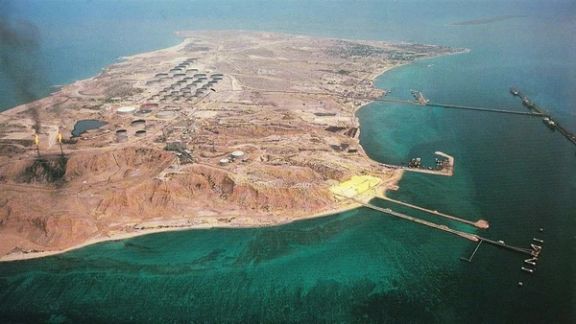
An aerial view of Abu Musa island in the Persian Gulf
Iran summoned European ambassadors in Tehran on Wednesday to protest what it called interventionist and baseless remarks made in a joint statement by the European Union and the Gulf Cooperation Council (GCC) on its territorial claims and defense policies.
Political Deputy Foreign Minister Majid Takht-Ravanchi said the envoys and heads of European missions were called in after the EU-GCC communiqué questioned Iran’s sovereignty over three islands in the Persian Gulf and criticized its missile and regional activities.
“The summons followed the meddlesome allegations in the joint statement of the EU and GCC foreign ministers regarding Iran’s islands and its defensive issues,” Takht-Ravanchi said, according to state media.
The move is a response to an EU-GCC meeting whose final statement backed the UAE’s claim to Abu Musa, Greater Tunb and Lesser Tunb -- urging a peaceful settlement or referral to the ICJ -- and called for a strictly peaceful Iranian nuclear program, and curbs on the proliferation of missiles, drones and related technology.
Tehran rejects the UAE’s claims, says the three islands are integral Iranian territory, and accuses Western and Persian Gulf states of undermining its sovereignty.
The statement also called on Iran to restore full cooperation with the UN nuclear watchdog. It also pressed Yemen’s Iran-aligned Houthis to join UN-led talks, halt Red Sea attacks and free detained aid workers.
The move comes amid heightened tensions after UN sanctions were reimposed and renewed Western pressure over Iran’s nuclear and regional activities.
Speaking at the EU-GCC High-Level Forum on Regional Security and Cooperation in Kuwait, EU foreign policy chief Kaja Kallas said the bloc sought to “encourage Iran to act as a responsible power in the Middle East” while acknowledging that the return of UN sanctions was “a setback but not the end of diplomacy.”
Kallas also linked instability in the Red Sea to Iran’s support for Yemen’s Houthi group and urged continued dialogue to reduce tensions.
Germany’s Foreign Minister Johann Wadephul also accused Tehran of “projecting destabilizing influence” through its regional proxies and warned that Houthi attacks were endangering both Israel and international shipping routes.
Iran’s Foreign Ministry has dismissed such criticism as politically motivated.
Spokesman Esmail Baghaei said Tuesday that “those who reimposed restrictions on Iran and accuse us of destabilization have no right to lecture us,” describing the remarks as shameful and hypocritical.
Baghaei added that European governments, which he said spend “hundreds of billions of dollars” on advanced weaponry, were in no position to question Iran’s indigenous defense capabilities.
Australia has introduced legislation that would, for the first time, allow its government to designate foreign state entities -- including Iran’s Islamic Revolutionary Guard Corps (IRGC) -- as terrorist organizations.
Attorney-General Michelle Rowland presented the bill to Parliament, saying it aims to close a major legal gap in Australia’s counterterrorism framework by permitting the listing of state-backed organizations accused of supporting or conducting terrorist acts.
The move follows findings by the Australian Security Intelligence Organization (ASIO) that the IRGC was involved in two anti-Semitic attacks in Sydney and Melbourne in 2024.
Rowland said the new Criminal Code Amendment (State Sponsors of Terrorism) Bill 2025 would strengthen Australia’s ability to respond to “malicious foreign actors” and serve as a warning to any state seeking to threaten the country through violence or coercion.
“This bill strengthens Australia’s counterterrorism framework, creating an environment in which it is more difficult, more risky, and more costly for foreign actors to cause harm,” she told Parliament.
Under the proposed law, the government would gain the power to list foreign state agencies or entities as state sponsors of terrorism if they are found to have directly or indirectly planned, supported, or financed acts of terrorism against Australia.
Once listed, it would become a criminal offence to collaborate with, fund, or provide material assistance to those entities. Limited exemptions would apply for diplomatic or legal obligations.
The legislation introduces new criminal offences, including preparing or participating in state-sponsored terrorist acts and offering material support to listed state actors. Intelligence and law enforcement agencies would also receive expanded powers to investigate and disrupt suspected state-linked terrorism.
A flag flutters above the Embassy of the Islamic Republic of Iran in Canberra, Australia, August 26, 2025.
ASIO findings link IRGC to attacks in Australia
The bill comes after a series of actions by Canberra against Tehran. In August, Prime Minister Anthony Albanese expelled Iranian Ambassador Ahmad Sadeghi following ASIO’s conclusion that the IRGC directed two arson attacks on Jewish sites -- one at a kosher restaurant in Sydney and another at a synagogue in Melbourne.
“ASIO has now gathered enough credible intelligence to reach a deeply disturbing conclusion that the Iranian government directed at least two of these attacks. Iran has sought to disguise its involvement,” Albanese said.
He described the incidents as “extraordinary acts of aggression orchestrated by a foreign nation on Australian soil.”
The proposed law would align Australia more closely with allies such as the United States, which designated the IRGC as a terrorist organization in 2019.
The group, established in 1979 after Iran’s Islamic Revolution, reports directly to Supreme Leader Ali Khamenei and wields significant military, political, and economic influence at home and abroad. Its Quds Force oversees operations that have supported armed groups in Lebanon, Gaza, Yemen, and Syria.
Australia’s move follows its decision last week, along with New Zealand, to implement revived United Nations sanctions on Iran after European powers triggered the snapback mechanism over Tehran’s nuclear program. The sanctions reimposed restrictions on arms, finance, and missile activities.
Canberra has also joined G7 nations in condemning Iran’s repression of dissidents abroad and intimidation of diaspora communities. In September, Australia warned of “transnational repression” targeting journalists and Jewish groups.
Rowland said the latest legislative step reflects Australia’s evolving security environment. “The threats we face are changing,” she said. “This bill ensures that our national security laws remain fit for purpose -- robust, balanced, and capable of protecting all Australians.”
Iranian traders, economists and digital market participants are alarmed by new state curbs on stablecoin holdings, telling Iran International the Central Bank’s decision will choke savings and drive capital offshore amid the historic devaluation of rial.
“Iran’s stablecoin limits will not stop dollar demand — they will only drive it deeper underground,” a Tehran-based economist who did not want to reveal his identity told Iran International.
The Central Bank’s High Council late last month approved a $5,000 annual purchase limit per person and a $10,000 ceiling on total stablecoin holdings.
The rule, announced as the rial plunged to a record low of 1,170,000 per US dollar earlier this month, drew sharp criticism from Iranians using Tether and other digital currencies to protect their assets from geopolitical headwinds.
The slump was triggered by the UN sanctions which resumed late last month after European countries suspicious about Iran's nuclear activities activated the so-called snapback mechanism.
The rial stood slightly below 1,140,000 at the time this report was published.
Even a prominent government official criticized the move.
“A disaster is when policymakers with good intentions, but based on wrong reasons and ignoring evidence, make a decision. The result will be weakening governance, erosion of public trust, a threat to people’s assets and discrediting institutions,” Deputy Minister of Communications Ehsan Chitsaz wrote on X.
Crypto market endangered
Traders contacted by Iran International described the new ceilings as both impractical and punitive. “The government keeps tightening controls because it has no real answer for the collapsing rial,” said Farzad, a 29-year-old trader in Tehran.
“They call it regulation, but it’s just another way to shift the burden onto ordinary people. When markets tumble, traders like us will be trapped — unable to cash out or protect our savings.”
“They’ve also started deciding how much people can spend based on their job status — fifty billion rials if you’re unemployed, 200 billion if you earn a salary,” Parham, a 25-year-old in Tehran, said.
“These limits kill initiative and push everyone toward informal channels.”
Parham referred to another Central Bank directive last week that set tiered limits on rial transactions — 200 billion rials for wage earners, 50 billion for the unemployed, and five billion for inactive entities.
Manipulation risk
The new regulation and a concurrent media campaign were meant to manipulate prices, the economist said.
“The $5,000 Tether cap is not about stability; it’s a cover for manipulation,” he said. “They’re draining liquidity under the guise of regulation and trying to buy time while the rial keeps falling. Fear about frozen assets fuels panic, making people sell at a loss.”
Tasnim, a media outlet linked to Iran's Revolutionary Guards, reported that “thousands of addresses on the Tether network have so far been frozen and their assets effectively made inaccessible,” calling for tighter oversight of exchanges such as Nobitex.
Black-market growth likely
Other commentators say the measure will only feed a shadow economy. Saeed Reza Moradian of OTC Crypto Exchange warned that such limits “will lead to the spread of rented accounts.”
“A $5,000 annual Tether limit destroys the digital economy. People’s needs won’t disappear — they will just move to opaque and foreign platforms,” wrote a user called Sepideh on X.
Iran International has observed advertisements offering cash for renting national ID numbers, allowing others to exploit the $5,000 per person stablecoin quotas.
Central Bank officials insist the measure is needed to prevent capital flight. Asghar Abolhasani, Secretary of the bank's High Council said users have one month to comply. But crypto traders told Iran International the rule is unenforceable.
“You can’t police digital assets with outdated banking tools,” said Farrokh, a Tehran-based trader. “Once trust is gone, people won’t wait — they’ll take their money abroad in whatever form they can.”
Failing controls
The comments by people depict a widening gap between official policy and public behavior. Small traders and households that once relied on Tether as a hedge against inflation now face the choice of breaking the rules or watching their savings erode.
For many Iranians confronting another devaluation and the return of UN sanctions, the Central Bank’s rule represents yet another blow to financial autonomy.
Those who spoke to Iran International said the cap will narrow legal channels, amplify underground trade and further alienate citizens from a banking system which is already widely distrusted.
Germany’s foreign ministry told Iran International that the European Union’s reimposed sanctions on Iran include financial restrictions but still allow limited personal money transfers.
“The measures contain restrictions in the financial sector, but provide exceptions, thresholds or authorizations to enable certain transactions, for example money transfers with Iranian persons in limited amounts as well as certain private transactions,” the ministry said in a written response to a query on Tuesday.
It added that EU sanctions regulations are directly applicable in Germany and that Berlin has not introduced additional national restrictions. “Possible further measures taken by banks or other private actors on their own responsibility are not necessarily based on sanctions law,” the ministry said.
The EU sanctions were restored last month after Britain, France and Germany triggered the United Nations “snapback” mechanism over what they called Iran’s repeated breaches of the 2015 nuclear deal. Six previous Security Council resolutions on Iran’s nuclear and missile activities were reinstated, along with autonomous EU measures.
Last week, German Foreign Minister Johann Wadephul said the return of sanctions was unavoidable because of Tehran’s actions, adding that “Iran must never come into possession of a nuclear weapon.”
Iran has rejected the sanctions as illegal and said it will not recognize any attempt to revive measures that expired under Resolution 2231.
Iran said on Tuesday it would soon stage a joint naval exercise in the Caspian Sea with the other four littoral states, saying the sea was off-limits to outside powers.
“The Caspian Sea belongs only to its five coastal states – Iran, Russia, Kazakhstan, Turkmenistan and Azerbaijan – and they will resolve related issues themselves,” navy commander Shahram Irani said at a gathering of naval chiefs in St. Petersburg.
Irani said the littoral states had developed “very good relations” in security, economic and environmental fields and had the capability to ensure stability without foreign involvement. “There is no place in the Caspian Sea for extra-regional powers,” he said.
He said a recent joint exercise in Iran’s Bandar Anzali and along the southern Caspian coast had strengthened cooperation, and that another drill would be held soon.
Iran navy chief Rear Admiral Shahram Irani meets commanders of Caspian littoral states in St. Petersburg, Russia.
Iran maintains two distinct naval forces. The army navy, commanded by Irani, operates in the Gulf of Oman, the Indian Ocean, and the Caspian Sea, while the Revolutionary Guard navy controls the Persian Gulf and Strait of Hormuz.
In August, Iran’s army navy fired a range of anti-ship cruise missiles in large-scale exercises in the Gulf of Oman and northern Indian Ocean, following a separate Iran-Russia drill in the Caspian a month earlier. Officials said the systems were radar-evading and high-precision, and warned that any new conflict with Israel would bring a stronger response from Tehran.
The Caspian Sea, bordered only by the five littoral states, has long been treated by Tehran and Moscow as off-limits to foreign militaries.
Iranian businessman Babak Zanjani, a tycoon once sentenced to death for corruption before receiving clemency, said that $2.3 billion from a Malaysian bank account tied to him was seized to help pay an international arbitration award against Iran’s National Oil Company (NIOC).
Zanjani wrote on the social platform X that the UAE-based Crescent Petroleum had “not only seized Iran’s Oil Ministry building in London worth $125 million, but also confiscated $2.3 billion belonging to the National Iranian Oil Company held in Malaysia’s First Islamic Investment Bank.”
He added that the funds had been converted to euros and were awaiting transfer “to a Singapore bank,” while the company’s total claim against NIOC had reached $2.9 billion plus $13 million in accrued penalties.
According to Iranian media, the Kuala Lumpur High Court implemented a 2021 ruling by The Hague’s arbitration tribunal, ordering Iran to compensate Crescent over a failed 2001 gas supply contract for the offshore Salman field. The enforcement follows similar seizures of NIOC properties in London and Rotterdam.
On Monday, Iran’s state media also confirmed that a UK appeals court had upheld the confiscation of the NIOC House, a historic £100 million property near the British Parliament, ruling that it could be used to help satisfy Crescent’s arbitration award.
The judgment found that Iran’s attempt to transfer ownership of the building to another state entity was intended to evade debt recovery.
The Crescent case -- one of Iran’s longest-running energy disputes -- stems from a 25-year gas export contract. Iran withdrew from the deal in 2010, alleging unfavorable terms, prompting years of arbitration and legal challenges.
Once worth an estimated $13.5 billion, Zanjani made his fortune helping Iran bypass Western sanctions during the presidency of Mahmoud Ahmadinejad through complex oil trading networks.
Zanjani, convicted in 2016 of embezzling $1.9 billion in oil revenues, had his death sentence commuted to 20 years after agreeing to help recover state funds abroad. Released last year, he has since rejoined Iran’s oil sector under government oversight, according to local media.