Russia To Get $10 Billion For Iran Nuclear Plant With US Waiver - Report

If finalized, the renewed nuclear agreement between Iran and world powers lets Russia cash in on a $10-billion contract to build atomic reactors in Iran.

If finalized, the renewed nuclear agreement between Iran and world powers lets Russia cash in on a $10-billion contract to build atomic reactors in Iran.
Washington Free Beacon reported on Wednesday that Russia’s top state-controlled energy company Rosatom has a contract with the Atomic Energy Organization of Iran for development projects at Bushehr nuclear plant in southern Iran.
The report said it obtained the information through the translation of some Russian and Iranian documents.
Negotiations in Vienna after 11 months hit a bump in the road on March 5 when Russia asked that sanctions for its invasion of Ukraine should not impact implementation of a revived 2015 nuclear deal, the JCPOA (Joint Comprehensive Plan of Action).
Moscow said on Tuesday it received US assurances that the Biden administration will waive the sanctions, noting that “Additions were made to the text of the future agreement on JCPOA restoration to ensure that all the JCPOA-related projects, especially with Russian participation, as well as Bushehr Nuclear Power Plant, are protected from negative impact of anti-Russian restrictions by US and EU”.
US State Department spokesman Ned Price confirmed on Tuesday, "We, of course, would not sanction Russian participation in nuclear projects that are part of resuming full implementation of the JCPOA”.
Foreign Minister Hossein Amir-Abdollahian said Wednesday that two of the outstanding matters in talks have been settled, “but two issues remain, including economic guarantees”.

Two of four outstanding matters in Iran’s nuclear talks with world powers have been settled in the past three weeks, Foreign Minister Hossein Amir-Abdollahian said Wednesday.
"We had four issues as our red lines in our near-final negotiations,” Amir-Abdollahian said. “Two of them have been almost resolved…and we have reached an agreement. But two issues remain, including economic guarantees.”
Iran has sought assurances that the US would honor commitments set by the deal over Iranian access to foreign markets and inward investment. Russian foreign minister Sergei Lavrov said Tuesday that Russia had received US assurances he had asked for March 5 that sanctions against Russia would not impact implementing a revived 2015 nuclear deal, the JCPOA (Joint Comprehensive Plan of Action). United Nations nuclear chief Rafael Mariano Gross also said Tuesday that “doubt” over the JCPOA implementation due to Ukraine sanctions had been cleared up.
Amir-Abdollahian said he had spoken earlier in the day with Ali Bagheri Kani, who has led Iranian negotiators in talks with world powers in Vienna. The foreign minister said “we continue to exchange our messages to the Americans through non-paper with Enrique Mora [the senior European Union official chairing the Vienna talks].”
If the US was “ready to settle” the two remaining matters, Amir-Abdollahian said, then Iran was “ready to conclude” with a gathering of foreign ministers in Vienna: “If the American side fulfills our remaining two demands today, we will be ready in Vienna tomorrow.”

Tehran and six world powers are on the verge of agreeing to revive the 2015 Iran nuclear deal, the head of the International Atomic Energy Agency said Tuesday.
In an interview with the France 24 English-language television station, Rafael Mariano Grossi welcomed Russian Foreign Minister Sergei Lavrov’s announcement that Moscow had received assurances from the United States that sanctions against Russia over Ukraine would not interfere in implementing the 2015 deal, the JCPOA (Joint Comprehensive Plan of Action).
Contrary to claims by some US and western European officials, Grossi said “the problems that emerged in the past few days were real” as sanctions against Russia over Ukraine had cast doubt on “some of the actions and activities contemplated under the JCPOA.”
“The JCPOA is an extremely complex instrument that has a number of limitations – things that Iran shouldn’t or couldn’t do,” Grossi explained. “But at the same time, it has some incentives, some technical cooperation projects and things that could be facilitated in Iran under the inspectors of the IAEA, and carried out in cooperation mainly with China and Russia…All of a sudden, these activities of commercial nature that require buying equipment, exchanging expertise, etc appeared to be in doubt.”
The US has in recent years employed third-party sanctions against Iran, leaving open anyone dealing with Tehran to punitive US action. The IAEA would play a role monitoring a restored JCPOA, with the enhanced inspection powers under the agreement. “I hope we can have this agreement soon, and start working - my inspectors are ready to go,” Grossi maintained.

Iran's foreign minister has voiced optimism over a nuclear deal after Russia backed off from a demand to be exempted from Ukraine sanctions in trade with Iran.
“If the American side is realistic, we will finalize a good, strong, and lasting agreement with the support of all negotiating parties in Vienna,” Amir-Abdollahian said in a phone conversation with his Chinese counterpart Chinese State Councilor and Foreign Minister Wang Yi Tuesday evening.
Referring to his meeting with Russian Foreign Minister Sergei Lavrov in Moscow earlier on Tuesday, Amir-Abdollahian said Russia, one of the five countries currently negotiating the revival of the 2015 nuclear deal with Iran, plays a constructive role in the talks and "remains onboard for the final agreement in Vienna.”.
Lavrov said Tuesday Russia has "written guarantees" it can carry out its work as a party to the Iran nuclear deal. "We have received written guarantees – they are included in the very text of the agreement on reviving the JCPOA, and in these texts there is a reliable defense of all the projects provided for by the JCPOA and those activities – including the linking up of our companies and specialists," Lavrov said.
The "written guarantees" have apparently been provided in the text of the final agreement being negotiated.
The Russian Foreign Ministry Spokesperson Maria Zakharova said Tuesday. "The text of the upcoming agreement has been amended with the necessary additions to ensure reliable protection of all projects and areas of activity envisaged by the JCPOA - including those with the direct involvement of our specialists, as well as, for example, Russian-Iranian cooperation on the Bushehr Nuclear Power Plant - from the harmful effects of anti-Russian restrictions [imposed by] the United States and the European Union," Zakharova said in a statement Tuesday quoted by the state-owned Ria Novosti.
Iran's state media on Wednesday welcomed the new developments with optimistic frontpage headlines including the Tehran Municipality-owned Hamshahri newspaper's "Moscow Rock No Longer Barring Vienna [deal]" and state-owned Khorasan's "Russian Knot in Vienna [Talks] Undone" while Iran newspaper, the mouthpiece of the government, evasively chose the headline "Iran, Russia Agree to Neutralize Sanctions".
The US State Department spokesperson Ned Price said on Tuesday that Washington will not sanction Russian participation in nuclear projects in Iran under a revived JCPOA, but underlined that it would also not allow Russia to use the deal as an "escape hatch" to evade Ukraine-related sanctions.
Limiting the guarantees Moscow was seeking from the US to JCPOA-related cooperation with Iran appears to be a big step back from the Russian Foreign Minister Sergei Lavrov's demand who according to Tass news agency said on March 5 that Russia had asked for guarantees that US sanctions would not affect Russia's "right to free and full-fledged trading, economic, investment, military and technical cooperation."
In an interview with Iran's reformist Etemad newspaper on Monday before Amir-Abdollahian's visit to Moscow published Wednesday, the Russian ambassador to Tehran Levan Dzhagaryan emphasized that Russia wanted exemption from such sanctions in all areas, not only in relation to the JCPOA.
"We need assurance that Russia's national interests are met, including in the framework of bilateral relations with the Islamic Republic of Iran in various areas, not only in the framework of the JCPOA," Dzhagaryan told Etemad. He said Russia does not want the sanctions imposed on her to be "a serious impediment to continuation of cooperation with a friendly country" and was awaiting "written guarantees".
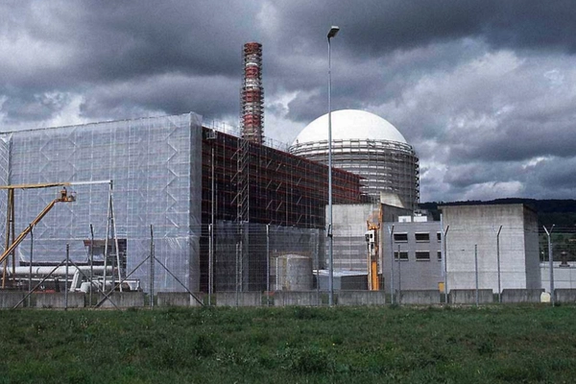
Washington would not sanction Russia in nuclear projects that are part of the 2015 Iran nuclear deal, A US official was quoted by Reuters As saying on Tuesday.
The official also said that the United States continues to engage with Russia on a return to the full implementation of the 2015 Iran nuclear deal
Iranian and Russia foreign ministers presented a united front at a Moscow news conference Tuesday over long-running talks to revive the 2015 Iran nuclear deal.
Iran’s Hossein Amir-Abdollahian said that the recent pause in the 11-month Vienna talks could “pave the way for the resolution of issues and the return of all parties to their nuclear deal commitments.” Amir-Abdollahian said he had invited Lavrov to visit Tehran soon.
An apparent twist was added to the talks March 5 when Lavrov said Moscow needed assurances that any sanctions against Russia over the Ukraine invasion would not impact Russia’s relations with Iran and the implementation of a revived 2015 deal, the JCPOA (Joint Comprehensive Plan of Action). There has been wide speculation as to what Lavrov meant and exactly what Moscow was seeking.
But the remarks of a US official on Tuesday show that Washington only exempted Russia in nuclear projects outlined in the JCPOA.
Russia is expected to play a central part in reimplementing the JCPOA, especially in shipping out enriched uranium currently held by Tehran above JCPOA limits. Moscow may have suspected that US third-party sanctions might target any Iranian links with Russia.
Lavrov said the future of Iranian-Russian relations was bright, especially as the Vienna talks were in the “home straight.”
‘Cannot be ignored’
Kremlin spokesman Dmitry Peskov had a different emphasis Tuesday, suggesting that Moscow and Washington may not yet have resolved Lavrov’s query over possible sanctions. Peskov told reporters that the issue remained "a topic for the continuation of talks - it is really something that is very important for us."
Peskov said sanctions against Russia "directly affect the interests of our country in the context of that deal,” and that international sanctions over Ukraine were “a new aspect that cannot be ignored, that must be taken into account."
Oil prices fell to their lowest level in three weeks Tuesday, with some analysts attributing this in part to Lavrov’s stress on Russia’s continuing commitment to the JCPOA, which when back in place could see 1 million barrels a day of Iranian oil return to the global markets. Also depressing the price was expectation of reduced demand due to the Covid-19 upsurge in China.

US Republican Senator Ted Cruz says Russian President Vladimir Putin and Supreme Leader Ali Khamenei are the major winners of the renewed deal with Iran.
In a tweet on Monday, Cruz denounced the deal that the Biden administration hopes to strike with the Islamic Republic, noting that “Biden’s foreign policy has failed in Afghanistan and Ukraine; now he is preparing to make a new catastrophic nuclear agreement with the Iranian regime”.
He emphasized that the Islamic Republic is “the same regime that chants ‘Death to America’, has killed hundreds of Americans, and conducts terrorism around the globe”.
He also shared a video of his remarks last week, saying, “In Vienna, Biden diplomats have been furiously bending over backwards to surrender to the Ayatollah (referring to Khamenei), the same Ayatollah who is a theocratic despot who regularly chants ‘Death to America’ and ‘Death to Israel’”.
“This administration wants nothing more than to give them hundreds of billions of dollars in sanctions relief, money that will inevitably be used to -- number one -- murder Americans… and number two – to develop nuclear weapons”, he said.
Iran “may be only weeks away from being able to develop a nuclear weapon”, Cruz warned, noting that “our enemies are stronger because of the weakness of this administration.
In a statement from Senate Republicans released on Monday, 49 Senators told the Biden Administration they oppose a revived deal as it can reduce limits on Tehran’s nuclear program.