Seven Women Killed In One Day In Domestic Violence Across Turkey
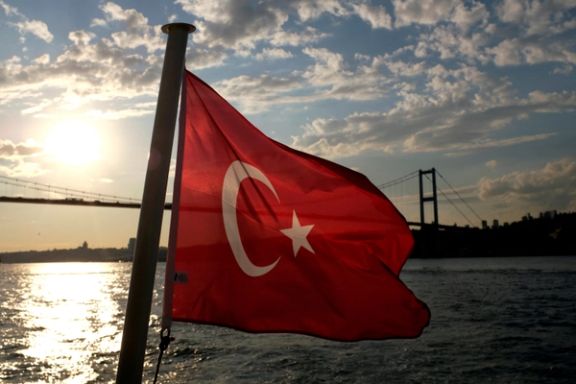
Seven women are reported to have died as victims of domestic violence in a single day in Turkey, according to local media.

Seven women are reported to have died as victims of domestic violence in a single day in Turkey, according to local media.
All the victims died either at the hands of their partners or ex-partners, reported television station Habertürk.
"In total, seven women were savagely killed in İzmir, Bursa, Sakarya, Erzurum, Denizli, and Istanbul," .
The victims, aged between 32 and 49, suffered fatal injuries from gunshot wounds or stabbing. Three of the assailants chose to end their own lives, two were apprehended, and one, wounded during detainment, succumbed later.
The circumstances surrounding the seventh assailant, who had escaped prison to fatally harm his wife, remain unclear.
According to the broadcaster, "The suspects were either their current spouses, or spouses from whom they were separated," further emphasizing the close relation between the perpetrators and victims. The names of the victims, along with their photographs, were displayed on the station's website.
In 2023, women's rights NGO ‘We Will Stop Femicide’ documented 315 cases of femicide, with 65% of the victims murdered within their own homes. Additionally, feminist groups have attributed 248 cases of "suspicious deaths," initially labelled as suicides by authorities, to third-party involvement, highlighting the concerning trend of defenestration incidents in Turkey.
Turkey's withdrawal from the Istanbul Convention in 2021, an international treaty aimed at preventing and combating violence against women, has raised criticism. The convention mandated authorities to investigate and penalize violence against women.
"In 15 years, the only year when the number of femicides decreased was in 2011, the year which the Istanbul Convention was adopted," remarked the NGO.
Furthermore, a lawsuit filed against We Will Stop Femicide by the Istanbul prosecutor in 2022, alleging "immoral activities," was dismissed last September.
In Iran, a woman dies at the hands of her husband or other family member on average every four days according to findings reported last year.

The crew of an unflagged ship allegedly smuggling missile parts to Houthi rebels were talking by satellite phone to Revolutionary Guard members, according to an FBI affidavit.
The revelation comes as the captain and three other men from the dhow are due to appear in a federal court in Virginia on Tuesday.
The vessel was intercepted by US naval forces in January in the Arabian Sea amid continuing Houthi attacks on shipping in the region. Two American Navy SEALs drowned in the operation.
The captain, Pakistani national Muhammad Pahlawan, refused to slow the ship when the US Navy began its boarding attempt.
Instead he “shouted for the crew to burn the boat before the Navy could board it,” according to court documents filed in the federal court in Richmond.
Upon searching the vessel, US forces seized Iranian-made weaponry consistent with Houthi attacks, marking the first confiscation of such weapons since the current series of attacks on shipping began in November.
“Initial analysis indicates these same weapons have been employed by the Houthis to threaten and attack innocent mariners,” an FBI agent wrote, quoting Central Command.
Crew members were in communication with a member of Iran’s Revolutionary Guard via satellite phone, according to the FBI.
Pahlawan and the other crew membesr, Mohammad Mazhar, Ghufran Ullah, and Izhar Muhammad, face charges of attempting to smuggle missile components and providing false information. They are accused of misleading authorities about the ship's origin and cargo.
Prosecutors are expected to push for their detention without bond.
Their legal representatives have yet to comment on the case. A further 10 crew members are being detained as material witnesses under federal law.
Iran sponsors the Houthis, providing funding, weapons, and even direct support on the ground. While Iranian officials claim the Houthis operate independently, recent events suggest Iran can influence their actions, as seen in Syria and Iraq.

Iran's assassination threat against two US former national security advisers has been countered by a $12m-a-year Secret Service operation, official papers reveal.
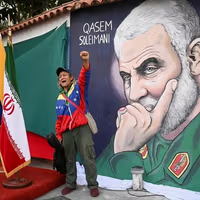
John Bolton and Robert O’Brien, who served under President Trump, are believed to have been targeted by Tehran in revenge for the killing in 2020 of Qassem Soleimani.
Iran has openly threatened to abduct and assassinate former Trump administration officials in retaliation for the death of the IRGC Commander.
Newly unveiled documents, obtained through a Freedom of Information Act request by CBS News' "60 Minutes," detail the extensive protection measures implemented for Bolton and O'Brien, who continued to receive Secret Service security long after their tenure in the Trump administration had ended.
The documents, submitted to Congress by the Department of Homeland Security (DHS) and signed by DHS Secretary Alejandro Mayorkas, outline comprehensive security arrangements.
These include dedicated special agents offering round-the-clock protection covering residences, workplaces, and both domestic and international travel.
The need for heightened security for Bolton and O'Brien was prompted by credible threats emanating from Iran, although the documents do not explicitly mention the country.
The revelation underscores the escalating tensions between Iran and former members of the Trump administration, with Iran openly targeting individuals as retaliation for past actions.
The disclosed figures reveal that for a ten-month period, expenses related to protecting Bolton amounted to $4,934,963, while those for O'Brien totaled $5,778,713 over a year-long span. Additional non-payroll expenses, such as foreign travel costs and equipment rentals, contributed to the substantial overall expenditure.
US law enforcement also protects Iranian dissidents and journalists in America due to credible threats from Iran.
British police have formed a unit to counter threats from Iran, China, and Russia. The new police unit has prevented a number of Iranian abduction and assassination plots.

Iran continues to allow al-Qaeda to facilitate its terrorist activities, a key communication channel to transfer funds and fighters to South Asia, Syria, and elsewhere, the US State Department told Iran International.
The State Department said that “Iran continues to deny al-Qaeda’s presence in the country, despite their knowledge of al-Qaeda leadership figures’ activities there," the relationship dating back to as early as 2009.
The State Department also confirmed remarks by James Rubin, the US special coordinator for the State Department’s Global Engagement Center, who recently talked of “a new partnership between Iran and al-Qaeda" in a briefing in London, saying that Iran is harboring al-Qaeda leaders inside its soil.
The department also emphasized that “Iran is the leading state sponsor of terrorism, facilitating a wide range of terrorist activities and other illicit activities around the world -- in Bahrain, Iraq, Lebanon, Syria, and Yemen, through militant groups and terrorists such as Hezbollah and Hamas.”
They branded Iran "a primary driver of instability across the Middle East" since the Islamic regime was established in 1979.
Late in January, the United Nations released a report disclosing eight new al-Qaeda training camps and other infrastructure inside Afghanistan as well as five madrasas, or religious schools to teach jihadi ideology. An al-Qaeda leader known as Hakim al-Masri “is responsible for the training camps and conducting suicide bomber training for Tehrik-i-Taliban Pakistan,” the Pakistani branch of the outfit. Al Qaeda has also established a new base “to stockpile weaponry” in the central province of Panjshir.
The report cited several UN Security Council member states as saying that the key al-Qaeda figures are travelling to provide liaison between the terrorist group’s de facto leader, Saif al-Adel, who resides in Iran, and senior al-Qaeda members in Afghanistan, including Abdul Rahman al-Ghamdi. Al-Ghamdi is one of the suspects in the September 11 attacks, who was unable to participate for unknown reasons.

Seif al-Adel, a former Egyptian special forces officer and a high-ranking member of al-Qaeda with a $10 million US bounty on his head, became the "uncontested" leader of the militant group following the July 2022 death of Ayman al-Zawahiri in a US missile strike in Kabul.
The Taliban has not formally declared him "emir" because of sensitivity to the concerns of the Taliban authorities in Afghanistan, who haven't wanted to acknowledge that Zawahiri was killed by a US rocket in a home in Kabul, another big blow to the group since its founder Osama bin Laden was killed in 2011. Another UN report said that the Sunni Islamist al-Qaeda is also sensitive to the issue of Adel residing in largely Shiite Iran.
The latest UN report highlighted that “The group maintains safe houses to facilitate the movement between Afghanistan and the Islamic Republic of Iran in the Provinces of Herat, Farah and Helmand, with additional safe house locations in Kabul.”
In February 2023, then State Department spokesperson Ned Price said, “Our assessment aligns with that of the UN… offering safe haven to al-Qaeda is another example of Iran’s wide-ranging support for terrorism, its destabilizing activities in the Middle East and beyond.”
A day after Washington aligned itself with the UN statement locating Adel in Iran, the regime’s foreign minister, Hossein Amir-Abdollahian, denied he is based in the country. "I advise the officials of the White House to stop the failed game of Iran-phobia, making news about the leader of al-Qaeda and linking him to Iran is laughable," he said.
According to the US State Department’s Rewards for Justice program, Adel moved to southeastern Iran after bomb attacks on the US embassies in Tanzania and Kenya that killed 224 civilians and wounded more than 5,000 others in 1998. He reportedly lived under the protection of Iran's Revolutionary Guards (IRGC), but in April 2003, Iran placed him and other al-Qaeda leaders under house arrest. In September 2015, Adel and four other senior al-Qaeda leaders were released from Iranian custody in exchange for an Iranian diplomat kidnapped by al-Qaeda in Yemen. They stayed in Iran after their release.
The UN report also confirmed that “the relationship between the Taliban and al-Qaeda remains close, and the latter maintains a holding pattern in Afghanistan under Taliban patronage.” Expressing concerns about the presence of al-Qaeda senior figures in Afghanistan, the UN team said, “the group continues to pose a threat in the region, and potentially beyond.” The report noted that Taliban tries to “reduce the visibility” of its ties with al-Qaeda.
In addition to harboring al-Qaeda leaders, Tehran is also bolstering its relations with Taliban, which agreed not to allow al-Qaeda to operate in areas under their control days after the takeover of Kabul in August 2021. Al-Qaeda is bound to the Taliban by a pledge of allegiance first offered in the 1990s by Osama Bin Laden to his Taliban counterpart Mullah Omar. The pledge has been renewed several times since, although it has not always been publicly acknowledged by the Taliban.

Saman Yasin (Seydi), an Iranian rapper arbitrarily imprisoned for 18 months, has demanded his judicial sentence in a letter addressed to the head of the Judiciary.
In his letter from Ghezel Hesar Prison in Karaj, published on Instagram, he wrote, "For 18 months, I have been imprisoned without any evidence or documentation, and during this time, court sessions have been scheduled for me numerous times but have not been held."
Arrested during the 2022 Women, Life, Freedom uprising, Yasin was originally sentenced to death before the Supreme Court overturned the ruling.
In the letter, Yasin disclosed enduring "mental, emotional, and physical problems" in prison, exacerbated by authorities' refusal to provide medical assistance. His plight is part of a larger pattern among political prisoners, who have spoken out against torture tactics, including the administration of unidentified pills and injections.
Previously, Yasin was subjected to further torture when detained in a mental hospital on the orders of a judge. Punished for smuggling an audio file from prison, Yasin described experiences of being tied to a bed and physically assaulted by security forces.
He said his tormentors sought a false confession regarding possession and use of firearms during the prior year's protests.

US State Department Spokesman Matthew Miller said the US remains "seriously concerned about Iran’s continued expansion of its nuclear program in ways that have no credible civilian purpose".
During his Monday briefing, he said Iran's continued production of highly enriched uranium remains a major policy concern. The statements came as two confidential reports from the UN's nuclear watchdog were distributed to member states on Monday, providing a grim assessment of Iran's nuclear program.
Persistent obstacles to thorough inspection procedures continue to obscure the true nature of Iran's activities, heightening concerns about the intentions of the Tehran regime.
IAEA head Rafael Grossi said that "public statements made in Iran regarding its technical capabilities to produce nuclear weapons" have only increased "concerns about the correctness and completeness of Iran's safeguards declarations".
Iran's enriched uranium stockpile has now exceeded 5.5 tons, representing an increase of one ton since October. Within the stockpile are 712.2 kilograms of uranium enriched up to 20 percent and 121.5 kilograms enriched up to 60 percent. Notably, the latter category has seen a decrease of approximately 7 kilograms over the past hundred days.
The Wall Street Journal reported that Iran has decided to reduce its stockpile of 60 percent enriched uranium over the last three and a half months "by deliberately diluting the material by mixing it with low-grade 2 percent material", noting that it is the first time the International Atomic Energy Agency has reported a quarterly drop in Tehran's highly enriched stockpile since Iran started production.
According to definitions established by the International Atomic Energy Agency (IAEA), Iran would require a minimum of 42 kilograms of uranium enriched to 60 percent to produce a nuclear bomb.
Iranian authorities have consistently asserted that Iran's nuclear program is solely intended for peaceful purposes. However, nuclear experts overwhelmingly argue that the levels and quantities of enrichment undertaken by Iran since 2021 cannot be justified in the absence of a weapons program.