Suspected Israeli Air Strikes On Iran-Linked Targets Continue In Syria
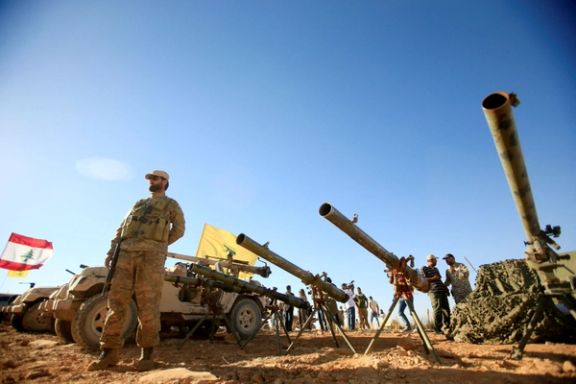
A suspected Israeli strike hit a villa in Baniyas, Syria believed to have been inhabited by individuals affiliated with Iran-backed militia, A war monitor reported on Friday.

A suspected Israeli strike hit a villa in Baniyas, Syria believed to have been inhabited by individuals affiliated with Iran-backed militia, A war monitor reported on Friday.
The Syrian Observatory for Human Rights said that three loud explosions were heard in the southern outskirts of Baniyas at dawn, which were caused by what it said were Israeli air strikes. According to Iranian Student News Agency, Reza Zarei, “a military advisor of the Revolutionary Guards,” was Killed in the attack.
Israel has intensified air strikes in recent weeks targeting Iran’s Revolutionary Guard senior personnel and bases, as well as affiliated militia forces in Syria. On Thursday, there were two suspected Israeli attacks, one targeting a truck belonging to the Lebanese Hezbollah that is a major part of the Iranian-led forces in Syria. Israel also hit a Syrian air defense unit that fired at its aircraft.
There were several attacks in late January and early February on IRGC targets in Damascus and elsewhere in Syria, killing several high-ranking Iranian officers.
Iran intervened in the Syrian civil war more than a decade ago to support strongman Bashar al-Assad against his armed opponents. Israel saw the entrenchment of Iranian forces in Syria as a direct threat and began regularly attacking their bases and weapons concentrations from 2017.

Iran has given Hezbollah the go-ahead to escalate attacks along Israel's northern border, according to reports.
The proxy militia in Lebanon backed by Iran is said to be poised to increase its cross-border assaults should it become certain Israel will invade the city of Rafah in the south of Gaza.
Hezbollah and Israeli forces have exchanged fire repeatedly in the months since the Gaza war began following the Hamas attack on Israel on October 7.
However, the Lebanon-based Shia militia have stopped short of all-out conflict with the Israeli Defence Forces (IDF) until now.
According to a report by the Arabic Post on Wednesday, high-level Iranian and Lebanese sources disclosed that Tehran has set conditions for Hezbollah, ordering the group to launch a large-scale attack on Israel only after confirming Israel's intentions to invade Rafah.
A meeting between Hezbollah Secretary-General Hassan Nasrallah and Iran's IRGC Quds Force commander Esmail Qaani was held to discuss “the latest developments,” a source from Iran's Revolutionary Guard revealed to Arabic Post.
Nasrallah reportedly expressed certainty about Israel's intentions to launch an assault on Hezbollah in Lebanon and sought Iran's support in responding effectively. "Nasrallah said that he is completely certain of [Israel's] intention to launch a large-scale attack on Lebanon, and he asked Qaani to give him complete freedom in how he intends to attack," a diplomatic source in Iran disclosed.
The report also highlighted Tehran's disapproval of Hezbollah's recent uncoordinated rocket launch on the northern Israeli city of Safed. The attack, which resulted in civilian and military casualties, led to Iranian calls for Hezbollah to exercise strategic patience.
The escalation in tensions underscores the volatile situation in the region, with fears of broader conflict looming large as Hezbollah gears up for potential retaliation against Israel.

Russia has successfully launched an Iranian satellite into orbit in the latest example of growing ties between the two rogue regimes.
The launch of Pars 1 satellite on a board a Soyuz rocket taking off from the far east Amur region of Russia was announced by Islamic Republic state media on Thursday.
The satellite, weighing 134 kg (295 pounds), is equipped with three cameras which officials claim will survey Iran's topography from its orbit approximately 500 km (310 miles) above the Earth's surface.
The launch occurred at the Vostochny Cosmodrome, near the border with China and approximately 1,500 km (930 miles) away from the port of Vladivostok.
"Our current domestic launch bases do not yet have the ability of injecting satellites at the right inclination for a sun-synchronous orbit, hence our use of a Russian launch base," Iran's Information and Communications Minister, Issa Zarepour told the state TV.
The collaboration follows Russia's previous launch of Iran's Khayyam sensing satellite into orbit in 2022 from Kazakhstan's Baikonur Cosmodrome, indicating a growing scientific partnership between the two countries despite US sanctions.
Iran's satellite initiatives have drawn attention from Western nations, particularly regarding concerns that they may be linked to Iran's missile development program, overseen by the aerospace division of the Revolutionary Guard Corps (IRGC).
While Iran asserts that its satellite endeavors aim to enhance communication capabilities, international security experts believe that they are closely intertwined with the country's missile development efforts.
Recent US intelligence assessments suggest that Iran's satellite launches could potentially expedite the development of its intercontinental ballistic missiles.

Israeli forces have hit Iran-backed militia in two locations near Damascus, the Syrian Observatory for Human Rights has reported.
According to the NGO, the attack resulted in the deaths of two Syrian Hezbollah supporters, while six other people were wounded.
Syria's defense ministry also reported Israeli strikes near Damascus Wednesday night, marking the latest in a series of attacks against Iran-backed forces in the region.
“The Israeli enemy launched air strikes from the direction of the occupied Syrian Golan, targeting a number of sites in the Damascus countryside,” the ministry said in a statement carried by state media.
The Israeli Defense Forces did not comment on the strike.
Lebanese television channel Al Maydeen, known for its pro-Iranian stance, reported a significant explosion heard in the heavily fortified Sayeda Zainab neighborhood of the Syrian capital, where a major Shiite shrine is located. No additional details were provided.
The neighborhood is in southern Damascus, where Iran-backed groups have a string of underground bases.
Since at least 2013, Israel has conducted numerous airstrikes in Syria, primarily aimed at pro-Iranian forces, including Hezbollah.
The frequency of the strikes has increased during the nearly five-month conflict between Israel and Hamas in Gaza. A number of Iranian Revolutionary Guard officers have been killed in suspected Israeli strikes on Syria since December.
Since the conflict began on October 7, Hezbollah has launched multiple attacks from Lebanon into northern Israel, prompting retaliatory strikes that have considerably escalated tensions along the border.
Israel seldom provides commentary on specific strikes within Syria but has consistently stated its determination to prevent Iran from expanding its influence in the region.
The Syrian Observatory For Human Rights is based in the UK with access to a wide network of sources in Syria.

Iran's quest for an agreement with Afghanistan to share water from the Hirmand River has been hit by a new setback despite the Islamic Republic’s desperate need for the resource.
The river, known as Helmand in Afghanistan, plays a pivotal role as a critical source for agriculture and drinking water.
Negotiations peppered with disputes between Iranian authorities and the ruling Taliban in Afghanistan have gone on for months.
Now a further delay has pushed back the schedule for any agreement to share the waters from the river which originates in the Afghan mountains.
Reports from Iranian media in November highlighted the Kabul government's failure to allocate any portion of the Hirmand River's water to Iran, sparking concerns about water scarcity in the region.
Ali-Mohammad Tahmasbi, advisor to the head of Iran's Department of Environment, revealed a verbal commitment from Abdul Ghani Baradar, the Acting Deputy Prime Minister for Economic Affairs of Afghanistan during discussions in Tehran, suggesting that Iran would receive water from the Hirmand once conditions permit.
Hassan Kazemi Qomi, President Ebrahim Raisi's special envoy for Afghan affairs, expressed cautious optimism, aiming for water entry from the Hirmand into Iran by October 2024.
However, he acknowledged the uncertainty surrounding the new timeline, citing unsuccessful negotiations between Iran and Afghanistan over the Hirmand water dispute.
Despite Iranian claims of an agreement with the Taliban to allocate 820 million cubic meters of water annually, no formal confirmation has been provided, and no water has been directed towards Iran over the past two years.

A gang of hackers linked to Iran is targeting aerospace and defense firms in Israel and the UAE, according to Google’s security arm.
The group named UNC 1549 – also known as Smoke Sandstorm and Tortoiseshell – have been using a variety of tactics to breach corporate security.
These include ‘spear fishing’ – sending links that appear to relate to a targeted individual’s interests – and ‘watering hole attacks’, in which hackers infect websites they believe someone to visit regularly.
UNC 1549 is known to be linked to the Iranian Revolutionary Guard Corps (IGRC).
According to Jonathan Leathery, principal analyst for Mandiant, the group's tactics make detection challenging: "The most notable part is how illusive this threat can be to discover and track — they clearly have access to significant resources and are selective in their targeting."
Microsoft has previously observed a shift in tactics by Iranian threat groups, particularly targeting IT services firms as a means to infiltrate government networks. Smoke Sandstorm, for instance, compromised a Bahrain-based IT integrator in 2021, indicating a broader strategic agenda.
Initially concentrating on IT service providers, UNC1549 has broadened its scope to encompass aerospace and defense sectors. Its operations transcend the Middle East, suggesting potential links to cyberattacks in Albania, India, and Turkey.
"The intelligence collected on these entities is of relevance to strategic Iranian interests, and may be leveraged for espionage as well as kinetic operations," Google wrote. "This is further supported by the potential ties between UNC1549 and the Iranian IRGC."
Companies are urged to enhance cybersecurity measures, including blocking untrusted links and providing comprehensive awareness training to employees.