Law Enforcement Officer Killed In Attack In Southeast Iran
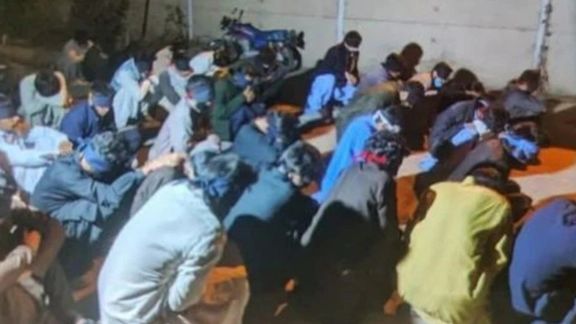
A law enforcement officer lost his life while two others sustained injuries during an armed confrontation with unidentified people in Saravan, southeast of Iran.

A law enforcement officer lost his life while two others sustained injuries during an armed confrontation with unidentified people in Saravan, southeast of Iran.
The clash, reported by Iranian media outlets citing the Sistan and Baluchestan Police Information Center, took place Friday afternoon.
The incident unfolded between police forces and occupants of a Peugeot vehicle in a village near Saravan county.
The fallen officer has been identified as Ali Kouchakzaie by the Baluch news website Halvash, which also highlighted the critical condition of one of the injured officers. No individual or group has claimed responsibility for the attack.
Previously, Jaish al-Adl, a militant group advocating for enhanced rights and improved living conditions for the Baluch ethnic minority, has conducted numerous assaults on Iranian security forces in the province.
Domestic media outlets have refrained from publishing any updates regarding the arrest or casualties of the attackers.
The incident adds to the concerning trend of armed attacks targeting government forces in Sistan and Baluchestan, as well as violence by government forces in recent months. On Thursday, a young Baluch activist was killed by unknown assailants in another part of the province.
Prior incidents, such as the attack on a police station in the village of Shuru near Zahedan on January 25, and an armed assault on a checkpoint near Rask on January 10th, resulting in the death of at least one law enforcement officer, underscore the escalating violence in the region.

Turkish Interior Minister Ali Yerlikaya has announced the arrest of an Iranian citizen for his involvement in illegal betting sites, money laundering, and organized crime.
In addition to the main character, Sa’dollah Amirshaghaghi, three other people have also been detained in connection with the case, and six people are being sought, Yerlikaya wrote on X on Saturday.
Amirshaghaghi, aka Saeed Amiri, used someone else’s identity to stay in a hotel in Izmir and was arrested while preparing to flee abroad. Turkey’s interior minister also said that Amirshaghaghi was the head of an organized crime group that runs illegal Iranian betting and gambling sites. It is not yet clear whether he has been arrested at the request of Iranian officials.
The report further added that during the operation, $120,000, €80,000, 9 luxury watches, 15 companies worth $500,000, 10 cars, and partnership shares in 17 houses and buildings and 9 other companies were identified, discovered, and seized upon court order.
Amirshaghaghi’s name has been in the news for a long time after accusations by Iranian officials. In an interview with Iran International in September 2021, he had claimed that some people accuse him of running betting sites because they do not want the identities of the real administrators to be revealed. “I am sure that the operators of the betting sites are inside Iran,” he stressed.
"I'm not involved in politics, and I respect the Islamic Republic. However, I'm puzzled as to why I'm consistently portrayed as the central figure behind these sites," Amirshaghaghi told Iran International.
Betting is forbidden in Iran as it violates Islamic Sharia law. However, many Iranians argue that the network of betting sites is launched or at least supported by the Iranian government as these sites can freely use Iranian bank payment gateways for their transactions.
According to the Iranian media, those behind such websites reportedly employed Turkey-based Instagram influencers and celebrities such as Milad Hatami and Davoud Ghaffari, known as “Davoud Hazineh,” to lure Iranians into gambling over the past years. Both individuals have been arrested and deported to Iran.
Hatami was sentenced to death in October 2023 over such allegations as “corruption on earth” and “widespread promotion of corruption.”
The most famous figure linked to betting sites is Amirhossein Maqsoodlou, an Iranian rapper better known by his stage name “Tataloo.” Turkish authorities detained and extradited him to Iran in December.
Tataloo's alignment with the regime was evident when Iran’s Supreme Leader Ali Khamenei praised one of his songs titled "Nuclear Energy." Khamenei described it as having a "good melody" and "good content," expressing satisfaction that it had unsettled the "enemy."
Although in custody in Iran, the latest news from Iranian officials indicated that he has written an apology, which can help his legal case.
Tataloo also backed Ibrahim Raisi’s failed campaign in Iran’s 2017 presidential elections.
In 2021, Mehr news agency, close to Iran’s hardliners, estimated the total turnout of the Persian gambling sites to be over 5,000 billion rials (around $200 million a year).

Naim Arbabi, an Iranian Chabahar resident and participant in the 2022 anti-government protests, was shot dead by four armed assailants on Thursday.
Arbabi, who had been arrested during September 2022, was subsequently granted temporary release from Zahedan's Central Prison upon posting a substantial bail.
"Four unidentified armed individuals riding two motorcycles attacked Naim in the Chabahar Free Trade Zone near the Lipar Hotel, where he was camping. He was shot directly in the head with four bullets, resulting in his death due to the injuries sustained," Baluch sources reported Saturday.
The circumstances surrounding his murder remain shrouded in mystery, with sources suggesting involvement by security forces due to his continued political activism on social media.
Arbabi's death underscores the ongoing struggles faced by Baluch Iranians, particularly in Sistan-Baluchestan Province, where minority groups have endured repercussions for their involvement in the 2022 protests. The province, predominantly Sunni Baluch, has witnessed a heavy-handed response from the regime, with dissenters facing harsh punishments, including execution.
The Baluch people have long been targets of persecution in Iran, with a significant number of executions occurring within their populations. Many Baluchis face execution on drug-related charges, yet activists argue that they are often denied fair trials. The regime's use of drug charges is seen as retaliation for persistent protests following Friday prayers. These communities, residing in one of Iran's most impoverished regions, struggle with high unemployment and inadequate infrastructure, leading some to resort to fuel, goods, and even drug smuggling as a means of survival.

As Norouz approaches, many Iranians shared their hopes and aspirations with Iran International, underscoring the obstacle posed by the current regime to the realization of a free and prosperous Iran.
In the final days of the current Iranian year 1402 (ending March 20), Iran International reached out to its audience to inquire about their hopes for the coming year. While dozens of responses varied widely, a prevailing sentiment was that the realization of these hopes hinges on changing the current regime.
Desire for Happiness and Peace One citizen expressed, "I wish for the Islamic Republic to vanish, allowing people to find peace and reclaim their lives."
Others echoed similar sentiments, wishing for "happiness and peace of mind" for Iranians, emphasizing the need for the regime's removal to achieve this.
Most responses received through social media carried pseudonyms, considering the risks involved for people inside the country from expressing their views.
Another individual remarked, "In recent years, we've endured more than our fair share of hardship. Iranians are good people who don't deserve this suffering. I hope for a future where we can lead peaceful and healthy lives after the fall of the mullahs, especially [Supreme Leader] Ali Khamenei."

Many messages highlighted the cruelty, oppression, theft, and tyranny perpetrated by the Islamic Republic. They labeled the regime as an occupier of Iran.
Honoring the Victims of Protests
Numerous Iranians referenced the killings of protesters by security forces in recent years, particularly during the nationwide uprising sparked by the death of Mahsa Amini in morality-police custody in September 2002. They believed that the pain and grief of bereaved families could only be somewhat alleviated by removing Iran’s government from "the hands of the mullahs, the IRGC forces, and the current leaders."
Observing an ancient Iranian tradition, many Iranians paid tribute to protest victims by visiting their graves on March 14, the last Thursday of the Iranian year.
Unity to Oust the Government
In recent days, Iran International received messages urging the public, especially opposition forces and groups, to unite against the Islamic Republic in the new year.
One citizen stated, "For the Woman, Life, Freedom Movement to succeed, we need targeted planning and protests. I hope for a united opposition and a strong coalition in the coming year."
Another noted, "I understand that my wish for the regime's collapse and the prosecution of its officials may not materialize for at least the next five years. The reason is that none of the world's politicians seem determined to effect regime change, as its survival, rather than its collapse, serves the interests of foreign countries."
Over the years, prominent dissidents and opposition figures, especially in recent months, have urged Western governments to heed the Iranian nation's call for regime change.
Many Iranians demand the collapse of the authoritarian government, followed by free elections with international observers and the establishment of a democratic, secular system. Additionally, many expressed a desire for the return of Iran’s exiled prince, Reza Pahlavi, to form a new government and restore order to the country.
Some wished for the return of Iranians forced to leave the country due to repression, who now yearn to return home.
Freedom, Peace, and Prosperity
Messages frequently emphasized the death of Supreme Leader Ali Khamenei, the formation of a government free from clerical interference, the prosecution of regime officials, and women's freedom from compulsory hijab. Other common wishes included a prosperous economy with affordable prices, peace and security in Iran and the Middle East, and freedom of expression.
Political prisoner Mahmoud Mehrabi, incarcerated in Esfahan’s Central Prison for over a year, expressed that true Norouz celebrations would only occur when genuine happiness pervades Iranian society.
Mehrabi emphasized that the transition from despair to joy can only be accomplished by the people themselves.
A middle-aged woman added, "I wish our children could experience happiness and freedom in the new year. May all our wishes be fulfilled."

Iran's Medical Council warns of rising emigration of pediatric heart specialists and surgeons, leaving hundreds of sick children without care, sparking concerns.
In a report released on Friday, the council highlighted the recent departure of yet another pediatric heart transplant surgeon from Iran, revealing that the waiting list for patients under this doctor's care is already full for the next two years, with 638 children in need of surgery.
The concerning trend comes at a time when, according to the Iranian Medical Council's statistics, between 10,000 to 15,000 children are born annually with congenital heart diseases in Iran. With 70 to 80 percent of the cases requiring surgical intervention, the shortage of specialized medical professionals poses a significant challenge.
The situation is compounded by the scarcity of doctors capable of performing complex infant surgeries, with the report indicating that the number of such specialists is less than five. Additionally, the waiting list for pediatric heart surgeries at Tehran's Shahid Rajaei Hospital, the largest heart surgery center in Iran, is already filled until 2026.
The sharp devaluation of Iran's currency and 50-percent annual inflation has led to many professionals to seek residence in other countries.
Mohammad Reza Zafarghandi, the head of the Iranian Medical Council, had previously labeled the "depletion of the country of doctors" as a "serious" crisis, emphasizing the urgent need for action to address the situation and safeguard the future of Iran's healthcare sector.
Furthermore, Iraj Fazel, the former Minister of Health, has expressed concern about the declining interest among medical students in specialized fields like pediatric surgery and heart surgery. He noted the absence of volunteers in many critical areas, exacerbating concerns about the shortage of specialists in the vital medical disciplines.

Mohammad Reza Tajik, the head of the Workers' Assembly of Tehran Province, has warned that wages lag behind inflation, leaving millions struggling to make ends meet.
Speaking out against the prevailing economic hardships, Tajik emphasized that "The wages of workers are always one year behind inflation."
He added that even a 100% wage hike would fail to bridge the gap between wages and living expenses for the working class. Inflation began to soar to 40% in 2019 after the United States imposed economic sanctions on Iran. The cumulative effect of five years of high inflation has impoverished tens of millions of Iranian wage earners.
Tajik's remarks come amidst the Iranian government's recent approval of a 20 percent average salary increase, slated to take effect after March 21. However, the adjustment is insufficient against the backdrop of inflation rates, which currently hover around 50 percent annually.
The purchasing power of Iranians is further undermined by the rising value of the US dollar in Tehran, which stands at 600,000 rials, with prospects of further depreciation looming in the near future.
The persistent inflation and sluggish economy have propelled millions of Iranians into the category of "working poor," with reports indicating that wages cover a mere 60 percent of monthly household expenses.
A myriad of factors contribute to the continuation of low wages in Iran, including economic mismanagement, corruption, and international sanctions. Moreover, structural deficiencies within the labor market, such as informal employment and inadequate labor regulations, exacerbate the prevalence of low-paying jobs. Consequently, many workers, particularly those in marginalized communities and informal sectors, grapple with poverty, struggling to afford basic necessities like housing, healthcare, and education.