Tehran Charges Journalists For Sharing BBC Report On State-Murdered Teen
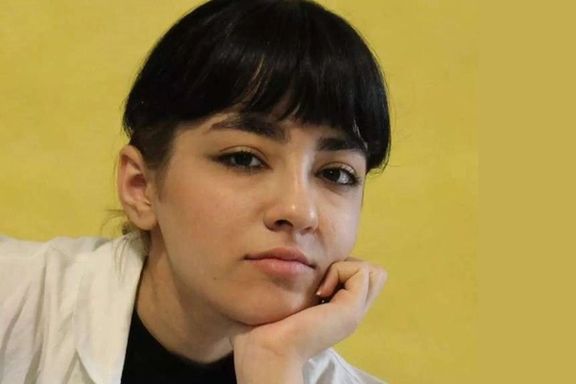
The Tehran Prosecutor's Office has filed charges against several journalists who have shared the latest BBC World investigation into the murdered teen, Nika Shakarami.

The Tehran Prosecutor's Office has filed charges against several journalists who have shared the latest BBC World investigation into the murdered teen, Nika Shakarami.
The report said that 16-year-old Shakarami was sexually assaulted and murdered by members of Iran's security forces last year, in the midst of the Woman, Life, Freedom uprising.
The journalists arrested are the latest among dozens targeted since 2022. At least 79 have been arrested, including the two women who first covered the arrest and death of Mahsa Amini, with reports suggesting numbers as high as 100. In February alone, over 35 were targeted in Iran, which is one of the world's 'least free' countries according to Freedom House.
After announcing the latest arrests, Mizan, Iran's judiciary news agency, labeled the BBC report as "fake," criticizing it for containing “false, insulting content, and for acting as propaganda against the regime” on social media platforms. Mizan did not reveal the names or identities of those charged.
According to the BBC report, a "highly confidential" document implicated three security personnel in the direct sexual assault and murder of Shakarami. The document, based on statements from the security forces, named the perpetrators and senior commanders who covered up the details of the crime. The BBC claimed one officer sat on Shakarami as she resisted, which ultimately led to a violent response with batons.
Just four days after Amini was killed, videos showed Shakarami setting fire to her hijab at a protest in Tehran. When Nika suddenly went missing, authorities refused to give the family any answers but after 10 days, authorities informed the family that Nika’s body had been found, later claiming she had committed suicide.
The teen's death, in which she was found to have severe blows to the head, echoed the murder of Kurdish-Iranian Mahsa Amini in September 2022, which triggered the nationwide uprising dubbed Woman, Life, Freedom.
Arrested by morality police for not wearing her hijab correctly, Amini's death has seen Iran's security apparatus since turn to brutal oppression to quash dissent and unrest, in addition to the continued hardening of hijab laws as the country rebels against the state's strict Islamic dress code.

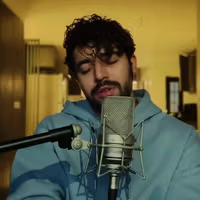
Eighty Iranian Kurdish families, who have lost loved ones in Tehran's crackdown on dissent, have called for the release of Toomaj Salehi, the Iranian rapper sentenced to death for his songs against repression, injustice, and poverty.
The statement, published on the Hengaw website on Tuesday, underlines the communal impact of Salehi's potential execution, stating, "The effort to free Toomaj is not just about freeing an individual, it is about the happiness of a community."
The families, who have lost loved ones during the Woman, Life, Freedom protests, argue that without voices like Salehi's, "Kordestan province will be lonelier and the path to freedom, equality, and democracy based on human rights in Iranian society will be much more difficult."
The statement criticizes Salehi's death sentence as "unjust and against the most basic principles of human rights," praising him for being a resonant voice that has highlighted "the different layers of injustice and oppression."
The families say, "As justice-seeking families of Kordestan province, we know few artists who have so loudly and clearly cried out against decades of systematic injustice against Iranian Kurds." Kurds in Iran remain one of the most persecuted minorities in the country.
On Sunday, hundreds of musicians demanded the release of Salehi and other jailed artists through an open letter, signaling a broad coalition of support for artistic freedom and opposition to Iran's harsh punitive measures against protestors.
Salehi was first detained in October 2021 after releasing a hit song critical of the regime.On death row, his fearless dissent has seen the young artist sentenced to death in Iran's continuing flurry of executions in the wake of the 2022 Woman, Life, Freedom, movement, sparked by the death in morality police custody of Mahsa Amini for the alleged improper wearing of her headscarf.

Hassan Rouhani, the former President of Iran, has voiced criticism against the reinstatement of morality police and the implementation of the Noor plan by law enforcement authorities as hijab crackdowns deepen.
In a meeting with officials from his administration this week, Rouhani questioned, "Is this really how the police are supposed to enforce moral codes, have they been trained for it?"
Since April 13, the initiation of Noor plan has led to numerous reported incidents of violent interactions between law enforcement and plainclothes officers with women opposing the mandatory hijab. The actions are justified by the Islamic Republic as "enjoining good and forbidding wrong," and compliance with the "hijab law."
During his talk, Rouhani emphasized the importance of maintaining "people's dignity and respect," and reflected on the Islamic Revolution, questioning whether force was used to make people wear hijabs. He asserted that many women chose to wear hijabs voluntarily after the revolution.
The severity of the police's approach has sparked dissent even among some supporters of the Islamic Republic.
On Saturday, 61 attorneys issued a statement criticizing illegal elements of the Noor plan declaring that the government has no right to impose its own dress code and ideology on women and society.
Female reformist activists inside Iran also condemned the "insulting behavior" of law enforcement towards women who oppose the mandatory hijab, warning that women will not cease to fight the oppressive measures.

City councillors and media insist on receiving clear answers regarding Tehran municipality’s secretly concluded agreement with a Chinese firm to import transport and traffic surveillance equipment.
After his visit to China in January, Mayor Alireza Zakani told the City Council that he had signed several agreements including a deal worth 1.67 billion euros in the field of transportation. Various officials have named electric buses, vans, taxis, subway cars, and traffic cameras as part of the products to be supplied to the municipality.
Councilors who approved of a two-billion- euro budget for improvement of transportation in the capital after the conclusion of the contract on March 4 say they have yet to be informed of the details of the agreements signed by the mayor.
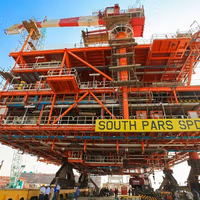
Tehran city government does not have access to such a large amount of hard currency which only the state can provide. The involvement of the oil ministry in the approval process of the deal suggests that the cost will be paid from funds accrued in China from Iranian oil imports. It is highly likely that permission for the whole project was granted by the office of Supreme Leader Ali Khamenei, if up to 2 billion euros is to be spent.
According to an editorial in Tehran Municipality’s Hamshahri newspaper on Monday, President Ebrahim Raisi, the ministries of industries, foreign affairs, interior, and oil, as well as the Central Bank of Iran, had knowledge of the details of the contract. This means a regime-wide decision-making process, suggesting oil money in China is involved.

China is Iran’s main oil buyer, defying US sanctions on Tehran, importing around one million barrels a day.
Hamshahri also admitted that the Chinese side had insisted on keeping the details of the contract secret due to US oil export and banking sanctions. Hamshahri’s editorial suggested that the Chinese side may decide to cancel the agreement.
Lack of transparency regarding the contract also raises questions about possible hidden dimensions of the agreements as it is not clear in what exact purposes the contractor has committed to procure equipment or deliver finished projects. This opens the door to the possibility that equipment and services with dual applications could be included in the contract.
Several Tehran City Council members walked out in protest and obstructed the council’s meeting on Sunday after Zakani evaded giving them clear answers regarding the details of the contract.
The meeting was held a few days after whistle-blower journalist Yashar Soltani published the signature page of the contract on his website.
Zakani claimed at the Sunday meeting that relevant authorities including the ministry of industry and the central bank were informed of the specifics of the agreement. Responding to council members’ criticism of the secrecy surrounding the contract, Zakani claimed that the details of the contract had been provided to two members, Jafar Tashakori-Hasemi, who refuted Zakani’s claim and walked out of the session, and Narjes Soleimani who said she was not convinced by Zakani’s responses.
Critics say the Chinese company, specializing in road projects, is ill-equipped for such a massive commission in the completely unrelated field of transportation technology. They are also concerned about secret conclusion of other contracts with China and possibility of corruption.
“We specifically demand transparency regarding the contract with China…It must be explained how many trips were made [by municipality officials] to China and how many officials went there, what issues were negotiated and what was the outcome of these trips, Councilor Mehdi Eghrarian told Entekhab news website Monday.
“One of my questions at the meeting [Sunday] was if the contract involved the purchase of other equipment. Mr Zakani says it did. So, the question remains, who coordinated [or approved] these purchases?” he said.
“We have a simple demand: Transparency of the Chinese contract. Why are you not making the contract transparent to us if you are not worried [of its consequences]?” the councilor said while calling on the media to help make the issues related to the administration of the capital clear and transparent.
As seen from the single-page document published by Soltani, the contract was concluded on January 30, 2024 with Poly Changda Overseas Engineering (PLCD), a company that specializes in construction of highways, bridges, and tunnels according to Bloomberg UK.
The same document shows that the contract was underwritten by Iran's Bank Shahr, which is affiliated to the municipality. Shahr Bank was sanctioned by the US treasury in October 2020.
Critics say Zakani signed the contract without due processes such as tender announcements and prior approval of the city council. The mayor and other municipality officials claim this was meant to expedite the supply of the much-needed equipment to transform the capital’s transportation system to an electric one.
The mayor of Tehran is a hardliner politician who began his political career during his student days at Tehran University after the Iran-Iraq War (1980-1988) in which he participated as a volunteer. He consequently became the head of the Student Basij Organization of the Revolutionary Guards (IRGC) and was personally involved in the bloody crackdown on students on Tehran University’s campus in 1999 alongside security forces.
Zakani specializes in nuclear medicine and university professor. He was elected to the parliament three times and in 2013 stood for presidency for the first time. He ran against Ebrahim Raisi in 2021. Tehran City Council which is under the full control of hardliners appointed him as mayor of Tehran soon after the elections.

The founder and former CEO of cryptocurrency exchange Binance, was sentenced to four months in prison on Tuesday for violating US money laundering laws and failing to comply with sanctions, including those against Iran.
The investigation revealed that Binance allowed more than 1.5 million virtual currency trades worth around $900 million, violating US sanctions. These included transactions involving Iran and designated terror groups such as Iran-backed Hamas, al-Qaeda and Islamic State.
Prosecutors said Binance employed a "Wild West" model that welcomed criminals, and did not report more than 100,000 suspicious transactions.
Families of victims of the Hamas terror attacks of October 7 and the families of hostages taken to Gaza, are suing Binance, along with Iran and Syria, for Binance's role in funding the terror group, among others between 2017 and 2023.
Once considered a leading figure in the cryptocurrency world, Changpeng Zhao's sentencing marks him as the second major cryptocurrency executive to face prison time after Sam Bankman-Fried for his role in the FTX scandal.
Presiding US District Judge Richard Jones in Seattle delivered a sentence that fell significantly below the three years requested by federal prosecutors, and well under the maximum of 1-1/2 years recommended by federal guidelines.
Binance was also found to have facilitated transactions involving the sale of child sexual abuse materials and processed substantial sums from ransomware attacks.
In addition to the prison term, Binance has agreed to a $4.32 billion penalty to settle the charges, while Zhao himself has paid a $50 million criminal fine and another $50 million to the US Commodity Futures Trading Commission.
Zhao stepped down as Binance's chief in November, when he and the exchange he founded in 2017 admitted to evading money-laundering requirements under the Bank Secrecy Act. He is expected to serve his sentence at a detention center near Seattle-Tacoma International Airport.

The release of a BBC World report detailing the violent death of teenager Nika Shakarami, a key figure in Iran's Woman, Life, Freedom uprising, has fueled a new wave of public outrage in Iran.
The report, revealing that Shakarami, 16, was sexually assaulted and killed by members of the Islamic Republic's security forces amid the nationwide uprising sparked by the death in morality-police custody of Mahsa Amini in 2022. Shakarami's death followed last year.
According to the report, BBC World accessed a "highly confidential" document showing that three security personnel were directly involved in the sexual assault and murder of Shakarami.
The document, based on statements from the security forces, includes names of the perpetrators and senior commanders who concealed the details of the crime. It describes how one officer physically restrained Shakarami, while she resisted, ultimately provoking a brutal response with batons.
Prominent figures such as Prince Reza Pahlavi have subsequently been vocal on platforms such as X (formerly Twitter), condemning the systematic abuse and calling for international accountability. "Ali Khamenei's thugs are waging a campaign of systematic sexual assault against Iranian women and protesters. This is a crime against humanity, and the international legal community must hold the perpetrators, primarily Khamenei, accountable," Pahlavi stated. He also encouraged all Iranians to stand in solidarity with the women of Iran against this organized aggression.
Amid the peak of the uprising, over 550 protesters were killed by Iran's security forces with Iran's Me Too movement finding that sexual abuse is systematically used against women, until today.
Hamed Esmaeilion, another prominent critic of the regime, echoed the sentiment of no forgiveness or forgetting, promising that Shakarami's killers would face punishment. Similarly, Masih Alinejad, a journalist and political activist, stressed the need to not only identify but expose the assailants, emphasizing the orchestrated nature of the crime and its profound implications.
Abdollah Mohtadi, Secretary-General of the Komala Party of Iranian Kurdistan, pointed to the murder as a stark indicator that the only resolution to the ongoing oppression and brutality, which has led to global sanctions, is the complete dismantling of the regime and its ideological foundations.
Gohar Eshghi, mother of Sattar Beheshti, a blogger who was killed in 2012 under torture in custody, wrote: "The entire world sees the document of crime and lies of the Islamic Republic. As I have said before, the only way for the happiness of the Iranian nation and justice-seeking is the fall of the Islamic Republic and holding a trial for each of these criminals."
In February, a document obtained from a hack of the judicial systems of the Islamic Republic confirmed the rape of Nika before her murder.
According to the document, which was written by Abbas Masjedi Arani, head of the Forensic Medicine Organization, addressed to the Supreme National Security Council, it stated, "In the genital examination, signs indicating assault or rough sexual intercourse were evident."
Shakarami's family found her body in a morgue nine days after her disappearance, while authorities claimed she had committed suicide.