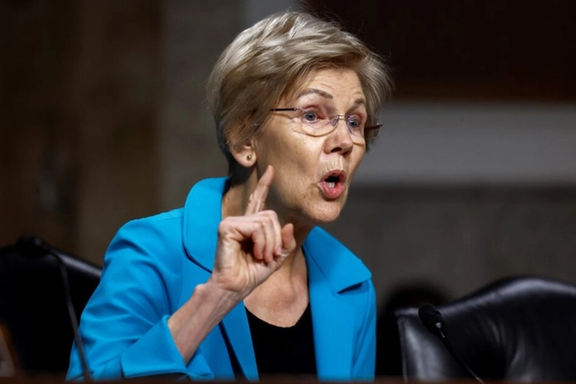
US lawmakers Elizabeth Warren (D-Mass.) and Angus King (I-Maine) urged the Biden administration on Wednesday to disclose its strategy for addressing concerns regarding Iran's Bitcoin mining operations, citing potential national security risks.
US lawmakers Elizabeth Warren (D-Mass.) and Angus King (I-Maine) urged the Biden administration on Wednesday to disclose its strategy for addressing concerns regarding Iran's Bitcoin mining operations, citing potential national security risks.
In their letter addressed to Defense Secretary Lloyd Austin, Treasury Secretary Janet Yellen, and National Security Advisor Jake Sullivan, senators requested information about Iran's crypto mining operations since 2021, including details on how the Iranian government has benefited.
Warren and King emphasized that crypto mining, which involves verifying crypto transactions and generating new tokens, has become increasingly "lucrative" for Iran, despite numerous international sanctions imposed on the country due to its nuclear program.
The first study to estimate Iran's potential profits from evading sanctions via cryptocurrency was published in 2021. At the time, Reuters reported that Iran's bitcoin production would generate revenues close to $1 billion a year, which was echoed in the letter.
"One estimate indicates that Iranian Bitcoin mining could have produced as much as $1 billion in revenue in 2021," the letter said, pointing to Bitcoin mining reportedly generating more than $186 million for Iranian crypto platforms between 2015 and 2021, with Tehran being one of the top eight Bitcoin-producing countries at the time, the lawmakers said.
The senators stated that crypto miners in Iran are required to sell their products to the Iranian central bank, which, in turn, enables the Iranian government to evade sanctions.
•
•
As experts have often said, the Iranian government has a self-inflicted “muddled relationship with crypto-currencies”, which have served to obscure various forms of trade, aiding in evading sanctions, while simultaneously presenting avenues for illicit activities.
In 2022, the state’s Intelligence Ministry claimed they blocked over 9,000 accounts belonging to 454 individuals used for illegal or undeclared exchanges of currency and digital currency. Based on the exchange rate during that period, the relevant trades amounted to 600,000 billion rials or approximately $2 billion.
Reports in Iranian media suggest that large-scale crypto mining has been taking place by influential or well-connected networks, as well as some Chinese companies that are using cheap and subsidized electricity in mining farms they set up in Iran. This could have been permitted only by Iran's intelligence services and the Revolutionary Guard.
The senators' warning about Iran's use of crypto mining coincides with the Treasury Department's request to Congress in April, urging lawmakersto pass new legislation authorizing the department to intervene in terrorist financing and sanctions evasion methods that utilize cryptocurrency. As part of that Senate hearing session, it was also revealed that the Islamic Revolutionary Guards (IRGC) has been using cryptocurrency to fund Hamas and the Islamic Jihad of Palestine.
The letter from Warren and King also mentions the benefit that Iran's proxies are gaining from this low-profile trade.
"The Iranian military has used crypto to fund known terrorist groups like Hezbollah, the organization believed to be partially responsible for the January 2024 drone strike in Jordan that killed three US service members," officials said. "Unless we take action, Iran will continue to use crypto to fund attacks against Israel."
Former Binance CEO Changpeng Zhao
In their letter, Warren and King asked the officials to "describe the steps the administration is taking to address threats to US national security posed by Iran’s reliance on crypto mining and cryptocurrency more generally to earn revenue and bypass sanctions."
Furthermore, the senators inquire about the Binance fiasco. In 2022, it was reported that the cryptocurrency giant Binance had processed Iranian transactions worth $8 billion since 2018 – despite US sanctions intended to isolate the country from the global financial system.
The founder and former CEO of cryptocurrency exchangeBinance was sentenced to four months in prison this week for violating US money laundering law and failing to comply with sanctions against Iran.
Over the course of two weeks, from April 16 to April 30, the Iranian government executed 63 individuals, averaging one execution every five hours, continuing a trend that began last year.
The data presented by the Iran Human Rights Organization (IHRNGO), headquartered in Norway, highlights a broader pattern of capital punishment in Iran.
Since the beginning of 2024, 171 people have been executed across various prisons in the country.
Mahmood Amiry-Moghaddam, the director of IHRNGO, criticized the international community's silence on the issue, stating, "In the last two weeks, the Islamic Republic has executed one person every five hours without any political cost. States that adhere to human rights and have diplomatic relations with Iran must react to the wave of executions in Iran. Silence paves the way for more executions."
The organization's latest figures indicate that at least 71 people were executed in 24 different Iranian prisons during April alone, with 63 of the executions occurring in the latter half of the month. Out of these, 44 were executed for drug-related offenses, 26 faced 'qisas' (retribution-in-kind) for murder, and one for rape.
The surge in executions follows the onset of the Woman, Life, Freedom protests in 2022, after which the Iranian government has significantly increased the pace of carrying out death penalties. In 2023 alone, the country saw at least 834 executions.
An April press release from 82 Iranian and international human rights organizations pointed out that over half of the executions in 2023 involved individuals arrested on drug-related charges. The statement emphasized the low cost of the drug-related executions to the government, signaling a potentially punitive approach towards non-violent offenses.
Iran is one of the world's largest jailers of journalists, cementing itself as one of the most repressive countries for press freedom, according to the 2024 World Press Freedom Index released by Reporters Without Borders (RSF).
The Islamic Republic’s targeted repression of journalists has led to the country's dismal ranking in the RSF Index, placing it 176th out of 180 countries assessed.
Since nationwide anti-regime protests began in 2022, “Iran has reinforced its position as one of the world’s most repressive countries in terms of press freedom,” RSF said.
The regime’s crackdown killed at least 550 and saw the arrest of tens of thousands, including scores of journalists, leading Iran to previously be ranked as the one of the world’s worst jailer of journalists in CPJ’s 2022 prison census.
“Iran – with its mass imprisonment policy – holds on to its extremely low ranking,” the report says.
A panel of RSF’s Freedom of the Press Worldwide, May 3, 2024
Since 2002, the Islamic Republic's suppression of dissent has consistently placed the country in the bottom 15 countries on the RSF Index.
“The Islamic Republic continues to exact its revenge against journalists who, since 16 September 2022, have fulfilled their duties in serving the public’s right to news and information,” said the head of RSF’s Middle East desk Jonathan Dagher in 2023.
Today’s RSF ranking places the country below China, and just ahead of North Korea, Afghanistan, Syria and Eritrea.
On the global scale, the RSF report highlights a trend of escalating political attacks on press freedom over the past year, with the Maghreb-Middle East Region having the “worst situation for press freedom.”
Four of the world’s 10 biggest jailers of journalists are in the Middle East. Alongside Iran (176), Israel (100), Saudi Arabia (166) and Syria (179) have perpetuated the detainment and harassment of journalists, contributing to a climate of fear and censorship, the report said.
Iranian Journalists Face Censorship, Suppression
Between 2023 and 2024, there were at least 226 cases of journalists and media in Iran facing suppression by authorities, through detention, trial, legal summons, or legal action, according to a separate annual report by the US-basedMidpoint Journalism School.
Suppression methods also involved violent physical encounters such as torture, flogging, shooting, attacking journalists' homes, and detaining family members, particularly in provinces outside Tehran.
The journalism hub, which offers educational resources and courses for aspiring young journalists, also publishes reports focusing on the plight and status of journalists in Iran.
The actual number of cases is likely higher, the report notes, as many instances remain concealed or unreported due to security threats by authorities.
In addition, the media school said that censorship patterns by Iranian authorities have shifted, with security institutions employing newer methods to prevent the free flow of information and manage news content before publication.
Though Tehran saw significant suppression of journalists, the expansion of websites and news channels in provinces has led to increased pressure on journalists outside the capital.
Media coverage of the regime's crackdown on women who refuse to wear mandated hijabs, criticism of the Iranian leadership and government agencies, as well as the disclosure of corruption among officials, constituted the main targets of censorship by Iranian security institutions. Reporting on poverty and suicide were also key subjects subjected to censorship by authorities.
The Chairman of the US House Committee on Foreign Affairs, Michael McCaul, has criticized a reported trip by Rafael Grossi, the Director General of the International Atomic Energy Agency (IAEA) to Iran.
Grossi is set to attend a conference in Isfahan, Iran next week.
"I am concerned by reports the IAEA Director-General plans to participate in an international nuke conference in Iran next week. This risks legitimizing Iran’s illicit nuclear activity. Focus instead needs to be on holding Iran to account for NPT-related violations," he wrote on X.
The IAEA has confirmed that Grossi’s visit on May 6 aims to engage with officials and participate in the 'International Conference on Nuclear Science and Technology.'
The visit comes just days after Grossi said that Iran was "weeks, not months" from acquiring the material needed for a nuclear weapon.
Ties between Iran and the IAEA have deteriorated, with Grossi in February acknowledging a "drifting apart" as Iran becomes defiant.
He also mentioned that the country is still enriching uranium to 60 percent purity at a rate of around 7 kg per month reaching levels close to those used for producing weapons.
Iran's uranium enrichment vastly exceeds the limits of the 2015 JCPOA agreement, which restricted Iran's uranium enrichment to 3.67 percent. Following the US withdrawal from the deal in 2018 during former President Donald Trump's administration and the subsequent reimposition of sanctions Iran began to exceed these limits in 2021.
The International Atomic Energy Agency (IAEA) has indicated that the 2015 nuclear pact has essentially collapsed, sparking concerns about Iran acquiring nuclear weapons capabilities.
Israel carried out an airstrike on a target near Damascus Thursday night, in what seems to be the first such attack since the one on Iranian consulate which led to an unprecedented escalation of hostilities between the two countries.
There has been relative calm in the past few weeks, after both Iran and Israel directly hit the other country, showing their fire power albeit in entirely different ways: Iran launching hundreds of missiles and drones to overwhelm the Israeli defense system, and Israel surgically taking out the central component of Iran’s defense system near a nuclear facility.
Both governments could claim victory and step back from the edge, momentarily perhaps, and under pressure from the United State, which is worried an all out war can break out in the region and drag in American forces.
The airstrike Thursday night had no IRGC casualties, unlike the attack on the consulate. Eight Syrian soldiers were injured in a building operated by Syrian security, according to the Syrian defense ministry. Reuters quoted a source that the site struck was not operated by Iranian units or Hezbollah – but it sat south of the Sayyeda Zeinab shrine, where Hezbollah and Iranian forces are entrenched.
That airstrike was above all a reminder that the fundamentals of power politics in the region remain the same, and another crisis could emerge at any time.
As if another reminder was required, the Islamic Resistance in Iraq, an umbrella term for a number of armed groups backed by Iran, claimed Thursday night that they had launched multiple cruise missiles towards Israel, including (for the first time) at the capital Tel Aviv.
Israel has not commented on the reports, but it’s more or less a given that all such attacks are neutralized by the Israeli defense system mid-air.
Thursday night’s event suggests that the existing calm may be a quiet overture to yet another storm, especially as reports have emergedthat an armed group in Bahrain has claimed responsibility for a drone attack on Israel last week.
The Islamic Resistance in Bahrain – almost certainly backed and equipped by Iran – said in a statement Thursday night that it had targeted an Israeli logistics company in Eilat on 27 April. Also known as the Ashtar Brigades, the group published a short video purporting to show the launch of the drone towards Israel. Its statement said its operation was in solidarity with “the patient people in resisting Gaza”.
This is the first time that a group based in Bahrain has claimed responsibility for an attack on Israel. If true, the attack raises many questions not just about the group and its capabilities, but also about Iran’s capacity and its intentions in the region, as the Biden administration attempts to avert war and even make deals –public and private.
“Iran is pursuing a strategy in which they hope we continue to pretend like we don't understand what the return address is for all this violence,” former US national security advisor HR McMaster told Sky News “And in a horrible, cynical way, Iran is willing to expend every Arab life, if necessary, to accomplish its objectives of pushing the United States, the United Kingdom and our allies out of the region as the first step in establishing hegemonic power in the region and destroying Israel."
A former Iranian regime operative and ideologue, currently residing in Canada, has proposed that opposition forces both abroad and within Iran unite to topple Supreme Leader Ali Khamenei’s rule.
This suggestion has sparked widespread discussion among the Iranian public this week, eliciting divergent reactions. Mehdi Nasiri, the proponent of this contentious idea, previously served as Khamenei’s representative at the hardline newspaper Kayhan and was its chief editor during the late 1980s and early 1990s.
While some view the proposalas an outreach effort by Iran's reformists to forge an alliance with the country's opposition abroad, others speculate it may have originated from within the regime's inner circle to exploit both factions for Khamenei’s benefit.
Nasiri specifically mentioned several reformist figures inside Iran, including Nobel Peace Prize laureate Narges Mohammadi, former president Hashemi Rafsanjani's daughter Faezeh Rafsanjani, and former deputy Interior Minister Mostafa Tajzadeh, all currently imprisoned in Tehran. He also cited former Prime Minister Mir Hossein Mousavi, who is under house arrest. On the other end of the spectrum, Nasiri referenced Prince Reza Pahlavi, heir to the pre-1979 monarchy, now residing in exile in the United States. He portrayed these individuals as representing opposing poles of the political spectrum capable of forming an alliance against Khamenei.
Mehdi Nasiri, the former editor of the conservative flagship Kayhan Daily
One of the things that sounds odd about the suggestion is that Nasiri neither represents Prince Reza Pahlavi nor the reformists in Iran. Although he has been criticizing Khamenei during the past two years, he is ultimately a regime insider whose track record includes nothing other than hardline conservatism. He is a man who often claims to have been sending messages directly to Khamenei about the affairs of the state.
Neither the prince, nor the reformists in Iran have shown any reaction to Nasiri's interview. But politicians and social media users in Iran and abroad have expressed their views about Nasiri's initiative. According to the reformist daily Etemad, Nasiri's critics have called him a “super hardliner who now offers suggestions for regime change," and charged that "Nasiri used to offer guidelines to the regime for suppressing the critics. "
Mahmoud Sadeghi, a former reformist MP, who like Nasiri used to be a cleric but shed his turban and robe and chose to wear a suit, said in a critical tweet that "Tajzadeh, as a pro-democracy reformist who opposes centralized power, has nothing in common with the prince who believes in hereditary succession."
Another prominent figure in the reformist camp, Mohammad Ali Abtahi, who served as the chief of staff to former President Mohammad Khatami, offered his perspective on Nasiri's proposal, stating: "As a former staunch hardliner, Mehdi Nasiri has the right to express his views and transition into a leading opposition figure. However, neither his previous hardline stance managed to undermine the reformist movement, nor does the reform camp require a newcomer like him. Contrary to his assertion, there is little likelihood of collaboration between Prince Reza Pahlavi and Mostafa Tajzadeh, nor does Tajzadeh express any interest in such cooperation. Furthermore, the individuals Nasiri mentioned are currently incarcerated in various forms. It appears someone may be misleading him."
Iranian Rreformist politician Mostafa Tajzadeh
Yet another reformist figure close to the Reform Front, Javad Emam pointed out that "a return to the constitutional monarchy would be a step back. Approaching the prince will be a move in the wrong direction by Iran’s reformists."
Politicians who belong to the so-called reform camp in Iran are mostly former Islamist or leftist revolutionaries, who are critical of Khamenei but except in a few cases have hardly called for dismantling the Islamic Republic.
On social media, a twitter user who tweets under the alias name Noah's Wise Son wrote: "It appears that the Islamic Republic and its reform front have no winning card to play. When the Islamic Republic started to groom Nasiri in diaspora media as a reformed Islamic intellectual it was evident that it was a plot to deceive political activists."
The user suggested that the Islamic Republic and reformists in Iran who have lost their social base, are trying to benefit from the prince's popularity in Iran. He charged that "those who cooperated with the Islamic Republic to suppress intellectuals and patriotic people wish to cleanse their criminal record by approaching the prince as a popular figure now that the regime is doomed to fall."
Nasiri says he is visiting his son who is a student in Canada and will return to Iran at a later date, but if what he says is his genuine idea, he can hardly get away with its consequences once he sets foot in Tehran.
A different scenario neither Iranian politicians, nor social media users have thought of is the possibility of Nasiri being a messenger from Khamenei who is either trying to save a regime that has lost the nation's support and trust or in a more complicated game, he is tasked by Khamenei to discredit both the royalists and the reformists.