Surge in Persecution of Baha'i Women in Iran
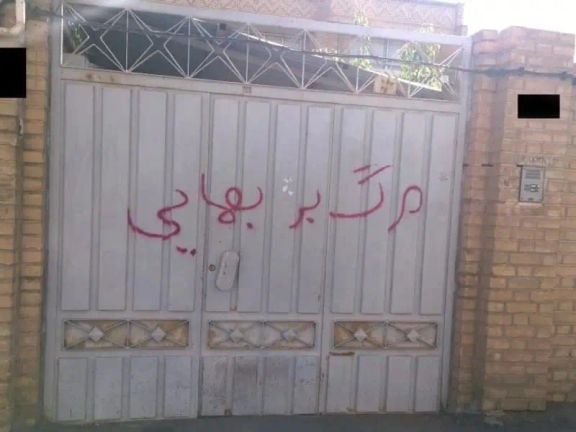
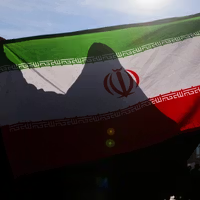
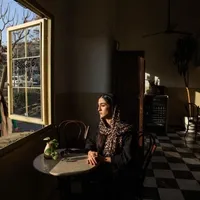
Dozens of Baha'i women in Iran have been summoned to court facing baseless criminal charges amid an escalation in the persecution of the Baha'i community.

Dozens of Baha'i women in Iran have been summoned to court facing baseless criminal charges amid an escalation in the persecution of the Baha'i community.
Since early March, over 75% of the Baha'is summoned to court or prison—65 out of 85—have been women, announced the Baha’i International Community (BIC) on Tuesday.
Currently, two-thirds of all Baha'i prisoners in Iran are women. Many were detained without due process, with some detainees' whereabouts still unknown.
The ongoing wave of persecution is part of a broader pattern of targeting women in Iran in the wake of the 2022 uprising.
Simin Fahandej, a representative of BIC to the United Nations in Geneva, emphasized the unity of women's struggles in Iran, stating, " The Iranian government puts you in jail, expels you from university, terminates your job, and persecutes you for standing up for your aspiration to live a full life as equal human beings."
Unofficial estimates suggest that Iran is home to over 300,000 Baha'i citizens. However, the Iranian Constitution only officially recognizes Islam, Christianity, Judaism, and Zoroastrianism as legitimate religions.
As the largest religious minority in Iran, the Baha'is have been subject to systematic harassment and persecution since the Islamic Revolution of 1979.

Iran's government is under fire from the nation's pharmacists following a directive that ties a pharmacy's adherence to the mandated hijab law to its allocation of medicine.
Pharmacy officials are speaking out against the government-run Food and Drug Administration's recent hijab mandate, stressing their commitment to patient care above a patient’s personal beliefs.
Earlier this week, the Iran Food and Drug Administration (IFDA) announced that pharmacies failing to enforce the mandatory hijab would face reduced medication allocations.
The IFDA head, Heidar Mohammadi, stated on Monday that violators would first receive a warning, followed by more severe deterrent measures if the warning proves ineffective. Continuous non-compliance could result in legal actions against the violators.
The spokesperson for the Iran Pharmacists Association, Hadi Ahmadi, responded to the warning on Tuesday that “the problem of pharmacies is not the hijab, but the lack of drugs,” as they are now facing a “shortage of nearly 300 drugs”.
Ahmadi also decried "the interference of unrelated bodies in the health sector" in an interview with ‘reformist’ Entekhab outlet.
“The Ministry of Health and Iran Medical Council establish the law for us. We also have an ethics committee, a charter of patients' rights, and an oath. We follow these rules. For us, it doesn't matter what race, color, or creed the patient is; Our job is to serve the patient,” Ahmadi added.
The head of the Supreme Council of Pharmacies of Iran, Hadi Okhovatpour, told centrist outlet Khabar Online that “if the intention is to enforce hijab on patients, it cannot be done. The pharmacy's duty is to supply medicine to the patient."
“No one asks patients about their identity, religion or beliefs while providing treatment,” Okhovatpour stressed.
In an apparent effort to address and soften the blow of criticism, the regime’s official news agency IRNA attempted to clarify the IFDA's stance by stating that the hijab rule pertains to pharmacy "employees, not customers."
Given that the hijab mandate for female pharmacy staff is already in place as a regulation, it seems likely that the new requirement was initially intended to extend to patients as well.
In addition to Iran's standard hijab regulations, an additional meticulous requirement was introduced in August 2021 and reinforced in 2023 for pharmacy staff, mandating the wearing of a black veil among other dress code requirements.
In the wake of Mahsa Jina Amini's killing in September 2022, while in custody of the so-called morality police for allegedly wearing her hijab improperly, nationwide protests surged, under the banner of "Woman, Life, Freedom."
Iranian authorities responded to demands for regime-change by brutally suppressing demonstrations, arresting over 20,000 individuals and causing the deaths of more than 500 young Iranian protesters.
The regime subsequently stepped up its use of facial recognition technology to renew its enforcement of the stringent hijab laws – leading to the closure of various establishments, including pharmacies serving uncovered women.

The Israeli Embassy and the Jewish community in Hungary have slammed an invitation extended to Iran’s former president to speak at two university events.
Mahmoud Ahmadinejad, known for his anti-Israel stance and Holocaust denial, is scheduled to speak to students at the National University of Public Service (NKE).
The topics are said to focus on "common values in the global environment," with Ahmadinejad billed as a "special guest" discussing environmental threats.
Euronews reported the story first and attempted to reach out to the university for comments but received no response. The Hungarian Ministry of Foreign Affairs has also remained silent on the issue.
The Israeli Embassy criticized the invitation, describing it as an affront to the memory of the Holocaust victims.
In a statement to Euronews, the Embassy condemned Ahmadinejad's visit as deeply offensive, citing his track record of Holocaust denial and his previous calls for the destruction of Israel.
The Association of Hungarian Jewish Congregations (Mazsihisz) also voiced its dismay, questioning why a Hungarian university would host a figure they described as "anti-Semitic to the core."
Ahmadinejad, President of Iran from 2005 to 2013, has not been recognized for his environmental advocacy but rather for his extreme political views, including opposition to the US, Israel, and his denial of the Holocaust. His presidency was also marked by a crackdown on human rights.

Iran's broad money has doubled during the 2.5-year presidency of Ebrahim Raisi, according to statistics from the country’s Central Bank (CBI).
The statistics suggest that broad money has surged from 5.19 quadrillion rials in August 2021 to 10.33 quadrillion rials in January 2024.
Broad money, the total money supply within an economy, is the primary cause of rampant inflation in Iran. The inflation rate, as calculated by the Central Bank of Iran (CBI), is reported at 52.3% although the International Monetary Fund (IMF), citing estimates from the Statistics Center of Iran, puts the figure slightly lower at 47%.
Broad money is mostly obtained by printing the huge quantities of unbacked banknotes by CBI to cover the government’s debts, which rose significantly during Raisi presidency due to budget deficits.
Earlier this month, Abdolnaser Hemmati, the former governor of Iran's Central Bank, said the Raisi administration has printed 6 quadrillion rials over the past 2.5 years, a figure that "surpasses the total money printed from Cyaxares’s era [Median king, 625- 585 BCE] to 2021."
In a video statement, Hemmati stated that the surge indicates a 115% increase in the monetary base over 30 months.
Hemmati did not mention the broad money growth during mid-2018 to August 2021, when he was serving as the head of CBI, but the official statistics show the broad money has increased from 2.27 quadrillion rials to 5.19 quadrillion rials in this period, indicating 128% growth.
Therefore, the growth of uncontrolled banknote printing during his tenure is no less significant than during the presidency of Raisi. In fact, inflation surged from 8% in 2017 to 44% in 2022.
Hemmati was Raisi’s rival during the 2021 elections, but reportedly was supported by just 10% of Iranian voters.
Why does the CBI print unbacked banknotes?
Over the past five years, Iran’s Central Bank has ceased publishing government budget reports.
According to the Supreme Audit Court of Iran and the Research Center of the Islamic Legislative Assembly, however, it is estimated that since 2018—when the US withdrew from the Joint Comprehensive Plan of Action (JCPOA) and imposed sanctions on Iran’s oil exports—the government's annual budget deficit has consistently exceeded 30%.
The Iranian government has been compensating the budget deficit by borrowing money – in particular, from the banking system.
CBI statistics show that the government's debts to the banking system surged from 6.55 quadrillion rials to over 13 quadrillion rials – equivalent to 21 billion USD based on current currency rates in open markets – during the Raisi administration.

Every year, the CBI has to print huge quantities of unbacked banknotes in order to provide money to banks to cover the growing debt of the government.
Notably, bank debts share only 20% of the Iranian government’s total debts.
In addition, the government has withdrawn two-thirds of the National Development Fund (NDF) reserves to compensate for the budget deficit and to finance the current expenses of state-run companies.
The NDF was set up in the early 2000s with the aim of safeguarding a slice of oil revenues for the benefit of future generations, as well as to support the private sector with loans. Today, the Iranian government's debt to the NDF has ballooned to over $100 billion.
As a result, liquidity in the country has doubled during Ebrahim Raisi's 2.5-year presidency, reaching 30% of GDP, or 80 quadrillion rials – or $131 billion USD based on the rate in open markets.


Abbas Tabrizian, a controversial Iranian Shia cleric known for his advocacy of Islamic Medicine, has made headlines again calling NASA’s Hubble Space Telescope a sham.
According to a post on his Telegram channel, Tabrizian alleged that the images from the iconic telescope are created inside a water basin and said that as the moon is ‘made of water and light’, the presence of soil and rocks is a nonsense.
Tabrizian, who resides in Qom—the religious capital of Iran—has been a polarizing figure in the country, often dismissed as a figure of ridicule by many.
He has authored several books on what he terms Islamic Medicine and operates an Islamic Medicine Center. The center promotes various products under the guise of religious compliance, including Islamic toothbrushes, Islamic soap, and even Islamic ink.
His views on medicine have sparked controversy, particularly his description of immunization as a "colonialist medicine" plot.
He asserts that following Islamic teachings can cure any ailment and that living a "true Islamic lifestyle" eliminates the need for conventional medical treatment. Tabrizian also provides his followers with diagnostic guidance, including advice for "womb preparation" and "treatment of brain debility," as well as prescriptions for medications like "nerve strengthener" and "blood detoxifier."
Tabrizian's notoriety surged during the COVID-19 pandemic when he suggested bizarre and unscientific remedies, such as applying violet oil to the anus as a cure for the virus. His statement in February 2021, claiming that COVID-19 vaccinations cause homosexuality, sparked backlash and mockery.
In January 2020, a video of Tabrizian burning a copy of Harrison's Principles of Internal Medicine went viral, leading to public condemnation by Iranians.

Iraj Fazel, the president of the Iranian Society of Surgeons and former Minister of Health, warned that if the exodus of doctors continues, Iran will be forced to import specialists and send patients abroad.
Fazel attributed the shortage to the economic struggles facing medical students and the government's educational policies. He said the number of students applying for medical degrees is also in decline.
“In the latest rounds, we observed no candidates for vascular surgery, and other specialties also saw similar vacancies,” Fazel explained, painting a grim picture of the future of Iranian medicine.
The sentiment was echoed by Mohammad Raiszadeh, the head of the Iranian Medical Council.
“The rate of job migration among doctors is even higher than the general emigration from the country,”he said.
Hossein Ali Shahriari, head of the parliament’s Health and Medical Commission, reported that around 10,000 Iranian specialists have sought jobs abroad in the past two years, primarily heading to Arab nations. The trend was so concerning that there were official calls in December to ban doctors from migrating abroad.
Compounded by the economic hardships faced by healthcare workers, who earn as little as $200 to $300 a month, the situation has also impacted their mental health. The Iranian Psychiatric Association reported an increase in suicide rates among medical residents, with 16 suicides in the past year alone.