US Politicians Slam Death Sentence for Iranian Rapper
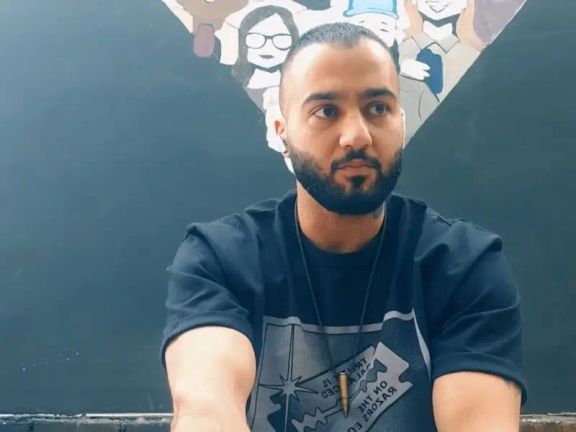
Politicians in the United States have slammed the death sentence of Toomaj Salehi, an Iranian singer known for his dissenting views amid the ongoing uprising against the government.
Politicians in the United States have slammed the death sentence of Toomaj Salehi, an Iranian singer known for his dissenting views amid the ongoing uprising against the government.
Adam Schiff, California Rep., took to X on Wednesday to condemn the Revolutionary Court's decision, which he described as an unjust sentence for merely "calling for accountability for the Iranian regime through music."
Schiff praised Salehi's “courage and steadfast vision of human rights in Iran,” calling him an inspiration.
Similarly, Texas Rep. Lloyd Doggett expressed his dismay on Tuesday, spotlighting the need to focus on “atrocities being committed by the Iranian regime and stand with Iranians who seek a brighter future where freedom, human rights, and the rule of law are respected.”
Amir Raeisian, one of the lawyers defending Salehi, revealed on April 24 that despite being eligible for an amnesty, Salehi was sentenced to death for charges made in 2022. The development has triggered a global outcry, underscoring the contentious use of capital punishment in political cases by the Iranian authorities.
Salehi was actively involved in the nationwide protests of 2022, a vocal supporter of protesters, detainees, and political activists throughout the uprising which erupted after the death of Mahsa Amini in morality police custody. The protests resulted in over 500 people being killed by the Iranian regime and thousands arrested.
He is the latest in a long line of executions of voices of dissent which reached a record last year, well over 800 Iranians killed amid the regime's brutal crackdown.

A video showing agents of Iran's hijab patrol forcibly arresting a young woman for failing to comply with the mandatory hijab has surfaced showing her being forcibly thrown into a van as brutal crackdowns continue.
According to the person who recorded the video, the hijab patrol has adopted a new strategy where an officer films the reactions of those detained to use as evidence of their behavior in legal proceedings.
The incident has sparked outrage on social media with some users criticizing bystanders for merely recording the event rather than intervening to help the young woman.
One user expressed frustration, saying, "These savages live among us; identifying them is the easiest thing, throwing paint at them or scaring them... Why don't you fight instead of crying, screaming, and being scared? Are we to become more miserable than this? Poorer than this?"
The crackdown is part of what the Iranian regime describes as a "national and public demand." Supreme Leader Ali Khamenei has launched a street war to intensify the enforcement of hijab laws under a new initiative named the Noor plan.
Morality police have returned to the streets with renewed intensity, particularly around the central districts of Tehran, marked by an increased number of police patrols, vans, and motorcycle units.
The incident is reminiscent of the 2022 death of 22-year-old Kurdish Iranian Mahsa Amini, who died in morality police custody after having suffered severe head injuries. Her death ignited the most significant protests against the regime since the establishment of the Islamic Republic.

Protests at American university campuses may have had other goals, but their narrative instead served as clear evidence of how Islamists and Marxists can collaborate against Western values and US interests.
The Iranian regime's support of the demonstrations and subsequent invitations by Islamic Republic officials for these students to relocate to Iran were further demonstrations of the deep connections between the Western left and Islamist states and movements.
Indeed, Iran under the rule of the mullahs seems to represent the utopian ideal for Western Islamists.
For American "wokes" and leftists, considering a move to Iran might now really be a viable option, although none appear to be willing to relinquish their comfortable lives under capitalism to live in a country whose national currency has lost value 9,000-fold in 45 years.
Under the mullahs' enlightened rule, men and women in Iran are segregated and separated – making sure everyone can have their respective "safe spaces." If you hate America and Israel, congratulations, you're in for a treat! And, let’s not forget the ubiquitous hijab, praised and flaunted at every turn, making even the most hijab-centric American media ads seem modest by comparison.
But, the list of Iran as an ideal destination for America’s left doesn’t stop there.
Criticism of Sharia is forbidden, with dissenters labeled as racist and subjected to prosecution. Beef consumption has decreased by approximately 50% in the past year due to poverty, resulting in a reduced carbon footprint. Long lines form for bread, reminiscent of Bernie Sanders' utopia.
All media platforms in Iran are actually state-affiliated or state-controlled media. Under the regime, political correctness is at its peak and people who violate will be prosecuted and imprisoned. Palestinians are praised when they kill Israeli kids and women. The Islamic Republic believes in black reparations in the US and even has a very good relationship with Venezuela and Cuba.
The Marxist world of socialist societies and that of Islamists in Iran and the West are mirroring each other these days. An examination of their respective discourses, ideologies, and policies reveals why Western Islamists and America’s left are so closely aligned.
Shared discourse
Marxists/leftists and Islamists often prioritize their own freedoms over those of others, showing little regard for freedoms such as speech, religion, media, assembly, and association. History has shown that when they gain power, they frequently suppress these freedoms for anyone who opposes their ideology. They often reject tolerance because they view themselves as unequivocally correct on the moral high ground – while others are entirely mistaken.
Conspiracy theory serves as the overarching belief that influences every perspective towards their adversaries, with the dominant tendency to assign blame to America first. Both present their ideologies as scientifically grounded and factual, asserting their ideas as the ultimate truth.
They portray history as the struggle between classes, whether economic or ideological. For them, the infrastructure of society consists not of civil society, law, ethics, or public opinion, but rather nuclei of power constructed around economics or ideologies, which they perceive as easily manipulable. People are often regarded as tabula rasa, blank slates that those in power can mold according to their desires. Those in positions of authority essentially hold carte blanche, allowing them to play God.
Marxists/leftists and Islamists both advocate for the resurgence of strong, centralized states, favoring them over modern states founded upon pluralistic civil society. They reject the notion of international borders and the nation-state model. In their belief system, there is a prominent role of the state in their utopia. Both thought systems have been historically violent and totalitarian. They have been good students of the tactics employed by fascist propaganda machine administrators and agitators.
Shared ideology
Although Marxists and Islamists have been trying to tear each other apart in the Middle East, they share remarkably similar belief systems. They are historicists, meaning they believe that history, akin to a divine force, is aligned with their cause, leading them to anticipate global conquest. Their vision of an ideal society entails a classless and mass structure governed by a charismatic leader reminiscent of figures like Lenin, Mao, or Khomeini. In this society, people are comrades and subjects – not individuals and citizens with rights. Islamism and Marxism look at human beings as an atom (not an individual) and society as a mass or collective. This atom is stripped of rights and becomes alienated. Governments are viewed as capable of either rescuing individuals or ushering them into a form of utopia. The road to happiness is paved by the government. They both are internationalists (globalists) and vie for world domination.
While Christians and the Western tradition have managed to separate religion and politics, Islamists see no necessity for such a division and have not developed a corresponding doctrine, much like Marxists who do not distinguish between ideology and policymaking.
Shared policies
More than a century of leftist policies, implemented in Europe, Latin America, and East Asia, along with half a century of Islamist policies in Iran, Afghanistan, and by ISIS, offer ample evidence of the similarities between these two ideologies. Islamists go so far as to believe that their ideology not only meets the needs of society but also has the capacity to accommodate or direct the social changes that Marxism seeks to achieve.
Here is a list outlining these shared characteristics:
Economy: They both pursue nationalization of big business and over-regulation, aiming to involve the government in every facet of people’s lives from birth to death, and seeking government control over all human and natural resources.
Society: According to both, due process is considered unfair; cash bail is deemed racist; the rule of law is perceived as benefiting only the rich and powerful, with poor people having no agency. They tolerate the "soft bigotry of low expectations," advocating for the replacement of equal opportunities and "equality before the law" with "equity," which entails equal distribution of wealth and status. They support pro-discriminatory measures such as affirmative action and oppose meritocracy, viewing them as essential for social progress. They both believe that parents should have no say in what is taught in schools.
Culture: They both view cancel-culture as necessary, advocating for restrictions on freedom of expression. They believe that the progressive elite should endorse filtering, political correctness, safe spaces, and the cancellation of cultural appropriation. They assert that criticism in society should be constructive, as interpreted by the left, and advocate for the avoidance of "incorrect" words in favor of those suggested by authorities. Furthermore, they contend that art should reflect progressive activism.
Media: The elimination of private independent media is paramount with both arguing that the government should control all mass media, whether financially, bureaucratically, or in substance.
Politics, domestic: Both ideologies endorse pro-mob behaviors, reject the rule of law and dialogue, manipulate elections, and engage in ballot harvesting as necessary means to consolidate and retain power, all under the guise of democracy. They see the primary objective of the government as rebuilding every aspect of society and culture according to ideological principles—this process is termed Islamization and socialization.
Politics, foreign: These are the fundamental tenets: hostility towards Jews; anti-Western, anti-American, and anti-Western powers sentiments; support for state-sponsored global terrorism; endorsement of militia actions; and promotion of anarchism in the international arena until a revolutionary globalist regime assumes control.
The opinions expressed by the author are not necessarily the views of Iran International.

Dozens of Baha'i women in Iran have been summoned to court facing baseless criminal charges amid an escalation in the persecution of the Baha'i community.
Since early March, over 75% of the Baha'is summoned to court or prison—65 out of 85—have been women, announced the Baha’i International Community (BIC) on Tuesday.
Currently, two-thirds of all Baha'i prisoners in Iran are women. Many were detained without due process, with some detainees' whereabouts still unknown.
The ongoing wave of persecution is part of a broader pattern of targeting women in Iran in the wake of the 2022 uprising.
Simin Fahandej, a representative of BIC to the United Nations in Geneva, emphasized the unity of women's struggles in Iran, stating, " The Iranian government puts you in jail, expels you from university, terminates your job, and persecutes you for standing up for your aspiration to live a full life as equal human beings."
Unofficial estimates suggest that Iran is home to over 300,000 Baha'i citizens. However, the Iranian Constitution only officially recognizes Islam, Christianity, Judaism, and Zoroastrianism as legitimate religions.
As the largest religious minority in Iran, the Baha'is have been subject to systematic harassment and persecution since the Islamic Revolution of 1979.

Iran's government is under fire from the nation's pharmacists following a directive that ties a pharmacy's adherence to the mandated hijab law to its allocation of medicine.
Pharmacy officials are speaking out against the government-run Food and Drug Administration's recent hijab mandate, stressing their commitment to patient care above a patient’s personal beliefs.
Earlier this week, the Iran Food and Drug Administration (IFDA) announced that pharmacies failing to enforce the mandatory hijab would face reduced medication allocations.
The IFDA head, Heidar Mohammadi, stated on Monday that violators would first receive a warning, followed by more severe deterrent measures if the warning proves ineffective. Continuous non-compliance could result in legal actions against the violators.
The spokesperson for the Iran Pharmacists Association, Hadi Ahmadi, responded to the warning on Tuesday that “the problem of pharmacies is not the hijab, but the lack of drugs,” as they are now facing a “shortage of nearly 300 drugs”.
Ahmadi also decried "the interference of unrelated bodies in the health sector" in an interview with ‘reformist’ Entekhab outlet.
“The Ministry of Health and Iran Medical Council establish the law for us. We also have an ethics committee, a charter of patients' rights, and an oath. We follow these rules. For us, it doesn't matter what race, color, or creed the patient is; Our job is to serve the patient,” Ahmadi added.
The head of the Supreme Council of Pharmacies of Iran, Hadi Okhovatpour, told centrist outlet Khabar Online that “if the intention is to enforce hijab on patients, it cannot be done. The pharmacy's duty is to supply medicine to the patient."
“No one asks patients about their identity, religion or beliefs while providing treatment,” Okhovatpour stressed.
In an apparent effort to address and soften the blow of criticism, the regime’s official news agency IRNA attempted to clarify the IFDA's stance by stating that the hijab rule pertains to pharmacy "employees, not customers."
Given that the hijab mandate for female pharmacy staff is already in place as a regulation, it seems likely that the new requirement was initially intended to extend to patients as well.
In addition to Iran's standard hijab regulations, an additional meticulous requirement was introduced in August 2021 and reinforced in 2023 for pharmacy staff, mandating the wearing of a black veil among other dress code requirements.
In the wake of Mahsa Jina Amini's killing in September 2022, while in custody of the so-called morality police for allegedly wearing her hijab improperly, nationwide protests surged, under the banner of "Woman, Life, Freedom."
Iranian authorities responded to demands for regime-change by brutally suppressing demonstrations, arresting over 20,000 individuals and causing the deaths of more than 500 young Iranian protesters.
The regime subsequently stepped up its use of facial recognition technology to renew its enforcement of the stringent hijab laws – leading to the closure of various establishments, including pharmacies serving uncovered women.

The Israeli Embassy and the Jewish community in Hungary have slammed an invitation extended to Iran’s former president to speak at two university events.
Mahmoud Ahmadinejad, known for his anti-Israel stance and Holocaust denial, is scheduled to speak to students at the National University of Public Service (NKE).
The topics are said to focus on "common values in the global environment," with Ahmadinejad billed as a "special guest" discussing environmental threats.
Euronews reported the story first and attempted to reach out to the university for comments but received no response. The Hungarian Ministry of Foreign Affairs has also remained silent on the issue.
The Israeli Embassy criticized the invitation, describing it as an affront to the memory of the Holocaust victims.
In a statement to Euronews, the Embassy condemned Ahmadinejad's visit as deeply offensive, citing his track record of Holocaust denial and his previous calls for the destruction of Israel.
The Association of Hungarian Jewish Congregations (Mazsihisz) also voiced its dismay, questioning why a Hungarian university would host a figure they described as "anti-Semitic to the core."
Ahmadinejad, President of Iran from 2005 to 2013, has not been recognized for his environmental advocacy but rather for his extreme political views, including opposition to the US, Israel, and his denial of the Holocaust. His presidency was also marked by a crackdown on human rights.