Supreme Leader Ordered Brutal Hijab Crackdown, Police Chief Reveals
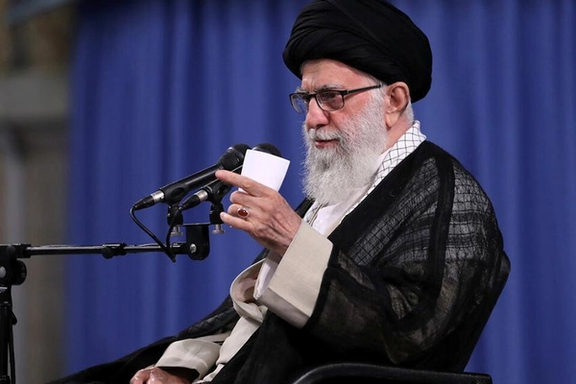
The latest brutal crackdown enforcing hijab comes on the direct orders of Supreme Leader Ali Khamenei, Tehran’s police chief has revealed.
The latest brutal crackdown enforcing hijab comes on the direct orders of Supreme Leader Ali Khamenei, Tehran’s police chief has revealed.
"After the Supreme Leader's directive, the police put this project on their agenda," Mohammadian said on Wednesday.
During a meeting with other police staff, he suggested they have "more patience" and work harder to accomplish their mission "better" without providing details on what that means.
Supreme Leader Ali Khamenei has repeatedly stated that ignoring the hijab is a red line that should not be crossed.
In his speech in early April, he described hijab defiance as "an imposed challenge". He said "the enemies" aimed to revert women's status to pre-Islamic Revolution times when their behavior, attitude, and presence were considered unacceptable.
"The issue of hijab has become a challenge and imposed on our country. They imposed this," he stated.
"Today, they are focused on the issue of removing women's hijab, but this is the first step; it is not the last step. This is not their goal. The enemy's goal is to return the country to the state of pre-revolution when scandalous conditions prevailed," he added.
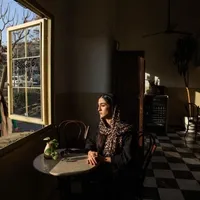
Morality police have been back on the streets since April 13, when the new hijab restrictions took effect. The extortion and abuse of Iranian women at the hands of hijab enforcement officers have caused even some regime supporters and hardliners to criticize the act or, at times, try to absolve Khamenei of responsibility.
Within a week of the new restrictions being enacted, deputy chief of the Office for the Preservation and Publication of the Works of the Leader of the Revolution, Mehdi Fazaeli, stated that the leader had cautioned some officials to refrain from taking any "irregular and spontaneous" actions regarding the hijab.
Mohammad Safari Malekian, a member of Iran’s parliament, was quoted on state news as saying: “Unfortunately, the country has suffered enormous costs due to the ill-considered enforcement of hijab. Distasteful behavior and an excessive amount of pressure on the issue of hijab will not achieve any results.”
Iran International has been informed of severe violence, including brutal physical assault and sexual verbal abuse suffered by many women arrested by the morality police during the latest crackdown.
Social media has been flooded with videos of Iranian hijab patrol agents forcibly arresting women for not complying with mandatory hijab. On Wednesday, a video surfaced that showed a woman being locked up in a police van as the crackdowns continued.
After the protests following Mahsa Amini's death in the custody of the morality police in 2022, enforcing mandatory hijab became more lax, but there are once again patrols of police, morality vans, and police motorcycle patrols in different Iranian districts.
Amini, a 22-year-old Kurdish-Iranian woman, died from multiple head injuries, triggering the fiercest uprising against the regime since its founding.


The university has also liaised with IRGC-connected diplomats for student exchange programs, only to see two of its graduate students detained or kidnapped by the IRGC and its allied armed groups in Iraq.
With its second student still missing, Princeton’s experience is a “cautionary tale of how American institutions can be ensnared in the internal politics of Tehran and Washington and become pawns in those battles,” the report’s author, Jay Solomon, writes. “[The] Congress is now formally probing the school’s ties to Iranian regime officials.”
The report, published Thursday under the headline “How Princeton got burned by its outreach to Iran,” is based on original investigation and makes use of a cache of Iranian foreign ministry emails that were obtained by Iran International and used in two scoops about an Iranian influence network in the US.
Some familiar names from previous reports appear in the new one: Mostafa Zahrani, a senior Iranian foreign ministry diplomat with strong ties to IRGC, and Ariane Tabatabaei, currently at Pentagon, whose close and extensive ties with the regime have raised many eyebrows, and led to calls for revocation of her security clearance –as has happened with her mentor, Robert Malley, who until a year ago was Joe Biden’s Iran envoy.
Once more, Tabatabaei seems to have been at the heart of Iran’s soft war: this time initiating the ‘outreach’.
“I wanted to introduce you to a friend who is in Princeton, and you will see him in Vienna in three weeks,” Tabatabai wrote in a 2014 email, attempting to connect Kevan Harris, the then associate director of the University's Iran Centre to Mostafa Zahrani, an Iranian diplomat with IRGC ties. “[Kevan Harris] is interested in sharing with you a plan to send Iranian students to Princeton and to send American students to Iran.”

The emails obtained by Iran International show that Harris then “arranged to see Zahrani in Austria two weeks later on the sidelines of the nuclear negotiations that were taking place between Iran, the US, and other global powers there.” Early 2015, Princeton picked its first candidate for its nascent Iran program: the Chinese-American student Wang Xiyue.
“Wang was hesitant about going to Tehran,” according to Semafor. “He also raised with Princeton his concerns about security.” Harris told him it would be fine. “It’s a good time to go [to Iran] — looks like they are in a good mood over there.” Six months later, Wang was arrested. He spent more than three years in Tehran’s notorious Evin prison, including in solitary confinement. He was released in a prisoner swap in 2019.
But Princeton seems to have ignored the lessons of Wang’s plight. In March 2023, a second Princeton graduate student, Elizabeth Tsurkov, was abducted by an Iranian-affiliated militia from a cafe in Baghdad. She hasn’t been seen since last November. “Both the US and Israeli governments blame Iranian-backed militia Kataib Hezbollah (KH) for the abduction.”
Elizabeth’s sister, Emma Tsurkov, has been vocal against Princeton’s response –which denied it approved Elizabeth’s travel to Iraq, implying that their student had “gone rogue.” It took the University more than six months to publicly take responsibility “for Elizabeth’s research and travel to Iraq.” Shortly after, in November 2023, KH released a video in which Elizabeth claimed, “she was both an operative for the CIA and Mossad.”

The report in Semafor also addresses the (very much ongoing) controversy surrounding Hossein Mousavian, a top regime diplomat and former nuclear negotiator, who has been at Princeton since 2009. “He fled Tehran that year after being charged with espionage”, but once in the safety of the US, he continued to promote the regime’s talking points and its nuclear positions. The emails obtained by Iran International and reviewed by Semafor shows that Mousavian would consult Zahrani and then-Foreign Minister Javad Zarif to ensure his pieces were on message.
There was very little doubt at this point that Princeton enjoyed “strong ties to the upper echelons of the Islamic Republic’s leadership,” Semafor quotes Wang. Even one of Wang’s advisers at Princeton’s Iran center, Mona Rahmani, had close ties to the regime in Tehran. “Her father ran Tehran’s interest section in Washington.” Wang says Rahmani “declined” to help him when he was thrown into jail in Tehran. Mousavian suggested it would be “counterproductive” to appeal to his contacts. And Princeton advised his wife to keep quiet and “not publicly criticize the Iranian government.”
“Simply put, after encouraging and convincing Mr. Wang to go to Iran, Princeton chose to put their reputation and political interest ahead of Mr. Wang’s personal safety,” reads the lawsuit that Wang filed against his former school in 2021. Princeton has always denied the charge of “negligence”. Last September, the two parties settled out of court with the school giving Wang an undisclosed amount.
Of all those named in the Semafor story, the only character still in Princeton –and almost entirely unaffected by all this– is Mousavian. The school still supports him and defends the decision to hire him in 2009, citing his role “in helping to promote the 2015 Iran nuclear deal, and his efforts to reduce tensions between Washington and Tehran that some Western officials worry could expand into an all-out war,” according to Semafor.
But some in the Congress have raised concerns about his continued presence in the US, with the House Committee on Education and the Workforce formally probing his employment: “Mousavian’s position...raises significant concerns about the influence of foreign hostile regimes on American institutions,” the committee wrote to Princeton President Christopher Eisgruber last November.
This has partly been a result of a grassroot campaign by Iranian-American activists who are pressuring Princeton to sever ties with Mousavian. Their campaign got a boost in March when the National Association of Scholars (NAAS) joined their chorus to get Mousavian dismissed. “His position threatens US national security and cedes academia’s integrity to a hostile regime linked to terrorism and human rights abuses,” the NAAS statement read.
Princeton has also hosted Robert Malley, the Biden administration’s suspended special Iran envoy, as a guest lecturer for the 2023 fall semester–months after his security clearance was revoked. Malley is currently being investigated by the FBI for the possible mishandling of classified information.