Canada Must Brand IRGC as Terror Group, Dissidents Urge
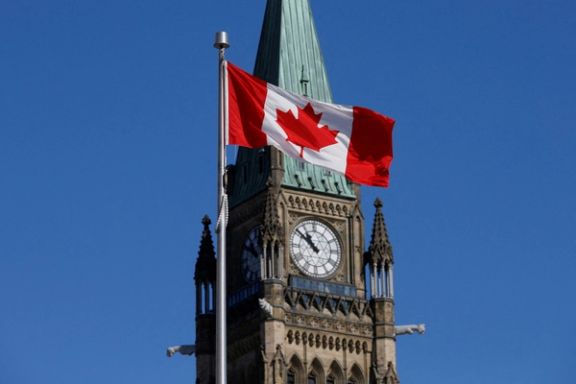
Canada’s government must designate the Islamic Revolutionary Guard Corps (IRGC) as a terrorist group after a unanimous vote by MPs, Iranian dissidents have urged.

Canada’s government must designate the Islamic Revolutionary Guard Corps (IRGC) as a terrorist group after a unanimous vote by MPs, Iranian dissidents have urged.
Canada-based Iranian dissident Hamed Esmaeilion wrote on X on Wednesday: “The time has come for the Canadian government to finally put this motion to action and call the IRGC what it deserves to be called."
Esmaeilion is a member of the Association of Families of Flight PS752 Victims. The group supports relatives of the 176 passengers who were killed when the Kyiv-bound flight was brought down by two IRGC air-defense missiles on January 8, 2020, as it took off from Tehran's Imam Khomeini International Airport. Among those who died were 55 Canadian citizens and 30 permanent residents.
Another prominent opposition activist, Masih Alinejad, asked Canadian Prime Minister Justin Trudeau which side of history he would choose in a tweet on X, "The people or the terrorists?"
"Millions of Iranians are counting on you to do the right thing and stand on the right side of history," Alinejad tweeted on Wednesday.
"The Revolutionary Guards of the Islamic Republic are like a dangerous virus, ready to spread across the globe unless we stop them. If you don’t take a stand against terrorism, it won’t just affect Iranians, but people worldwide will suffer the consequences", she added.
The call to brand the IRGC a terrorist group is only the latest attempt in Canada, stretching back to at least 2012. The mass drone and missile attack by Iran on Israel last month has amplified such calls among Canadian parliamentarians.

Iranian filmmaker Mohammad Rasoulof has been sentenced to eight years in prison and flogging in what opponents of the regime have condemned as punitive “revenge.”
The dissident leading director is being punished for “the signing of statements and the making of films and documentaries” which it is claimed are “collusion with the intention of committing a crime against the country's security”.
Rasoulof’s lawyer Babak Paknia posted on X (formerly know as Twitter) that the director has been sentenced to eight years imprisonment – of which five years are “applicable” – as well as flogging, a fine and the confiscation of property.
The Iranian Independent Filmmakers Association (IIFA) has condemned the sentence.
A statement published on the IIFA's Telegram channel on Wednesday said that the verdict once again indicates that the Iranian "legal system is nothing more than an instrument of revenge" against political dissidents.
"A regime that is built on the suffering of people is destined to crumble soon," the statement read.
The verdict is the latest in a series of harsh sentences handed out to Rasoulof since he was first jailed in 2010 for six years for creating anti-regime content and banned from making films for 20 years. The jail sentence was reduced to one year on appeal.
Despite the ban, he produced There Is No Evil, a drama that captured Iranian society under the Islamic Republic regime and won the Berlinale Golden Bear in 2020.
In 2022, Rasoulof was arrested after signing a letter saying military and security forces "have become tools for cracking down on people" and calling on them not to suppress protesters.
Rasoulof's latest film The Seed Of The Sacred Fig will be screened this month at Cannes.

Iran’s Islamic Revolutionary Guards are exploiting partnerships between Swedish and Iranian universities to acquire research and technology for their military programs, according to a new investigation by a US-based NGO.
Unbeknownst to Swedish authorities, United Against Nuclear Iran (UANI) says the IRGC has full access “to all collaborative work product between Iranian universities and their international academic partners”.
The partnerships in question involve at least eight Swedish universities – among them prestigious institutions like Lund University and Uppsala University.
"It is a significant national security issue, and Swedish universities should immediately sever any partnerships with Iranian universities given the risks of such collaboration, which may appear benign on the surface but which can be misused by the IRGC and security institutions in the Islamic Republic," UANI Policy Director Jason Brodsky told Iran International English.
In a letter alerting the Swedish government, UANI CEO Mark Wallace warned the country’s Education Minister that “any collaboration with an Iranian university will support the IRGC and other armed regime elements to further the Islamic Republic’s military program and the IRGC’s nefarious hard and soft power capabilities.”
The IRGC, the country’s paramilitary force, is subject to EU sanctions, and is a US-designated terrorist entity.
Letters outlining the NGO’s findings were signed by Wallace and Alireza Akhondi, a Swedish politician representing the Center Party, and were sent to the universities in question.
“Members of Parliament have summoned the Swedish education minister for questioning,” Brodsky said, adding that Swedish policymakers are taking UANI's investigation seriously.
Alongside the European Jewish Association, Europe Israel Public Affairs the UANI outlined its findings at the Swedish Parliament on Tuesday.
How the IRGC Exploits University Collaborations
Sweden, however, is not the only NATO member state, whose academic institutions have reportedly been targeted by the IRGC.
Last year, the UANI revealed that several top German universities partnered with an Iranian university linked to IRGC and Hezbollah, known for backing terrorist attacks on Israel.
Findings by the Jewish Chronicle in 2023, showed that scientists at 11 British universities helped the Iranian regime develop technology that can be used in its drone programme and fighter jets.
UANI's findings suggest that a strategic agreement was implemented in February 2021 between the IRGC and Iranian universities, exposing any collaborating academic institution to vulnerability.
The accord was implemented by the country’s Supreme Council for Cultural Revolution (SCCR) – overseen and led by the Islamic Republic’s Supreme Leader Ali Khamenei. The body, which sets Iran’s policies on cultural and educational matters, including the mandated hijab, faces several international EU and UK sanctions for gross human rights violations.
The SCCR’s accord mandates the transfer of all research and academic materials' intellectual property and rights to the IRGC and other regime entities – and is reportedly enforced across all Iranian universities.
Called the "Comprehensive Act on Science and Technology in the Defense and Security Field of the Islamic Republic of Iran," its aim is to acquire defense and security sciences and technologies.
UANI says that the agreement specifies that research obtained from universities is to be used for “hostility with enemies in the path of achieving the scientific defense goals of the Islamic Revolution” – and that it may be used against Sweden.
“Given the recently obtained evidence revealed by UANI’s investigation, any partnership with an Iranian university directly benefits the IRGC and other armed elements of the Iranian regime, posing a significant threat of espionage and exploitation,” the UANI CEO said.
The academic disciplines in which the Swedish universities collaborate with Iranian counterparts, the UANI said, align precisely with the IRGC's primary focuses for defense and security, as outlined in the strategic agreement.
These areas include automated and unmanned equipment (drones), aerospace propulsion systems, artificial intelligence, advanced warfare software and military science and technology, advanced electronics, energy, and cyber electronics.
Student exchanges organized under these partnerships also raise concerns about potential exploitation by the IRGC and other regime entities for malign purposes, the UANI found.
UANI says the universities involved in these collaborations are Malmo University, University of Boras, Lund University, Lulea University of Technology, Mid Sweden University, Uppsala University, Linnaeus University, and Swedish University of Agricultural Sciences.

The Canadian House of Commons on Wednesday unanimously adopted a Report to designate Iran’s IRGC as a terrorist entity and expel about 700 Iranian agents operating in Canada.
The constitutional weight of the adoption of the report cannot be exaggerated for it is non-binding for the government and the government could very well never re-introduce any bill for its implementation. Politically, however, the unanimous adoption of the report marks a step forward in Canada’s sluggish progress to designate IRGC as a terrorist entity.
The report paves the way for the introduction of Bill-350, State Immunity Act, as a set of amendments to the Criminal Code and the Immigration and Refugee Protection Act proposed by MP Hon. Garnett Genius. Whether or not the governing Liberals step up to the plate and designate IRGC as a terrorist organization, it is abundantly clear that the Trudeau government has already crossed Rubicon of confronting the Iranian regime, be it through going after IRGC and its special forces branch, the Quds Force, or via tackling the Canadian network of the relatives of the Iranian regime’s ruling echelon.
The burning question is whether the next step to tackle the IRGC and its active measures operatives in Canada will transpire in the form of both actionable legislation and action on behalf of the Canadian RCMP, CSIS, and Canada’s financial crime and FATF enforcement institutions. Indeed, Canada-Iran relations have gone through four distinct period since 2012.
The first period dates back to parliamentary debates on the question of designating IRGC in its entirety as a early as 29 March 2012, when Conservatives under Prime Minister Stephen Harper were at the helm. These debates took place in the context of a surge in human right violations by the Iranian regimes; starting with the death of Iranian Canadian Zahra Kazemi at the hands of the Iranian security forces in 2003 and the regime’s brutal suppression of 2009 presidential election protests.
Harper’s government implemented a series of measures that emerged in the form a comprehensive diplomatic confrontation against the Islamic regime of Iran. From cutting all diplomatic relations with the Iranian by closing the Canadian embassy in Tehran to designating IRGC’s Quds Force as a terrorist organization. However, Harper’s government did not go beyond these measures and only did join the UN mandated international sanctions against the Iranian regime concerning its nuclear program. Moreover, Harper’s government did nothing to stop former members of the ruling elite and/or IRGC top brass relatives from calling Canada home through various visa schemes made available to them through Canada’s Immigration system.

With Trudeau’s liberals taking over in November 2015, the government of Canada did not seek to undo the measure taken by the previous the conservative government but did not seem to have done anything to put into action any of those measures in a concrete manner. Indeed, the Canadian Senate considered bill S-219 (An Act to deter Iran-sponsored terrorism, incitement to hatred, and human rights violations) in February 2016 that would designate IRGC as a terrorist entity in its entirety.
Then, in 2018, the very MP Hon. Genius did sponsor another non-binding motion 018 to designate IRGC as a terrorist. For reasons that still befuddle most observers, the government, which enjoyed an overwhelming majority at the time, defeated the motion.
Without getting bogged down in the minutia of the history of this period, the turning point that galvanized the Iranian-Canadian community to pressure Trudeau’s government into concrete action was January 2020 shot-down of Ukrainian PS752 passenger airliner with 63 Canadians on board and almost a dozen more Canadian permanent residents by the IRGC air-defense batteries. From this point onward the liberal government began to adopt more concrete actions, starting with a series of sanctions against IRGC top brass and other high-ranking members of the Iranian regime.
However, the government stopped short of taking any concrete action from preventing the regime officials’ relatives from settling in Canada, nor did it introduce a Magnitsky style act for the Iranian regime officials who had profited from human rights violations.
The fourth period starts with Iran’s autumn 2022 “Woman, Life, Freedom” uprising and continues to date. The government began to roll out new sanctions against Iranian officials implicated in the brutal uprising culminating public consultation to stop the former officials and their relatives to use the proceeds of their crime for settling and/or investing in Canada. As of 2023, with Immigration Canada joining in the action by deporting several former senior regime officials, Canada seems to be gearing up for more concrete punitive actions against the Iranian regime.
Today’s vote thus marks a point of no return for Trudeau liberals. First, in the 2018 vote that defeated a similar motion by MP Genius, the two Iranian Canadian MPs Messrs Ali Ehssasi and Majid Jowhari were conspicuously absent from the vote. Today, however, both were present. In so far as speculation goes, it is likely that the gentlemen chose not to attend the session as they did not wish to vote “yes” against the wishes of a government, and one might say PM Trudeau, that was determined to defeat the motion.
Also in 2018, Trudeau’s government enjoyed a comfortable majority, which it no longer enjoys, and it may soon have to face Iranian-Canadians at the ballot box in a general election. The government can also no longer ignore reports of threats against Canadians by the Iranian regime on Canadian soil. Thus, whether or not Trudeau’s government would take action and pass Genius’ Bill-352 into legislation, with this motion it can longer remain sit on its hands and do nothing further. In the end, the winds of change may force it to do so as it will set sails soon for another election campaign.

Amnesty International has branded Iran's brutal hijab crackdown as a "War on Women" in the wake of the recent Noor plan which has seen security forces violently arresting unveiled women.
The human rights organization reported that since April 13 when the new hijab crackdowns began, Iranian security forces have escalated their tactics engaging in "surveillance, beatings, sexual violence, electric shocks, arbitrary arrests, and detention."
Amnesty has called on Iranian President Ebrahim Raisi to halt the punishment of women and girls for asserting their rights to bodily autonomy and freedom of expression, religion, and belief. The organization urges the immediate repeal of all compulsory hijab laws and regulations and demands the disbandment of all security forces assigned to enforce these laws.
Conditions have deteriorated rapidly under the newly intensified Noor (light) plan launched last month in a bid to crack down on hijab defiance. Sparked by the death in morality police custody of Mahsa Amini, conditions for women have worsened exponentially as women have rebelled against the Islamic dress code as a means of fighting the regime.
The call for action follows claims by UN human rights experts in September about potential laws promoting hijab compliance as a form of "gender apartheid."
In March, the UN Fact-Finding Mission on Iran outlined the arbitrary nature of punishments related to mandatory hijab laws, which they said violate international human rights law.
Reports of violent encounters between law enforcement, including plainclothes officers and women opposing mandatory hijab have surged following the implementation of the Noor plan. The morality police, particularly active in Tehran's central districts, have intensified their presence, marking a return to strict oversight after their being scaled back following the death of 22-year-old Amini.

Politicians in the United States have slammed the death sentence of Toomaj Salehi, an Iranian singer known for his dissenting views amid the ongoing uprising against the government.
Adam Schiff, California Rep., took to X on Wednesday to condemn the Revolutionary Court's decision, which he described as an unjust sentence for merely "calling for accountability for the Iranian regime through music."
Schiff praised Salehi's “courage and steadfast vision of human rights in Iran,” calling him an inspiration.
Similarly, Texas Rep. Lloyd Doggett expressed his dismay on Tuesday, spotlighting the need to focus on “atrocities being committed by the Iranian regime and stand with Iranians who seek a brighter future where freedom, human rights, and the rule of law are respected.”
Amir Raeisian, one of the lawyers defending Salehi, revealed on April 24 that despite being eligible for an amnesty, Salehi was sentenced to death for charges made in 2022. The development has triggered a global outcry, underscoring the contentious use of capital punishment in political cases by the Iranian authorities.
Salehi was actively involved in the nationwide protests of 2022, a vocal supporter of protesters, detainees, and political activists throughout the uprising which erupted after the death of Mahsa Amini in morality police custody. The protests resulted in over 500 people being killed by the Iranian regime and thousands arrested.
He is the latest in a long line of executions of voices of dissent which reached a record last year, well over 800 Iranians killed amid the regime's brutal crackdown.