Iranian Cleric Expresses Affinity for Africa as Iran Looks to Widen Reach
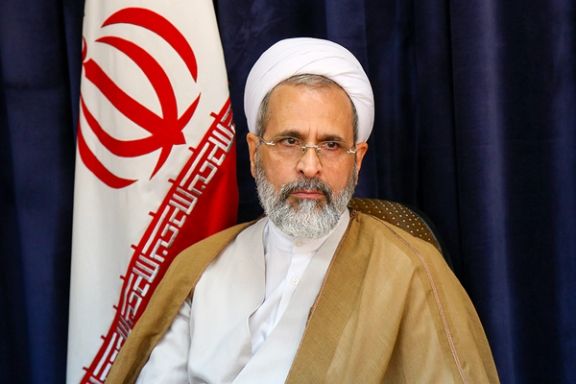
Alireza A'rafi, the director of Iran's seminaries, has reiterated the country's deep-seated affection for Africa as Iran continues to spread its grip on the Muslim world.

Alireza A'rafi, the director of Iran's seminaries, has reiterated the country's deep-seated affection for Africa as Iran continues to spread its grip on the Muslim world.
A'rafi claimed that the sentiment has been consistently shared by Iran's past leader Ruhollah Khomeini and the current Supreme Leader Ali Khamenei.
His comments underline Iran’s strategic interest in Africa, portraying it as more than mere diplomatic outreach. "Africa will play a significant role in the future global equations," A'rafi stated.
Iran is actively increasing its presence in Africa through religious, educational, and political channels, aiming to cement its influence there. The latest outreach coincides with Iran’s efforts to support pro-Palestinian student movements in the US and Europe, part of a broader attempt to enhance its international stature.
A'rafi also voiced hope for a rise in academic and religious opposition to Israel in Africa, signaling Iran’s intent to foster anti-Israeli sentiment among African nations.
However, Iran's actions in Africa have sparked controversy. Omar Hilal, Morocco’s ambassador to the United Nations, expressed concern in March last year about the potential for Iran's destabilizing activities in the Middle East to spill over into Africa.
Compounding the concerns, the US State Department reported in October that Iran had breached a UN Security Council resolution by sending armed drones to Ethiopia in the summer of 2021.

To defend a covert agreement to procure traffic equipment from China, the Tehran Municipality has erected banners and billboards across the capital, which critics argue "denigrate" domestic producers.
“Why Did We Import?” the banners and billboards in the streets and metro stations read in large letters and give a list of reasons for the purchase of electric buses, taxis and surveillance equipment from China. The list includes reduction of gasoline use, better air quality and the capital’s urgent and vital need for a new public transport fleet.
They also imply that domestically produced counterparts are inferior to the Chinese-made products, citing higher production costs and labeling domestic automakers—many of which, like Iran Khodro, are primarily owned by government-affiliated entities—as "tortoises" in terms of production speed.
The municipality has withheld the details of the controversial agreement not only from the public but also from city councilors. The agreement was signed by ultra-hardline Mayor Alireza Zakani during a visit to China in January.
If the foreign policy decisionmakers are using the agreement as a solution to repatriation of Iran's money from illicit oil sales to Chinese refineries, it would be more acceptable to tell the truth to Iranian producers, workers, and ordinary people, the Iranian Labour News Agency (ILNA) argued in an editorial entitled “Self-Humiliation of Municipality’s Billboards Against Iranian Production and Workers”.
The money referred to by ILNA, the mouthpiece of the Workers’ House (Khaneh-ye Kargar), has accrued in Chinese banks over the past few years and cannot be accessed due to international banking sanctions that came into effect after the United States unilaterally withdrew from the 2015 Iran nuclear deal.
The Workers’ House, which is Iran's largest government-endorsed and legal workers’ union, has reformist leanings like the Islamic Labor Party to which it is affiliated.
“But the automaking industry and labor relations analysts believe that the arguments and attitude [of municipality officials] is some sort of deprecation of domestic production,” the editorial added.
“Denigration of domestic production … by a public institution close to the government that voices revolutionary slogans, is strange for many and has raised the question of how much the conditions of the Iranian workforce and the fruits of their labor matters to various officials,” ILNA wrote.
The editorial also highlighted what it perceived as disrespect for the Iranian workforce and domestic production, particularly during years emphasized by Supreme Leader Ali Khamenei for their significance in promoting domestic manufacturing.
Khamenei has established a tradition of giving names to each Iranian calendar year in his New Year speeches (usually March 21). This year it was “Surge in production through people's participation”. He also dubbed the past two years as years of "Inflation Control, and Growth in Production” and “Production: Knowledge-Based Job-Creation”.
Speaking to ILNA, an official of the Iranian Auto Parts Producers’ Association, Bahram Shahriyari, refuted the claims of inefficiency of domestic producers and insisted that bad government management, which has monopolized the industry, are to blame for the problems of domestic automakers. He also claimed that big fluctuations in exchange rates and other issues such as higher taxes levied on producers have run car manufacturers and auto parts makers to the ground.

Reza Masoudi, the mayor of District 5 of the city of Shiraz in southern Iran, has been found dead at his home, sparking the temporary suspension of city council activities while police hunt the killers.
During a routine Shiraz City Council meeting on Sunday, proceedings were abruptly adjourned upon the breaking news of Masoudi's death.
Colonel Hamid Aframon from the Fars province police said the body of the mayor was found in his home under suspicious circumstances.
"The cause for Mayor Masoudi's death will be determined following the completion of ongoing investigations," Colonel Aframon noted. The Fars province police chief has already issued directives to follow up on the high-profile case.
Further details provided by Afshin Mohammadi, Deputy Prosecutor of Shiraz, confirmed his murder revealing that initial crime scene investigations pointed to signs of conflict.
"The examination of the body and the scene indicates that the incident occurred around midday on Sunday," said Mohammadi.
He also highlighted that the specialized murder investigation and crime scene teams from Fars province are actively working on the case to uncover more details regarding the mayor of district 5.

The representative of Supreme Leader Ali Khamenei at the Kayhan newspaper has called for the expulsion of International Atomic Energy Agency (IAEA) inspectors from Iran.
Shariatmadari’s piece pushed for "the suspension of all Iran’s commitments under UN Security Council resolutions, including those concerning the nuclear dossier, and the expulsion of IAEA inspectors." His statement comes amid heightened rhetoric following the IAEA chief’s recent visit to Iran, which seems to have emboldened Iranian officials’ nuclear ambitions.
“This is the undeniable and legal right of our country. Do not trample on this undeniable right,” said Shariatmadari.
Meanwhile, Kamal Kharrazi, the Supreme Leader’s foreign policy advisor and former Iranian foreign minister, threatened a shift to nuclear deterrence if Israel attacks Iran’s nuclear facilities. The statement has been met with minimal reaction from the international community, with the US State Department merely labeling it "irresponsible."
“We have no decision to build a nuclear bomb but should Iran's existence be threatened, there will be no choice but to change our military doctrine,” Kharrazi said.
During his visit, Grossi noted that although there was “no specific timeframe or deadline” for Iran to address its nuclear issues, he underscored the expectation for Iran to act quickly.
The escalatory dialogue follows the February 2024 announcement by former Iranian Atomic Energy Chief, Ali Akbar Salehi, who claimed Iran’s readiness to quickly produce sufficient fissile material for nuclear armament.
Grossi, recently warned that Iran is alarmingly close to achieving nuclear weapons capability, suggesting that the development of a nuclear bomb could be weeks away, should Khamenei decide to proceed.

Several public universities in Iran have stepped up suppression of students by restricting and banning their online activities, subjecting them to harsh penalties.
On Wednesday, K. N. Toosi, one of Iran's top five technological research universities, announced that students are not allowed to join online platforms such as X (formerly known as Twitter), Facebook, and Instagram, already banned in the country and only accessible via vpn services.
Students must also obtain a permit if they plan to join or create groups with over 100 members in messaging services such as Telegram. This is while Telegram channels are one of the main ways student unions share news.
Any unauthorized activity will result in severe punishments, including temporary study bans and, in extreme cases, a complete ban from studying in any university for up to five years, the university said.
The news comes as students have recently shared pictures online of posters they hang on campus with the headline "the war of women" to protest the recent crackdown on women for hijab. Since mid-April, morality police have returned to the streets, using violence to enforce hijab.
Additionally, universities attempt to prevent female students who have "improper" hijab from entering their campuses. In late April, after the morality police banned over 200 students from entering Amir Amirkabir University of Technology in Tehran, many students went on strike.
K. N. Toosi University has cited the disciplinary rules approved at the height of nationwide protests in Iran in 2022, as the source of these newly disclosed measures.
Students in Iran played a prominent role in protests during the Woman, Life, Freedom movement, which was sparked by the death in custody of 22-year-old Mahsa Amini, who died in the custody of morality police for allegedly not wearing her hijab “properly.”
Students joined other protesters in Iran and chanted slogans against the government. It is estimated that over 700 students have been arrested for demonstrating at universities as well as being attacked and beaten by government forces.
Moreover, universities began summoning, suspending, and expelling students, in addition to imposing new rules and requirements.
On Friday, Tarbiat Modares University of Tehran also texted students, warning them to refrain from any online activity on Telegram channels.
Telegram's Amir Kabir News channel, a student-led group that shares university news, described this action as "ridiculous" and posted a screenshot of the text message.
In the text message sent by the Security Cyberspace Monitoring Center of this university, the students were asked to terminate their membership in the "Twitter of Tarbiat Modares Students" Telegram group, as their online activities were monitored.
On Tuesday, the same channel reported about the pressure put on female students by the disciplinary committee at K. N. Toosi University: "Several female students have received a message that they are wearing their hijab inappropriately.”
In another recent case of intensifying restrictions on students' activities, including in cyberspace, the Telegram channel United Students announced that in the past few months, at least five students were charged with social network activities in the disciplinary committee.
According to the student group, the documents in the cases contained screenshots of tweets and photographs of the students.
Several reports indicate that students protesting the violation of their rights have been punished, and one of the latest cases involves the expulsion from the dormitory of a protesting student at Tarbiat Modares University.
According to the Telegram channel Pishro Students, Ahmed Pirouznia, a PhD student at Tarbiat Modares University, has been permanently banned from the dormitory, canteen, financial services and studying for six years by the disciplinary committee.
As recently as last week, the secretary of the union of Iranian university professors warned that the Interior Ministry and the National Security Council now control Iran's universities.
“Unfortunately, there has been a lot of government interference at the universities. The power of the Ministry of Science has diminished, and it seems the Interior Ministry gives orders to universities,” said Karen Abrinia in an interview with the relatively independent news website Khabaronline.

A bill aimed at further tightening internet control in Iran has been reintroduced in the Iranian parliament in a last minute bid to deepen social repression as the current parliament comes to its season's end.
The ILNA news agency reported that the 'Legislation to Protect Cyberspace Users' aims to intensify internet restrictions and with the new parliament set to officially commence on May 27, there is a final push to enact the bill before the changeover.
Over the past two decades, Iran has routinely blocked websites and social media applications, though many citizens circumvent the restrictions using VPNs (Virtual Private Networks) and other tools.

Legal expert Kambiz Norouzi said the new measures will not succeed, as people find alternative ways to get online. "Fighting realities only leads to failure," he said.
Mohammad Javad Azari Jahromi, Minister of Communications during Hassan Rouhani's administration, said the move is a desperate last minute attempt to push through the repressive measures. "The planners have lost hope for passing the plan in the next parliament considering its composition. With the current performance, they believe there is a high chance that the government will be a one-term administration, therefore they want to pass a law to permanently remove the internet development mandate from the control of administrations."
A recent report by the Tehran E-commerce Association has pointed fingers directly at President Ebrahim Raisi, alleging his role in the ongoing internet censorship efforts. The report criticizes the direct involvement of all three branches of government in censorship processes, particularly highlighting the President's responsibility due to his appointment power over the committee that filters websites.
"Iran's internet situation is akin to that of poor and underdeveloped countries, but the main difference is that in Iran's case, these conditions are self-inflicted," the report added.
However, hardliner Tehran representative Mostafa Mirsalim expressed his frustrations about the stalling of the legislation in parliament, citing the "lawlessness" online as causing significant societal damage.
The resurgence of interest in tightening internet restrictions traces back to July 2021 when Ali Khamenei, Iran's supreme leader, criticized the "unrestrained" nature of cyberspace.
Critics argue that the approval of the plan will mark a shift towards a more security-oriented approach by the regime towards the internet, potentially leading to increased censorship and restricted access.
Following the nationwide protests that erupted in mid-September 2022 after Mahsa Amini was killed in a morality police detention center, several popular internet services, including Instagram and WhatsApp were blocked by the government.
Iran not only blocks a wide range of websites including major social media platforms and international services like Google Play but also implements a reverse filtering system known as Iran Access. This system restricts users outside Iran from accessing numerous Iranian sites, including those of government bodies, banks, and financial institutions. The measure aims to lower the risk of foreign hacking attacks which frequently target government organizations.