Iran Executes Sunni Prisoner After 14 Years on Death Row

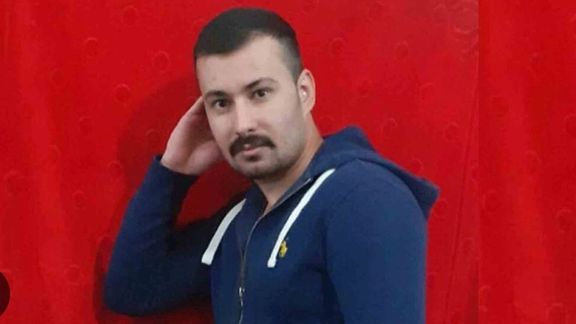
After 14 years in jail, Sunni prisoner Khosrow Besharat was executed for trumped up charges of killing an imam amid Iran’s continued execution spree.

After 14 years in jail, Sunni prisoner Khosrow Besharat was executed for trumped up charges of killing an imam amid Iran’s continued execution spree.
Besharat was one of seven people charged with "moharebeh" (waging war against God) and other offenses, of which six have already been executed.
Arrested in December 2009 alongside Anwar Khezri, Qasem Abasteh, Ayoub Karimi, Farhad Salimi, Davoud Abdollahi, and Kamran Sheikheh, the group faced allegations of "moharebeh," "corruption on earth," “supporting Salafi groups,” and the murder of Abdolrahim Tina, an imam in Mahabad killed in 2008.
Initially sentenced to death in 2017, Besharat's verdict was overturned by the Supreme Court, which sent the case back to the Revolutionary Court in Tehran for re-evaluation. Nevertheless, in June 2018, amid Iran’s secretive legal system, they were once again sentenced to death, a decision confirmed by the Supreme Court in February 2020.
The execution of Besharat at Ghezelhesar prison in Karaj on Wednesday follows closely behind that of Anwar Khezri, killed on May 1 after approximately 15 years in the same prison. The death sentences of Abasteh, Karimi, Salimi, and Abdollahi were also executed between November 2023 and January 2024.
Throughout their incarceration, Besharat and the other defendants had repeatedly professed their innocence in published letters, asserting that the charges against them were unfounded.
Besharat's execution occurred on a day when, according to the US-based Human Rights Activists News Agency (HRANA), four other prisoners were executed in Ghezelhesar prison for charges related to drug crimes and murder.
Amnesty International released a report on April 4 titled "Don't Let Them Kill Us," highlighting that 853 were executed in Iran in 2023, an unprecedented figure in the last eight years. Among those are huge numbers of minorities such as Kurds.

Niger's Prime Minister, Ali Lamine Zeine, revealed that the United States has threatened the country with sanctions if it proceeds with a deal to sell uranium to Iran.
In an interview with The Washington Post on Tuesday, Zeine said Molly Phee, the State Department’s top official for African affairs, issued the threat during spring negotiations aimed at extending the presence of US forces in Niger.
According to him, the confrontation led to the “rupture” of military relations between the United States and Niger, previously considered a key ally in West Africa.
Le Monde reported earlier this month that despite international pressures, the military government of Niger still plans to proceed with the sale of hundreds of tons of refined uranium, or "yellowcake," to Iran.
Zeine, who met with President Ebrahim Raisi and other top Iranian officials in Tehran in January, stated that “absolutely nothing” has been signed with Iran, adding that if a deal had been inked, it would have “not been under the table … but in front of cameras.”
The strain in relations was exacerbated when Niamey announced the mid-March termination of its military cooperation with the US, shortly after a US delegation visit.
The US had been heavily involved in counter-terrorism operations in Niger, operating a major drone base near Agadez city. Following the cessation of cooperation, the US agreed in April to withdraw more than 1,000 American personnel, with ongoing discussions regarding the terms.
Relations between Niger and Western nations have deteriorated sinceast year’s July coup that ousted elected president Mohamed Bazoum. Post-coup, the junta expelled French troops and enhanced ties with Russia, which has since provided military instructors and equipment.

Iran has branded new sanctions by Australia “illegal” with key figures within Iran’s military and Revolutionary Guard (IRGC) now under the new measures.
The sanctions also target the IRGC Navy and individuals such as Iran's Defense Minister Mohammad Reza Ashtiani and Brigadier General Esmail Qaani, commander of the IRGC's Quds Force.
Iran's Ministry of Foreign Affairs accused Australia and its partners of maintaining a “double standard” claiming they are aligned with Washington's policies.
Australia's sanctions, which also affect several Iranian businesspeople and entities involved in missile and unmanned aerial vehicle (UAV) programs, have been justified on the grounds of curbing Iran's "destabilizing behavior" and extensive proxy activities in the region. The Australian government asserts that these programs have long fueled regional instability.
In total, Australia has now sanctioned 90 individuals and 100 entities related to Iran, stating its commitment to apply pressure to compel Iran to cease its disruptive actions and adhere to international norms.
However, despite the sanctions, Australia has not designated the IRGC as a terrorist organization—a stance that aligns it with the UK, Canada, and France, rather than with the United States, which designated the IRGC as a foreign terrorist group in 2019.

The EU Council announced the expansion of its restrictive measures against Iran on Tuesday in response to the country's military support for Russia's war on Ukraine and armed groups in the Middle East.
The expanded measures will allow the EU to target individuals and entities involved in supplying, selling, or transferring Iran's missiles and UAVs when supporting Russia’s war of aggression against Ukraine, being used by armed groups and entities to undermine peace and security in the Middle East and Red Sea region, or breaching United Nations Security Council Resolution 2216 (2015).
"This framework, adopted in July 2023, currently prohibits the export of components used in the construction and production of Unmanned Aerial Vehicles (UAVs) from the EU to Iran, and provides for travel restrictions and asset freeze measures against persons responsible for, supporting or involved in Iran’s UAV’s program," stated the Council.
"In view of Iran’s continuing military support of Russia’s war of aggression against Ukraine as well as of non-state armed groups in the Middle East and the Red Sea region, and following the Iranian drone and missiles attacks against Israel on 13 April 2024, the Council decided that the EU’s ability to impose restrictive measures will now cover not only UAVs, but missiles too."
Initially, Iran denied supplying drones to Russia but later acknowledged that it had provided a small number before Moscow initiated its war on Ukraine in 2022.
Following Hamas' attack on Israel on October 7 and the subsequent Israeli offensive in Gaza, Iran has stepped up its efforts against American and Israeli interests, deploying armed groups throughout the Middle East that it supports, arms, and trains.

The Iranian government has allocated at least 360 trillion rials ($600 million) to its propaganda activities in the current calendar year (March 21, 2024 – 20 March 2025) amid a deep economic crisis.
The figures in this budget might seem small when converted into US dollars but considering that many private and public sector employees earn under $200 per month, it is easy to see the scale of the spending. On the other hand, the total propaganda budget constitutes a large part of the country's annual budget which is being paid out partly by printing money. This fuels a more-than-%50 annual inflation that has impoverished tens of millions of people in the past five years.
One more thing to consider is that many of the propaganda organizations also receive funds other than their official annual budget.
The reformist daily Etemad in a report last week tried to make sense of a hodgepodge of scattered numbers to arrive at a total budget figure for propaganda. This is not an easy task in Iran, as the government allocates money for propaganda in every line item, often under obscure designations. The total figure of 360 trillion rials, therefore, might be just the tip of the iceberg.
However, some numbers were clearly mentioned. For example, 1.10 trillion rials ($1.8m) of the propaganda budget is allocated to President Ebrahim Raisi's provincial visits. At the same time, while 5 trillion rials was allocated for May 10 runoff parliamentary election, mostly spent on advertising the highly staged-managed vote, to urge people to participate. The result was an eight-percent turnout.
Over 800 billion rials has been allocated to the committee that follows an international legal case about the killing of former IRGC Qods Force Commander Qasem Soleimani by the United States in 2020. Meanwhile the government is to spend 20 trillion rials on the publicity for Iran's membership In the BRICS and Shanghai pacts.
Furthermore, Iran will spend 269 billion rials to help the office of the country's Cultural Attache' in South Africa. That is in addition to another 2.8 trillion rials for its Islamic Center in South Africa.
According to Iran International TV, 77 trillion rials will be spent by the Islamic Propagation organization, a body that works in parallel with the Culture Ministry in an inexplicable duplication of efforts.
Iranian analyst Mehdi Khalaji told Iran International that the Etemad report reveals only the tip of the iceberg about propaganda spendings by the Iranian government. He said Iran runs a financial empire for ideological activities in Iran, the Middle East and other countries.
While Etemad argues that Iran's extensive spending on propaganda has yielded no tangible effects, Khalaji counters that such expenditure has contributed significantly to the survival and continuity of the Islamic Republic, its powerful clerical system, and the expansion of Shiite soft power in the region.
Khalaji highlights the influence of the clerics in Iran, noting that they control one third of all land in Iran through religious endowments. Meanwhile, the Etemad report details the budget allocations for propaganda, including 9 trillion rials dedicated to enforcing the anti-US legislation passed after former US President Trump withdrew from the 2015 nuclear deal. Additionally, nearly five trillion rials fund the state broadcaster IRIB, which also taps into the country's oil revenues from the National Development Fund. Furthermore, 10.5 trillion rials are allocated to "institutions under the Interior Ministry," which include unofficial security forces that suppress protests, and 8.5 trillion rials support pilgrimages to religious sites in Iran, Iraq, and Syria.
Meanwhile, the government will contribute 500 billion rials to help Amir Al-Momenin Seminary in Tehran as well as 1.5 billion to help the Al-Mahdi religious education center. Some other items in the propaganda budget include:
According to Etemad, these budgets have been allocated to organizations whose functions are not clear to the public and never disclose their financial statements. It is also not clear who is spending all that money, where and for what purpose, as there are no checks and balances in place to control the financial status of those organizations.
A video surfaced on social media on Sunday, showing a woman being beaten and violently arrested by a regime’s hijab enforcement police officer in Iran.
The footage shows the officer forcefully pushing the woman into a car after beating and detaining her.
The woman, whose face is not visible, can be heard saying amid the assault, “Okay, let go of me… you’ve broken my neck."
In the statement issued Tuesday morning, police said that the "defendants," including the woman whose arrest is seen in the video, must "obey the law and arrest warrant and avoid any kind of unaccustomed behavior."
Media outlets have reported that the arrest of this woman was due to her opposition to the mandatory hijab.
The statement said that the officer who apprehended the woman was arrested by order of the police commander of the relevant province and is now under investigation. The officer has reportedly been suspended from service pending appropriate measures.
In response to this statement, Iranian social media users have dismissed the news of the officer's arrest as fake.
Citing numerous past incidents, one user commented: "In a few days, there will be additional news saying the person who filmed this scene was arrested."
The Police Information Center did not provide any clarification or information on the charges against the woman or the reason for her arrest.
Other instances of hijab enforcement officers violently arresting and beating women have been reported across multiple cities in Iran recently.
This comes as part of Iran’s renewed and intensified crackdown on unveiled women, following the introduction of the Noor Plan in April at the directive of the country’s Supreme Leader Ali Khamenei.