Iranian Minister Calls Internet Blocking Policies ‘Acceptable’
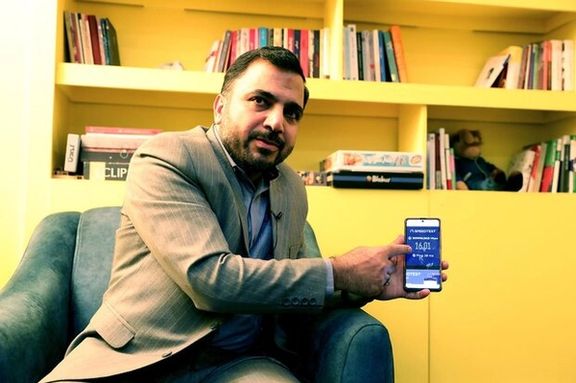
Iran's Minister of Communications, has defended the country's internet policies, which involve restricting access to popular foreign platforms, labeling the policy "acceptable."

Iran's Minister of Communications, has defended the country's internet policies, which involve restricting access to popular foreign platforms, labeling the policy "acceptable."
In an interview with the Shargh newspaper, Isa Zarepour remarked, "The same logic prevails even in countries that claim to uphold freedom of speech. Accepting a country's laws means abiding by them; otherwise, it's natural for restrictions to be enforced."
Zarepour claimed that Instagram played a “significant” role in amplifying the "riots" of 2022, referring to the widespread public protests which Iranian authorities consistently label as such. The protests were in response to the death of Kurdish woman Mahsa Amini, who died in police custody for allegedly defying hijab regulations, sparking the Woman Life Freedom movement.
He further stressed the necessity of regulating platforms that "do not adhere to their own rules and jeopardize national security."
Additionally, he defended his crackdown of internet usage during the 2022 uprisings, calling it one of the "good events" of his tenure, despite widespread reports of internet blackouts and the shutdown of SMS services during the anti-government protests.
The government's actions included cutting off access to major social media platforms like Instagram and WhatsApp and cracking down to social media criticism of the government with thousands already arrested for charges including threatening state security.
Zarepour called allegations of intentional disruptions by the Ministry of Communications unfounded.
According to the Freedom on the Net 2023 report by Freedom House, Iran ranks sixty-eighth out of seventy countries in internet freedom.
Since the 2022 uprising, not only have dissident voices been targeted but millions of Iranians have been plunged further into poverty as the platforms they relied on for e-commerce, especially small businesses in rural areas, have been cut off.

Over 47,000 tons of expired and contaminated cooking oil have been distributed in Iran, according to prominent Iranian whistleblower journalist Yashar Soltani.
The contaminated oil was reportedly part of a shipment bought by Iran’s state purchasing agency from Turkey and Argentina in August 2021.
The Government Trading Corporation of Iran (GCT) had purchased an overall shipment of 91,000 tons of cooking oil, which reportedly was poisoned with agricultural toxins and pesticides, according to Soltani's report.
The report, based on documents allegedly obtained from official laboratories, suggests that the shipment was tested by Iranian state laboratories four times. All results reportedly indicated that "the oils cannot be cleared for consumption" due to residue factors of agricultural toxins.
The oils were said to include chemical insecticides such as malathion, deltamethrin, piperonyl butoxide, and pirimiphos-methyl.
Consumption of chemical insecticides can pose health risks to humans. Short-term exposure to high levels of pirimiphos-methyl can cause symptoms such as nausea, vomiting, abdominal pain, headache, dizziness, and difficulty breathing. Long-term exposure may lead to more serious health effects, including neurological damage, reproductive issues, and an increased risk of certain cancers.
Over a year after the shipment was purchased, in September 2022, a technical committee considered the sampling results "inconclusive" and voted to release the cargo of two out of three ships, which contained half the total.
In his report, Soltani noted that 47,000 tons of expired and contaminated cooking oil had entered the Iranian market. As of now, 44,000 tons remain unreleased at Bandar Abbas port in Hormozgan province, located in southern Iran.
Officials denied and replied to the allegations, but Soltani released a further update with additional evidence days later.
In a statement last Tuesday, the GCT, mentioned in Soltani's report as the importer of this shipment, denied that the oil was tainted.
"No product can be sold without the permission of Iran’s Food and Drug Organization (IFDA) and the Iran National Standards Organization (INSO). Without approval from these organizations, a product will not qualify for distribution and consumption," the statement read.
Bandar Abbas's prosecutor also objected, stating to Iranian media that "The released oils had permission from IFDA, but the 44,000-ton cargo of contaminated oil is not cleared and is still kept in the port."
Another official, the Chief Justice of Hormozgan, echoed the denials by saying a "shipment of 44,000 tons of oil worth 70 million euros" was seized, and "the seller offered to take it back."
The IFDA also denied authorizing any contaminated products last week.
The investigative journalist, known for uncovering corruption among Islamic Republic officials, reacted to the denials on Thursday and emphasized the role of IFDA as the main culprit.
The IFDA, operating as part of the Iranian government’s Health Ministry, falls under the purview of current President Ebrahim Raisi.
Soltani criticized officials for focusing solely on the unreleased cargoes and demanded an explanation for why half of them had already entered the market.
“The IFDA’s head should take responsibility for the situation more than anyone else,” Soltani wrote on his website.
He presented further documents that demonstrated that in the IFDA system, the shipments are still labeled "waiting for permit."
“How can these products enter the market without IFDA authorization?...The main issue remains. In all four tests, several agricultural toxins were found in these products and declared not suitable for human consumption. But suddenly, the IFDA decided to import half into the Iranian market.”
Soltani was sentenced to five years in prison in 2016 for investigating corruption in municipal real-estate sales in Tehran. In 2019, he was released on bail after being charged with "spreading lies" and "gathering classified information with the intent to harm national security."
The whistleblower also exposed the reported financial corruption by a prominent cleric appointed by the Supreme Leader Ali Khamenei as Tehran's Friday Imam in March.

Iraj Kakavand, the anti narcotic police chief of Iran, said on Wednesday that approximately half of the country’s prisoners are involved in drugs or narcotics.
His comments, implying a lack of monitoring in prisons where drug use prevails, come as human rights group report that the prison system in Iran is highly controlled and violence, rape, and torture by the Islamic Republic agents prevail.
Iran Wire claimed in 2020 that cheap, mass-produced narcotics are distributed among prisoners. Activists such as Leila Hosseinzadeh, who has since been released, said that systematic drugging of prisoners is also rife. After a fight between two prisoners, she said "a pill was placed into the mouth of one of them so that they could not speak for a few days.”
Moreover, the latest claims come against the backdrop of execution as punishment for drug-related crimes in Iran’s judiciary system, a practice that analysts say is political in nature.
According to Iran Human Rights Organization Director Mahmood Amiry-Moghaddam, drug-related executions are "aimed at instilling fear and preventing more protests" and have been carried out "without any political cost or consequences."
Amnesty International reported in April that Iran executed at least 853 people in the last year, marking the highest number in eight years. Drug-related offenses accounted for more than half of these executions.
In April, more than 80 human rights organizations called on the United Nations Office on Drugs and Crime (UNODC) to demand from Iran that drug-related executions cease as a condition of its cooperation.
Prisoners who have been charged with drug offenses in Iran are sentenced to death for “torture-tainted confessions, without due process and fair trial rights and often without access to a lawyer,” according to their statement.
According to Amiry-Moghaddam, UNODC has kept silent about the rise in drug-related executions in the country while it has partnered with Tehran to combat drug trafficking.

Amir Ali Hajizadeh, the commander of the Aerospace Division of the Islamic Revolutionary Guard Corps (IRGC), was honored for his role in the attack on Israel last month.
The ceremony saw Hajizadeh awarded the first Ferdowsi International Medal in the category of "epic-making" for his role in the April 13 assault, Iran’s first direct attack on its archenemy.
The Ferdowsi National Medal, given by the Ferdowsi Foundation, recognizes significant contributions across scientific, cultural, artistic, and political domains, honoring both Iranians and non-Iranians. The event coincides with Ferdowsi National Commemoration Day, honoring the Persian poet known for the epic poem "Shahnameh" (The Book of Kings), a cornerstone of Persian literature.
On April 13, dubbed Operation True Promise by Iran, an assault was launched against Israel, involving approximately 170 drones, 120 surface-to-surface ballistic missiles, and 30 cruise missiles. Supported by a US-led coalition, most of the assault was intercepted.
The offensive was allegedly in retaliation for an earlier Israeli airstrike on an Iranian consulate facility in Damascus, which killed seven IRGC officers including two senior commanders.
Israel responded on April 18 with a precise airstrike near Isfahan, targeting military installations. The action was aimed at reinforcing Israel's deterrence capabilities while avoiding further escalation of the conflict.
While the Israeli Defense Forces (IDF) successfully intercepted nearly all incoming projectiles, Iran hailed the operation as a major triumph, asserting it had inflicted significant damage on its arch enemy.

After 14 years in jail, Sunni prisoner Khosrow Besharat was executed for trumped up charges of killing an imam amid Iran’s continued execution spree.
Besharat was one of seven people charged with "moharebeh" (waging war against God) and other offenses, of which six have already been executed.
Arrested in December 2009 alongside Anwar Khezri, Qasem Abasteh, Ayoub Karimi, Farhad Salimi, Davoud Abdollahi, and Kamran Sheikheh, the group faced allegations of "moharebeh," "corruption on earth," “supporting Salafi groups,” and the murder of Abdolrahim Tina, an imam in Mahabad killed in 2008.
Initially sentenced to death in 2017, Besharat's verdict was overturned by the Supreme Court, which sent the case back to the Revolutionary Court in Tehran for re-evaluation. Nevertheless, in June 2018, amid Iran’s secretive legal system, they were once again sentenced to death, a decision confirmed by the Supreme Court in February 2020.
The execution of Besharat at Ghezelhesar prison in Karaj on Wednesday follows closely behind that of Anwar Khezri, killed on May 1 after approximately 15 years in the same prison. The death sentences of Abasteh, Karimi, Salimi, and Abdollahi were also executed between November 2023 and January 2024.
Throughout their incarceration, Besharat and the other defendants had repeatedly professed their innocence in published letters, asserting that the charges against them were unfounded.
Besharat's execution occurred on a day when, according to the US-based Human Rights Activists News Agency (HRANA), four other prisoners were executed in Ghezelhesar prison for charges related to drug crimes and murder.
Amnesty International released a report on April 4 titled "Don't Let Them Kill Us," highlighting that 853 were executed in Iran in 2023, an unprecedented figure in the last eight years. Among those are huge numbers of minorities such as Kurds.

Niger's Prime Minister, Ali Lamine Zeine, revealed that the United States has threatened the country with sanctions if it proceeds with a deal to sell uranium to Iran.
In an interview with The Washington Post on Tuesday, Zeine said Molly Phee, the State Department’s top official for African affairs, issued the threat during spring negotiations aimed at extending the presence of US forces in Niger.
According to him, the confrontation led to the “rupture” of military relations between the United States and Niger, previously considered a key ally in West Africa.
Le Monde reported earlier this month that despite international pressures, the military government of Niger still plans to proceed with the sale of hundreds of tons of refined uranium, or "yellowcake," to Iran.
Zeine, who met with President Ebrahim Raisi and other top Iranian officials in Tehran in January, stated that “absolutely nothing” has been signed with Iran, adding that if a deal had been inked, it would have “not been under the table … but in front of cameras.”
The strain in relations was exacerbated when Niamey announced the mid-March termination of its military cooperation with the US, shortly after a US delegation visit.
The US had been heavily involved in counter-terrorism operations in Niger, operating a major drone base near Agadez city. Following the cessation of cooperation, the US agreed in April to withdraw more than 1,000 American personnel, with ongoing discussions regarding the terms.
Relations between Niger and Western nations have deteriorated sinceast year’s July coup that ousted elected president Mohamed Bazoum. Post-coup, the junta expelled French troops and enhanced ties with Russia, which has since provided military instructors and equipment.