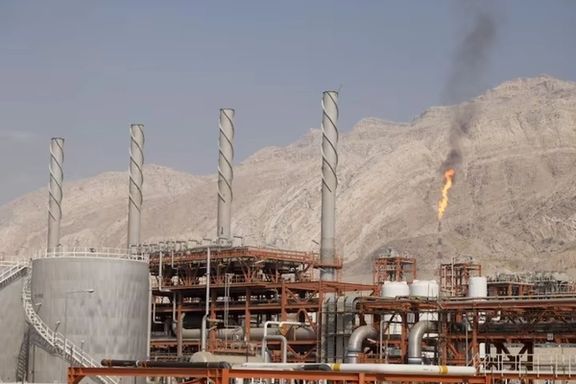
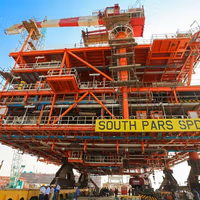
A general view shows a unit of South Pars Gas field in Asalouyeh Seaport, north of Persian Gulf, Iran November 19, 2015.
A US lawmaker has criticized the Biden administration for inadequately addressing the increase in Iran's petroleum trade which has allegedly generated $88 billion since President Joe Biden took office.
In a recent television interview, Mike Lawler attributed the increase to what he perceives as a weak stance on Iran by the current US administration.
“His [Biden’s] appeasement of Iran is extremely dangerous… You look at the unholy alliance between China, Russia and Iran, and you see that they are seeking to undermine and destabilize the free world,” he stated.
Lawler championed the SHIP Act, a legislative measure aimed at curbing the illicit petroleum trade that allegedly funds Iranian-supported terror activities.
“I fought to get the SHIP Act passed and signed into law so we can finally crack down on the illicit petroleum trade funding Iranian terror. This Administration must hold Iran accountable,” he wrote on X.
The issue of Iranian oil revenue has become a hot topic, with reports indicating a substantial increase in the past year.
In 2023, Iran has been exporting approximately 1.4 million barrels of oil daily, with a significant portion being purchased by China, according to tanker shipment tracking firms. Although the exports would value around $41 billion at Brent crude prices, it is likely that Iran is selling at a lower rate.
Lawler's comments reflect a growing unease among US lawmakers who are pushing for immediate action to prevent Iran from accessing additional financial resources that could be used to support terrorism. More than 60 House members in January called on the President to reverse the current policy and take a tougher stance against Iran.
A detailed report from The Spectator has revealed the detailed strategies employed by Iran in the assassination of its opponents abroad.
According to the report, Iran is actively transforming the murder-for-hire industry across the US and Europe, contracting out killings to avoid direct involvement.
The Spectator's investigation indicates that Iran employs the same covert tactics abroad that it uses to manage proxy forces like Hezbollah and militia groups across the Middle East, outsourcing murder plots through proxies or criminal gangs.
“There appear to be no set rules for the methods Iran uses to find the criminals to do its work abroad, except to avoid the obvious. Biker gangs and people-traffickers are better able to operate away from the gaze of counter-terrorism police than politically motivated ideologues,” wrote the Spectator.
Plots have reached the highest levels of state. Two years ago, the US charged an Iranian man with attempting to hire a hitman to kill John Bolton, a former national security adviser in the Trump administration, for a lucratively tempting $300,000.
The report highlights the activities of Unit 840, a secretive branch of Iran’s IRGC Quds Force, which orchestrates the operations. One of the thwarted plans involved the attempted assassination of Sima Sabet and Fardad Farahzad, two presenters for Iran International TV. While the US has proscribed the IRGC, other nations have as yet failed to make the designation.
Last year the US named Iran the number one state sponsor of terror and countries such as the UK have named it as a leading foreign threat on British soil. Israel’s spy chief last year said dozens of plots against Jewish and Israeli targets abroad had also been foiled.
The Iranian parliament greenlit a ‘controversial’ bill on Wednesday in favor of a two-day weekend, after drawing criticism and opposition from hardliners who associated it with the "Western lifestyle" and the Jewish Sabbath.
Yet to be approved by the Guardian Council – made up of Islamic clerics – it would usher in changes to the workweek. Fridays and Saturdays would become the official days of rest, and the work week would be reduced to 40 hours from the current 44.
Currently, Friday is the only official day of rest in Iran. However, many government offices and private companies also observe full or partial closures on Thursdays.
The bill cleared its first hurdle, despite facing opposition from hardliners and institutions closely aligned with Supreme Leader Ali Khamenei, who objected to designating Saturdays as the second official day off due to religious and ideological reasons.
Khorasan media outlet, close to the Islamic Revolutionary Guard Corps (IRGC), emphasized that "the issue is not just a day off; it is the issue of changing the social order.”
"Friday is a symbol of Islam as opposed to Saturday, which is the symbol of Judaism, and Sunday, which is the symbol of Christianity. We ignore the symbolic significance of days…In a society, identity determines your border with others, but neglecting it leads to cultural mixing, de-identification, and lack of individuality," the outlet said.
Both Iran’s parliament and government are dominated by ideological hardliners with anti-Jewish and anti-Israeli views. In the past four decades, the Islamic Republic's ruling regime has spent billions of dollars on anti-Israel groups and campaigns in the region and beyond.
President Ebrahim Raisi's parliamentary deputy Mohammad Hosseini said last week that the government supported Thursday's option instead of Saturday.
At a time when the Iranian regime is experiencing perhaps its lowest popularity since its establishment in 1979, it is grappling with criticism over an economy in decline and escalating inflation.
Since at least the 1990s, Iranian government officials and ruling clerics have been implicated in financial corruption and embezzlement of billions of dollars, intensifying public discontent.
According to official figures released by the interior ministry, around 60% of the 84 million Iranians live under the relative poverty line of whom between 20 to 30 million live in "absolute poverty".
Meanwhile, political supporters of Saturdays argued that cutting economic ties with the world for four consecutive days, potentially from Thursday to Sunday, would severely damage trade and production.
Lawmakers pointed out that other Islamic countries in the region, including Saudi Arabia, the United Arab Emirates, Pakistan, Turkey, and Iraq, also hold weekends on Fridays and Saturdays.
On Wednesday, Mohsen Pirhadi, a lawmaker representing Tehran, said, "Choosing Saturday would be the most economically beneficial and least costly option.”
To clarify that Thursday is not religiously significant or sacred like Friday, the private sector has lobbied top Shia clerics who can provide guidance, to confirm this.
In a letter on April 17, the Iran Chamber of Commerce chairman, Samad Hassanzadeh, appealed to the Supreme Leader, Ali Khamenei, to support the private sector's position.
Ayatollah Abdollah Javadi-Amoli, a "Marja" – a high-ranking religious authority in Shia Islam with many followers—announced on Wednesday that there is no religious barrier to declaring Saturdays a holiday: "The holiday on Saturday is to coordinate with the global economic market and transactions, and it is effective in solving some economic problems and curbing inflation."
Ayatollah Abdollah Javadi-Amoli, a "Marja" – a high-ranking religious authority in Shia Islam with many followers
Javadi-Amoli, who has been outspoken about the financial hardships many families face, warned in April that unresolved financial difficulties could lead to losing faith in a meeting with the CEO of Iran’s National Bank (Bank Melli Iran).
“Religion will be wrecked if the economy cannot satisfy [the needs of the] people…After religious matters, money and wealth are what matters the most in the country,” he stated.
Furthermore, several top clerics in Iran, typically supportive of the government, have recently expressed concern about high inflation, which surpasses 50%, fluctuating exchange rates, and the impact of sanctions on the economy, blaming the administration.
Helmut Brandstätter, a member of the Austrian parliament, has urged the European Union to sanction Iran’s IRGC.
In a statement, Brandstätter revealed, “I met with the sister of Mahmoud Mehrabi, a man sentenced to death in Iran over a social media post advocating for justice and anti-corruption,” highlighting the plight of Iran’s citizens under the oppressive regime. Mehrabi, arrested last year, faces execution for charges of "corruption on earth"—a term frequently used by Iranian courts to prosecute various alleged offenses.
The IRGC plays a central role in suppressing dissent by leading crackdowns on protests and unrest, utilizing both its regular forces and the Basij militia to monitor public activities.
The United States designated the IRGC as a foreign terrorist organization in 2019 and last year, the UK admitted that Iran was among the country’s biggest foreign threats with multiple IRGC plots foiled on British soil.
Brandstätter’s call for EU sanctions gains further gravity with the mention of Toomaj Salehi, a dissident rapper sentenced to death for his involvement in the 2022 anti-regime protests. Brandstätter has taken up sponsorship and advocacy on Salehi’s behalf.
“Mehrabi is in the same prison as Toomaj Salehi, for whom I took a sponsorship. Toomaj was also sentenced to death, only because he stood - and stands, even in prison - in solidarity with those who want to live in freedom in Iran,” wrote Brandstätter on X.
Amnesty International reported that 853 people were executed in Iran in 2023, the highest number in eight years as executions stepped up in the wake of the 2022 uprising.
In 2011, the EU initiated a sanctions regime targeting Iran due to severe human rights violations. The sanctions have been renewed annually and are currently extended through 13 April 2025.
Since October 2022, the EU has intensified the measures, implementing 10 new packages of sanctions in response to the worsening human rights situation in Iran.
Iran will pose a significant threat to the upcoming US elections, Director of National Intelligence Avril Haines said on Wednesday, predicting that Tehran will intensify its cyber and influence activities.
“Iran is becoming increasingly aggressive in their efforts,” Haines told the US Senate Select Committee on Intelligence. “[They] seek to stoke discord and undermine confidence in our democratic institutions, as we have seen them do in prior election cycles.”
Influence by “foreign actors” has been a source of apprehension in recent US elections, especially since 2016, when ‘Russian meddling’ became a major theme, with people on both parties accusing the other of having benefited from it.
Haines in his Senate briefing Wednesday also singled out Russia as the “most active foreign threat” to US elections, adding that China and Iran were also “significant actors” in trying to leave their mark.
On Iran, specifically, he said: “They continue to adapt their cyber and influence activities, using social media platforms, issuing threats, and disseminating disinformation. It is likely they will continue to rely on their intelligence services in these efforts and Iran-based online influencers to promote their narratives.”
There seems to be a growing consensus in Washington that the ‘influence’ offensive from the regime in Tehran has to be taken seriously, even though it’s not yet as serious as threats from Moscow and Beijing –and perhaps not on the same global scale.
This was pointed out Wednesday by the president of the US Council on Foreign Relations, Michael Froman, who suggested in an interview with CNN’s Christian Amanpour that the outlook is not all gloom, as those worried about or affected by such threats rally to fend them off.
“There’s a concerted effort by Russia, China, Iran, and North Korea to challenge the rules-based international order…but it has strengthened, in many respects, alliances around the world. So there’s been an action and a reaction.”
Russia, China, and Iran deny all such accusations, punching back with allegations of American influence campaigns –and direct interventions– across the world. This is a game to which Iran seems to be a new but fast-learning player, attempting to shape not just public opinion and discourse, but also high-level decisions and policy.
“There is evidence that some think tanks, advocacy organizations, and universities are uncomfortably close to a U.S. enemy,” Policy director at United Against Nuclear Iran, Jason Brodsky, posted on X.. “ Some of them do so unwittingly, others perhaps wittingly. They risk becoming components of an information operation benefitting Tehran.”
This has been well documented by Iran Internationaland Semafor in a number of exclusive, investigative reports.
Interestingly enough, the Iranian regime is no longer hiding its intentions, even publishing research papers on the subject of ‘influence’.
In a 128-page report published recently, an Iranian think tank (SARAMAD), recommends a number of measures to be considered after the 2024 US elections, including establishing “a network of elite lobbyists” to indirectly “advance” the regime’s interests in “policies and US public opinion."
The report calls for the creation of a "special network" in the US that would “put Iran's interests first” and are able and willing to express their views to "restore Iran's image”.
This, of course, has been pursued before –and with some success– in such measures as the Iran Expert Initiative, whose affiliates worked tirelessly to promote the regime’s stance during and after the negotiations that led to the 2015 nuclear deal. A key figure in that initiative, Arianne Tabatabaei, is now a high-ranking official at the Pentagon, while her mentor, Robert Malley, President Joe Biden’s former Iran envoy is being investigated by the FBI for potentially criminal mishandling of official documents.
The US Congress has been trying to learn more about Malley’s case for months–including the reasons his security clearance was suspended– but the State Department has refused to offer information.
Some Biden critics accuse him of ‘appeasing’ Iran. They say he has been paralyzed by fear of ‘escalation’ that he thinks could lead to an “all-out war” in the Middle East, failing to confront, even to recognize the magnitude of threats posed by, the Iranian regime.
“Many US media and think tankers refuse to believe that Iran would seek to run sophisticated info operations on US soil,” former national intelligence manager on Iran Norman Roule posted on X. “It's past-time for the kid gloves and denials to drop.”
The true essence of Iranian patriotism is occasionally obscured or mischaracterized in Western media, contributing to a lack of understanding about its distinctive qualities.
This article explores the unique aspects of Iranian nationalism, which has often been misunderstood as akin to the xenophobic and racist right-wing movements prevalent in Western discourse. Understanding this distinction is crucial for a deeper appreciation of Iran's socio-political landscape and its historical resistance against both Eastern and Western hegemonies.
Nationalism, or 'patriotism,' is known as the most liberal political discourse in contemporary Iranian history. This cultural and political discourse stood firmly against totalitarian ideologies like Marxism and Islamist ideologies, preventing Iran from falling into the Communist trap during the turbulent decades of the Cold War. Nevertheless, this movement was defeated in 1979 by an alliance of Communists and Islamists, leading to the overthrow of Mohammad Reza Shah Pahlavi.
Opponents of Iranian nationalism consisted mainly of two anti-Western currents: political Islam and Marxism. Khomeini vehemently condemned nationalism and ordered the removal of nationalist symbols from institutions and political currents. Iranian Marxists, prior to the 1979 revolution, had carried out terrorist attacks against symbols of Western influence. These groups contributed to the overthrow of the Pahlavi regime, which had granted significant freedoms to women and religious minorities. During the Pahlavi era, women and religious minorities enjoyed extensive freedoms, and positive relations existedbetween Iran and Israel. However, Pahlavi's opponents targeted American diplomats and fought against women's rights, while many nationalists continued to promote Western culture and the country's development.
To better understand the profound differences between Iranian nationalism and xenophobia, it is necessary to consider the ideas of the Constitutional Revolution era and the years that followed. Mirza Aqa Khan Kermani and Seyed Hassan Taqizadeh, two prominent Iranian thinkers, were committed to structural reforms and modern Western teachings. Kermani, a pioneer of the Constitutional movement, emphasized the need for Iran to distance itself from tyranny and superstitions, while Taqizadeh advocated modernization inspired by Western democracies. Both emphasized the importance of education, freedom of expression, and the media as foundations of democracy. This line of thought, after a relatively long hiatus during the 1960s and 1970s, under the intellectual influence of leftists and Soviet enthusiasts, has been revived in recent decades among Iranians and has become the focus of their struggle against the Islamic Republic.
Western nationalism arose after the collapse of the Holy Roman Empire and the establishment of nation-states in Europe, but Iranian patriotism is the result of thousands of years of nation-state existence in Iran and the peaceful coexistence of different ethnic groups side by side. This type of patriotism, unlike Western nationalism, which was aggressive in the age of post-Renaissance nation states, has been defensive and not only served as a barrier against extremist Islamism, but also a factor for Iran's territorial unity and national sovereignty.
During the Pahlavi era, which was founded on Iranian patriotism, religious minorities such as Jews, Christians and Baha'is enjoyed extensive freedoms that were unparalleled in the Middle East. These freedoms were significant as they demonstrated a unique aspect of tolerance and progressive policies in the region. These minorities were not only free in worship but many entrepreneurs belonging to these communities also held prominent economic positions in Iranian society. The Family Protection Law, enacted during the Pahlavi era, was one of the most progressive laws in the Muslim world regarding divorce and the age of marriage in favor of women, and Iranian women obtained the right to vote before they did in some European states, including Switzerland. In the field of arts, women often had more rights than men. The Iranian LGBT community also enjoyed significant freedoms and played an active role in the artistic field. For example, a year before the Islamic revolution in 1978, when the famous gay designer Bijan Safari got married, Empress Farah Pahlavi sent a bouquet of flowers on her behalf as congratulations.
In conclusion, Iranian patriotism, deeply rooted in a rich cultural and historical heritage, contrasts sharply with the often reductive and skewed portrayals found in Western media. This patriotism is marked by its defensive and inclusive nature, reflecting a nationalism that promotes unity and resists hostile pressures rather than fostering exclusion. By appreciating these nuances, the international community can engage in a more informed and respectful dialogue about Iran, recognizing its unique national identity and the aspirations of its people for freedom.