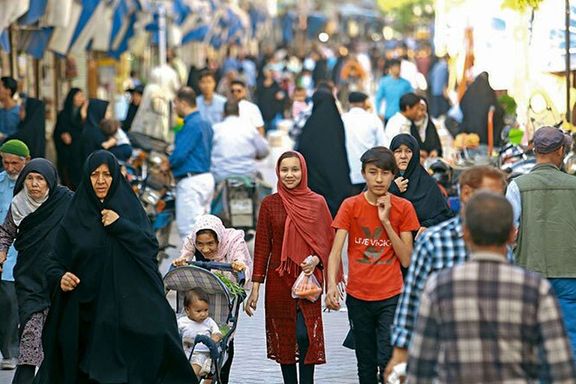
The rapid escalation of anti-Afghan sentiments in Iran in recent weeks and demands to expel millions of Afghans may be one of the most urgent problems facing the newly elected President Masoud Pezeshkian.
Some activists, politicians, and social media users in Iran warn that the unprecedented rise of such sentiments could entail serious violence against migrants and turn into a major security problem.
Mohammad-Bagher Ghalibaf, one of the six candidates in the recent snap presidential elections, promised in his campaign speeches and debates to build walls along Iran's borders with Afghanistan and Pakistan to stop the influx of migrants and to expel “all illegal immigrants”.
Pezeshkian, too, promised that his future government would block the borders to end the influx of migrants, register those who are already in Iran, and negotiate with European countries to either accept some of them as refugees or pay Iran for some of the costs for hosting them.
He argued that the West had to accept responsibility for its actions in Afghanistan which he said had caused millions of Afghans to seek refuge in Iran. “There is no reason the Iranian people must pay the costs of the wrong policies of others,” he said in a series of tweets before the elections.
Ultra-hardliner Saeed Jalili who lost the runoff vote to Pezeshkian, however, avoided taking a clear stance on the matter. Jalili’s supporters accuse Ghalibaf and his supporters of inciting “Afghan phobia”. There have been allegations that some Afghans played an active role in Jalili’s campaign and promoted him on social media.
Those who demand the “expulsion” of Afghans accuse the government of letting them benefit from billions of dollars in food, fuel, and other subsidies. The influx of perhaps more than six million Afghans in the past three years has pushed up housing costs by increasing demand in the market, and taking jobs from Iranians.
There have also been widespread but unsubstantiated rumors that migrants are spreading various infectious diseases among Iranians including a claim refuted by health officials that leprosy is spreading in Iran due to Afghan migration.
Anti-Afghan sentiments are hugely promoted in Persian language social media with several dedicated hashtags including “Expulsion of Afghans is a national demand”.
Campaigners for the expulsion of Afghans who have also launched an online petition often highlight crimes allegedly committed by migrants including murder, rape, and child abduction.
Some campaigners for the expulsion of Afghans who also oppose the clerical rule in Iran are accused of expressing racist and ultra-nationalistic views on social media.
There have also been reports of indiscriminate aggressive behavior towards Afghans, irrespective of their residence status. There are also some reports of signs of “No Afghan entry” being displayed by real-estate agents.
A recent video clip on social media shows a young woman in a Tehran subway forcing an elderly Afghan woman to give up her seat, sparking widespread debate online.
Iranian media report that the Afghan population has overtaken Iranians in some deprived areas in and around the capital and other major cities as well as some smaller cities and towns.
Afghans first came to Iran as refugees in the early 1980s and later as economic migrants, but their numbers rarely rose above two million before the Taliban takeover of the government in Afghanistan in 2021. Around 780,000 have refugee status and are not considered illegals.
Two months after the helicopter crash that killed Iran’s late President Ebrahim Raisi, the incident remains shrouded in mystery with many unanswered questions, as the government's investigation has been non-transparent.
The Ham-Mihan newspaper in Tehran has published a report, which underscores the lingering ambiguities and the lack of a "definitive or publishable" conclusion.
“The reports are still not convincing, and the ambiguities surrounding the president's helicopter crash are met with unanswered questions from the public, which likely keeps the case open,” Mohammad Saleh Noghrekar, a lawyer and jurist, told the daily.
On May 19, a helicopter crash in northwestern instantly killed all occupants, including Raisi and his foreign minister Hossein Amir-Abdollahian. The president was returning from a visit to a dam project, with three helicopters carrying the official delegation. The two other choppers had a normal flight.
Initial investigations revealed that only 69 seconds elapsed between the last contact with the helicopter pilots and the crash, with no emergency status declared—a detail that raises more questions than it answers. It remains unclear what happened in those 69 seconds that prevented even an emergency status announcement.
The second report of the High Commission investigating the dimensions and causes of the helicopter crash noted that the weather forecast on May 19 indicated favorable weather conditions suitable for visual flight to the first and second destinations until 8:50 AM on the day of the incident. The newspaper report emphasized that the weather on the return route, based on the latest received documents and statements from the pilots and passengers of two other helicopters, requires further examination.
Adding to the controversy, Ham-Mihan mentioned rumors it could not independently confirm or deny, that according to security protocols, one or two escort helicopters should have accompanied the helicopter carrying the President. However, the helicopter carrying Raisi and his companions lacked an escort. This security mistake is considered one of the greatest blunders in recent Iranian history, the paper said.
Further complicating the narrative, the responsible authority for investigating the reasons behind the crash, ruled out "an explosion caused by sabotage during the flight and moments before the collision with the slopes" in a report issued on May 29.
The General Staff of the Armed Forces released a second report later, ruling out sabotage and confirming that no maintenance defects or violations of capacity limits were found. However, the report did little to quell the public's doubts.
Noghrekar also pointed out the outdated nature of the Bell 212 helicopter, purchased from Canada in 1994, which had been in service for more than three decades and lacked essential weather radar. This detail underscores the broader issue of Iran's aging aviation fleet, exacerbated by international sanctions that hinder the renewal of helicopters and airplanes, posing significant security risks.
"This issue has also posed numerous risks to the flight in terms of security indicators, making the flight conditions highly risky," he added.
Speculation and rumors have only intensified as official reports continue to provide inconclusive findings.
In a country already fraught with internal strife, the lack of clarity surrounding Raisi's death is particularly unsettling. The Solidarity of Iranian Republicans echoed these sentiments in a statement on May 30, highlighting the potential for “escalating mafia-like relationships” within the government if the crash was the result of an “internal conspiracy.”
Iran and Sudan exchanged ambassadors on Sunday, nine months after they agreed to restore diplomatic relations following a seven-year hiatus.
Last October, Tehran and Khartoum announced in a joint statement the resumption of their diplomatic relations, seven years after Sudan decided to cut its relations with Iran following an attack on the Saudi Arabian embassy in Iran.
On Sunday, Sudan’s de facto leader and army chief Abdel Fattah al-Burhan received Iran's new ambassador Hassan Shah-Hosseini in Port Sudan and sent Abdelaziz Hassan Saleh as the African country’s ambassador to Tehran.
This is “the beginning of a new phase in the course of bilateral relations between the two countries," Sudanese Foreign Ministry Undersecretary Hussein al-Amin said.
The rapprochement comes as the army-aligned government of Sudan is scrambling for allies during its war with the paramilitary Rapid Support Forces (RSF). Over the course of the 15-month battle between the two sides, the Sudanese government has been loyal to the army.
The backdrop of Sudan's civil war has become a battleground for regional powers vying for strategic influence. Sudan's military, engaged in conflict with paramilitary forces, has sought external support, including drones from Iran, to gain the upper hand in the ongoing conflict.
Shortly after Iran and Sudan agreed to restore their relations last year, a delegation of Sudanese officials visited Iran on a mission to purchase Iranian-made drones, after a UN arms trade embargo expired in October.
Informed sources disclosed to Iran International that the delegation's primary objective was to acquire knowledge on the operation and utilization of the drones, which have been seen to be used in the likes of Russia's war on Ukraine and by the Houthis against Saudi Arabia and the United Arab Emirates.
In February, the United States voiced concern at reported arms shipments by Iran to Sudan’s military. John Godfrey, the US ambassador to Sudan, said Washington was "deeply concerned by external support" to both the Sudan Armed Forces and rival Rapid Support Forces.
"There are reports about resumed ties between Sudan and Iran that could reportedly include Iranian materiel support to SAF, which is also very troubling and a source of great concern for us," Godfrey said at the time.
With the Sudanese army in control along the Red Sea, a large Iranian presence would alarm Western powers as Yemen's Houthi rebels, on the other side of the key maritime transit lane, have been firing on international shipping since the Israel-Hamas war.
Ahmad Hasan Mohamed, intelligence adviser to Sudan’s military leader, said Iran had offered explosive drones to Sudan's military to combat rebel forces amid the civil war and proposed a helicopter-carrying warship in exchange for permission to build the base. However, Sudan rejected the deal to avoid straining relations with the United States and Israel.
The Islamic Republic has increased its intelligence ministry's budget by tenfold under late President Ebrahim Raisi amid a severe economic crisis plaguing the nation.
The Ministry of Intelligence is accused of being involved in the systematic forced disappearance of dissidents and obtaining forced confessions from political prisoners. However, the Islamic Republic's intelligence minister claims the ministry has used its increased budget for confronting the country's archrival Israel.
"With a tenfold infrastructural budget, pursued by Raisi and the parliament through the budget law, we were able to expand our security infrastructure and effectively counter Israel," said Esmail Khatib, the Minister of Intelligence, in a report on the government's three-year performance.
Khatib's admission of a tenfold budget increase for Ministry of Intelligence under the Raisi administration has raised alarm bells. While ordinary Iranians struggle with economic hardships, their government is channeling unprecedented resources into its intelligence apparatus, prioritizing cyber warfare and international espionage over the welfare of its citizens.
The Financial Times reported in 2022 on the Iranian government's deep-seated fear of Israeli operations within Iran, suggesting that Israel has established a widespread network capable of operating freely within the country.
In recent years, the Islamic Republic has accused Israel of eliminating its key nuclear officials and stealing confidential nuclear documents. One high-profile incident involved Mossad agents stealing a massive cache of nuclear documents from a warehouse near Tehran in January 2018, as mentioned by Israeli Prime Minister Benjamin Netanyahu.
The increase in funding also coincides with a notable uptick in cyber-attacks carried out by hacker groups affiliated with the Ministry of Intelligence. A recent report by cybersecurity firm Check Point highlighted that the hacker group MuddyWater has launched a series of global attacks using newly developed malware.
Since the Hamas attack on Israel on October 7, which claimed the lives of almost 1,200 people mostly civilians, such cyber-attacks have intensified, targeting countries like Israel, Turkey, Algeria, Italy, and Egypt. Such aggressive cyber activity seems to be a direct result of the substantial budget increase, allowing Iran to bolster its security infrastructure at the expense of its people.
In his Sunday report, Iran's Intelligence Minister also claimed that after the Syria conflict, members of armed groups like ISIS entered Iran but were all arrested by Iranian security forces. However, his assertion rings hollow considering the deadly attacks that have occurred during Raisi's presidency, including the January 3 explosions at Qassem Soleimani's burial site in Kerman, which resulted in nearly 100 deaths and over 300 injuries. ISIS claimed responsibility, yet suspicions about the Islamic Republic's involvement linger, further undermining the perceived strength of Iran's military and security forces.
Iran's Oil Minister Javad Owji has claimed a major gas import deal with Russia as the country suffers from serious power shortages, without saying how the gas can reach Iran.
The declaration comes despite Iran possessing the world's second-largest proven gas reserves, amounting to approximately 29.6 trillion cubic meters, or 16% of the global total. The country’s resources, however, have not shielded it from a dire and ongoing energy crisis.
A nation rich in gas, yet starving for fuel
Owji's announcement on July 17 was made during a cabinet meeting chaired by Acting President Mohammad Mokhber, where he praised the late president Ebrahim Raisi’s efforts in securing the agreement. Raisi died in a helicopter crash on May 19.
The deal stipulates that Iran will receive 300 million cubic meters of Russian gas daily, with Russia also covering the construction costs of the necessary pipeline infrastructure, leveraging their technology for seabed pipelines. This is a gigantic amount of gas, which amounts to more than one-third of Iran's daily production.
Construction of pipelines able to handle such a volume of natural gas from Russian fields thousands of kilometers away would cost tens of billions of dollars, while Iran cannot afford to pay for such a huge amount of gas, with its hard currency revenues slashed by US oil sanctions. Currently there is no pipeline capacity to handle such a large volume of gas.
Despite the fanfare, the reality is stark. Iran's 23 gas refineries produce around 850 million cubic meters of sweet gas daily. However, the country grapples with gas shortages every winter and summer, forcing many industrial units, including gas power plants, to switch to Mazut—a low-quality, heavy oil notorious for its high pollution levels.
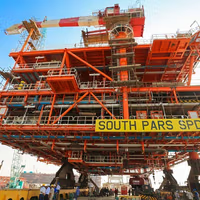
A natural gas pumping station in Iran
Iranian experts have long warned against the environmental and health hazards of using Mazut in place of natural gas to produce electricity. Yet, the severity of gas shortages during colder months has led to a disregard for such concerns, highlighting the government's failure to manage its vast natural resources effectively.
According to the International Energy Agency, gas accounted for about 71% of Iran’s energy supply in 2021, a 295% increase since 2000. Should this trend continue, experts warn that Iran may face chronic shortages in the coming years, further increasing its reliance on imports despite its abundant reserves.
The facade of energy diplomacy
Owji's portrayal of the Russian gas deal as an “economic and industrial revolution” is interpreted by many as misleading. The minister claimed that the agreement would not only stabilize Iran’s internal gas supply but also boost its gas export capacity and stability, involving financial exchanges worth $10 to $12 billion annually. He touted it as an “unprecedented achievement” in Iran's history, dubbing it a "masterpiece of the Raisi government's energy diplomacy."
Behind the facade: Struggles in joint fields and declining investment
In reality, Iran faces significant challenges in its 28 joint oil and gas fields with neighboring countries. It consistently lags behind its neighbors—such as Iraq, Qatar, and Saudi Arabia—in production due to a lack of investment. While these countries have ramped up their extraction efforts with the help of international, particularly Western, companies, Iran has seen its investment in upstream projects plummet. The Ministry of Oil relies on a meager 14.5% share of oil revenues for investments, amounting to just over $5 billion last year.
Gas pressure boosting facilities of Shahid Bagheri (Khormoj)
Statistics from the Parliament’s Research Center show a drastic decline in annual investment in Iran’s upstream oil and gas projects, from around $18 billion in the 1990s to about $7 billion in the early 2010s, and further dropping to $3 billion since 2017. International sanctions have crippled Iran’s ability to attract foreign investment or borrow funds, further exacerbating the situation.
A call for policy overhaul
The state of Iran’s energy sector underscores the urgent need for a major shift in the government's foreign policy. Without reaching an agreement with the West over its nuclear program, which is viewed as leading to weapons capability, and changing its hegemonial stance in the region, Iran's energy sector and broader economy will continue to flounder.
Owji’s celebration of the Russian gas deal as a "masterpiece" now is seen by observers as a thin veneer over the reality of Iran’s mismanagement and economic woes.
Iran’s Supreme Leader has defended a bill passed by the Iranian parliament in 2020 which played a significant role in preventing the revival of the JCPOA nuclear agreement.
"Some people protested and found fault with the Strategic Action law, which is absolutely unfounded. This law was very much the right thing to do," Ali Khamenei asserted on Sunday. He was referring to Iran’s "Strategic Action Plan to Lift Sanctions and Protect the Iranian Nation’s Interests," a law mandating the government to enhance its nuclear activities if the US does not lift sanctions.
Iran's President-elect Masoud Pezeshkian in a meeting with Supreme Leader Ali Khamenei in Tehran, Iran, July 21, 2024
Khamenei’s Sunday statements signal Tehran’s continued reluctance towards negotiating with Western powers as Iran continues to find ways to evade global sanctions.
Previously, former Foreign Minister Mohammad Javad Zarif, speaking at an election round table on June 18, noted that both Israel and the Parliament's strategic law were significant factors preventing US President Joe Biden from returning to the JCPOA.
The 2020 legislation was initiated in November after the election of Joe Biden, who had already pledged to return to the JCPOA during his election campaign. Iran devised the legislation apparently as a pressure lever against the United States, because it mandated a higher level of uranium enrichment and less inspections by the UN nuclear watchdog, IAEA, as negotiations were about to begin in 2021.
The JCPOA, originally established in 2015, aimed to limit Iran's nuclear program in exchange for relief from economic sanctions. However, after the United States withdrew from the agreement in 2018 under former President Donald Trump, Iran gradually reduced its compliance with the deal, but never violated it in a major way until Biden's election.
Efforts to revive the JCPOA have faced significant obstacles despite the Biden administration's willingness to return to the deal as he pledged during his 2020 presidential campaign.
More recently the International Atomic Energy Agency (IAEA) has criticized Iran’s nuclear activities, raising concerns about the program's peacefulness. The IAEA reported that Iran has stockpiled large amounts of highly enriched uranium, with Raphael Grossi saying that Iran is "weeks not months" from a nuclear weapon.
Khamenei further elaborated on the role of Iranian parliamentarians in bypassing sanctions imposed on Iran by Western countries.
"Parliament can play a role in both lifting and neutralizing sanctions… neutralizing sanctions is more important than lifting sanctions… lifting the sanctions is not in your hands, but it is in your hands to neutralize such measures, and there are good ways to neutralize the sanctions,” Khamenei stated.
The Sunday session was also attended by President-elect Masoud Pezeshkian. Although Pezeshkian has pledged to work towards lifting US sanctions during his recent presidential election campaign, he has emphasized he would follow Khamenei’s policies.
Despite sanctions for not only the nuclear program but for supporting Russia's war on Ukraine and rights abuses at home, Iran's oil exports havesignificantly increased. They have risen from 400,000 barrels per day after the 2019 US sanctions to over 1.5 million barrels per day currently.
Iran has employed numerous mechanisms through a wide range of entities and organizations to sell its oil via third parties to evade sanctions.