Iran, through its proxies, has encircled Israel in a multi-front war that is slowly expanding as more violent and new fronts emerge. A former IDF spokesperson is now calling on the Israeli government to take the fight directly to the root cause: Iran.
Former IDF combat commander in Lebanon and Gaza, Lt.- Col (ret) Jonathan Conricus, told Iran International in an interview that Israel needs to hold the Islamic Republic responsible.
"Israel has an interest and should be taking the war to Iran. I think the Israeli strategy should be very clear that the Islamic Republic of Iran is responsible for directly funding and arming terrorist organizations that are killing Israelis," said Conricus.
The next time that one of Iran-backed proxies strike Israel, Conricus would like to see Israel retaliate directly against the Islamic Republic. That would include options like Iran's facilities, military, strategic infrastructure, and the government.
“All of the targets are kosher and, on the table, and they will be attacked by Israel because Iran has been aggressive against Israel for so long."
He made it clear that Iranian people are not Israel's enemy and that civilians should not be targeted.
For years, Israel's strategy has been one to retaliate against Iranian proxies without directly involving Iran. Israel is believed to have disrupted Iran’s nuclear ambitions by going after various facilities and scientists. It likely has strong intelligence on Tehran’s nuclear weapons program, which has increased its total stockpile of highly enriched nuclear fuel and is reportedly close to becoming a nuclear power.
In an interview with Iran International, the former IDF spokesperson said Israel's current strategy of dealing with Iran's proxies while trying to undermine its nuclear ambitions is not working, but Iran's plan has proven to work.
"I'm sad to admit it," said Conricus, "But the Iranian strategy of encircling Israel with terrorist organizations and fighting a war of attrition is working for Iran, and they are not paying the price for their aggression."
Conricus, who is a senior fellow at the Foundation for Defense of Democracies (FDD), would like Israel to change the equation and formulate a comprehensive national strategy that has economic, political, and military components, which would undermine Iran's ruling system. He wants Israel to take a leadership role in that fight.
Iran's Minister of Interior has called for Afghan migrants residing in Iran to "go to their own country and work there to rebuild it" amid rising numbers of immigrants from neighboring Afghanistan.
Eskandar Momeni's comments, delivered during a television appearance on Monday, have drawn criticism for perceived contradiction with Iran's own policies, particularly as the country continues to issue thousands of visas to Afghans daily.
During the program, Momeni justified the remarks by stating that "Iran cannot handle this volume of migration." His comments, however, have been met with skepticism from observers who argue that Iran's actions contradict its rhetoric. While Iranian officials, including Momeni, repeatedly say that Afghan migrants should return home, their actions, such as the continued issuance of visas, suggest otherwise.
Many believe the government is trying to appease public demands to reduce the presence of millions of Afghan migrants, blamed for increasing social and financial burdens, while quietly maintaining policies that keep the borders open.
The Iranian government has invested three billion euros to construct a border wall, yet reports indicate that Afghan migrants who are deported often return, some even jumping over the wall to re-enter Iran.
Afghan refugees at a border crossing waiting to enter Iran
In his television address, Momeni clarified that the "priority is for those who enter illegally and unlawfully," and emphasized the need for migrants to "respect the mechanisms of the host country." He went further, blaming Afghan migrants for the rise in unemployment in Iran, stating that "a lot of job opportunities are being taken away."
Critics argue that while the government wants to portray itself as tough on immigration, it continues to benefit from the presence of Afghan migrants in other ways. Some have accused Tehran of using Afghan migrants to bolster its regional influence, with reports suggesting that Iran has previously recruited Afghan fighters for its military operations in Syria.
The surge of Afghan migrants into Iran since the Taliban’s takeover of Afghanistan in 2021, estimated to have grown from 2.5 million to as high as 10 million, has only deepened public frustration, as Iran grapples with its own economic crisis and strained social services.
Meanwhile, human rights organizations have Iran’s treatment of Afghan migrants. In August, Shargh daily reported the arrest of several Afghan teenagers between the ages of 10 and 17, despite their having proper documentation. One notable incident involved a violent confrontation between law enforcement and a young Afghan immigrant named "Seyed Mahdi" in Damavand County, which sparked outrage.
The arrest was followed by a video that surfaced online, showing a police officer kneeling on Mahdi’s neck, a scene that immediately drew comparisons to the death of George Floyd in the US, to which Iranian officials reacted widely including Supreme Leader Ali Khameni who slammed it.
The treatment of Afghan migrants in Iran has been increasingly scrutinized by international organizations.
Amnesty International has raised concerns about the "routine arbitrary detention" of Afghan nationals in Iran, alongside reports of torture and other forms of ill-treatment.
The rights group Hengaw has also issued warnings about the growing tide of government and societal racism toward Afghan migrants, describing the situation as "catastrophic."
For many, the contradiction in Iran’s policy, open borders on one hand, and demands for migrants to leave on the other, reflects a deeper struggle within the government to balance its geopolitical interests with rising domestic pressures.
British Foreign Secretary David Lammy and US Secretary of State Antony Blinken, who will jointly visit Kyiv this week, said on Tuesday they are united on the need to tackle Iran's influence in the Middle East and Ukraine.
"(We are) completely aligned on the need to tackle Iran's malign activity in the region and beyond," Lammy told reporters beside Blinken, who is visiting Britain.
"We're seeing a disturbing pattern of greater Iranian support for the Kremlin's illegal group, and we discussed today our shared commitment to holding Tehran to account for their undermining of global stability."
Blinken said Iran's decision to supply Russia with ballistic missiles threatened European security and he announced further sanctions on Tehran.
"Russia has now received shipments with these ballistic missiles, and will likely use them within weeks in Ukraine, against Ukraine," Blinken said, citing intelligence that he said has been shared with US allies and partners around the world.
The supply of Iranian missiles enables Russia to use more of its arsenal for targets that are further from the front line in Ukraine, Blinken said.
"This development and the growing cooperation between Russia and Iran threatens European security and demonstrates how Iran's destabilizing influence reaches far beyond the Middle East."
Lammy said he and Blinken would travel to Kyiv this week, the first joint visit of this kind for more than a decade.
The British foreign minister described the supply of ballistic missiles from Iran to Russia on Tuesday as a "significant escalation".
"This is a troubling action that we're seeing from Iran. It is definitely a significant escalation and we are coordinating," he said.
Lammy said he would not comment on "operational issues" when asked whether Britain would give the green light to Ukraine to use the Storm Shadow long-range missiles to strike targets inside Russia.
Iranians have recently shared videos and photos of Starlink satellite internet terminals being installed on rooftops, raising expectations that this technology could soon render the government’s internet filtering efforts ineffective.
Starlink devices have been in limited use for nearly two years now but in the past two weeks there has been a sudden social media interest that is difficult to explain given the unaffordability of the terminals and monthly subscription for most Iranians.
However, the availability of Starlink is seen by many as a potential game-changer for bypassing state-imposed online restrictions, allowing greater access to unfiltered internet in Iran.
A Starlink kit
The terminals typically cost around $500, depending on the model, with a monthly subscription fee of $110. However, in the Iranian market, prices are significantly higher, reaching up to three times the standard cost. Users still need domestic internet subscriptions to connect to government websites and the banking system. Starlink alone cannot bypass these local services, as access to critical domestic infrastructures remains tied to Iran's national network, requiring users to maintain both international and domestic connections.
Installation of Starlink and speed test in Tehran
To put the potential cost in perspective, an ordinary employee earns around $200 a month and can never spend hundreds of dollars for unfettered internet access.
There is also an element of risk involved in the use of Starlink. The terminals have to be smuggled into country from neighboring countries, particularly the Iraqi Kurdistan and the Persian Gulf countries as Starlink has no regulatory approval to operate in Iran.
In October 2023, Iran's Ministry of Telecommunications demanded that SpaceX obtain licensing for Starlink operations and filed a complaint with the International Telecommunication Union (ITU) over unauthorized use in Iran, which resulted in a ruling in Iran's favor. While over 60 countries have approved Starlink services, Iran is likely to demand access to user data—a request SpaceX would almost certainly reject.
Those found using Starlink in Iran risk prosecution for possessing smuggled goods. In November 2023, Iranian security forces confiscated 22 Starlink terminals, claiming they were CIA property intended for use by the office of dissident Sunni cleric Mowlavi Abdolhamid Esmail-Zehi.
The illicit terminals must be registered in the countries from where they are smuggled for the same reason and operate in ‘roaming’ mode once installed in Iran.
A Starlink dish in Iran
In many cases, social media posts suggest that multiple families in large apartment buildings share a single Starlink device to reduce the cost, similar to how satellite dishes were shared when first introduced in the 1990s, despite being banned.
Many Iranians recall police raids and jamming that rendered satellite dishes useless. The government continues to resort to jamming, especially during unrest, while also implementing internet blackouts to stifle dissent.
Since the early 2000s, the Islamic Republic has tightly controlled the internet, forcing most Iranians to rely on anti-filtering software to access blocked websites and social media. The widespread use of such software is a major cause of slow internet speeds, with allegations that influential figures behind the restrictions benefit from selling VPNs.
A Starlink dish in Tehran
Iran has been working on a national network to cut off access to the global internet and gain complete control over online content.
During his campaign, President Masoud Pezeshkian criticized internet restrictions, which impact freedom and hurt hundreds of thousands of small businesses. However, his government has yet to make any meaningful changes to the strict policies set by a council that includes key state officials, such as the Revolutionary Guards and police chiefs.
Hesam Misaghi, an expert from the Persian-language Telegram channel Starlink for Iran, told Iran International that it’s difficult to determine how many Starlink terminals are currently in use in Iran. He estimates there could be between 10,000 to 20,000 terminals, based on information from merchants and installation technicians.
Starlink satellites were activated over Iran in September 2022 after the US Treasury authorized certain transactions to ensure Iranian protesters could access the internet to share footage of the crackdown. By October 2022, after the Mahsa Amini protests spread nationwide and authorities imposed internet blackouts, Starlink terminals were smuggled into Iran and activated.
In January 2023, the head of the Tehran Telecom Traders Union, Mehdi Mohebi, quoted an “official” whose identity he did not want to reveal, saying that around 800 Starlink terminals had been smuggled into Iran. A few days earlier, Elon Musk had said the number of active terminals in Iran was approaching 100.
Due to medication shortages in Iran, families of patients with Spinal Muscular Atrophy (SMA) are seeking asylum in Europe amid Iran’s collapsing healthcare system.
According to the Ham-Mihan newspaper, patients are seeking refuge in countries like Austria, Germany, the Netherlands, and the UK.
As death rates among SMA patients have also risen sharply, with over 50 people having died since last year, the crisis is worsening in Iran where a flood of medical professionals have fled to seek work abroad.
Saeed Azamian, former director of the SMA Association, said the situation worsened after medication for children under 11 was halted last December, leading to the deaths of at least 20 children suffering from the genetic neuromuscular disease.
In March, Iran International reported that 10 children had died in one month alone as a result of the crisis.
A report published last year also noted that of the 781 patients registered in Iran by October 2022, 164 patients died, the majority of them during the first 20 months of life.
Over the past three years, patients and their families have protested against the Ministry of Health for failing to import or distribute the medication.
Families are selling their homes and belongings to pay brokers and immigration lawyers to seek asylum in European countries. The report cited the case of a woman named only as Zahra, who fled to the Netherlands with her sick six-year-old son. They now live in a camp but receive the expensive medication he needs for free.
Families had previously relied on campaigns for medication, but donations dwindled after President Ebrahim Raisi promised the government would supply the necessary drugs, a promise he failed to keep.
Months passed before the partial import of medicines began and patients had been paying up to 250 million tomans per bottle of Risdiplam syrup, a costly treatment for SMA. The medication was not part of Iran's official drug list until late 2021.
The Ministry of Health claimed it would assess the drug's effectiveness, but results were delayed while the efficacy of drugs like Spinraza and Risdiplam has already been proven in multiple other countries.
Iranian officials have been promoting last year's $5 billion in foreign investment as a success despite sanctions. However, this amount pales in comparison to the much larger sums being attracted by neighboring countries.
The Chairman of the Iranian and Foreign Joint Investment Association, Hossein Salimi, in an interview with ILNA admitted that Iran's energy crisis could be the final nail in the coffin for its already anemic foreign investment prospects. According to Salimi, the ongoing shortfall in energy production and consumption is so severe that it may deter foreign investors more than any other issue.
$5 Billion: A contrast to regional success stories
Iran’s much-publicized $5 billion in foreign investment last year is dwarfed by the figures coming out of neighboring countries. For example, the UAE attracted $22.5 billion in foreign direct investment (FDI) in 2022, and Saudi Arabia, riding the wave of Vision 2030, secured around $21 billion the same year. These numbers are several times higher than Iran’s, highlighting how far the Islamic Republic has fallen behind its regional rivals in the race to attract global capital.
While Iranian officials like Salimi say that the $5 billion investment is a small victory, the reality is that it’s hardly enough to compensate for the country's systemic mismanagement, outdated infrastructure, and the suffocating impact of international sanctions. In comparison, the UAE and Saudi Arabia, free from such constraints, have built an investor-friendly environment supported by stable energy supplies, global trade relationships, and consistent economic reforms.
Energy crisis: A ticking time bomb
Salimi’s comments underscore a critical point: even if foreign companies wanted to invest in Iran, they would face challenges due to the country’s dysfunctional energy sector. Years of underinvestment, combined with poor management, have left Iran with a 14,000-megawatt electricity deficit. As a result, the country is struggling to meet even its current consumption, let alone the additional energy needs of foreign industrial investors.
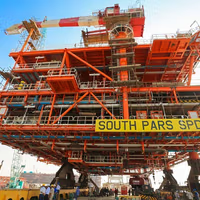
An offshore oil platform in Iran with the Iranian flag displayed in the foreground
Salimi’s warning points to a reality: "If tens or hundreds of foreign industrial companies come to Iran... will we be able to provide the necessary water, electricity, and gas for these industries?" The answer, it seems, is no. Any influx of foreign business would likely run into the same problems that Iranian citizens already face—frequent blackouts, water shortages, and limited access to energy resources.
The problems run deeper than just energy shortages. Salimi’s reminder of energy giant Total's departure from Iran is emblematic of how the country’s geopolitical entanglements have stunted its growth. In 2018, after the US reimposed sanctions, Total, one of the world's largest oil and gas companies, pulled out of a multibillion-dollar gas deal, signaling to the world that Iran was simply too risky for long-term investment. Since then, the situation has only worsened, with Iran remaining on the Financial Action Task Force (FATF) blacklist, limiting its ability to engage in international banking and financial exchanges.
Small investments, big problems
Salimi's mention of the $5 billion in foreign investment last year underscores another issue: the size and type of investments Iran is attracting. According to Salimi, 10-20% of this investment came from Iranians living abroad, while small Afghan investors accounted for less than 20%. More than half of the remaining investment came from companies outside these two groups, mostly in industries like food production, which require relatively small capital outlays.
Meanwhile, an energy expert, Morteza Behroozifar, warns that Iran’s oil industry alone needs $250 to $300 billion in investment to remain afloat. “We are currently experiencing shortages of gas, gasoline, and diesel," Behroozifar said in a recent interview with ISNA, adding that without massive foreign investment and a change in management, Iran’s energy sector is headed for collapse. The $5 billion that officials are highlighting is a fraction of what is required to stabilize and grow the economy.
The road ahead: Will Pezeshkian's government deliver?
President Masoud Pezeshkian has acknowledged the need for at least $100 billion in foreign investment to tackle the country’s growing problems. Yet, according to observers, attracting that kind of capital will require more than just rhetoric—it will demand systemic reform, transparency, and above all, the resolution of Iran’s energy crisis.
With a 14,000-megawatt electricity deficit, Pezeshkian’s cabinet will have to overhaul the country’s infrastructure while navigating the complex web of sanctions and international isolation that has crippled previous administrations.
"The people are not our enemy, but the Islamic Republic regime, the Revolutionary Guard, the Basij, the secret police and the evil, oppressive regime of Iran..weaken them. And when an opportunity comes also to help brave Iranians fight against the regime.”
Iran planting the seeds for a new front?
Israeli's Foreign Minister Israel Katz posted to X on Monday "The Iranian terror octopus is working to establish an eastern terror front against Israel and moderate states in the region. We must cut off the octopus's tentacles."
Katz was referring to the escalation in the West Bank, also known Judea and Samaria in Israel, where violence has increased, and recent videos posted to social media show armed militants with ISIS and Hamas flags.
Shaiel Ben-Ephraim, a journalist and analyst who covers Israeli news and politics, posted to X on Monday a photo that was reportedly taken in Jenin where terrorist organizations allegedly run the refugee camps.
He posted that the image was from a funeral in the city. He wrote that "Sources in the army said, "We will find those in these pictures and get to them eventually." But more operations are just a band-aid. The answer is to bring governance back to Jenin, Tulkarem, and other cities where the PA has lost its grip. Otherwise, the rest of the cities of the West Bank will all look like this eventually.
Conricus, who served in the IDF for 24 years, said there’s been a slow and steady escalation of terrorism in the region. Jihadi sentiments existed before the Israel-Hamas conflict, but the key difference now is the increased availability of weapons. These weapons, allegedly originating from Iran, are funneled through Iraq and Syria and smuggled via Jordan, a US ally.
The former IDF spokesperson said the Palestinian Authority can't control it, and that in the last three weeks, five Palestinian suicide bombers were dispatched, with two of them detonating prematurely, while the other cases were thwarted.
“The Palestinian Authority, if you listen to their communications in Arabic and in English, they speak about the Iranians. They say that they're seeing Iranian influence in Judea and Samaria,” said Conricus.
Three Israeli civilians were killed in a shooting at the Allenby Crossing on the border between the West Bank and Jordan, Israeli authorities said Sunday.
The gunman, from Jordan, carried out the attack in a commercial cargo area under Israeli control where Jordanian trucks offload cargo entering the West Bank, officials said.
The IDF is also investigating after a young Turkish American woman, Aysenur Eygi, was shot and killed in the West Bank on Friday, according to US and Palestinian officials, while she was taking part in a protest near Nablus.
Behnam Ben Taleblu, a senior fellow at the Foundation for Defense of Democracies (FDD), said the West Bank and Jordan have the “Iranian target on their backs."
Iran is reportedly working to destabilize the Kingdom and capitalize on the sympathies many in the West Bank have towards civilians in Gaza, and to arm them to create more fronts in the "ring of fire" against Israel.
It’s all part of Tehran strategy of a slow “death by a thousand cuts” approach towards Isarel according to Taleblu.
Israeli PM: the situation in the north must change
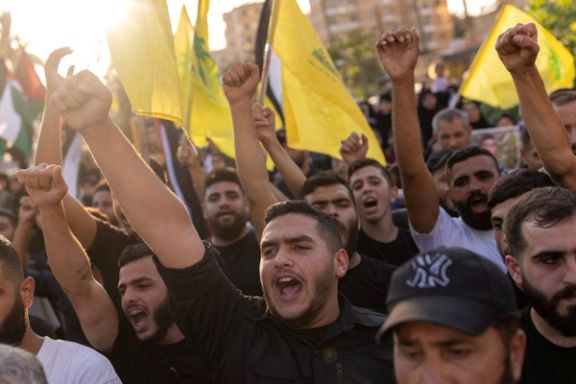
Over to the north, the likelihood of an all-out war between Israel and Hezbollah has intensified, with Israeli Prime Minister Benjamin Netanyahu instructing the Israeli military on Sunday to prepare to “change the situation in the North.”
National Unity party leader Benny Gantz, who left Netanyahu’s government in June, warned that the conflict may be imminent, saying it is already unfolding “too late.”
US Central Command chief Michael Kurilla arrived in Israel on Sunday for meetings with senior Israeli security officials in a visit focused on threats from Hezbollah and Iran.
Since October 7, Hezbollah has launched daily attacks against Northern Israel – employing rockets, anti-tank missiles, and explosive UAVs at both military and civilian targets.
Hezbollah has reportedly as many as 150,000 missiles and rockets pointed at Israel.
Seventy thousand Northern Israelis, living within a 5-kilometer radius of the Lebanon border, evacuated after October 7 and remain displaced within their own country. While Hezbollah initially targeted these "ghost town" areas, the Iran-backed group is now increasingly focusing on non-evacuated zones, escalating the conflict in more populated regions.
Israel Channel 12, citing Israeli security sources, said that the war with Hezbollah is “approaching."
Taleblu, who specializes in Iranian security, told Iran International it’s too early to tell whether Lebanon will get dragged into a larger scale war with Israel.
“Israel is facing something of a multi-front war brought to you by the Islamic Republic. But ultimately, based on how the response to the escalation goes, if the Islamic Republic doubles down, if it brings in more weapons transfers, more technology, or if it tries to respond again, it certainly does have the potential to spiral,” he said.
For many Northerners, they're already facing a war, but Hezbollah's strategy, said Conricus is to “keep this situation of instability, where Israel is split between dealing with Hamas in Gaza and Hezbollah in Lebanon.”
The number of rockets has increased and so too has the range. And it’s all about a balancing act.
“They [Hezbollah] have to escalate incrementally, but they must be careful not to escalate too much,” said Conricus, who emphasized that too much escalation would trigger an Israeli response that would not be to Hezbollah's benefit.
Another front: Syria
Israel launched strikes on military sites in Syria on Sunday, reportedly killing at least 25 people, injuring dozens, according to Syrian state media.
The ariel strikes took place in Western Syria at 4 different locations, which are believed to be bases for Iranian forces and militia, housing what’s known as the Scientific Studies and Research Center (CERS), allegedly producing weapons.
Israel claims the CERS manufactures precise surface-to-surface missiles. Israel’s Alma, an institute focused on threats to northern Israel, has revealed in a detailed report that the CERS manufactures chemical, biological, and potentially nuclear weapons”.
Conricus said it’s believed there may have been an attempt by Iran to deliver the weapons to Hezbollah, but that Israel intercepted those weapons before they could be sent.
The Islamic Republic responded by blaming Israel, with the country's foreign ministry spokesperson Nasser Kanani saying at a news conference in Tehran Monday "we strongly condemn this criminal attack by the Zionist regime on Syrian soil."
Since the Israel-Hamas war broke out, Israel regularly targets military sites in Syria linked to Iran, but the intensity of Sunday's strike and death toll was significant.
The former IDF commander said those facilities have been struck in the past and he sees only one path forward as a solution:
“We can defeat Hamas and then defeat Hezbollah but if we don't deal with the root cause of instability and terrorism in the Middle East. We won't solve our problems long term. It's high time for Israel to change its strategy against the Islamic Republic of Iran."