Hardliners in Iran blast president for denying Trump assassination plot
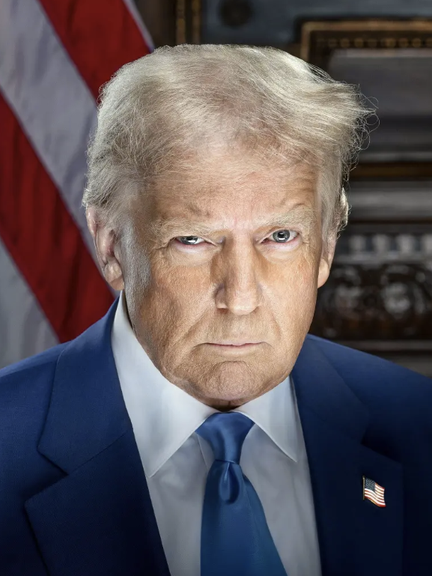
Iran's ultraconservatives condemned President Masoud Pezeshkian for his comments to NBC News, in which he denied Iran’s intention to assassinate President-elect Donald Trump.

Iran's ultraconservatives condemned President Masoud Pezeshkian for his comments to NBC News, in which he denied Iran’s intention to assassinate President-elect Donald Trump.
In an interview with NBC’s Lester Holt, Pezeshkian dismissed accusations that Iran planned to avenge the January 2020 targeted killing of IRGC commander Qassem Soleimani, which Trump ordered. This stance diverges sharply from multiple threats Iranian officials have made against Trump, former Secretary of State Mike Pompeo, and former National Security Advisor John Bolton.
Kayhan, a leading ultraconservative newspaper closely associated with Supreme Leader Ali Khamenei, issued a scathing editorial addressing Pezeshkian directly: “Mr. President, you don’t own Iran.” The editorial argued that Pezeshkian had overstepped his authority and outlined its objections: “First, it is beyond your jurisdiction; second, for reasons we will outline, it is entirely contrary to our national interests; and third, it sends a message of humiliation to the sworn enemy of Islamic Iran.”
Vatan-e Emrooz, another conservative outlet, criticized Pezeshkian for asserting in the interview that Iran had never intended to harm Trump. The paper questioned whether the president had the authority to abandon Iran’s stated commitment to punishing those responsible for Soleimani’s assassination. “No! Iranian officials have repeatedly emphasized their determination to punish this criminal murderer, and Iran will certainly take the necessary steps to carry out this punishment,” the newspaper declared.
Iran’s apparent effort to portray Pezeshkian as a moderate and pragmatic leader comes amid deep economic turmoil and major setbacks in Lebanon and Syria last year. The country’s leadership faces mounting pressure to alleviate US economic sanctions, which are critical for the Islamic Republic’s financial survival.
However, Vatan-e Emrooz underscored that Iranian hardliners remain committed to confronting the United States. The paper declared: “Certainly, if legal pursuits prove fruitless and international judicial bodies remain inactive, the broad Resistance Front will place the issue of punishing Trump on its agenda through other means.”
This sentiment echoes a threat issued by former Iranian President Ebrahim Raisi in January 2022, when he warned, “If Trump and Pompeo are not tried in a fair court for the criminal act of assassinating General Soleimani, Muslims will take our martyr's revenge.”
Both Kayhan and Vatan-e Emrooz reiterated that Pezeshkian had no authority to dismiss Iran’s pursuit of justice for Soleimani’s death. “Neither Mr. Pezeshkian nor anyone else can claim that Iran and the Resistance Front have abandoned the pursuit of justice against Trump and his accomplices for the martyrdom of Haj Qassem Soleimani,” Vatan-e Emrooz warned.

When a key advisory body in Iran started revisiting the contentious issue of acceding to international monetary conventions, it not only faced opposition from hardliners but also raised questions about whether the Supreme Leader has moderated his stance.
The Expediency Discernment Council (EDC), reportedly authorized by Ali Khamenei to undertake this review, was created to resolve disputes between the parliament and the Guardian Council, the body responsible for granting final approval to all legislation.
Economy Minister Naser Hemmati recently announced on social media that the Supreme Leader has approved a revisiting of Iran's accession to anti-money laundering and terrorism financing conventions.
Khamenei has not made any public statements on the matter so far.
The Financial Action Task Force (FATF) is an intergovernmental organization established to combat money laundering, terrorist financing, and other threats to the international financial system. Iran was first placed on its blacklist primarily due to its failure to meet international standards for combating money laundering and terrorist financing.
Many observers believe that the rapid deterioration of the Iranian economy, coupled with demands by the presidential administration and many politicians in Tehran, may have led Khamenei to give the green light for resolving the matter.
In an interview published by Euro News on Tuesday and widely covered by Iranian media, Asghar Fakhrieh-Kashan, former deputy of Iran's Central Bank, expressed that he had "the feeling" President Masoud Pezeshkian had reached an agreement with Khamenei to resolve the issue.
What role does the Expediency Discernment Council play in the debate?
One of the Council’s main mandates is to arbitrate between the Parliament and the constitutional watchdog, the Guardian Council, when a law is approved by the former but rejected by the latter and they cannot resolve the dispute.
The Council’s chair and members are appointed by Khamenei.
The current controversy centers on two pieces of legislation required by the FATF to remove Iran from its blacklist: the Palermo Convention on combating transnational organized crime and the CFT Act on combating the financing of terrorism.
Although Parliament approved these laws in 2018, the Guardian Council rejected them, citing conflicts with "resistance economy guidelines," national security policies, and "contradiction with the Sharia".
In November 2018, the matter was referred to the EDC, where it has remained stalled. This prolonged inaction could not have occurred without Khamenei's directive or consent.
Approval by two-thirds of the EDC's 43 current members is needed to finalize the two long-delayed pieces of legislation.
Who supports and opposes FATF-required accession?
Accession to the conventions has been a contentious issue in the Iranian political scene since 2016, largely due to the significant restrictions Iran faces on its relations with international banks and foreign trade as a result of being on the FATF blacklist.
Pezeshkian repeatedly called for accession to the FATF’s conventions during his campaign as a crucial move to prevent the country’s financial isolation. His government says a final resolution of the matter may be near.
The former nuclear negotiator, hardliner Saeed Jalili, who ran against Pezeshkian in the July snap presidential elections, is currently a member of the Expediency Discernment Council (EDC). He has the support of EDC members and some lawmakers in Parliament.
In a fiery anti-American speech recently, ultra-hardliner lawmaker Mehdi Koochakzadeh slammed the efforts to accede to anti-money laundering conventions under the Financial Action Task Force (FATF) as tantamount to “approving servitude to America.”
In a letter earlier this week to the Chairman of the Expediency Discernment Council (EDC), Sadegh Amoli-Larijani, 120 lawmakers argued that accession to the Palermo and CFT conventions would not benefit the Iranian nation. They contended that such a move would only “escalate the problems resulting from sanctions” and enable the US to uncover Iran's methods of circumventing them.
Reports suggest that at least half the members of EDC have a history of opposing not only these laws but Iran's accession to all conventions demanded by FATF.
However, as in many other cases, a subtle indication through unofficial channels from Khamenei may turn some of them.
Why is a decision on FATF legislation important?
The FATF recommends "enhanced due diligence" for transactions involving blacklisted countries. This makes financial dealings with Iran costly, risky, and time-consuming for international institutions. Countries may also apply countermeasures, such as terminating banking relationships, prohibiting transactions, or imposing additional audit requirements.
Resolving FATF-related issues would reduce these barriers, potentially facilitating greater access to international financial markets and alleviating economic pressure on Iran.
What steps has Iran taken to meet FATF’s requirements?
In 2016, under President Hassan Rouhani, Iran agreed to an FATF action plan to move from the blacklist to the gray list.
By 2020, however, the FATF reinstated Iran on its blacklist due to its failure to complete the action plan.
The global anti-money laundering task force, therefore, urged its members to continue to advise their financial institutions to apply enhanced due diligence to business relationships and transactions with natural and legal persons from Iran.
37 of the 41 recommendations to the Iranian government that the FATF made in 2016, including a cash declaration regime, were accepted by Iran and relevant legislation was introduced in these areas. But the counter-terrorism financing remains the toughest hurdle in Iran as hardliners argue that it would restrict Iran’s ability to assist their proxy groups abroad.

Israel and Hamas have reached a ceasefire deal to end the Gaza war, US President Joe Biden announced on Wednesday, over 15 months after the October 7 attack by Iran-backed militants triggered the bloody conflict.
The Israel-Hamas deal outlines six-week initial ceasefire phase that includes gradual withdrawal of Israeli forces from central Gaza and return of displaced Palestinians to north Gaza, Reuters reported citing an official briefed on the agreement.
US President Joe Biden hailed the deal in a White House speech, flanked by Vice President Kamala Harris and Secretary of State Anthony Blinken.
The grueling war began when Gaza-based Palestinian militants' attacked Israel on October 7, 2023, killing 1,200 soldiers and civilians and abducting 250 foreign and Israeli hostages.
Israel's incursion into the enclave killed tens of thousands of people, many of them civilians, and morphed into a region-wide confrontation between Iran-backed armed groups and Israel, which receives weapons and funding from the United States.
Iran finds itself on the backfoot as the confrontation winds down, with Israeli blows pounding Hezbollah into a ceasefire Lebanon, weakening Iran's ally Bashar al-Assad in the face of a rebel advance which toppled him, degrading Iran-backed Palestinian militants in Gaza and hitting Iranian military targets directly in October.
Only the Iran-aligned Houthis in Yemen appeared to fight on largely unscathed.
The agreement comes after months of negotiations facilitated by Egyptian and Qatari mediators, with support from the United States and was reached just before the January 20 inauguration of US President-elect Donald Trump.
Trump's Middle East envoy Steve Witkoff took part in the latest diplomacy and was present in a news conference in Doha convened on Wednesday by foreign minister Sheikh Mohammed bin Abdulrahman Al Thani, a main interlocutor between the warring sides.
The President-elect had repeatedly vowed that "all hell will break out" in the Middle East if Hamas did not agree to release the hostages by January 20.
But Biden appeared keen not to attribute the diplomatic breakthrough to his successor, responding to a shouted question by a journalist on who deserves credit for the deal, Biden or Trump: "Is that a joke?"
Phased hostage release
According to the deal, Hamas will release 33 Israeli hostages in a first phase, including all women including soldiers and civilians, children and men over 50.
Israel, in turn, will release 30 Palestinian detainees for every civilian hostage and 50 Palestinian detainees for every Israeli female soldier Hamas releases. Israel will also release all Palestinian women and children under 19 detained since October 7, 2023, by the end of phase one.
The total number of Palestinians released will depend on the hostages released and could range between 990 and 1,650 Palestinian detainees, including men, women, and children.
Hamas will release hostages over a six-week period, with three hostages released every week, and the remainder before the end of the period, Reuters reported citing the official briefed
The release of hostages will begin with the living, followed by the remains of those who have died. Qatar, Egypt, and the US will guarantee the implementation of the agreement, Reuters reported.
Israeli forces entered Gaza following an October 7, 2023, attack by Hamas-led militants who breached security barriers and infiltrated Israeli communities, killing 1,200 soldiers and civilians while taking over 250 hostages, both foreign and Israeli.
Israel's military actions in Gaza have resulted in over 46,000 deaths, according to Gaza health ministry data, leaving the coastal strip in ruins, with hundreds of thousands of survivors enduring harsh winter conditions in tents and temporary shelters.

Iran’s navy unveiled its first signals intelligence (SIGINT) vessel, Zagros, on Wednesday, said to be designed for electronic surveillance and cyber intelligence operations.
The announcement follows the news that Iran's army received 1,000 new drones, bolstering its military capabilities.
"The Zagros will serve as the watchful eye of Iran's navy in the depths of the seas and oceans," Navy Commander Shahram Irani said during the unveiling ceremony.
The launch coincides with extensive military exercises aimed at safeguarding the country's nuclear infrastructure, including key facilities in Natanz and Fordow.
The drills, involving both the Islamic Revolutionary Guard Corps (IRGC) and the Iranian army, are expected to continue until mid-March.
The head of the Atomic Energy Organization, Mohammad Eslami, announced on Wednesday that two additional exercises will be conducted in the coming days, focusing on passive defense to demonstrate maximum operational readiness.
The unveiling of the Zagros comes amid intensified and ongoing international scrutiny of Iran's nuclear program.
Tehran maintains its nuclear activities are solely for peaceful purposes, a claim increasingly challenged due to its elevated uranium enrichment levels.
The International Atomic Energy Agency (IAEA) has confirmed that Iran holds uranium enriched to 60%, approaching weapons-grade levels.
Tensions between Iran and the United States have escalated in recent years, especially after the US withdrew from the 2015 nuclear deal during Donald Trump's presidency and reimposed sanctions. Relations were further strained by the killing of General Qassem Soleimani in 2020, as well as Tehran's support for regional proxy groups, and alleged attacks on commercial shipping in the Persian Gulf.
Reports earlier this month suggested that the Biden administration considered potential strikes on Iranian nuclear facilities if Tehran continued its progress toward developing a nuclear weapon.
Iran’s investment in the Zagros and other military technologies underscores its focus on strengthening surveillance and defensive capabilities in response to regional and international challenges.
Admiral Shahram Irani asserted that the ship is domestically constructed and will play a key role in securing maritime domains, including the Indian and Pacific Oceans.
"The Iranian navy has successfully addressed the nation’s defensive demands through local expertise and advanced intelligence capabilities," Admiral Irani said.

US President-elect Donald Trump needs to show he will keep his word before Iran will consider talks with his administration, Iranian President Masoud Pezeshkian told reporters on Wednesday.
"If Trump proves he follows through on his words, we will engage in talks with him," President Pezeshkian said during a cabinet meeting.
His comment followed the foreign minister's statement on state television the previous day, saying that Tehran would not engage in talks with the US unless Washington first rejoined the 2015 nuclear deal, the Joint Comprehensive Plan of Action (JCPOA).
“We will not negotiate with the United States until it returns to the JCPOA. We will also continue consultations with China and Russia, considering them two key members of the JCPOA,” Foreign Minister Abbas Araghchi stated.
This is not the first occasion on which the Islamic Republic has insisted on evidence of US intentions prior to entering into negotiations.
Since the Trump administration withdrew from the JCPOA in 2018 and imposed severe economic sanctions, Tehran has repeatedly called for the easing of these sanctions as a sign of Washington's goodwill.
Iranian and international media, along with analysts, however, anticipate Trump to intensify sanction enforcement to compel Tehran into make concessions.
NBC is scheduled to air an interview with President Pezeshkian on Wednesday, where, according to his aide, he will convey Tehran’s willingness to engage in talks with the Trump administration.
This apparent divergence in messaging has drawn attention and criticism inside Iran.
In a short version of the interview NBC released on Tuesday, Pezeshkian also denied that the Islamic Republic had any plans to assassinate Donald Trump for the 2020 killing of Qassem Soleimani, a pivotal figure who led Tehran's military operations across the Middle East.
Efforts by the Biden administration to restore the 2015 nuclear deal included extensive indirect talks with Tehran in 2021–2022, which stalled after Russia's invasion of Ukraine. Russia, a key JCPOA signatory, played a significant role in those negotiations.
Iran's government is under increasing pressure from a worsening economic crisis and regional military setbacks in the Middle East over the past year.
Inside Iran, Trump’s return to the White House has led many officials, analysts, and state media to advocate for preemptive talks with the incoming administration to prevent further strain in relations with the US.
Araghchi's comments elicited strong criticism from Hamid Abutalebi, a political advisor to former President Hassan Rouhani. In a post on X, Abutalebi charged the Pezeshkian administration with inconsistency and a lack of clarity in its foreign policy approach.
“It seems that the esteemed government is engaging in ‘political self-deception,’” Abutalebi wrote. “On one hand, the President sends a message signaling a willingness to negotiate, while on the other, his Foreign Minister, in tonight's interview, takes a stance against the President's position, effectively neutralizing it.”

Israel planted explosives in centrifuge technology Iran bought for its nuclear program, veteran diplomat and vice president Mohammad Javad Zarif said, alleging an apparently unknown attempted attack by the Islamic Republic's arch-enemy.
Providing few details, Iran's vice president for strategic affairs said in a preview of an online interview that sanctions on Iran and its allies deepened security challenges and made them vulnerable to Israeli booby traps.
“Our colleagues had purchased a centrifuge platform for the Atomic Energy Organization, and it was discovered that explosives had been embedded inside it, which they managed to detect," he told the Hozour (Presence) online program.
It was not clear when the alleged incident occurred.
A power failure at Iran’s Natanz uranium enrichment site in April 2021 apparently caused by an explosion was decried by Iran as an act of "nuclear terrorism".
The murky incident was neither fully explained by Iran nor claimed by Israel, which has repeatedly carried out cyberattacks and assassinations aiming at Tehran's nuclear program.
Iran says it is pursuing peaceful nuclear technology, while Israel and the United States believe Iran may ultimately seek a bomb.
Zarif detailed how sanctions compel Iran and its allies to rely on intermediaries, creating vulnerabilities that have allegedly been exploited by Israel.
“Instead of being able to order equipment directly from the manufacturer, sanctions force you to rely on multiple intermediaries for such purchases," Zarif said.
"If the Zionist regime infiltrates even one of the intermediaries, they can do anything and embed anything they want, which is exactly what happened.”
A series of coordinated explosions in Hezbollah's communication devices in September 2024 arose from Israel's diligent infiltration of those suppliers, he added.
“The issue with the pagers in Lebanon turned out to be a multi-year process, meticulously orchestrated by the Zionists."
The September incidents in Lebanon involved the detonation of around 5,000 pagers and 1,000 walkie-talkies, resulting in at least 32 deaths and more than 3,000 injuries.
Though Israel has not taken credit for the attacks, Israeli intelligence operatives appear to have covertly modified the devices, embedding explosives during a decade-long operation involving fake companies and deceptive distribution tactics.

In response, Iran's Islamic Revolutionary Guard Corps (IRGC) suspended communication devices, conducting inspections to prevent recurrence. The Iranian Civil Aviation Organization also banned electronic communication devices, barring mobile phones, on commercial flights.
"These are, in fact, some of the damages caused by sanctions, which have made circumventing them a necessity for us," Zarif said. "In addition to financial losses, there have also been significant security risks.”