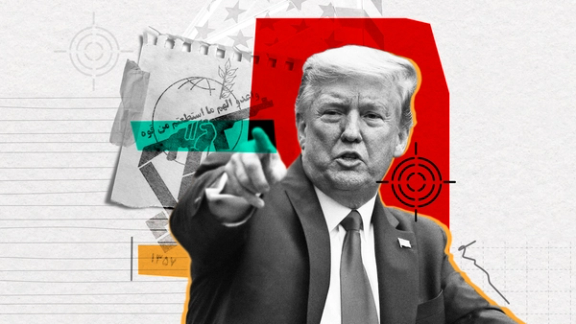
Iranian officials find themselves in a Shakespearian dilemma over whether to negotiate with the incoming Trump administration. Engaging would mean justifying or apologizing for past intransigence, while refusal risks confronting a deeper existential threat.
A fierce battle is unfolding between centrist politicians, such as President Masoud Pezeshkian, who favors dialogue with Trump in an effort to solve the country's economic problems as he told the NBC News channel, and hardliners who accuse the proponents of negotiations with the Trump Administration of selling out the country to the United States. Meanwhile, Foreign Minister Abbas Araghchi attempted to take a neutral stance, stating that the Ministry simply implements decisions made by the political system. "Decisions will be made by the authority that has to decide," Entekhab News quoted him as saying.
These conflicting views among Islamic Republic officials and politicians regarding negotiations take place against the backdrop of Supreme Leader Ali Khamenei's firm opposition to talks with Donald Trump, primarily due to Trump's role in the assassination of former IRGC Quds Force Commander Qasem Soleimani.
The positions of both men are well-documented and publicly accessible. Khamenei's opposition to negotiations with Trump is explicitly stated on his official website, while clips of Trump’s televised statement admitting to ordering Soleimani’s killing are widely circulated on social media. Neither can deny their past remarks.
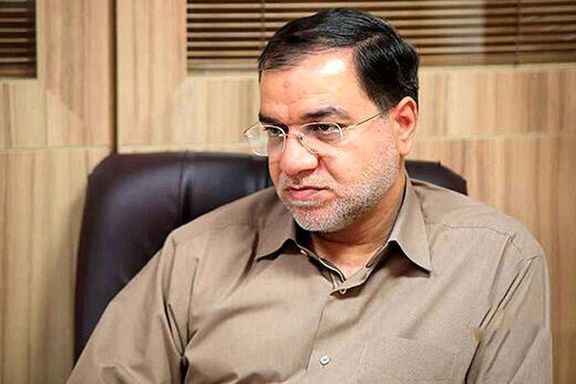
A senior member of Khamenei's office, Mehdi Fazaeli, told the press in Tehran on Wednesday: "I say loud and clear, and with the highest degree of certainty that negotiations with the United States will not serve our national interests."
Mehdi Fazaeli, a senior official in Ali Khamenei's office
At the same time, Foreign Minister Araghchi has stated that "Iran might start negotiations if Washington returns to the 2015 nuclear deal." However, this scenario seems unlikely, given that it was Trump who unilaterally withdrew from the agreement, known as the Joint Comprehensive Plan of Action (JCPOA), in 2018.
Furthermore, it seems highly unlikely that Iran's nuclear program would be the sole focus of negotiations between Khamenei's Islamic Republic and Trump's America. The West has repeatedly emphasized its demand for Iran to cease harboring and supporting “terrorism” and armed proxy groups.
Although Israel’s attacks against Iran’s regional proxy groups have diminished their prominence on the negotiation agenda, the United States, Europe, and even China remain concerned about the Yemeni Houthis’ attacks on Israel and international navigation in the Red Sea.
The Didban Iran website quoted Fazaeli as saying: "Supporters of negotiations believe they can resolve Iran's economic problems, while opponents argue that not only will negotiations fail to address these issues, but they may also lead to new challenges."
Fazaeli, regarded as a voice reflecting Khamenei’s views, stated that "the Islamic Republic, rooted in its ideology, cannot engage in talks with oppressors and imperialists." He further argued that "America's positions on the Panama Canal and Greenland are clear evidence of its imperialist nature."
"Meanwhile, our experiences negotiating with the United States, whether over the release of US hostages in 1981 or the nuclear deal in 2015, have reinforced our distrust of America," he said, notably without expressing any regret over the 1979 hostage-taking of US diplomats.
Hardline daily Kayhan, close to Khamenei's office, characterized Pezeshkian's remarks in his NBC interview about the possibility of talks with the Trump Administration as "Begging America for negotiations," and added: "That is madness."
While Iranian hardliners are well-known for their staunch opposition to rapprochement with Washington, other Iranian politicians also frequently resort to anti-US rhetoric. Earlier this week, in an ironic twist, Speaker Mohammad Bagher Ghalibaf repeatedly chanted "Death to America!" in an effort to pacify an outraged hardliner MP who was railing against the US in parliament.
The apparent divide among Iranian politicians over negotiations could be a calculated strategy to present a united front in disagreement, aimed at convincing US negotiators that significant concessions are needed from Washington to overcome internal opposition. At the same time, they may seek to reassure Russia during an upcoming meeting between President Pezeshkian and Vladimir Putin in Moscow on Friday that the prospects for Tehran-Washington relations remain uncertain.
Iranian President Masoud Pezeshkian met with Russian President Vladimir Putin in Moscow on Friday to sign a long-term pact, widely regarded as a sign of the growing ties between the two countries.
"Our enhanced relations will thwart the plans of those seeking to destabilize the region and impose their policies," Pezeshkian reportedly said in the meeting.
According to Iranian state-controlled media, Pezeshkian described Iran-Russia relations as sensitive and strategic, and stressed Tehran's commitment to deepening ties.
The comprehensive strategic partnership agreement, as it has been referred to, is seen as a means for Moscow and Tehran to navigate Western sanctions by strengthening their political and economic ties.
Pezeshkian also reportedly suggested that progress had been made on a joint project to build a new nuclear power plant in Iran.
"We have worked to remove barriers to expanding our relations," Pezeshkian added.
On his inaugural visit to the Kremlin since he was elected in July 2024, Pezeshkian was accompanied by a high-level delegation from the Islamic Republic, comprising ministers, senior officials, and a parliamentary representative.
"Iran is an important partner for us with which we are developing multifaceted co-operation," Kremlin spokesperson Dmitry Peskov told reporters ahead of Pezeshkian's meeting with Russian President Vladimir Putin.
The Kremlin previously said the pact would elevate the two state’s partnership to a strategic one.
The messaging from Tehran, including remarks by government spokesperson Fatemeh Mohajerani, sought to convey optimism, suggesting that the treaty will open “new horizons” for Iran-Russia relations.
In an interview with Russia's TASS ahead of the visit, the Iranian ambassador to Russia said that the pact would send a "clear signal" to other countries.
"The ability to cooperate between the two countries is a political issue to help advance international cooperation towards a new world order," Kazem Jalali said.
While Tehran has previously expressed its hope for accelerated cooperation in the North-South Corridor and the Russia-Iran gas transfer project – there has been little progress on Iran becoming an energy hub for Russian gas.
As several analysts have noted, the pact’s timing is a sign that Moscow and Tehran are bracing for Donald Trump’s return to the White House this month.
Hanna Notte, expert in arms control, security, and Russian foreign policy, said in a thread on X, that both countries have emerged as “losers” in the post-October 7,2023 Middle East, referring to the weakening of Iran's "axis of resistance" due to Israeli-led attacks and the fall of Syrian President Bashar al-Assad, a key ally to Russia and Iran.
“Both Russia & Iran see some utility in signaling the robustness of their partnership at this time - and that Trump won't be able to drive a wedge between them,” Notte wrote.
Nearly three years on, Russia's war on Ukraine continues, with Iran playing a key role as Moscow's ally in supplying drones and missiles. Iranian-made drones, including the Shahed series, have been crucial in Moscow’s attacks on Ukrainian infrastructure. Reports also suggest that Tehran provided ballistic missilesto enhance Russia's military capabilities.
Advisers to Trump, who takes office next Monday, are reportedly crafting a wide-ranging sanctions strategy to facilitate a Russia-Ukraine diplomatic accord in the coming months while at the same time squeezing Iran, people familiar with the matter told Bloomberg.
Advisers to US president-elect Donald Trump are crafting a wide-ranging sanctions strategy to squeeze Iran, Bloomberg reported citing people familiar with the matter.
Trump’s key advisers plan to return to a maximum pressure strategy targeting Tehran, the sources said, starting with a sanctions package targeting major players in the oil industry due as soon as February.
The International Energy Agency (IEA) on Wednesday said the latest US sanctions targeting Russian and Iranian oil could eventually dent their export volumes.
New US sanctions on Iran and Russia announced last Friday target entities responsible for over one-third of Russian and Iranian crude exports in 2024.
A report by Iran's Central Bank has inadvertently highlighted the pervasiveness of insider dealings and corruption that threaten the integrity of Iran’s entire banking system.
The report published by Tehran-based Aftab News website details a list of significant overdue, non-performing loans owed by bank customers and, in turn, the debts these banks owe to the central bank.
27 major institutional debtors who have borrowed from public and private banks collectively hold approximately 790 trillion rials (about $10 billion at the current free market exchange rate) in non-performing loans.
The loans were issued over several years when the Iranian rial held significantly more value, and with the tanking currency their actual value in today's terms is likely far greater than $10 billion.
A non-performing loan (NPL) is a bank loan that is subject to late repayment or is unlikely to be repaid by the borrower in full.
For instance, over a quarter of the total amount is owed by the Bank of Industry and Mines.
The bank's current CEO, Mahmoud Shayan, started his career as a junior employee at a branch of the National Bank serving religious seminary students in the Shiite holy city of Mashhad and rapidly climbed the ranks to serve as a board member of the National Bank and CEO of Bank Maskan, a real estate bank.
Iran's Bank Melli or National Bank main branch in Tehran
Even Iran's state-controlled media and officials have for years alluded to political insiders leveraging their influence to secure substantial bank loans through companies they or their associates control, often evading repayment obligations.
The largest entity indebted to the country’s banking system is the Middle East Mines and Mineral Industries Development Holding Company (MIDHCO), which has been under US sanctions since 2019.
MIDHCO’s chairman Majid Ghasemi is also the Deputy for Economic Research at the research center of Expediency Council, an official body staunchly opposed to Iran’s adherence to international anti-money laundering standards demanded by the global watchdog, the Financial Action Task Force (FATF).
The second largest banking debtor is Debsh Sabz Gostar, a tea trading company around which a $3.5 billion embezzlement scandal has swirled since 2023.
The third-largest debtor is state-backed automaker SAIPA, which was also active in Syria until 2023.
Following these are steel companies, including Esfahan Steel Company, which bears Iran’s second largest ever embezzlement case after Debsh Sabz Gostar.
Iran's oldest steel plant in Mobarakeh
The Islamic Revolutionary Guard Corps (IRGC) holds a nearly 50% stake in Khuzestan Steel Company, which is also implicated in the broader embezzlement cases of steel companies.
The companies are Iran’s largest steel producers.
The MAPNA Group, the largest electric power plant construction company in Iran, with close ties to IRGC is also the largest debtor to Pasargad Bank, Parsian Bank, and Bank Saderat.
Abbas Aliabadi, a former IRGC commander, served as MAPNA CEO until 2023, is currently the Minister of Industry.
Additionally, Ghadir Investment Company, under direct control of Iran’s Supreme Leader Ali Khamenei, whose largest shareholders are entities affiliated with the armed forces, is listed among the 27 largest non-performing debtors in the banking sector, both directly and through its sanctioned subsidiaries.
This massive accumulation of non-performing loans by entities linked to the IRGC comes at a time when the banks themselves are facing significant financial losses.
According to the central bank, the accumulated losses of seven banks reached 540 trillion rials ($6.8 billion) in October 2024.
Notably, Pasargad Bank and Parsian Bank top the list, while they also rank the second and third in term of granting non-performing loans to the 27 major banking debtors.
Profiting from exchange rate volatility
Over the past year, the value of the US dollar has risen by more than half against the Iranian rial, and over the past three years, it has almost tripled.
Real estate prices in Iran have increased even beyond the dollar exchange rate, creating an attractive opportunity for insiders to secure loans from banks and invest in real estate and other sectors.
MIDHCO, the largest banking debtor, saw a 25% jump in investments during the past Persian calendar year ending in March compared to the preceding year, despite an economic crisis gripping the country.
The government itself, the largest debtor, has also intensified borrowing from domestic banks which in turn borrow from the central bank.
The latest central bank statistics reveal that government and state-owned enterprise debt to the central bank jumped by 65% in October compared to the same month in 2023.
Government and state-owned enterprise debts to the overall banking system saw an increase by more than half.
To offset budget deficits caused by reduced oil export revenues due to sanctions, the Iranian government borrows from domestic banks.
These banks, in turn, borrow from the central bank, which has caused their debt to the central bank to double over the past two years.
To cover loans to banks and the government, the central bank has resorted to extensive money printing, resulting in liquidity surges and runaway inflation which are set to only deepen the country’s economic woes.
Iran's ultraconservatives condemned President Masoud Pezeshkian for his comments to NBC News, in which he denied Iran’s intention to assassinate President-elect Donald Trump.
In an interview with NBC’s Lester Holt, Pezeshkian dismissed accusations that Iran planned to avenge the January 2020 targeted killing of IRGC commander Qassem Soleimani, which Trump ordered. This stance diverges sharply from multiple threats Iranian officials have made against Trump, former Secretary of State Mike Pompeo, and former National Security Advisor John Bolton.
Kayhan, a leading ultraconservative newspaper closely associated with Supreme Leader Ali Khamenei, issued a scathing editorial addressing Pezeshkian directly: “Mr. President, you don’t own Iran.” The editorial argued that Pezeshkian had overstepped his authority and outlined its objections: “First, it is beyond your jurisdiction; second, for reasons we will outline, it is entirely contrary to our national interests; and third, it sends a message of humiliation to the sworn enemy of Islamic Iran.”
Vatan-e Emrooz, another conservative outlet, criticized Pezeshkian for asserting in the interview that Iran had never intended to harm Trump. The paper questioned whether the president had the authority to abandon Iran’s stated commitment to punishing those responsible for Soleimani’s assassination. “No! Iranian officials have repeatedly emphasized their determination to punish this criminal murderer, and Iran will certainly take the necessary steps to carry out this punishment,” the newspaper declared.
Iran’s apparent effort to portray Pezeshkian as a moderate and pragmatic leader comes amid deep economic turmoil and major setbacks in Lebanon and Syria last year. The country’s leadership faces mounting pressure to alleviate US economic sanctions, which are critical for the Islamic Republic’s financial survival.
However, Vatan-e Emrooz underscored that Iranian hardliners remain committed to confronting the United States. The paper declared: “Certainly, if legal pursuits prove fruitless and international judicial bodies remain inactive, the broad Resistance Front will place the issue of punishing Trump on its agenda through other means.”
This sentiment echoes a threat issued by former Iranian President Ebrahim Raisi in January 2022, when he warned, “If Trump and Pompeo are not tried in a fair court for the criminal act of assassinating General Soleimani, Muslims will take our martyr's revenge.”
Both Kayhan and Vatan-e Emrooz reiterated that Pezeshkian had no authority to dismiss Iran’s pursuit of justice for Soleimani’s death. “Neither Mr. Pezeshkian nor anyone else can claim that Iran and the Resistance Front have abandoned the pursuit of justice against Trump and his accomplices for the martyrdom of Haj Qassem Soleimani,” Vatan-e Emrooz warned.
When a key advisory body in Iran started revisiting the contentious issue of acceding to international monetary conventions, it not only faced opposition from hardliners but also raised questions about whether the Supreme Leader has moderated his stance.
The Expediency Discernment Council (EDC), reportedly authorized by Ali Khamenei to undertake this review, was created to resolve disputes between the parliament and the Guardian Council, the body responsible for granting final approval to all legislation.
Economy Minister Naser Hemmati recently announced on social media that the Supreme Leader has approved a revisiting of Iran's accession to anti-money laundering and terrorism financing conventions.
Khamenei has not made any public statements on the matter so far.
The Financial Action Task Force (FATF) is an intergovernmental organization established to combat money laundering, terrorist financing, and other threats to the international financial system. Iran was first placed on its blacklist primarily due to its failure to meet international standards for combating money laundering and terrorist financing.
Many observers believe that the rapid deterioration of the Iranian economy, coupled with demands by the presidential administration and many politicians in Tehran, may have led Khamenei to give the green light for resolving the matter.
In an interview published by Euro News on Tuesday and widely covered by Iranian media, Asghar Fakhrieh-Kashan, former deputy of Iran's Central Bank, expressed that he had "the feeling" President Masoud Pezeshkian had reached an agreement with Khamenei to resolve the issue.
What role does the Expediency Discernment Council play in the debate?
One of the Council’s main mandates is to arbitrate between the Parliament and the constitutional watchdog, the Guardian Council, when a law is approved by the former but rejected by the latter and they cannot resolve the dispute.
The Council’s chair and members are appointed by Khamenei.
The current controversy centers on two pieces of legislation required by the FATF to remove Iran from its blacklist: the Palermo Convention on combating transnational organized crime and the CFT Act on combating the financing of terrorism.
Although Parliament approved these laws in 2018, the Guardian Council rejected them, citing conflicts with "resistance economy guidelines," national security policies, and "contradiction with the Sharia".
In November 2018, the matter was referred to the EDC, where it has remained stalled. This prolonged inaction could not have occurred without Khamenei's directive or consent.
Approval by two-thirds of the EDC's 43 current members is needed to finalize the two long-delayed pieces of legislation.
Who supports and opposes FATF-required accession?
Accession to the conventions has been a contentious issue in the Iranian political scene since 2016, largely due to the significant restrictions Iran faces on its relations with international banks and foreign trade as a result of being on the FATF blacklist.
The former nuclear negotiator, hardliner Saeed Jalili, who ran against Pezeshkian in the July snap presidential elections, is currently a member of the Expediency Discernment Council (EDC). He has the support of EDC members and some lawmakers in Parliament.
In a fiery anti-American speech recently, ultra-hardliner lawmaker Mehdi Koochakzadeh slammed the efforts to accede to anti-money laundering conventions under the Financial Action Task Force (FATF) as tantamount to “approving servitude to America.”
In a letter earlier this week to the Chairman of the Expediency Discernment Council (EDC), Sadegh Amoli-Larijani, 120 lawmakers argued that accession to the Palermo and CFT conventions would not benefit the Iranian nation. They contended that such a move would only “escalate the problems resulting from sanctions” and enable the US to uncover Iran's methods of circumventing them.
Reports suggest that at least half the members of EDC have a history of opposing not only these laws but Iran's accession to all conventions demanded by FATF.
However, as in many other cases, a subtle indication through unofficial channels from Khamenei may turn some of them.
Why is a decision on FATF legislation important?
The FATF recommends "enhanced due diligence" for transactions involving blacklisted countries. This makes financial dealings with Iran costly, risky, and time-consuming for international institutions. Countries may also apply countermeasures, such as terminating banking relationships, prohibiting transactions, or imposing additional audit requirements.
Resolving FATF-related issues would reduce these barriers, potentially facilitating greater access to international financial markets and alleviating economic pressure on Iran.
What steps has Iran taken to meet FATF’s requirements?
In 2016, under President Hassan Rouhani, Iran agreed to an FATF action plan to move from the blacklist to the gray list.
By 2020, however, the FATF reinstated Iran on its blacklist due to its failure to complete the action plan.
The global anti-money laundering task force, therefore, urged its members to continue to advise their financial institutions to apply enhanced due diligence to business relationships and transactions with natural and legal persons from Iran.
37 of the 41 recommendations to the Iranian government that the FATF made in 2016, including a cash declaration regime, were accepted by Iran and relevant legislation was introduced in these areas. But the counter-terrorism financing remains the toughest hurdle in Iran as hardliners argue that it would restrict Iran’s ability to assist their proxy groups abroad.