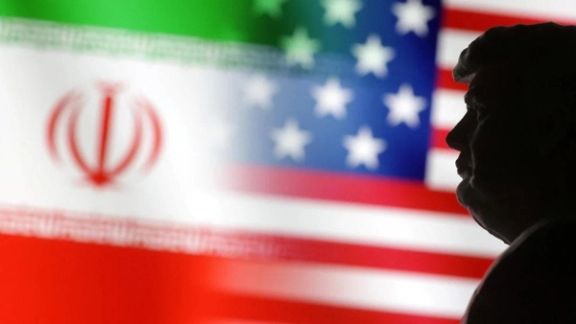
Infighting persisted among rival factions in Tehran over possible US talks after Ali Khamenei gave an implicit green light earlier this week, though with caveats reflecting his recurrent distrust of America.
At the same time, some of the key politicians who opposed the idea of negotiations with the United States have been realigning their stances and shifting their loyalties.
The conservative Jomhouri Eslami newspaper described the past week as marked by an intensifying war of words between supporters and opponents of negotiations aimed at addressing Iran's economic and foreign policy impasse.
The daily wrote: “Supporters of negotiations argue Iran cannot permanently cut ties with one of the world's major powers. They point to China and Russia, which have long-standing rivalries and conflicting interests with the US yet maintain relations. Likewise, they contend, Iran can engage with the United States and other nations—except those with illegitimate governments—without being vulnerable to coercion.”
"This group of politicians believes Iran must reconsider its foreign policy to better serve its own interests. On the other hand, opponents of negotiations, who are at the center of the recent infighting, argue that Iran should have no relations with the United States, as nothing justifies talks with Washington," the Jomhouri Eslami wrote, adding, "The opponents of negotiations with America insist that the United States is not trustworthy and that its officials do not honor their commitments."
The daily noted that this group organized rallies in Tehran over the past week to protest negotiations and their supporters. However, it added that statements from Iranian officials throughout the week suggest the country is more inclined than ever to pursue talks with the United States.
The daily added, "If this is the case, there is hope for a breakthrough in Iran's foreign relations that could lead to an improvement in Iranians' livelihood."
The commentary was part of the daily's weekly roundup in a tumultuous week of infighting and shifting alliances, including divisions within the conservative camp.
The conservative Nameh News website described an ongoing and unresolved rivalry between Majles Speaker Mohammad Bagher Ghalibaf and former Supreme National Security Council secretary Saeed Jalili.
The reformist, pro-government daily Etemad linked the disputes between the two politicians to their rivalry in past and recent presidential elections. In the June 2024 election, Ghalibaf withdrew his candidacy in favor of Masoud Pezeshkian, ultimately helping pave the way for Pezeshkian's victory in the runoff. According to Nameh News, the two politicians maintain opposing views about negotiations with the United States.
•
•
The website noted that, unlike Jalili, Ghalibaf does not oppose negotiations but believes Iranian negotiators should first align on their definitions and demands. However, it observed that Jalili and his supporters, particularly in the ultraconservative Paydari Party, oppose any form of talks between Iran and the United States.
"Jalili believes that Iran and the United States are fundamentally at odds, positioned as opposing forces by nature. He argues that escalating tensions between the two can serve as a means to restrain the other side," the website wrote.
As a result of the dispute, Ghalibaf—who has repeatedly shifted his loyalties over the past six months, moving between the Paydari camp and Pezeshkian's supporters—has once again aligned himself with the latter, Nameh News concluded.
Widening divisions are also emerging between pro-Pezeshkian reformists and the conservative faction. Ayatollah Mohsen Gharavian, a former ultraconservative who has joined the Reformists, insisted in an interview with Khabar Online that "the only way to end the sanctions is negotiating with global powers." He accused Jalili of mobilizing vigilantes in the streets against negotiations and argued that "he should distance himself from the radicals if he was not behind the rallies."
Meanwhile, Mohammad Karbasi, a hardline cleric in Qom, the center of the Shiite Seminary, accused reformist cleric Mohammad Ali Abtahi of "having a plan to instigate riots in the streets" after Abtahi recently stated in a post on X that "Iran's economy is affected by the impact of the sanctions" and that "negotiations can have a positive impact on Iran's economy if we have competent diplomats."
Washington is exhorting senior Lebanese officials to prevent Hezbollah or its allies from selecting the country's next finance minister, Reuters reported citing sources familiar with the matter.
Hezbollah has traditionally played a key role in forming the government, working alongside its Shi'ite ally the Amal Movement which has controlled Lebanon’s finance ministry since 2014.
US officials are keen to limit their influence as Prime Minister-designate Nawaf Salam assembles a new cabinet, Reuters reported.
The US is exerting significant pressure on both Salam and Lebanese President Joseph Aoun to curb Hezbollah's power, Reuters cited a source close to the group as saying.
Lebanon could face difficulties securing foreign financial aid crucial for post-war reconstruction if Hezbollah or Amal were to select the next finance minister, Reuters reported citing other sources.
Washington’s intervention comes as Hezbollah’s position in the region has been shaken after over a year of combat with Israel.
Its key ally Syrian President Bashar al-Assad was toppled by Islamist militants, transforming the political landscape in Lebanon and the broader Middle East.
The damage from Israeli airstrikes last year was extensive, particularly in Shi'ite-majority areas where Hezbollah enjoys strong support.
While Hezbollah has urged international and regional powers to assist Lebanon’s rebuilding efforts, sources suggest that financial assistance is likely conditional on political changes—particularly the group’s diminished role in government.
Aoun’s presidency marks a shift from Iranian-backed dominance in Lebanon’s politics. Backed by factions seeking to reduce Hezbollah’s power, his election ended years of political paralysis and exposed the divide between Lebanon’s pro-Western and pro-Hezbollah blocs.
In his first parliamentary address, Aoun called for the Lebanese state to reclaim control over its military, signaling a challenge to Hezbollah. He said that his presidency would work towards ensuring the state had the exclusive right to bear arms—an implicit challenge to Hezbollah’s vast arsenal.
Iran’s embassy in Beirut congratulated Lebanon on Aoun’s election, expressing hope for stronger cooperation between the two nations. The statement did not address Hezbollah’s arms, reflecting the growing political tensions over the group’s future role in the country.
Israel has accused Iran of funneling tens of millions of dollars to Hezbollah through clandestine cash deliveries, lodging formal complaints with the US-led committee overseeing the cease-fire in Lebanon, The Wall Street Journal reported Friday.
Iranian envoys have been flying into Beirut from Tehran with suitcases stuffed with US dollars to finance Hezbollah’s operations. Additionally, Israel has reported that Turkish nationals have been used as couriers to transport funds from Istanbul to Beirut, according to WSJ.
The cease-fire committee, which includes representatives from Israel, Lebanon, the US, France, and the UN, has relayed these concerns to Lebanon’s government. The cease-fire terms require Lebanon to secure its borders to prevent arms smuggling but do not explicitly address cash transfers, WSJ reported, citing an unnamed US defense official.
These allegations come amid increased scrutiny of Iranian financial activities in Lebanon. In early January, tensions flared at Beirut Airport when an Iranian diplomat refused to have his bags searched, triggering a brief standoff. Lebanon’s Foreign Ministry later said that the funds in the diplomat’s possession were for embassy expenses and were allowed entry under the Vienna Convention on Diplomatic Relations.
However, reports suggest this was the third such incident since November, raising concerns about Lebanon’s commitment to curbing Iranian cash and arms transfers to Hezbollah.
Meanwhile, Hezbollah’s Deputy Secretary-General Naim Qassem revealed in December that $50 million had been distributed to over 233,000 displaced Lebanese households, openly acknowledging Iranian financial support for the group.
Reports of cash transfers to Iran’s proxy groups have surfaced in the past. In 2006, Mahmoud al-Zahar, a senior Hamas official, said on Al-Alam TV that during a visit to Tehran, he received several suitcases containing $22 million from Qassem Soleimani, the late commander of the IRGC’s Quds Force.
In 2019, China’s Xinhua News Agency reported that during an event preceding "Quds Day" in Gaza, Iran distributed $651,000 to Palestinian families in the territory.
35-year-old Iranian refugee Sina Rostami, who is detained in a Turkish deportation camp for not having proper documentation, is routinely awakened in the morning with the strike of a jailer's baton.
Sina is the portrait of the Iranian youth. Opposed to the theocratic establishment, he dreams of a better life in the West, but what he has experienced in his pursuit of freedom illustrates the grim reality of what many Iranian refugees face.
“The way they treat us here is like we’re not humans,” said Sina, speaking to Iran International.
Sina’s sleeping quarters that he shares with six people and the washrooms have no lights. Sina said he often has to wait 12 to 14 hours before he is permitted to recreation outdoors.
“I wasn’t even registered for food (rations) until recently and other Iranians would bring me food—which is not really edible anyway,” he said.
At the height of the Woman, Life, Freedom uprisings sparked by the death of young woman Mahsa Jina Amini in Iranian morality police custody in September 2022, Sina was one of tens of thousands of demonstrators arrested.
Sina described 18 days of interrogation, saying the night before his transfer to Tehran's notorious Evin prison that he was threatened with death unless he confessed. The next day he was blindfolded and threatened more.
"Prepare for your execution. Write your will if you have anything to say," Sina said his Iranian interrogators told him in prison.
However, he believes the threats of execution were part of their psychological torture. He was released from prison a few weeks later.
Sina felt life wasn't safe anymore after being released and decided two years later it was time to leave his homeland for new beginnings - but what awaited him was worse, he said.
Smugglers and victimizing refugees
After escaping Iran on a perilous journey in June 2024, Sina initially sought refuge in Turkey. He and a friend paid to make their way to Greece en route to the West when he was detained by Greek authorities.
Sina said he and his friend from Iran were searched by two armed men, wearing what he described as commando fatigues. They were then forced onto a pickup truck where they were dropped off at police headquarters.
After being questioned by Greek police, Sina said authorities bundled him and his friend onto another truck manned by a group of masked men. Sina said they were smugglers.
They were beaten with metal pipes, he said, and what happened next left Sina scarred for life. Sina said he was gang raped by the smugglers.
It happened at gunpoint, Sina said, adding that his hands were tied behind his back.
The smugglers took him and other refugees across the Evros River and back into Turkey to Istanbul.
Sina’s therapist, Azadeh Afsahi who was put in touch with him through other Iranian dissidents aware of his case, has been connecting with him since he was smuggled back into Turkey in June.
Sina was staying in insect-infested, illegal hostels until he was caught by Turkish authorities while trying to see a lawyer to legally leave the country.
“The trauma that he is enduring every day and now that he was put in camp in this deportation camp, all of those memories are coming back to him,” Afsahi told Iran International. “He is diagnosed with Post Traumatic Stress Disorder (PTSD) and severe depression. He has nightmares. He can't sleep."
Afsahi, who is of Iranian origin and lives in California, said Sina’s life is in danger either by suicide or death at the hands of Iranian authorities should he be repatriated. She communicates with Sina by telephone.
“He has suicidal thoughts. He is very depressed," said Afsahi who made the assessment of Sina as a clinical therapist.
"I have his permission to talk about this. Usually, I don't talk about what's happening in therapeutic sessions because it's against confidentiality. But the reason I'm talking right now is because his life is in danger," she added.
The conditions in the deportation camp only further put his life in peril, and he feels unsafe in that environment, fearing he could become a victim of sexual assault again, according to Afsahi.
"He thinks that is going to happen again," added Afsahi.
Sina is speaking out, using his real name to raise awareness on the plight of Iranian refugees. It's a rare move as most Iranian refugees are too afraid to come forward given their precarious situation.
Afsahi advocates to help save Sina's life and to push for change.
"For the three years that I've been working with the refugees in Turkey, the government is resembling the Islamic Republic, said Afsahi "I want the curtains to be open so we can see what the Turkish government is doing to the Iranian refugees."
Afsahi feels Sina's status under international and Turkish law as a refugee is being ignored.
In the meantime, Sina's life hangs in the balance, not knowing how much longer he has to live in the camp or if he could possibly be deported back to Iran.
"I want people to know what is happening that's why I am allowing my voice and name to come out," said Sina.
Public participation in the ancient Zoroastrian Sadeh festival, once nearly forgotten but now surging in popularity among Iranians, is being banned anew by authorities in the Islamic Republic.
Interest in the Sadeh celebrations, along with other pre-Islamic festivals like the fall Mehregan celebration, has become a growing trend among Iranians.
Recognized by UNESCO in 2023 as a joint Iranian, Tajikistani Intangible Cultural Heritage of Humanity, Sadeh is an agricultural festival celebrated since ancient times. Though highly revered by Zoroastrians, this holiday is not exclusive to their faith and was historically celebrated by agricultural communities across the Persian Empire.
This year, travel agencies promoted package holidays to cities like Kerman, Yazd, Shiraz, and other smaller towns, offering tourists the chance to observe or participate in the Sadeh rituals led by Zoroastrian clergy, known as fire priests.
Plans were, however, canceled at the last minute after media reports on Tuesday revealed that, as in previous years, participation in the Sadeh celebrations in Kerman, Yazd, and Tehran on Wednesday would be strictly limited to Zoroastrians, despite many members of the general public hoping to take part.
Old footage from 1966 shows Zoroastrian fire priests preparing to light the Sadeh fire with embers from the holy fire
The festival takes place roughly midway between the Winter Solstice (Yalda) and the Spring Equinox, which marks the celebration of the Iranian New Year (Norouz). Ancient texts, including classical Persian historical chronicles, suggest that Sadeh commemorates the mythical King Houshang’s discovery of fire. In the Zoroastrian holy book, the Avesta, he is referred to as Haošyangha.
Sadeh is typically celebrated in open spaces, such as fields, with large bonfires. During Zoroastrian ceremonies, fire priests dressed in white robes light a massive bonfire, while participants gather to enjoy festive food and celebrate together.
Zoroastrianism, the world's oldest monotheistic religion, predates Islam by over a thousand years. Today, some estimates suggest there are about 30,000 Zoroastrians remaining in Iran.
In ancient Persia, the Sadeh bonfire symbolized the Sun, believed to grow stronger after the festival, warming the earth and preparing it for the spring planting season.
Some Iranian media outlets criticized the decision and some reports suggested that the decision to exclude the public may have been dictated by state authorities.
“Despite the inclusion of the Sadeh festival on UNESCO’s list of Intangible Cultural Heritage, restrictions on its celebration in Iran persist,” reported Kojaro, Iran’s leading tourism platform, on Wednesday.
Footage of Sadeh celebrations in Kerman Wednesday
Officials from the Zoroastrian community have not directly mentioned pressure from security forces or state agencies, instead citing "limited space" and "health considerations" as reasons for the decision.
Sirus Nikbakht, chairman of the Kerman Zoroastrian Association, told the media that non-Zoroastrians were not allowed to even watch the ritual lighting of the bonfire in the field where the ceremony was to take place. However, he mentioned that some government officials were invited to the ceremony.
A video of the celebration in Kerman shared on social media Wednesday showed Zoroastrian celebrants carrying large images of Supreme Leader Ayatollah Ali Khamenei, his predecessor Ayatollah Ruhollah Khomeini, and Prophet Zardosht during the procession—presumably as a sign of respect for the government officials who attended the "private" ceremony.
“Cultural heritage experts still believe that due to its historical and cultural background, this festival should be celebrated as a national event with the presence of the public. Nevertheless, the [government's] policies regarding its celebration have not [yet] changed,” a commentary titled “Why Has the Ancient Sadeh Been Limited to Zoroastrians?” published by Jahan-e Sanat News on Tuesday stated.
Zoroastrian fire priests carrying embers to light the Sadeh fire in Kerman
“The celebration of Sadeh festival is not only a [Zoroastrian] religious ritual, but also a several thousand years old national celebration which all Iranians should participate in, not just Zoroastrians ... The ban on the presence of tourists in the celebration of Sadeh is a great disappointment and one cannot understand the logic behind it,” Afshin Amirshahi, chief editor of Payam-e Ma newspaper, protested in a Wednesday editorial.
While Zoroastrians, along with Armenians, Assyrians, Chaldean Christians, and Jews, are allowed to practice their faith, they must be cautious to keep Muslims away from their places of worship, particularly during prayers and ceremonies.
The Shia establishment closely associates Sadeh—and other ancient festivals like Norouz, Yalda, Charshanbeh Souri and Mehregan—with pre-Islamic Persia and Zoroastrianism, which they often link to "fire worship" and paganism.
Iranian authorities are also likely concerned that public participation in the festival could lead to uncontrollable crowds, reflecting their ongoing effort to restrict gatherings, especially after previous anti-state protests.
On January 30, 2023, at the height of the nationwide anti-state Woman, Life, Freedom protests, demonstrators lit Sadeh bonfires in several Iranian cities, including Tehran, Ahvaz, and Shiraz, while chanting slogans against Supreme Leader Ali Khamenei.
US President Donald Trump's latest remarks on Iran, which downplayed the likelihood of military conflict and suggested possible dialogue, have prompted some Tehran insiders to favor direct talks and a potential agreement with his administration.
“This time Trump is completely different from before. There were [people like] John Bolton and [Mike] Pompeo before and he had radicals [around him],” Ahmad Bakhshayesh-Ardestani, a member of the Parliament’s National Security and Foreign Policy Committee told the Iranian Labour News Agency (ILNA) Tuesday.
Last week, President Trump expressed hope that a deal on Iran's nuclear program would eliminate the need for the US to support an Israeli attack on Iran.
"It would really be nice if that could be worked out without having to go that further step ... Iran hopefully will make a deal, and if they don't make a deal, I guess that's okay too," Trump said.
Last week, Trump terminated Secret Service protection for former national security advisor John Bolton, former secretary of state Mike Pompeo, and former special envoy for Iran Brian Hook, despite alleged threats from Iran against their lives. This decision has drawn criticism from some Republicans.
Bakhshayesh-Ardestani also argued that Trump’s approach and way of thinking about conflicts in the world have changed because he wants to tell the world that he has the power to go to war but wants to solve the problems without resorting to force.
He also argued that Trump has adopted a new approach to the Islamic Republic because he has realized that Iran does not seek a nuclear bomb. “Trump’s focus is on Iran for not having nuclear weapons. Iran considers nuclear weapons to be religiously forbidden,” he said, adding that this means an agreement between the two sides is possible.
He was apparently referring to an alleged fatwa by Supreme Leader Ali kHamenei many years ago. However, analysts argue that the so-called fatwa is merely an advisory opinion rather than a binding legal decree. They argue it was intended to mislead the international community about the true intentions of a nuclear program that Tehran insists is peaceful.
In late December, Bakhshayesh-Ardestani had said that an Israeli strike against Iran's nuclear facilities would effectively allow the Islamic Republic to move toward developing nuclear weapons.
Speaking to the moderate conservative Entekhab news website in Tehran on Monday, a former Iranian diplomat at the UN, Kourosh Ahmadi, described “the tone and content of the words that Trump has spoken about Iran after taking office” as “more diplomatic than hostile.”
“Firstly, he has only talked about negotiation and agreement [with Iran], and secondly, his tone is mostly calm and there is no threatening rhetoric,” he said.
Ahmadi suggested that Trump's stance has increased the likelihood that he plans to "officially propose negotiations as the first step in relations with Iran, rather than focusing on threats or pressure."
The former diplomat also advised Iranian authorities to view Trump’s statements as an indication of his openness to negotiating with Tehran before exploring other options.
President Masoud Pezeshkian and officials of his administration including Foreign Minister Abbas Araghchi say Tehran is open to and prepared for talks with the Trump administration, but it is unclear to what extent they are willing to be flexible. Trump also has not officially reveal his next steps toward Tehran.
Other Iranian officials, including Pezeshkian’s Special Envoy in Maritime Economy, Ali Abdolalizadeh, have in recent weeks indicated that the “governance” has concluded that there must be direct talks between the US and Iran.
In the parlance of the Islamic Republic, terms like "governance" or "system" are frequently used to refer to Supreme Leader Ali Khamenei. In 2018, Khamenei stated that the Islamic Republic would never engage in negotiations with the US, specifically not with the Trump administration.
In mid-January, a senior figure in Khamenei’s office claimed that the Supreme Leader’s anti-American remarks in a speech were not meant to rule out negotiationsif the positions of the two sides of a dispute align.