Talks with even infidels are possible, Iran’s security chief says
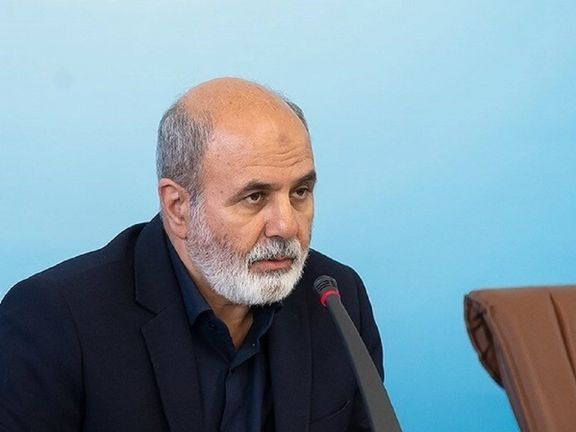
Secretary of Iran’s Supreme National Security Council Ali Akbar Ahmadian
Secretary of Iran’s Supreme National Security Council has suggested that negotiations with those deemed infidels are possible, but only under the guiding principle of resistance against the demands of adversaries through non-violent means.
Ali Akbar Ahmadian argued on Tuesday that dialogue and resistance are not mutually exclusive, leaving unclear whether he was referring to the contentious issue of possible talks with the United States.
"It is even possible to negotiate with infidels," he said, "but based on what principle? It is possible to negotiate based on the principle of resistance."
He emphasized that resistance forms the foundation for understanding the Islamic concept of jihad (struggle) in its various forms.
Citing a Quranic verse, he explained that the greatest jihad involves not blindly accepting the words of adversaries.
He clarified that "not obeying" does not necessarily translate to physical conflict, but rather signifies not uncritically accepting opposing viewpoints.
Over the past three months, calls for negotiations with Washington have grown in Iran as Tehran officials and commentators worry that US President Donald Trump may escalate economic sanctions. In recent weeks, former Foreign Minister and current aide to President Pezeshkian, Mohammad Javad Zarif, has come under increasing attacks by hardliners who accuse him of proposing negotiations with the Trump administration.
Emphasizing the need for careful judgment, Ahmadian suggested that listening to adversaries' arguments is acceptable only when they align with one’s own principles. He warned against misguided compromises, stressing the importance of standing firm when necessary.
Ahmadian's remarks echoed those of Supreme Leader Ali Khamenei in late January, when he implicitly endorsed negotiations but firmly warned officials to uphold Iran's positions.
Without elaborating, he highlighted the role of reason in choosing the lesser of two harms and the greater of two benefits.
Iranian security forces are torturing a former political prisoner in a bid to extract a confession that he provided a gun used in the assassinations of two senior judges last month, a source familiar with the matter told Iran International.
Bijan Kazemi's home was raided by security agents in the western town of Kuhdasht in Lorestan province on Jan. 21, the source added, and all electronic devices belonging to him and his family were confiscated.
Kazemi was allowed to make a quick phone call to relatives.
“Kazemi was transferred from Kuhdasht to Ward 209 of Tehran's Evin Prison after his arrest. Intelligence Ministry agents beat him and are trying to extract a forced confession claiming that the shooter who killed Razini and Moghiseh obtained his weapon from him,” added the source, who requested anonymity for security reasons.
The two judges, Mohammad Moghiseh and Ali Razini were shot dead in Tehran on January 18 at the Supreme Court in central Tehran, in a rare attack on veteran top players in the theocracy. Supreme Leader Ali Khamenei led their funeral prayers.
According to Iranian media, the shooter, whose identity has not been revealed, took his own life as he was pursued by security forces.
Since the killings of Razini and Moghiseh, the Intelligence Ministry has arrested several former political prisoners allegedly in connection with the incident. No details have been released on those detainees.
Kazemi was previously imprisoned for two years after an arrest in 2020. He was allegedly affiliated with the formerly armed opposition group, Mojahedin-e Khalq, also known as MEK, according to the Iran Prison Atlas published by the California-based human rights organization United4Iran.
The two jurists, both clerics, had decades-long histories of handing down death sentences and lengthy prison terms to dissidents in numerous cases, and were nicknamed the “hanging judges” by critics.
Judges Ali Razini (left) and Mohammad Moghiseh (right) were assassinated in Tehran on January 18, 2025
Moghiseh and Razini were known for their roles in the 1988 mass executions of political prisoners.
During the targeted attack, one of the guards of the Supreme Court’s 39th Branch was also injured, but his identity has yet to be disclosed.
Islamic Republic officials have given conflicting reports over how the killings took place.
“A note left by the attacker indicates that the People’s Mojahedin Organization of Iran (MEK) instructed him,” said Jafar Ghadiani, the Disciplinary Prosecutor for Judges in a statement on January 26.
A newspaper in Iran published a report on January 19 saying only 13 seconds passed from the moment the shooter entered the office to the time he left, during which he fired six rounds in rapid succession.
The deaths of Moghiseh and Razini struck a nerve in Iran particularly among former political prisoners, many of whom described harsh punishments they meted out.
The costs of Iran’s nuclear program are negligible compared to the achievement of gaining nuclear technology despite sanctions, the country’s atomic energy chief said on Sunday.
"We shouldn’t focus on weighing costs against benefits. While we are paying a heavy price due to sanctions, the emphasis is not on the costs," said Mohammad Eslami, an Iranian vice president and head of the Atomic Energy Organization.
When asked by a state TV interviewer to explain how the expenses are justified, he underscored the importance of acquiring advanced technology that so-called arrogant global powers seek to deny other nations, particularly Iran.
Eslami argued that evaluating the program’s costs and benefits should occur only after what he described as the required technological capabilities were achieved.
“We are now on this path. We’ve reached a stage where we can apply nuclear technology in various fields,” he added.
He maintained that Iran’s nuclear program is transparent and peaceful, accusing critics of using it to fuel what he called Iranophobia internationally.
Eslami's remarks came after Ali Larijani, an advisor to the Supreme Leader, signaled a softer stance on Iran’s nuclear program, calling it vital but stressing that it should not overshadow broader progress as “people must live their lives.”
The nuclear program is a pillar of our development, but not its entirety, he said on Saturday, stressing that despite his direct role in past negotiations, its scope must remain within defined limits.
"The nuclear issue is part of our national strength, but it is not all of it. People must live their lives, and progress must be achieved in various fields. The nuclear agreement [JCPOA] preserved nuclear knowledge, ensuring its continuation, but reduced the number of centrifuges from 9,000 to 5,000," Larijani, who is considered a moderate conservative in the Islamic Republic's political spectrum, argued.
Iran has faced ongoing electricity and gas shortages due to underinvestment and the impact of US-led sanctions which have hindered modernization efforts in its power, oil and gas sectors.
Iran’s leadership has been wrestling with the idea of re-engaging with Washington over the nuclear program in order to reduce US economic sanctions.
Iran's nuclear program: costs vs benefits
On January 23, Eslami highlighted the economic benefits of the Bushehr Nuclear Power Plant, saying it cost $1.8 billion but has supplied 70 billion kilowatt hours of electricity to the grid in more than a decade. He estimated that producing the same amount of energy from fossil fuels would have cost $8 billion. However, government data shows that the reactor produces just 2% of Iran's annual electricity needs.
Critics argue the program’s costs outweigh its benefits.
Outspoken reformist commentator Sadegh Zibakalam criticized the nuclear program in a post on X on January 23, questioning its value.
“Mr. Zarif says we had no intention of producing nuclear weapons and could have built them if we wanted. So why incur such enormous costs for over 20 years?” he wrote. Zibakalam also cited unfulfilled promises to build five nuclear plants comparable to Bushehr.
In a letter to hardline lawmaker Hamid Rasaei in February 2023, Zibakalam argued that Iran could procure fuel for its Bushehr power plant through the International Atomic Energy Agency (IAEA).
“Not only does our insistence on producing nuclear fuel domestically have no economic justification due to its high cost, but also other things like speaking of 'our proud nuclear achievements' are one-sided and exaggerated.”
Since US President Donald Trump imposed what he called maximum pressure sanctions in his first term starting in 2018, Iran’s national currency has depreciated nearly 20-fold, and inflation has surged to 40%.
The sanctions severely disrupted the economy, particularly in the banking, trade, transportation and insurance sectors.
Sanctions have severely disrupted multiple sectors of Iran’s economy, particularly international trade, which has been hit hard by rising costs in banking, transportation, shipping, and insurance.
In a recent state-run television program, Saeed-Reza Ameli, former secretary of Iran's Supreme Cultural Revolution Council, said sanctions have cost the Iranian economy $1.2 trillion over the past 12 years.
Economist Vahid Shaghaghi-Shahri echoed similar concerns in an interview with the Etemad newspaper last week, saying Iran’s gross domestic product has shrunk from $640 billion to $400 billion over the same period.
Without sanctions, he estimated, the economy could have grown to $1 trillion.
Iranian President Masoud Pezeshkian said on Monday that certain economic difficulties are beyond governmental control, stressing the need to be transparent with citizens regarding such limitations.
"The current situation of high prices and livelihood problems that are putting pressure on the people is unacceptable," he said. "Some of it is in our hands, and some of it is not," he added without elaborating.
Pezeshkian made the remarks during a joint meeting with Parliament Speaker Mohammad-Bagher Ghalibaf, Chief Justice Gholamhossein Mohseni Ejei, and other senior legislative and judicial officials.
Iran's current economic crisis stems from both US and European sanctions, as well as systemic mismanagement linked to the government's bureaucracy and its dominant role in the economy.
Official media often attributes economic responsibility to the presidential administration, but since foreign policy decisions rest with Supreme Leader Ali Khamenei, lifting sanctions is beyond the president's control.
(From left) Iranian President Masoud Pezeshkian, Chief Justice Gholamhossein Mohseni Ejei, and Parliament Speaker Mohammad-Bagher Ghalibaf during a meeting in Tehran on February 3, 2025
Last month, the Statistical Center of Iran reported significant price increases on essential goods, with some food items seeing prices multiply up to five times compared to last year.
Ordinary workers currently earn less than $150 a month, while official estimates indicate that a family of three needs at least $450 a month to cover basic necessities.
Pezeshkian said it is time to engage the population, at least one third of whom have been pushed below the poverty line, warning that more protests lie ahead.
"When we are unable to fulfill our commitments to the people... if they come to the streets and protest, we must engage in dialogue with them ... but instead, we treat them badly.
"Solving the people's problems is our duty; if we cannot, we should at least explain it to them in a kind manner... not treat them violently."
He accused the country's adversaries of taking advantage of the dire economic conditions, warning: "Of course, the people should also be careful that the enemy does not exploit their protests to disrupt society.”
Acknowledging declining public support for the government, he asked, "In the recent elections, 50 percent of the people did not participate. Are they not one of us, and are we not their servants? Shouldn't we ask ourselves why they are dissatisfied with us?"
Only 24 million of 61 million eligible Iranians voted on June 28 in snap presidential elections called after the untimely death of President Ebrahim Raisi in a helicopter crash.
The 39.9 percent turnout was the worst in the history of the Islamic Republic. Pezeshkian did not secure the 50 percent required to avoid a run-off. The turnout improved in the second round to 49.68%.
In 1979, just ten days passed between Ayatollah Ruhollah Khomeini’s return from exile in France and the fall of the monarchy, paving the way for the establishment of the Islamic Republic under his and other clerics' control.
Known as Dahe-ye Fajr (“Ten Days of Dawn”), this period is officially commemorated annually with various ceremonies. Due to differences between the Iranian and Western calendars, this period can begin on January 31 or February 1 and end on February 10 or 11.
For supporters of the Islamic Republic, Fajr (“Dawn”) symbolizes the "new era" in Iran’s history marked by the fall of the monarchy and the establishment of an Islamic governance.
Ayatollah Ruhollah Khomeini's arrival at Mehrabad Airport, February 1, 1979
Q: What are the key ceremonies during Dahe-ye Fajr?
On the first day of the ten-day "Dawn" period, a ceremony takes place at Khomeini’s mausoleum in southern Tehran, commemorating his return to Iran after 14 years in exile, the majority of which he spent in Iraq.
On the final day, state-sponsored rallies take place nationwide to mark the Islamic Revolution's victory. The president addresses participants at Azadi Square (“Freedom Square”) in Tehran, and the day is observed as a public holiday.
State dignitaries as Khomeini's mausoleum, February 1, 2023
Q: How does the state’s media cover the events?
State-run television channels extensively cover all the ceremonies of Dahe-ye Fajr, particularly the Revolution Day rallies. These broadcasts often feature large crowds, which Iranian state officials claim reflect widespread support for the Islamic Republic and its Supreme Leader.
State-sponsored Revolution Day (22 Bahman) rally in Tehran, February 11, 2024
Q: What criticisms have been raised about the media coverage of these events?
Individual critics and opposition groups argue that participation in these rallies has significantly declined in recent years.
They also say that state authorities use incentives like gifts, paid leave, or implicit threats to compel attendance – particularly among civil servants, soldiers, students, and workers.
Q: How did the monarchy fall in 1979?
Months of massive protests forced King Mohammad-Reza Pahlavi, the Shah of Iran, to leave the country with his family on January 16, 1979.
He entrusted a Regency Council and opposition Prime Minister Shapour Bakhtiar to manage the country in his absence.
Khomeini had vowed to return to Iran. Bakhtiar initially attempted to block his return by closing Iran's airports.
However, widespread protests, led by both Islamists and leftist groups, compelled him to reopen them.
King Mohammad-Reza Pahlavi and Queen Farah departing for Egypt, January 16, 1979
Q: What happened when Khomeini returned to Iran?
On February 1, Khomeini arrived in Tehran on a chartered Air France plane, accompanied by opposition figures who had supported him during his exile.
Upon arrival, millions of Iranians flooded the streets to welcome the 76-year-old cleric.
Khomeini traveled directly to Behesht-e Zahra, Tehran’s largest cemetery, to honor the “martyrs of the Revolution.”
In a fiery speech, he declared the Shah-appointed Bakhtiar government "illegal" and announced his intention to establish a new administration.
“I will appoint a government. I will slap this government on the mouth. I will establish a government with the support of the nation because the nation has accepted me,” Khomeini proclaimed.
Ruhollah Khomeini's first speech after arrival in Tehran at Behesht-e Zahra cemetery, February 1, 1979
Q: What did Khomeini do after his return to Iran?
A few days after that speech, Khomeini appointed Mehdi Bazargan, a moderate Islamist scholar and politician, as prime minister.
By February 11, revolutionary forces had seized control of all government institutions. The state broadcaster officially announced the monarchy's collapse the same day.
Q: What happened to Khomeini’s closest aides after his return?
Ironically, many of Khomeini’s close aides from his time in exile were later accused of treason or marginalized – and ultimately faced tragic fates.
Sadegh Ghotbzadeh, who served as foreign minister between November 1979 and August 1980, was accused of plotting to assassinate Khomeini and of attempting a coup to topple the newly established Islamic Republic in April 1982. He was executed by firing squad in September of the same year.
Another aide, Hassan Banisadr, who was elected as the Islamic Republic’s first president (from February 1980 to June 1981), was impeached and deposed by Parliament, allegedly for opposing the clerics in power. He went into hiding and later escaped to France, where he lived until his death in Paris in 2021.
In the now-infamous photos of Khomeini descending the stairs from the Air France plane upon his return to Tehran, state-run news outlets have edited out several of his aides who were by his side.
Today, the only individual still visible next to Khomeini in the official photos is the airliner’s pilot, holding his hand.
An Iranian daily criticized Foreign Minister Abbas Araghchi, arguing that his recent diplomatic approach toward the United States, particularly his demands for the release of blocked funds, has been misguided.
In a Sunday editorial, Ham-Mihan, a newspaper aligned with Iran’s Reformist faction, argued that the Foreign Ministry’s performance over the past six months has led to a diminished and weakened position in at least three key areas.
The newspaper pointed to Iran’s handling of overtures for negotiations with the United States as a key concern.
Iran’s policy toward Washington has long been a sensitive and contentious issue, especially after the US withdrawal from the JCPOA nuclear deal in 2018 and the imposition of sanctions. With President Donald Trump’s return, many Iranian politicians and commentators are voicing concerns over the possibility of harsher sanctions as the country struggles with a deep economic crisis.
Ham-Mihan said that efforts at engagement—whether overt or behind closed doors—have consistently encountered resistance from hardliners in both Tehran and Washington.
Beyond internal challenges, Ham-Mihan warned that Trump’s different view of foreign policy makes Iran’s diplomatic messaging particularly sensitive.
“One of Trump’s main arguments for withdrawing from the JCPOA was the lack of economic benefits for American companies,” the paper added, suggesting that any new diplomatic overtures must be framed in a way that aligns with Trump’s priorities.
Araghchi, however, has been criticized for failing to take such dynamics into account. The newspaper pointed to his recent interview with Al Jazeera, in which he asked for the release of frozen Iranian assets as a confidence-building measure.
Ham-Mihan argued that this approach misjudged Trump’s negotiating style and contrasted it with other Iranian officials who have suggested offering American companies investment opportunities in Iran instead.
The newspaper also expressed alarm over the apparent disarray within Iran’s foreign policy structure. Unlike the administration of President Hassan Rouhani where the foreign ministry led negotiations, figures like former Supreme National Security Council Secretary Ali Shamkhani and Strategic Council on Foreign Relations President Kamal Kharrazi now seem to be pursuing independent agendas, leading to confusion.
Iranian Foreign Minister Abbas Araghchi and Syrian President Bashar al-Assad (right) meet in Damascus on December 1, 2024.
Additionally, Ham-Mihan criticized some of Araghchi’s recent regional visits, suggesting they have become more about symbolic appearances than meaningful diplomatic efforts.
The paper particularly highlighted his trips to Beirut and Damascus right before Bashar al-Assad's fall, arguing that they failed to achieve meaningful results to bolster Iran's influence and instead reinforced the country's image as a passive observer rather than an influential actor.
The newspaper urged Araghchi to reassess his approach, warning that without a more unified and strategic direction, the Foreign Ministry risks becoming increasingly sidelined in shaping Iran’s diplomatic agenda.