Iran’s revamp of a top national security body signals a ruling system in decline, former US State Department official Len Khodorkovsky told Eye for Iran, calling it “pure theater” and likening it to “rearranging deck chairs on the Titanic.”
“We’re seeing the leadership desperate and flailing away in various ways to try and preserve its control and its hold on power,” he said. “Whether you stand up the defense council, whether you change the name of the currency ... the ship is still sinking.”
Khodorkovsky served as Deputy Assistant Secretary of State during the first Trump administration, working closely with the Special Representative for Iran on the administration’s “maximum pressure” campaign.
Born in the Soviet Union, he emigrated to the United States as a child after experiencing life under the communist system. From abroad, he watched the country of his birth unravel — a collapse that, he says, offers lessons for Iran today.
His prediction rests on a convergence of forces the leadership cannot reverse: an economy in freefall, a public that has lost faith in the system, and leaders resorting to cosmetic moves to mask deep structural decay.
Drawing on the lessons of the Soviet collapse, he argued that once cracks appear in an authoritarian system, its fall can come faster than expected.
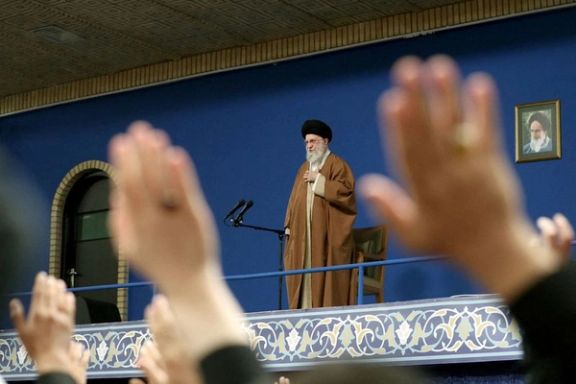
Chaired by the president, it includes the heads of the judiciary and parliament, senior military commanders, key ministers, and two representatives of Supreme Leader Ali Khamenei.
Veteran lawmaker Alaeddin Boroujerdi called it “necessary given the current wartime situation,” saying it would allow military and defense decisions to be made “in a concentrated manner” during critical moments. Esmaeil Kowsari, a former Revolutionary Guards commander, said it would speed the chain of command and “with timely strikes, suppress threats.”
The revival of such a body — last active during the 1980–88 Iran–Iraq War — follows a 12-day war with Israel in June, during which Iranian military and nuclear facilities were hit by Israeli and US strikes.
Larijani’s return: rebrand, not reboot
Two days after the council’s creation, President Masoud Pezeshkian appointed Ali Larijani as SNSC secretary.
Khamenei quickly followed, naming Larijani his personal representative to the body. A political veteran, Larijani previously served as SNSC secretary from 2005 to 2007, was speaker of parliament for over a decade, and has long been an adviser to the Supreme Leader.
Khodorkovsky said Larijani’s appointment will not change the system’s trajectory. “They’re trying to look strong externally, but internally the system is rotting,” he said. “The personnel changes are cosmetic — the fundamentals are the same.”
Mounting internal strain
Iran’s ruling system is buckling under severe economic pressure. The rial has collapsed—dropping from around 300,000 per USD in 2020 to over 1 million in early 2025—losing more than 80 percent of its value. Inflation remains among the highest in the world.
The strike brought key transport routes to a halt and drew public sympathy as a flashpoint of economic and social discontent.
Since the June war with Israel, Iran has seen no major uprisings — only scattered strikes and protests amid a heavy security presence.
Authorities have intensified arrests of activists, expanded surveillance, and deployed security forces in restive provinces to deter gatherings.
Against this backdrop, the truckers’ strike has been the most visible form of unrest, reflecting deep and widespread grievances across the population.
For Khodorkovsky, these are the real forces eroding the state’s foundations — and they cannot be reversed by councils or reshuffles.
“You can change the faces, you can change the names, you can create new institutions,” he said, “but when the people have turned away and the economy has collapsed, the end is only a matter of time.”
When Iran's armed forces chief of staff declared this week that all Iranians are together in one battle trench, the rallying cry rang hollow with many Iranians bewildered by a punishing war last month and worsening standards of living.
“Our home is not your trench. If you're looking for one, use your own house and stop riding on our backs,” one user said in a message sent to Iran International.
The backlash followed a speech by Major General Abdolrahim Mousavi, chief of staff of Iran’s armed forces, who said on Thursday, “All of our houses are like one trench facing the enemy.”
“Mousavi wants to use the civilian population as human shields,” one user wrote on X.
Another opined: "Did you care then that Iran’s wealth should be for its own people, and now you’re using the same people, drowning in your corruption and crimes, as your shield?!"
Iran is currently grappling with water shortages and widespread power outages amid high summer temperatures, while also dealing with recovery efforts following a 12-day war with Israel and its aftermath.
Mousavi also issued threats for any further attacks on Iran, saying there would be severe consequences for what he called any renewed aggression.
“Even if only one Iranian remains alive, you Americans will not be safe from the slap of his revenge," Mousavi said in a broadcast live on Iranian state television.
“Iran’s air defense was damaged early in the 12-day war, but since then Iran has rebuilt and modernized its systems. Israel now realizes that Iran’s air defense in a future war would be multiple times stronger,” Islamic Revolutionary Guards Corps (IRGC) affiliated Tasnim News said on Thursday.
Israel launched a surprise military campaign on June 13 targeting military and nuclear sites, assassinating senior Iranian commanders and killing hundreds of civilians. In response, Iranian missile strikes killed 29 Israeli civilians.
According to an Iranian government spokesperson, 1,062 Iranians were killed during the conflict, including 786 military personnel and 276 civilians.
The United States capped off the conflict with attacks on Iranian nuclear facilities at Isfahan, Natanz and Fordow with long-range bombers and submarine-launched missiles on June 22. Washington brokered a ceasefire on June 24.
Israel established a network of Iranian dissidents and non-Iranian recruits over the course of years for its assassinations of senior officials in a June war and total destruction of Iran’s anti-aircraft defenses, according to a ProPublica investigation.
The Israeli air force conducted reconnaissance flights inside Iran in advance of the conflict to ensure the eventual safe penetration of its airspace and identify weaknesses in Iranian air defense systems, the report said.
“Israeli pilots had been secretly flying over Iran since 2016, learning the landscape and exploring various routes to minimize the chances of detection,” ProPublica reported.
Israel launched a surprise military campaign on June 13 targeting military and nuclear sites, assassinating senior Iranian commanders and killing hundreds of civilians. In response, Iranian missile strikes killed 29 Israeli civilians.
The espionage operation involved a vast network of local recruits who were activated on the second day of the war, June 14, to launch coordinated attacks to disable air defenses and missile launchers.
“One hundred percent of the anti-aircraft batteries marked for the Mossad by the air force were destroyed,” ProPublica cited a source as saying. “Most were near Tehran, in areas where the Israeli air force had not previously operated.”
According to the report, Israeli-trained commandos recruited from Iran and neighboring countries were deployed across the country to carry out the attacks from within. Israeli intelligence used front companies to ship the necessary equipment into Iran legally, it added.
“According to Israeli planners, they arranged for unwitting truck drivers to smuggle tons of ‘metallic equipment’, parts for weapons used by the commando teams into Iran,” the report said.
After the surprise military campaign, Iranian media reported on several attack drone assembly production sites inside Iran set up by Israel.
Sources told ProPublica that the agents who carried out the sabotage, breaking into safes, setting up machine guns, disabling air defenses, and monitoring the homes of nuclear scientists, were not Israelis, but Iranians or citizens of third countries.
Intelligence gathering and targeting scientists
Israeli operatives also conducted intelligence operations around the Natanz nuclear facility, collecting soil samples to monitor uranium enrichment levels, ProPublica reported.
“Mossad veterans said operatives, likely Israelis posing as Europeans installing or servicing equipment, walked around Natanz wearing shoes with double soles that collected dust and soil samples,” the report noted.
Tests later revealed that Iranian-made centrifuges were enriching uranium well beyond the 5% level.
The sources cited by ProPublica added that moving shipments in and out of Iran was relatively easy. “Boxes and crates were shipped by sea or in trucks driven legitimately through border crossings,” one said.
Tracking targets
The report also described a long-term surveillance campaign that tracked 11 Iranian nuclear scientists, including details of their daily routines and even the layout of their homes.
“The dossiers even mapped the locations of the bedrooms in the men’s homes. On the morning of June 13, Israeli warplanes fired air-to-ground missiles at those coordinates, killing all 11,” the report stated.
“Officials emphasized that the military logistics of the operation were coordinated by Israel's military intelligence directorate and the Israeli air force, which reportedly struck more than a thousand targets during the 11-day air campaign,” Propublica reported.
According to an Iranian government spokesperson, 1,062 Iranians were killed during the conflict, including 786 military personnel and 276 civilians.
Islamic Revolutionary Guards Corps (IRGC) announced all the country's defense sites are fully operational and updated.
“Iran’s air defense was damaged early in the 12-day war, but since then Iran has rebuilt and modernized its systems. Israel now realizes that Iran’s air defense in a future war would be multiple times stronger,” IRGC affiliated Tasnim News said on Thursday.
Israel prime minister Benjamin Netanyahu had previously said during a visit to Washington in July that Israel had rolled back parts of Iran’s nuclear program, but suggested that the confrontation with the Islamic Republic is far from over.
Iran is awash in voices claiming to speak for its people: state loyalists, opposition figures and self-styled experts of every stripe drowning out the non-extreme yet critical voices with their din.
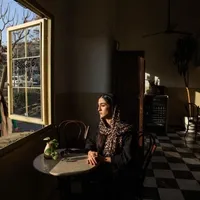
Most people I see in Tehran feel suspended in uncertainty, struggling with daily water and electricity outages while fearing the return of United Nationas sanctions and another war. They want change, but can’t see it on the horizon.
Worst of all, they feel they can’t express their concerns and thoughts.
“These days, you have to declare your political stance before you can say anything. And what you say must fit the dominant binaries, even if it’s about the price of beef.”
Shahriar is 36. He was laid off from his HR job just after the Iran-Israel ceasefire. He now delivers food while looking for work.
“There’s no voice that represents us,” Shahriar says. “And by us, I mean those who hate the Islamic Republic but don’t want to see the country destroyed by war. The atmosphere of accusation, labeling and hate online is so intense that I stopped posting on X and Instagram two weeks ago.”
That hostility, he says, has spilled beyond the screen.
“I’ve seen this toxicity enter friendships and family gatherings. If you criticize the war, people assume you support the regime—even though that same regime has imprisoned anti-war activists. Even supporters of the regime can’t tolerate anti-war views.”
Pick a side
Since the widespread protests of 2022, many activists have been calling for unity between those who want to see fundamental change in Iran. But solidarity remains fragile and elusive. A coalition of six high-profile opposition figures offered a glimmer of hope. But the effort quickly collapsed, widening divides and deepening mistrust.
“There’s this illusion that only two camps exist. Either you follow a scripted, militant vision of regime change or you’re a regime collaborator,” says Shiva, a civil society activist in Tehran.
The polarization, she believes, has erased nuance and pushed those like her out of conversations.
“Say Israel committed crimes, and one group calls you a regime apologist. Say the same thing to the other side, and they’ll ask why you’re silent about Iran’s military achievements. You find yourself defending your integrity instead of your argument. Constantly. It’s exhausting—and sad.”
Repeat the line
A recent study by LifeWeb, an analytics group operating under restrictions in Iran, offers a partial window into online activity during and after the Iran-Israel war.
The report says the hashtag #جانم_فدای_ایران (“My life for Iran”)—promoted by former foreign minister Mohammad Javad Zarif—was used in over 514,000 posts generated by only 17,000 users. That’s an average of 30 posts per user, suggesting coordinated repetition rather than broad engagement.
Likewise, in the final three days of the war, the Trump-associated hashtag #MIGA (Make Iran Great Again) appeared more than one million times from just 30,000 users—again averaging 30 posts each. This peak came during a nationwide internet blackout in Iran, raising further questions about the campaign’s authenticity.
While not conclusive, such patterns underscore how coordinated efforts can dominate digital narratives, often overshadowing the quieter voices who oppose both war and authoritarianism.
A man attending a religious ceremony marking the death of the third Shiite Imam, July 2025
Silence yourself
This “distortion” shapes perception, says Navid, a 28-year-old MBA student.
“These campaigns make it seem like most Iranians supported the Israeli strikes. But around me, most people saw war as a dangerous way to bring change. Sure, some defend it—but when the majority stays silent, the loud minority becomes the dominant voice.”
Navid believes this dynamic makes people fear expressing their views, feeling isolated in their beliefs. His friend Sina nods as he speaks before jumping in to vent his frustration at “losing” the only space he had to talk.
“Social media is the one platform most of us have to express our views. And it has been taken over by aggressive minorities and pressure groups.
“How can we reach a shared understanding, a shared purpose, when all we do is attack and cancel each other,” he asks. “The worst bit is we don’t even know if those shutting us up are real people or bots and cyber mercenaries.”
In 1980, months after Islamists took over what appeared to be everyone’s revolution, Iran’s renowned poet Ahmad Shamlou wrote one of his most recited lines to describe the repression: “They sniff your mouth, lest you’ve said ‘I love you.’”
It’s chilling to hear that line whispered again, not in defiance of power, but in fear of each other.
The National Council of Resistance of Iran (NCRI) denied on Friday that its affiliate, the exiled opposition group Mujahedin-e Khalq (MEK), played any role in the assassinations of two figures involved in Iran’s nuclear program, in a statement sent to Iran International.
The group rejected involvement in the 2010 killing of physics professor Masoud Ali-Mohammadi and the 2011 killing of nuclear scientist Majid Shahriari, calling the allegations “pure lies fabricated by the intelligence services” of the Islamic Republic to “demonize the MEK.”
Response to renewed allegations The statement followed comments by Vida Mehrannia, wife of Swedish-Iranian researcher Ahmadreza Djalali, in an interview with Iran International’s “Cheshmandaz” program, in which she noted that some Iranian state media outlets had accused the MEK of aiding in the scientists’ assassinations.
Djalali was arrested in 2016 while visiting Iran at the invitation of universities in Tehran and Shiraz and later sentenced to death on espionage charges. He has repeatedly denied the allegations, saying they stem from his refusal to cooperate with the Revolutionary Guards in spying on Western countries.
Past denials and nuclear disclosures
The MEK said it has repeatedly condemned Djalali’s death sentence and called for his immediate release, adding that it had previously, including in a 2012 statement, categorically denied involvement in the nuclear scientists’ killings.
While rejecting the assassination allegations, the group emphasized its history of exposing Iran’s nuclear activities. It said to have made 133 disclosures in the past 34 years aimed at preventing Iran from acquiring nuclear weapons, including a May report to Fox News alleging the existence of a secret nuclear site in Semnan province, and a 2020 report that facilities in Tehran and Abadeh were linked to weapons production.
US President Donald Trump will host Armenian Prime Minister Nikol Pashinyan and Azerbaijani President Ilham Aliyev at the White House on Friday to sign a US-brokered peace agreement creating a transit corridor at Iran’s doorstep, Axios reported.
The deal seeks to end decades of conflict between the two countries and includes a 43.5-kilometer corridor across Armenian territory, Axios reported. The route, to be developed by the United States and called the Trump Route for International Peace and Prosperity, will connect Azerbaijan’s mainland with its Nakhchivan exclave, which borders Iran and Turkey.
Armenia and Azerbaijan have fought over Nagorno-Karabakh since the late 1980s, most recently in 2023 when Azerbaijan seized the territory. The corridor would enable travel and trade between Turkey, Azerbaijan and Central Asia without crossing Iran or Russia. Iran has opposed the project, saying it would cut off its only direct land route to Armenia and reduce its influence in the South Caucasus. Russia has also criticized it, while Turkey supports it.
Washington’s quiet diplomacy
Axios said the Trump administration’s work began in March when White House special envoy Steve Witkoff visited Baku after a trip to Moscow at Qatar’s request. According to a US official who spoke to Axios, Witkoff then asked Aryeh Lightstone, a former aide to US Ambassador to Israel David Friedman and close to Trump’s son-in-law Jared Kushner, to lead the talks. Lightstone made five trips to the region to negotiate with both sides.
The same US official told Axios that negotiators pitched Pashinyan on the idea that by allowing a US-developed route, Armenia would gain a strong partner in Washington and a safeguard against future pressure from Baku. Armenia dropped its long-standing objection to the corridor during these talks.
Geopolitical and economic stakes
The route is expected to boost regional trade by billions of dollars a year, US officials told Axios. It would also limit the role of Russia and Iran, whose influence in the South Caucasus has been challenged since the Ukraine war.
The US official said Tehran fears the corridor will leave it more dependent on Azerbaijan for access to Russia and Europe.
The same official described the plan as “very Trumpian,” focusing on trade and economic growth rather than framing it purely as a security issue, and said the deal opens Armenia to the world and gives it the United States as a key partner instead of Iran.
From quiet talks to public signing
Trump called the upcoming gathering a Historic Peace Summit and praised both leaders for “doing the right thing” for their people in a post on Truth Social.
“Peace is not finalized there is still more work to do, but the accord sets out the main issues and steps to resolve them,” the US official told Axios. The agreement will begin with government-to-government cooperation, with hopes it will grow into warmer relations between citizens over time.