Iran Must Brace For 67% Inflation In Coming Year
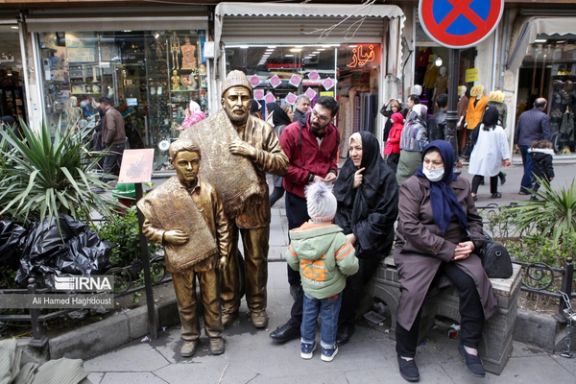
Hassan Sadeghi, the head of the Union of Veteran Workers, has predicted a 67% inflation rate in the coming year (beginning March 20) as the economy spirals downward.

Hassan Sadeghi, the head of the Union of Veteran Workers, has predicted a 67% inflation rate in the coming year (beginning March 20) as the economy spirals downward.
He warned of the likelihood of intensified protests as a result of the economic crisis unless salaries are increased and policies more suited to Iran are implemented.
"In the past year, the prices of consumer goods in Iran have skyrocketed several times, but wages have remained stagnant,” he pointed out as more and more Iranians fall below the poverty line.
In a bold statement, Sadeghi blamed government inefficiency. "This year, they [the government] have budgeted based on taxation, so people are bracing for a 67% inflation. This is while even if wages are doubled, it will have no effect on reducing inflation."
Furthermore, Sadeghi accused the government of “copy paste versions” of IMF policies without considering Iran's unique economic challenges.
"They don't care about the principle that we are a third-world country and our people earn in rials but spend in dollars. The government should not implement IMF policies with Iran's flawed and inefficient economic structure,” he added.
Iran's inflation trends have been on a rise in recent years, with rates soaring from around 10% in 2016 to nearly 50% in 2023.

Iran may be attempting cyberattacks on US water infrastructure, the Biden administration warned state governors Tuesday, in yet another sign that US deterrence is inadequate to limit the Iranian regime's aggression beyond its borders.
In a letter bearing the names of National Security adviser Jake Sullivan and Environmental Protection Agency administrator Michael Regan asked governors to help the administration take measures to “secure water systems against the increasing risks from and consequences of these attacks.”
In the past few years, Iran has grown more aggressive in its relations with the United States, targeting American forces and bases through its proxies in the Middle East, and even plotting to assassinate former US officials on American soil.
Targeting water infrastructure is perhaps more brazen than all other actions, as it affects not just the armed forces or politicians, but ordinary Americans.
"Disabling cyberattacks are striking water and wastewater systems throughout the United States,” Sullivan and Regan wrote. “These attacks have the potential to disrupt the critical lifeline of clean and safe drinking water, as well as impose significant costs on affected communities."
The warning letter –made public Tuesday– may suggest that the administration perceives the threat to be serious and substantive. Hackers associated with Iran and China have already attacked water systems, according to Sullivan and Regan
The letter notes that Iran’s Revolutionary Guards (IRGC) “has targeted and disabled a common type of operational technology used at water facilities where the facility had neglected to change a default manufacturer password."
The letter doesn’t have much more on the specifics of those attacks, not even their nature . But it does offer an overview of the relationship between the Biden administration and the Iranian regime, which seems to be emboldened enough to attempt such an attack, potentially harming a large number of Americans on American soil.
"Drinking water and wastewater systems are a lifeline for communities, but many systems have not adopted important cybersecurity practices to thwart potential cyberattacks," Regan said in a press release announcing a virtual meeting on the subject for Thursday.
“We need your support to ensure that all water systems in your state comprehensively assess their current cyber security practices to identify any significant vulnerabilities,” Sullivan and Regan wrote in their letter to state governors.
They also demanded each state to exercise plans to prepare and recover from a potential cyber incident. The water system in the US is known to be vulnerable, lacking proper funding and facing staffing shortages.
According to Bloomberg, hackers related to the Iranian regime attacked Israeli-made digital controls in the water industries in the US last November, affecting several states without affecting water supply.
Many in Washington blame the Biden administration for not confronting Iran in a meaningful way that would establish deterrence. President Biden and his team have made it clear on several occasions, however, that they don’t want escalation with Iran, allowing the IRGC and its regional allies to plot with not much to fear.
It remains to be seen how this policy changes –if at all– during the 2024 presidential campaign and afterwards.

The United States on Wednesday imposed new sanctions on three procurement networks that are supporting Iran’s ballistic missile, nuclear and defense programs, the Treasury Department said in a statement.
It said the networks — based in Iran, Turkey, Oman and Germany – had procured carbon fiber, epoxy resins and other missile-applicable goods.
“Through complex covert procurement networks, Iran seeks to supply rogue actors around the world with weapons systems that fuel conflict and risk countless civilian lives,” said Brian Nelson, undersecretary of the Treasury for terrorism and financial intelligence. “The United States will continue to use our tools to disrupt these networks and hold accountable those countries that would help proliferate Iran’s drones and missiles.”
Germany-based dual Iranian-German national Maziar Karimi has procured epoxy resin and other items for Iran’s IRGC ASF SSJO using a complex web of intermediaries and front companies, the Treasury said. Karimi has used Oman-based Mazaya Alardh Aldhabia LLC (MAA) as a front company to facilitate procurements for Iranian defense end-users, including the IRGC ASF SSJO and Iran’s Ministry of Defense and Armed Forces Logistics (MODAFL).
Turkey-based company Gokler Dis Ticaret Limited Sirketi has facilitated procurements of carbon fiber and solvents used in the production of carbon fiber for Iran’s MODAFL and its subsidiaries. Additionally, Rostam Shahmari Ghojeh Biklo, Pishro Mobtaker Peyvand (PMP), and Mitra Inanlu were involved in the procurement of proliferation-sensitive material for proscribed elements of Iran’s nuclear and other military weapons programs through various cover companies, including `Alborz Organic Materials Engineering Company.
Last month, the Treasury announced punitive measures targeting Iran’s ballistic missile and drone procurement programs as Washington looked to increase pressure on Tehran, whose proxies in Iraq, Lebanon, Syria, Yemen and the Gaza Strip have attacked US and Israeli targets.
(With reporting by Reuters)

President Joe Biden and his wife Jill, have extended greetings for Nowruz, emphasizing its growing significance within American culture.
The President noted the significance of the festival for expat Iranian communities across the United States who have turned the celebration into “a joyful part of American culture”. Around half a million to a million expats now live in the US, the largest in the world outside Iran.
Addressing the challenges faced by many this year, President Biden emphasized the importance of hope, stating, “the United States will continue to stand with the courageous women of Iran, who are fighting for their freedoms. And together with our partners, we will hold Iranian officials to account for denying fundamental human rights.”
Secretary of State Antony Blinken also joined in the Nowruz festivities, posting a picture of the Haft-Seen spread and expressing his wishes, saying, “Happy Nowruz to all celebrating the arrival of spring and new beginnings. May we cherish the bonds of family and the promise of a brighter tomorrow.”
Nowruz, celebrated across Iran, Afghanistan, Central Asia, and parts of South Asia, holds deep cultural significance as it welcomes the spring season and the New Year in the Persian calendar.
Nowruz is a cultural event marked by age-old rituals like the Haft-Seen table arrangement and joyful gatherings.
Reports affirm that Nowruz transcends regional boundaries, uniting people in celebration irrespective of their religious or ethnic backgrounds.
The festivity has been recognized as a UNESCO Intangible Cultural Heritage.

Iranian opposition figures, dissidents, and families of perished protesters have issued Norouz messages, expressing hope for the end of “the dark age” of the Islamic Republic.
Their defiant statements and widespread criticism of the clerical government stand in contrast to far-fetched claims by Supreme Leader Ali Khamenei and other officials of having been able to control inflation and make progress on various fronts.
Families of victims commemorated Norouz (Nowruz) by honoring the memory of those killed by security forces, gathering at the graves of their loved ones and issuing messages calling for resistance and perseverance for freedom and justice in Iran.
The mother of Reza Moazami Goudarzi, one of the victims of the November 2019 protests, wrote on Instagram that she is celebrating Norouz in memory of all the heroes who have sacrificed their lives for freedom during 45 years of Islamic rule. Goudarzi was shot in the back by security forces in November 2019 in Andisheh city, near the capital Tehran, and died at the age of 19 because hospital staff refused to treat him in fear of government reprisal.
Regime’s security forces and vigilante gunmen killed at least 1,500 citizens during a week of anti-government protests in 2019.
The father of Mehrshad Shahidi, another victim of the 2022 protests, released a video saying that he will be at his son's grave on Wednesday with other family members to celebrate Norouz.
The parents of Mahsa Zhina Amini, also took to Instagram to welcome the new year by honoring the memory of their daughter. Her death in the custody of morality police in 2022 sparked the "Woman, Life, Freedom" movement and widespread protests in Iran that continue to this day. Taking a metaphorical tone, her parents described spring as "liberation from the tyranny of winter."
Quashing the protests, government forces killed more than 550 people, including 68 children. The mother of Hananeh Kia, one of the victims, wrote in a message how she is longing for her child and expressed hope for "bright days" ahead. Hananeh Kia, 23, was shot and killed by government forces in September 2022, during the first week of the uprising.
Meysam Pirfalak, the father of Kian, a 9-year-old boy who became one of the icons of the anti-regime revolt, also released a video message for Norouz. Kian was shot and killed by government forces in November 2022, while he was in the family car with his parents and younger brother on their way back home in Izeh, in southwestern Iran.
In addition to people in Iran, several opposition figures issued Norouz messages almost with a similar theme, wishing an end to the Islamic Republic and the freedom of the country.
Iran’s exiled prince Reza Pahlavi and his mother, the last queen of Iran Farah Pahlavi, in separate messages, emphasized the importance of Iranian unity and solidarity “to overcome darkness.”
Reza Pahlavi described the new year as a year of pragmatism, “a year of rolling up sleeves of determination and putting on boots of resilience; a year of overcoming obstacles and uniting for solutions; a year of advancing from hope to belief; a year of launching a new plan."
He expressed hope that light will prevail over darkness and Iran will regain its past freedom and glory, saying, “For forty-five years, we have been in our long winter night, but today even the guards of Zahhak (a tyrannical king in Iranian mythology and a metaphor for Ali Khamenei) smell the scent of spring. The echo of Iran's footsteps towards liberation has terrified their dark hearts."

Iran’s Supreme Leader Ali Khamenei referred to the plight of recent flood victims in his New Year address but emphasized that "the most tragic of all was the tragedy that occurred in Gaza – an event that holds great importance in our international affairs. We did not experience anything more tragic than that this year.”
Iran-backed Islamist group Hamas invaded Israel on October 7 and killed 1,200 mostly civilians, taking 240 hostages. Israel's ongoing offensive to dismantle Hamas has resulted in thousands of civilian casualties in Gaza.
Many Iranians, however, oppose the regime’s support for Palestinians and other extraterritorial causes, while Iran is becoming poorer and tens of millions suffer as a result.
Despite the dire economic situation, with inflation hovering at 50 percent and the national currency in freefall, Khamenei claimed there was progress in the country. "If growth in domestic production is pursued in a suitable manner, many of the country’s key economic issues, such as inflation, employment, and the value of our national currency, will be solved in a desirable manner," he said.
Khamenei also designated the new Iranian calendar year as the year of "Surge in production through people's participation." He has been designating slogans for each year in the past 35 years, with most of the slogans focusing on economic growth which has hardly materialized. Iranian officials and organizations try to portray their activities as if they are in line with the Khamenei-designated motto. President Ebrahim Raisi delivered a New Year address, boasting that despite projections, the country's inflation rate did not surpass 100 percent.

Iranian-American astronaut Jasmin Moghbeli shared a glimpse of Norouz (Nowruz) festivities from the International Space Station (ISS) with the traditional Haft-Sin spread.
Moghbeli, who returned to Earth a few days ago via a capsule, captured the photograph during her tenure aboard the ISS.
In an Instagram post, she expressed her initial anticipation of spending Norouz in space, stating, “I brought a Haft-sin with me …thinking I might be there for Nowruz. It would have been unique to celebrate the Persian New Year in space, but I am also very happy to be back home in time to celebrate with my family!”
Norouz, widely known as the Persian New Year, holds cultural importance for millions worldwide. Rooted in ancient Zoroastrian traditions, it symbolizes the onset of spring, embodying themes of renewal, hope, and prosperity. The festivities typically span around two weeks, commencing with the vernal equinox.
Central to Norouz celebrations is the "haft-sin" table, adorned with seven symbolic items representing various facets of life. These items include wheat sprouts symbolizing rebirth, apples signifying beauty and health, and garlic believed to possess medicinal properties and ward off evil spirits.
Beyond the revelry, Norouz serves as a testament to the enduring cultural heritage and resilience of communities that observe it. It is a time for families to come together, reflect on the past year, and embrace the promise of new beginnings.