Jailed Iranian Writer Couple Must be Released, Say 700 Activists

Writers Anisha Asadollahi and her husband Keyvan Mohtadi “do not belong in prison” more than 700 activists have said in a letter calling for the couple’s release.

Writers Anisha Asadollahi and her husband Keyvan Mohtadi “do not belong in prison” more than 700 activists have said in a letter calling for the couple’s release.
The two members of the Iranian Writers Association were arrested in May 2022 on charges of "conspiracy and collusion" against national security.
In a statement issued on Wednesday, union, cultural, and political activists stated: "Keyvan Mohtadi and Anisha Asadollahi are caring and thoughtful individuals who do not belong in prison."
Parastoo Foruhar, artist and writer; Keyvan Samimi, political activist; Esmaeel Abdi, member of teachers union; Mehrangiz Kar, women's rights activist; Reza Khandan Mahabadi, writer and Fereshteh Molavi, translator; are among the signatories.
Asadollahi was sentenced to five years and eight months and Mohtadi to six years in prison.
Despite two years having passed since his arrest, Mohtadi has been denied parole. Asadollahi was temporarily released in August 2022, but returned to Evin prison a year later.
According to the 2023 Freedom to Write Index, Iran retained its position as the second most imprisoned country, following China.
PEN America published its latest report last week, which found that Iranian authorities continue to detain Iranian authors, many of whom are associated with the Woman Life Freedom Movement of 2022.
In September 2022, the regime's crackdown on the Woman Life Freedom movement, sparked by the death of Mahsa Amini, resulted in the deaths of at least 550 Iranians, as well as the arrest of tens of thousands, including scores of journalists.

The latest brutal crackdown enforcing hijab comes on the direct orders of Supreme Leader Ali Khamenei, Tehran’s police chief has revealed.
Abbas Ali Mohammadian hailed the repressive measures – dubbed the "Nour [light] Initiative" - as "successful" amid increasing reports of violence committed by morality police agents against women in Iran's cities.
"After the Supreme Leader's directive, the police put this project on their agenda," Mohammadian said on Wednesday.
During a meeting with other police staff, he suggested they have "more patience" and work harder to accomplish their mission "better" without providing details on what that means.
Supreme Leader Ali Khamenei has repeatedly stated that ignoring the hijab is a red line that should not be crossed.
In his speech in early April, he described hijab defiance as "an imposed challenge". He said "the enemies" aimed to revert women's status to pre-Islamic Revolution times when their behavior, attitude, and presence were considered unacceptable.
"The issue of hijab has become a challenge and imposed on our country. They imposed this," he stated.
"Today, they are focused on the issue of removing women's hijab, but this is the first step; it is not the last step. This is not their goal. The enemy's goal is to return the country to the state of pre-revolution when scandalous conditions prevailed," he added.
Morality police have been back on the streets since April 13, when the new hijab restrictions took effect. The extortion and abuse of Iranian women at the hands of hijab enforcement officers have caused even some regime supporters and hardliners to criticize the act or, at times, try to absolve Khamenei of responsibility.
Within a week of the new restrictions being enacted, deputy chief of the Office for the Preservation and Publication of the Works of the Leader of the Revolution, Mehdi Fazaeli, stated that the leader had cautioned some officials to refrain from taking any "irregular and spontaneous" actions regarding the hijab.
Mohammad Safari Malekian, a member of Iran’s parliament, was quoted on state news as saying: “Unfortunately, the country has suffered enormous costs due to the ill-considered enforcement of hijab. Distasteful behavior and an excessive amount of pressure on the issue of hijab will not achieve any results.”
Iran International has been informed of severe violence, including brutal physical assault and sexual verbal abuse suffered by many women arrested by the morality police during the latest crackdown.
Social media has been flooded with videos of Iranian hijab patrol agents forcibly arresting women for not complying with mandatory hijab. On Wednesday, a video surfaced that showed a woman being locked up in a police van as the crackdowns continued.
After the protests following Mahsa Amini's death in the custody of the morality police in 2022, enforcing mandatory hijab became more lax, but there are once again patrols of police, morality vans, and police motorcycle patrols in different Iranian districts.
Amini, a 22-year-old Kurdish-Iranian woman, died from multiple head injuries, triggering the fiercest uprising against the regime since its founding.

The Iranian automobile workers’ leader has protested against a two billion euro deal to buy electric buses from China for Tehran.
The reaction by the head of the Iranian Automobile Workers Union (IAWU) on Thursday came after the capital’s authority agreed the contract with a Chinese firm.
Mojtaba Hajizadeh branded the move an "insult to domestic production" and explained that it was unjustifiable financially because "domestic vehicles and their spare parts are much cheaper than imported models."
He told state broadcaster ILNA that they could not compete with China because of the leverage Beijing enjoys, particularly including its "veto power" in the political arena.
The news of the vast contract with China for buses, other transport and traffic surveillance equipment has been met with a massive backlash even from officials in the past few days.
Tehran city councilors and the media have called for greater transparency, but details of the contract remain undisclosed.
Jafar Tashakori Hashemi, a member of the Tehran City Council, said on Monday: "This is a violation of the municipality's work. As far as I know, bus purchases are not a matter of national security, so we should be able to view the actual contract."
The contract signed by Mayor Alireza Zakani is expected to be funded by proceeds from Iranian oil exports to China, and funds that have accumulated in China while US sanctions have been in effect.
Zakani confirmed that he had signed several agreements during his January visit to China.

Seven crew members on a Portuguese-flagged ship that was illegally seized by Iran almost a month ago in the Persian Gulf have been released.
The MSC Aries with 25 personnel on board was intercepted by Iran's Revolutionary Guard Corps (IRGC) in the Strait of Hormuz on April 13 amidst heightened tensions with Israel.
Five Indians, a Filipino, and an Estonian have now been released, according to a statement from Portugal’s foreign ministry.
The statement added that 17 crew members remained aboard following the release of the seven crew members and the earlier release of one other.
According to the IRGC, the MSC Aries violated maritime laws and was seized because it was associated with Israel, the country's archenemy.
MSC has leased the ship from Gortal Shipping, which is connected to Zodiac Maritime, which Israeli businessman Eyal Ofer partly owns.
This seizure coincided with an escalation in regional tensions, occurring on the same day that Iran launched its first direct attack on Israel and just a few days after a suspected Israeli airstrike on Damascus.
“Portugal will continue to make every effort to ensure that these international obligations are fully complied with,” Portugal’s foreign ministry statement read.

Authorities are increasing pressure on Iran’s medical community compelling female health workers to abide by hijab rules, including barring them from medical conferences if their clothing is not deemed Islamic enough.
Female participants of an annual medical conference were barred from entering the annual surgeon’s conference in Tehran on Monday, with several forced to buy “acceptable” clothing, have “appropriate” clothing delivered by family members, or return home to change.
The 45th conference of the Iranian Association of Surgeons, a non-governmental organization, is currently ongoing at the Medical Sciences University of Iran.
The 'reformist' Etemad news outlet reported that an official of the university’s security and a female agent were stationed in a small room at the gate of the conference hall to inspect the outfits of all female participants.
They were observed preventing women from entering if their coats (Manteau in Persian) were deemed short or tight-fitting, and if their trousers did not cover their ankles.
Only after changing into what was considered acceptable by the inspectors, could female participants enter the conference hall, according to Etemad’s reporter who was present at the conference.
According to the same reporter, one of the surgeons had to wear a male colleague's oversized jacket, while another, who had traveled from the southern city of Ahwaz to Tehran, had to hire a cab to go to a nearby shopping center to buy an acceptable Manteau.
A third doctor had to call her family to bring her another Manteau, the report said. Additionally, one female participant mentioned being instructed to slide her trousers down from her waist to cover her ankles.
Participants told Etemad that in some cases the chairmen of the gathering’s specialized groups had to leave the meetings to plead with the hijab inspectors to allow members to enter.
Participants in the conference told Etemad that hijab surveillance this year was unprecedented in the past two decades.
There has also been an uproar in the media and social media in the past few days over the statement of Heidar Mohammadi, head of the Health Ministry’s Food and Drug Administration (IFDA), who recently said that the “hijab [observance] status” at pharmacies would be a deciding factor in allocation of government-rationed medicine and medical supplies to them.
Dress code directives have been communicated to all pharmacies but “some anomalies” are being reported to the authorities, Mohammadi was reported as saying Monday.
“The matter of compliance with norms [set by the government] is one of the things that are considered in cases such as allocation of pharmacy quotas. If a pharmacy does not comply with the norms, a warning will be given at first, and if the warning is not heeded, preventive measures will be implemented against the offending pharmacy. If the preventive measures are not fruitful either, the violators will be referred to the legal authorities,” he added.
This could refer both to hijab observance by pharmacy staff and customers because authorities insist that all businesses are responsible for their customers’ hijab abidance and have on many occasions shut them down for serving unveiled women.
The Public Relations of the FDA consequently claimed in a statement that Mohammadi’s remarks were wrongly interpreted. The statement accused “hostile media and people” of taking advantage of the “mistake” to “assail religious beliefs”. Despite official state media claims, the statement did not in any terms deny the connection between hijab observance and allocation of rationed medicines to pharmacies.
In December 2023, another controversy regarding hijab and healthcare erupted in Iran after hardliners demanded specifically designed gowns conforming to Sharia rules to be made compulsory in hospitals and operating theaters.
Mohammad-Hossein Taheri-Akerdi, the secretary of a state body responsible for promotion of Islamic standards, whose main concern has always been promotion of hijab, said at the time that twelve versions of Islamic surgical gowns had been designed for female patients claiming that the standard hospital clothing violated women’s “dignity”.
Around the same time dental surgeon and university lecturer, Dr. Fatemeh Rejaei-Rad, was expelled from Amol University of Medical Sciences and lost her medical license for not wearing the hijab at an official event.
The punitive measures against Rajaei-Rad followed after she climbed the stage to accept a Best Doctor Award at a ceremony in the city of Amol without wearing a headscarf.
Three managers from the health department were also sacked for perceived failure to react to Rajaei-Rad's presence without a hijab during the ceremony.
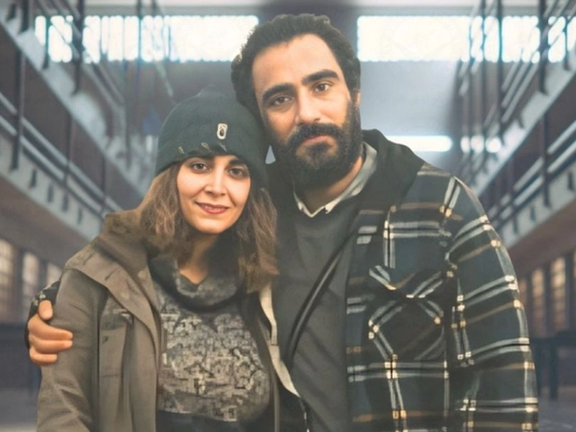
Iran’s economy is struggling as sanctions bite hard, the Supreme Leader’s chief of staff has said in a rare admission by the regime.
In unusually frank remarks, Gholamhossein Mohammadi Golpayegani said: "We are facing difficulties due to sanctions; however, the government will find a way to overcome these problems."
His comments to Iranian media on Friday come amid grim data on the state of the economy. The Central Bank of Iran (CBI) last month reported a 52.3% inflation rate for 2023, and there are widespread shortages including of gasoline despite the country’s major oil resources.
The sanctions are being enforced against Iran because of its nuclear weapons programme and support for terror groups, but Supreme Leader Ali Khamenei and his loyalists have been reluctant to acknowledge the strain caused to the economy. Instead, they claim the sanctions are opportunities for growth and development and could foster national unity.
"Weapon developments is an example of turning sanctions into opportunities," Khamenei stated during a speech in April. "Sanctions cannot impact Iranians because they need no external help."
Inflationary pressures have been exacerbated by the plummeting value of the Iranian currency. Over the decades, devaluations of the rial have caused millions of Iranians to fall into poverty.
The recent foreign policy decisions of the Islamic Republic have made things substantially more difficult for the economy. The foreign exchange market in Tehran witnessed an unprecedented surge during the first two weeks of April, with the dollar briefly reaching 700,000 rials amid worsening tensions between Iran and Israel. In 1978, the rial was valued at 70 rials per dollar.
Inflation has eroded the middle class, with tens of millions of people now living on roughly $200 a month, far below what is required to maintain a middle-class lifestyle.