Iranian Activist in Critical Condition amid Hunger Strike in Evin Prison
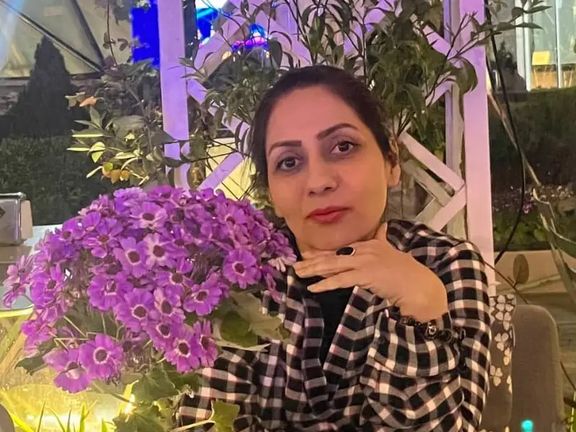
Narges Mansouri, a 46-year-old Iranian labor activist, is in a critical condition on the twentieth day of her combined hunger and medication strike at Evin Prison in Tehran.

Narges Mansouri, a 46-year-old Iranian labor activist, is in a critical condition on the twentieth day of her combined hunger and medication strike at Evin Prison in Tehran.
Medical reports have highlighted severe complications including kidney damage, neurological issues, and an elevated risk of cardiac arrest due to her ongoing strike.
A source close to Mansouri's family disclosed to Iran International that the prison's medical staff have described her condition as "dangerous".
The activist began her strike on April 23 to protest the neglect of her legal case and the financial demands made by the court which threatens to seize her mother's home unless a payment of 1.5 billion rials (about $2,500) is made. She is also demanding her own release.
On April 29, the situation became publicly known through the Instagram page of Narges Mohammadi, another imprisoned human rights activist at Evin, who highlighted the severity of Mansouri's condition and her ongoing strike.
Mansouri is renowned for her activism as part of the Syndicate of Workers of Tehran and Suburbs Bus Company. She was among 14 women who, in 2019, demanded the resignation of Ali Khamenei, leader of the Islamic Republic. The act led to her arrest, and she was sentenced to five years for "assembly and collusion against national security" and an additional year for "propaganda activities against the system."
Her defiance against the strictures of the Islamic Republic continued even after her arrest.
In recent decades, many political prisoners have suffered from various diseases and serious injuries due to their protest hunger strikes in prison, and some have also lost their lives.

Iranian dissident filmmaker Mohammad Rasoulof has fled Iran, escaping on foot through rugged mountainous borders after receiving an eight-year prison sentence for his film about Iran’s recent uprising.
In a statement released Monday, the artist said: “I arrived in Europe a few days ago after a long and complicated journey. About a month ago, my lawyers informed me that my eight-year prison sentence was confirmed in the court of appeal and would be implemented on short notice.
“Knowing that the news of my new film would be revealed very soon, I knew that without a doubt, a new sentence would be added to these eight years. I didn’t have much time to make a decision. I had to choose between prison and leaving Iran. With a heavy heart, I chose exile. The Islamic Republic confiscated my passport in September 2017. Therefore, I had to leave Iran secretly.”
Rasoulof’s film, The Seed of The Sacred Fig, delves into the protest movements in Iran following the death of Mahsa Amini in 2022. Amini's death in custody, allegedly for not adhering to hijab, ignited widespread protests across Iran.
Rasoulof emphasized that the global cinema community needs to actively support filmmakers who tackle sensitive topics. He advocated for a vocal and unequivocal defense of freedom of speech. According to Rasoulof, filmmakers who bravely resist censorship, rather than comply with it, find great encouragement in the backing of international film organizations. Drawing from his own experiences, he noted that such support is crucial and can prove invaluable in enabling them to persist with their work.
In an Instagram post, Rasoulof also declared, "From now on, I'll be one of the millions of Iranians living abroad who are impatiently waiting to bury you and your oppression system in the dustbin of history."
Mohammad Mehdi Esmaeili, Iran's Culture Minister, on Monday called the film “illegal”. The legal repercussions for Rasoulof, upheld on appeal, include imprisonment, lashes, a fine, and property confiscation.
The crackdown has not only targeted Rasoulof, a long-time dissident hated by the authorities, but also involved the film’s crew, some of whom have faced interrogation and travel bans.
Rasoulof has been restricted from leaving Iran since 2017 and was incarcerated from July 2022 until February 2023. He was released as part of an alleged mass amnesty in response to extensive protests throughout Iran.
Shortly after regaining his freedom, Rasoulof was informed of a new legal case against him related to his film There Is No Evil (2020), which, in his absence, secured the Golden Bear at the Berlin International Film Festival.
A familiar figure at the Cannes Film Festival, Rasoulof's previous works including Goodbye (2011), Manuscripts Don’t Burn (2013), and A Man Of Integrity (2017) have all been showcased there, each film critically examining the impacts of authoritarian governance.
Due to potential backlash from the Iranian authorities, the identities of the cast and crew, along with the plot and script details of his latest film, remain confidential.

British Prime Minister Rishi Sunak underscored the escalating threats to Britain posed by what he termed the "axis of authoritarian states," including Iran.
In a major speech on Monday, he named Russia, China, Iran, and North Korea as countries working to “undermine” the UK’s values and warned that the threat is not distant, with hostile states already operating within the UK.
"These are not far away problems. Iranian proxies are firing on British ships in the Red Sea, disrupting goods destined for our high street," Sunak added, referring to the blockade initiated in November.
Iran-backed Houthi rebels have intensified their attacks on shipping lanes begun in November in support of Iran-backed Hamas in Gaza, specifically targeting vessels linked to Israel and its key allies, such as the United States and Britain. They claim to be forcing Israel into a ceasefire but have killed several non-Israeli seamen and taken dozens more hostage.
Moreover, speaking about conflicts around the world including the Middle East, Sunak highlighted Iran’s military and drone attack on Israel on April 13.
“War rages, too, in the Middle East as Israel defends itself not only against the terrorists of Hamas but a barrage of missiles fired – for the first time – directly from Iran,” Sunak stated.
The attack came in response to an alleged Israeli airstrike on Iran’s consulate in Damascus in which one senior Quds force commander was assassinated along with several senior IRGC figures.
Last year the chief of British security service MI5 named Iran as one of the UK’s biggest state threats. Attacks of Iran International journalists have taken place multiple times, mostly foiled but endangering the reporting team on British soil.

Kimia Alizadeh, an Iranian-born taekwondo athlete, clinched a gold medal at the 2024 European Championships in Belgrade on Sunday, marking her first competition under the Bulgarian flag.
Competing in the women’s 62kg weight class, Alizadeh defeated Great Britain’s Aaliyah Powell, a world youth champion, in a closely contested final, winning 2 rounds to 1.
Recently granted Bulgarian citizenship and having received her passport just a month ago, Alizadeh's triumph in Belgrade carries significant weight as she is now poised to represent Bulgaria at the forthcoming 2024 Paris Olympics.
The athlete's defection was explained in a candid social media post describing the regime's control over her life and career, stating, "I am not a history maker, nor the flag bearer of Iran. I am one of millions of oppressed Iranian women who have been dictated to for years. They controlled my every move, my clothing, and even my words. They used my medals to promote their own agenda."
Her defection is part of a broader trend with around 30 Iranian athletes having sought asylum in other countries in recent years in a range of sports. Factors influencing such decisions include mandatory hijab and a policy prohibiting competition against Israeli athletes.

A top Islamic Revolutionary Guards commander, who was killed in an attack at the Iranian consulate in Syria on April 1, had traveled from Tehran to Damascus via Latakia on the same day to evade Israeli targeting, an investigation by Iran International showed.
Suspected Israeli warplanes bombed Iran's consulate in a strike that killed seven Iranian military advisers, including the Quds Force Commander Mohammad Reza Zahedi.
According to four military and intelligence sources, Zahedi departed from Mehrabad Airport in Tehran at 5 AM aboard an Antonov An-74. He landed at Khmeimim Air Base in Latakia, a Russian facility protected by the S-300 missile defense system.
Delivered to Syria in 2018, the S-300 defense system poses challenges for Israeli airstrikes, potentially hindering its aerial capability to strike Iranian targets.
A joint investigation with Intelli Times showed that Zahedi arrived at Khmeimim Air Base at 11 AM and flew to Damascus on the same plane. Iran International could not find out which airport in Damascus Zahedi traveled to. According to intelligence sources, the Commander landed either at Mezzeh Military Base or Bly around 4:45 PM. The Mezzeh base is a five-minute drive from Iran’s consulate building.

Known as Abu Mahdi, Brigadier General Mohammad Reza Zahedi was the highest-ranking Iranian military official to be killed since IRGC General Qasem Soleimani was assassinated in January 2020.
Zahedi was a senior commander in the Quds Force, the IRGC’s clandestine foreign operations wing, which is designated as a terrorist entity by countries such as the US and Canada. His pivotal role in Iran's support of “terrorism”, including backing groups like Hamas and Hezbollah, led to him being subjected to US sanctions.
Last year, information obtained by Iran International showed that Mohammad Reza Zahedi, among his many significant roles in Iranian foreign operations, was also supervising the deployment of air defense equipment in Syria.
On the evening of March 31, Zahedi was in his hometown of Isfahan in central Iran. His friend Masih Tawanger reportedly told him that he was worried for his safety.
Zahedi responded with a laugh, recounting a similar warning he had given to Hezbollah's senior figure, Imad Mughniyeh, before Mughniyeh was assassinated in 2008. Despite the warning, Zahedi remarked that he would proceed with his journey to Syria the next day.
Iranian news agencies reported that following this meeting, Zahedi flew to Mashhad to visit the tomb of the 8th Shiite Imam. There, he informed Supreme Leader Khamenei’s close associate, Ahmad Marvi, about his intention to travel to Syria
According to information available to Iran International, Zahedi then traveled to Tehran, arriving at Mehrabad Airport at 1 AM – where the IRGC has a dedicated terminal to transfer weapons to Syria and Iraq.
This terminal is managed under the supervision of the Quds Force Unit 190 of the IRGC, led by Behnam Shahriari, another US-sanctioned commander.
Iran International learned that Zahedi reportedly used an Antonov An-74 aircraft for his journey from Tehran to Latakia port in northwest Syria.
This revelation contrasts with the earlier assumption that he had headed directly to Damascus.
The Antonov An-74 is operated by Yas Air, which the UN Security Council has identified as an entity affiliated with IRGC.
Moreover, in 2012, the US sanctioned the cargo airline since it was used to transport illicit cargo, including weapons and IRGC Quds Force personnel, under the cover of humanitarian aid to the Levant.
The weapons that are brought with Antonov planes are then given to Hezbollah's Unit 4400, previously called Unit 108, which is responsible for arms shipments. The unit is operated under Muhammad Ja’far Qasir, known as Shaykh Salah, a key Hezbollah financier. The US is offering a reward of up to $10 million for information about him.
Zahedi’s plane landed at Khmeimim Air Base, the Russian base whose skies are protected by the S-300 missile defense system, protected from Israeli strikes.
From the Khmeimim Air Base, which also has a domestic flight terminal, Zahedi would fly to Damascus in the same Antonov An-74 plane, though he did not land at the international airport.
Suspected Israeli warplanes attacked the consular building adjacent to the main Iran embassy complex in Damascus' upscale Mezzeh district at 5 PM on April 1.

Zahedi, along with his deputy, General Mohammad Hadi Haji Rahimi, and five other IRGC forces, who were later identified as Hossein Amanollahi, Mehdi Jalalati, Mohsen Sedaghat, Ali Agha-Babaei, and Ali Salehi Rouzbahani were killed.
Iran responded over two weeks later, launching an unprecedented round of 300 missiles and combat drones in retaliation against Israel.
Israeli officials said that over 99% of Iran’s projectiles and missiles used in the attack were intercepted.
In retaliation, an Israeli strike targeted the air defense system at Isfahan's 8th Shekari Air Base six days later, resulting in no reported casualties.
While reports showed that an essential flap-lid radar had been "damaged or destroyed" by the attack, Iran replaced destroyed radar installation within hours of the attack to make it appear as though the damage had been minimal
Iran, according to reports, downplayed the severity of Israel’s strike to “save face” – and refrained from retaliating again.

Former Iranian President Hassan Rouhani criticized the government's approach to the Joint Comprehensive Plan of Action (JCPOA).
In a letter to the Guardian Council, he asserted that the Raisi Administration "neither has the capability to withdraw from the JCPOA nor the will to revive it."
Rouhani also lamented that the opportunity for reviving the JCPOA at the end of his term was thwarted by "the parliament's sabotage and the support of the Guardian Council."
President Ebrahim Raisi has recently echoed sentiments against expanding the nuclear deal by Rouhani, saying “Some wanted to announce in the country that we must reduce the shadow of war, negotiate on our missiles and military capabilities, and put JCPOA 2 and 3 on the table. However, the leadership said, 'What happened to JCPOA 1 that you want to put 2 and 3 on the table, and missiles are not negotiable."
The JCPOA, achieved in Vienna on July 14, 2015, involves Iran and major world powers including the five permanent members of the United Nations Security Council. Under the agreement, Iran consented to reduce its nuclear capabilities in exchange for relief from economic sanctions.
However, the US withdrawal from the agreement in 2018 under President Donald Trump and the subsequent imposition of sanctions strained relations and crippled Iran’s economy.
Despite international scrutiny and ongoing diplomatic efforts, Iran has continued to enrich uranium up to 60-percent purity, a level that many outside observers argue has potential military applications.
On Tuesday, Rafael Grossi, the chief of the United Nations atomic watchdog, criticized Tehran for its "completely unsatisfactory" cooperation after his recent visit to Iran. During his trip, he had pressed Iranian leaders to implement "concrete" steps to resolve issues surrounding their nuclear program.
It came weeks after Grossi said Iran was dangerously close to making nuclear weapons.