Former IRGC minister details Iran’s global assassination campaign
Iran’s first minister of the Islamic Revolutionary Guard Corps (IRGC) admitted to overseeing assassinations of opposition figures abroad, revealing new details about Tehran's decades-long campaign of targeted killings.
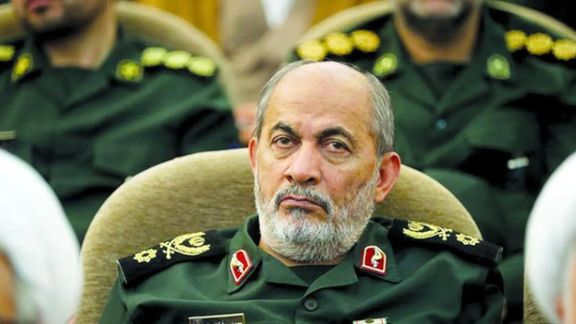
In an interview with the Tehran-based news website Didban Iran, Mohsen Rafiqdoust said he personally oversaw operations against exiled dissidents, including former Prime Minister Shapour Bakhtiar, military officials Gholam-Ali Oveissi and Shahriar Shafiq, and dissident artist Fereydoun Farrokhzad.
“The Basque separatist group in Spain carried out these assassinations for us. We paid them, and they conducted the killings on our behalf,” Rafiqdoust said.
Mohsen Rafiqdoust
He recounted his role in the 1991 assassination of Bakhtiar in Paris, saying he supervised Anis Naccache, a Lebanese operative who had previously attempted to kill Bakhtiar in 1980 but failed.
According to Rafiqdoust, he traveled to France to negotiate Naccache’s release, warning French officials: “If after two weeks he is not freed and one of your embassies is bombed or a plane hijacked, don’t complain.”
Naccache himself had previously said in a 2008 interview with the IRGC-affiliated Fars News Agency that Iran’s then Leader Ruhollah Khomeini personally approved the order to kill Bakhtiar.
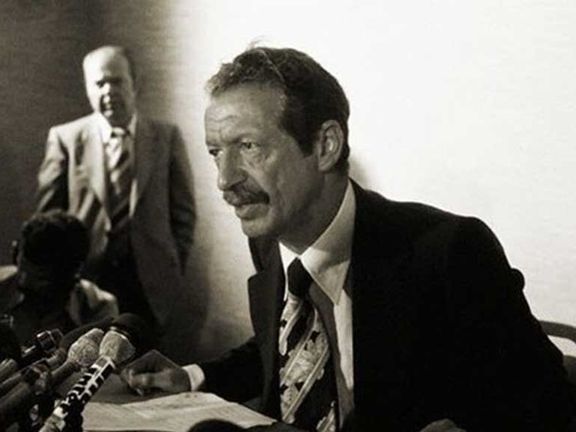
Shapour Bakhtiar, the last prime minister of Iran under the last shah of Iran Mohammad Reza Pahlavi
“The Islamic Revolutionary Court issued his death sentence, and Khomeini endorsed it. I told the IRGC members that I had operational experience and would carry it out,” Naccache said.
The Iranian government has been implicated in multiple assassinations over the past four decades. In 1984, the Chief Commander of the Imperial Iranian Armed Forces Gholam-Ali Oveissi and his brother were shot dead in Paris.
The Lebanese group Islamic Jihad, later linked to Hezbollah, claimed responsibility for the attack. The group’s leader, Imad Mughniyeh, played a role in several international terrorist operations, including the 1983 bombing of the US Embassy in Beirut and attacks against Israeli targets in Argentina.
Iran’s campaign of assassinations began in 1979 with the killing of Iranian Imperial Navy Captain Shahriar Shafiq in Paris and has continued for decades.
A report published in December by the Abdorrahman Boroumand Center documented 862 extrajudicial executions and 124 attempted kidnappings or assassinations by the Iranian state.
The campaign has escalated in recent years. A Reuters investigation in 2024, citing court documents and statements from Western governments, reported that Iran had been involved in at least 33 assassination or kidnapping attempts since 2020.
Iran’s reach has extended to the United States. Washington has accused Tehran of orchestrating at least five assassination plots on American soil since 2020.
Journalist and activist Masih Alinejad was among those targeted, with US authorities uncovering Iranian-backed attempts to kill her through hired operatives.
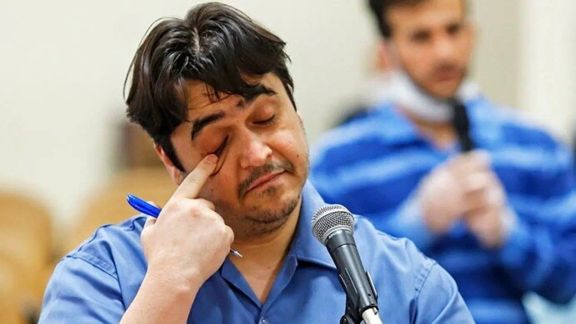
In one of the most high-profile cases, Iranian security forces abducted journalist Ruhollah Zam in Iraq and transferred him to Iran, where he was executed in 2020.
Iran’s targets have not been limited to its own dissidents. The US Department of Justice recently disclosed details of an Iranian plot to assassinate President Donald Trump before the 2024 election.
A federal indictment in Manhattan named Farhad Shakari, a 51-year-old Iranian national, as the lead operative, along with two American accomplices.
The US government has long designated Iran as a leading state sponsor of terrorism, imposing extensive sanctions in response to its activities.
It is not only Iranian dissidents that have been the targets of Iranian plots. The head of Israel's Mossad, David Barnea, said in 2023 that in the last year, there had been 27 plots foiled targeting Israelis in Europe, Africa, Southeast Asia, and South America.
In Israel alone during 2024, Iran-backed plots soared by 400% with 13 cases and 27 Israelis indicted.
The Director General of the UK's MI5 also recently stated that since the start of 2022 the UK has responded to 20 Iran-backed plots, presenting potentially lethal threats to British citizens and UK residents, directly blaming the IRGC.
"The Iranian Intelligence Services, which include the Islamic Revolutionary Guard Corps, the IRGC, and the Ministry of Intelligence and Security, or MOIS, direct this damaging activity," a statement earlier this month said.
"But often, rather than working directly on UK shores, they use criminal proxies to do their bidding. This helps to obfuscate their involvement, while they sit safely ensconced in Tehran."
MI5 said that Iran is targeting dissidents, media organizations and journalists reporting on the government's "violent oppression".
It also acknowledged the danger posed to Jews and Israelis abroad.
"It is also no secret that there is a long-standing pattern of targeting Jewish and Israeli people internationally by the Iranian Intelligence Services," added the statement. It is clear that these plots are a conscious strategy of the Iranian regime to stifle criticism through intimidation and fear."
On March 8, 1979, tens of thousands of Iranian women took to the streets, demanding the right to choose what to wear on the first International Women’s Day of the post-revolutionary Iran.
The rally that was supposed to be a celebration of women, became the start of a six-day battle against the newly imposed Islamic dress code on them. It was perhaps the earliest sign that the revolution they had fought for had been hijacked.
Only weeks before, many of these same women—students, doctors, lawyers, nurses, teachers, activists—had marched against the dictatorial rule of Mohammad Reza Shah Pahlavi, fighting for freedom, democracy, and equality, unaware that they would become the first victims of Iran’s Islamization led by Ayatollah Ruhollah Khomeini.
On March 7, 1979, Khomeini decreed that all women working in government offices must heed Islamic diktats and cover their hair. The following day, women arriving at work unveiled were turned away.
Many felt this was not about clothes, but control. They saw it as an attempt to erase women from public life. And they fought back.
“We did not rise to go back,” thousands chanted marching from the University of Tehran toward the Prime Minister’s office. “In the dawn of freedom, women’s rights are missing.”
The peaceful demonstration was met with brute force. Islamist revolutionaries and pro-Khomeini mobs stormed the march with sticks and knives. Dissenting women were beaten and stabbed. They were called enemies of Islam and agents of the West.
But they did not back down.
For six days, they marched through the streets of Tehran, defying the cold, the growing danger, and the bitter sneering of those who dismissed their struggle as secondary to the revolutionary cause.
The dismissive view was by no means limited to Iranian masses. It was shared by many Western intellectuals who, bewitched by the revolution in Iran, ignored or actively justified the repression of the new regime.
Thinkers afar: enablers and allies
While feminists like French philosopher Simone de Beauvoir and American writer Kate Millett stood in solidarity with women in Iran, others like de Beauvoir’s compatriot Michel Foucault helped legitimize the Islamic Republic.
De Beauvoir recognized the Iranian women’s fight as part of the global struggle for gender equality, helping establish the International Committee for Women’s Rights (CIDF) to amplify their voices. Millett traveled to Iran to document their struggle and was arrested and expelled for her efforts.
Foucault also visited Iran but had a wholly different view of the events. He romanticized the revolution, reducing it to a rejection of Western imperialism and ignoring its catastrophic consequences for women and dissidents. He brushed aside human rights concerns as Western biases, a framing that persists in various forms to this date.
Another lasting influence in Western intellectual circles is Palestinian-American philosopher and literary critic Edward Said.
Said’s most influential work, Orientalism, was published a year before the revolution in Iran. He focused on Western narratives about the East. While many of his arguments against colonialism were valid, they were weaponized by Islamists to deflect criticism.
Said, unlike Foucault, never glorified Iran’s transformation. Others used his emphasis on culture, however, to depict forced veiling and gender segregation as cultural differences rather than human rights violations, failing to—or choosing not to— challenge the repression in a meaningful way.
A Legacy of Resistance
Back in Iran, the forced veiling of women was completed and codified in 1983. Those daring to flout the law would be punished by official enforcers or emboldened thugs. The Six-Day Protest of 1979 was defeated.
But it heralded a long fight for equality that’s continued to this date.
In 2022, the world watched as Iranians across Iran took to the streets after a 22-year-old Kurdish woman named Mahsa Amini died in custody, having been detained for not covering her hair fully.
Amini’s tragic death—a state murder by all accounts—ignited the largest uprising against the Islamic Republic. Young men tore down posters of supreme leader Ali Khamenei as young women set their scarves on fire.
Their slogan? “Woman, Life, Freedom.”
The struggle against hijab and gender apartheid is not just an Iranian issue—it is a global human rights fight. Iranian and Afghan women continue to resist, even as the Islamic Republic and the Taliban impose laws aimed at erasing them from public life.
What happened on March 8, 1979, is not just history, it is a warning. Revisiting that eventful day and what has happened in Iran since, may help Western intellectuals and politicians see mandatory hijab for what it is: systemic, religious oppression, not a symbol of cultural relativism.
When enforced by law, hijab is not a cultural practice. It is a means of control. Iranian and Afghan women are calling for solidarity, demanding that the world listen to them rather than the Foucaults of the world.
International Women’s Day is a day to honor those who fought and are fighting for equality. It also has to be a day to reject the view that dismisses their struggle, and enables their oppressors.
Opinion expressed by the author are not necessarily the views of Iran International.
Iran has refused to enter nuclear negotiations with the United States under the conditions set by the current US administration, Lebanese pro-Iranian TV channel Al Mayadeen reported Saturday.
Although the report was published a day after President Donald Trump announced he had sent a letter to Supreme Leader Ali Khamenei, it makes no mention of the message.
The outlet cited an unnamed high-ranking Iranian diplomatic source who said that during his visit to Tehran last month, Russian Foreign Minister Sergey Lavrov expressed Moscow’s willingness to facilitate nuclear negotiations with Washington through diplomatic channels.
Tehran told Lavrov that it would never engage in talks with Washington under the conditions imposed by the Trump administration.
President Trump revealed on Friday that he had sent a letter to Khamenei, offering negotiations while warning of military consequences if talks failed. Speaking to Fox Business Network, Trump said, “There are two ways Iran can be handled: militarily or through a deal. I would prefer to make a deal.”
Iran swiftly dismissed the letter, with an official outlet of the Islamic Revolutionary Guard Corps (IRGC) calling it a psychological operation. Iran’s UN mission in New York also denied receiving any such communication.
Meanwhile, on Thursday, Russian Deputy Foreign Minister Sergei Ryabkov met with Iranian Ambassador Kazem Jalali to discuss international efforts to resolve issues surrounding Iran’s nuclear program, the Russian Foreign Ministry announced on Friday.
According to a Bloomberg report on Tuesday, later confirmed by the Kremlin, Russia has agreed to assist the US in communicating with Iran on various matters, including its nuclear program and support for regional anti-US proxies.
Kremlin spokesman Dmitry Peskov said, "Russia believes that the United States and Iran should resolve all problems through negotiations" and that Moscow "is ready to do everything in its power to achieve this." The report was subsequently picked up by Russian state media.
Last month, prior to Russia's official offer of mediation, Russian Foreign Minister Sergei Lavrov met with Iranian President Masoud Pezeshkian and Foreign Minister Abbas Araghchi in Tehran, where both sides reportedly "aligned their positions" on the 2015 Joint Comprehensive Plan of Action (JCPOA), the nuclear deal that unraveled following the US withdrawal in 2018.
Iranian-American journalist Reza Valizadeh, a former reporter for US-funded Radio Farda, has launched a hunger strike in Evin Prison, protesting what he calls an unjust and rushed legal process that resulted in his 10-year prison sentence.
Valizadeh, who was arrested in September last year after returning to Iran to visit family, was convicted of collaborating with a hostile government—a charge his legal team and international observers have strongly denounced.
In January, an Iranian appeals court upheld his sentence despite his lawyer arguing that the punishment is disproportionate to the alleged crime.
In a message from Evin Prison obtained by Iran International, Valizadeh said his hunger strike is in response to the Iranian judiciary's refusal to review key aspects of his case. He said that until the full scope of issues raised during interrogations and court proceedings are reconsidered, he will continue his protest.
“The public must know that the judicial process for political prisoners in Iran is hasty, lacks thorough examination, and leads to lengthy and unfair sentences,” he wrote.
Valizadeh was initially held in Ward 2A of Evin Prison, a section controlled by the IRGC Intelligence Organization, before being transferred to Ward 209, overseen by the Ministry of Intelligence.
His trial, held under Judge Iman Afshari, was widely criticized for its brevity and lack of due process. He was sentenced to 10 years in prison, two years of internal exile from Tehran and neighboring provinces, and a travel ban.
Currently, he is being held in Ward 8, an area described as an “exile ward” known for its unsanitary and overcrowded conditions. According to sources, lice infestations, lack of medical care, and restricted access to family visits have worsened his situation. Additionally, he has been barred from granting legal representation to his family for handling personal affairs.
Valizadeh’s case has drawn international condemnation, with organizations such as Reporters Without Borders and the Committee to Protect Journalists demanding his immediate release. The US State Department has called his arrest a violation of international law, but Valizadeh has criticized Washington for failing to take effective action beyond issuing statements.
Iran has been accused of hostage diplomacy, detaining foreign and dual nationals under vague security charges to use as leverage in diplomatic negotiations and receiving financial rewards. The European Parliament recently condemned this practice, calling for the release of EU detainees. Rights groups warn that such detentions often lead to prisoner exchanges for Iranians held abroad.
The Islamic Republic will not engage in negotiations with "bullying" powers, Supreme Leader Ali Khamenei said in a speech on Saturday, a day after US President Donald Trump sent him a letter requesting nuclear talks.
Khamenei's official website quoted him as saying, "The insistence of some bullying governments on negotiations is not aimed at resolving issues but rather at asserting dominance and imposing their own demands. The Islamic Republic of Iran will certainly not accept their expectations."
President Trump revealed on Friday that he had sent a letter to Khamenei, offering negotiations while warning of military consequences if talks failed. Speaking to Fox Business Network, Trump said, “There are two ways Iran can be handled: militarily or through a deal. I would prefer to make a deal.”
Many in Iran anticipated Khamenei’s response to President Donald Trump’s letter during his speech at a meeting with top government officials on Saturday afternoon. Although the full text of his speech has not yet been released, but apparently he did not directly address Trump's letter.
Khamenei routinely meets with senior government officials, including the president, every Ramadan. This time, however, the announcement came unusually late on Friday evening Tehran time. This followed Trump’s revelation that he had sent Khamenei a letter offering negotiations on Iran's nuclear program while warning that military intervention was the alternative.
Iran has not officially acknowledged receiving Trump’s letter. On Friday, Tehran’s UN mission in New York stated that Iran had “so far” not received any such correspondence.
Speculation over Russian mediation
Highlighting the mediatory role that Russia is playing between Iran and the US, some Iranian media and pundits have speculated that the letter may have been handed to the Iranian ambassador Kazem Jalali during his meeting with the Russian Deputy Foreign Minister Sergei Ryabkov around midday Tehran time on Friday. Tehran and Moscow both said the meeting was to discuss international efforts to resolve Iran's nuclear program and Tehran-Moscow cooperation.
Hardline media predict no response
Trump sent another letter to Khamenei in 2019, after unilaterally withdrawing from the 2015 nuclear deal. Khamenei refused to accept the letter, delivered by then-Japanese Prime Minister Shinzo Abe, and insisted that Trump was untrustworthy.
An editorial in the Revolutionary Guards (IRGC) linked Javan newspaper on Saturday dismissed Trump’s latest letter as “a segment of America’s propaganda puzzle”. Referring to Khamenei’s refusal to accept Trump’s 2019 letter, the editorial suggested that Iran would once again ignore Trump’s message. “Based on the Islamic Republic’s polices; one can predict Iran's response to the letter. There will be no reply, assuming the letter is allowed to be delivered,” the article stated.
The ultra-hardliner Kayhan newspaper similarly referenced the 2019 incident and Khamenei’s rejection of the idea of negotiations with the United States in a speech in February. In its editorial on Saturday, Kayhan argued that Trump’s primary goals was to improve his own image and shift blame for lack of diplomacy onto Iran.
Backchannel diplomacy
Iran and the United States typically communicate through backchannels or intermediaries, such as Oman, which has on several occasions facilitated meetings between officials of the two countries or relayed messages.
Former President Barack Obama reportedly sent multiple letters to Khamenei between 2009 and 2015, discussing topics such as diplomacy, the nuclear deal (JCPOA), and potential cooperation against ISIS. However, there are no reports that Khamenei ever responded in writing to any of these letters.
The ceasefire between Turkey and an outlawed Kurdish group could further empower Ankara to fill a regional power vacuum after Tehran and its allies were battered in warfare with Israel, foreign relations expert Henri Barkey told Eye for Iran.
“Iran is very alone at the moment” said Barkey, an adjunct senior fellow for Middle East studies at the Council on Foreign Relations in Washington DC.
The push for a resolution to a decades-old insurgency by the Kurdish Workers Party against the Turkish state comes as the Middle East's tectonic plates shift and global alliances are in flux as President Donald Trump cast upends US commitments.
"We have a completely changed strategic situation in the Middle East," said Barkey, "no one at the moment has any dominance in the Middle East and it's up for grabs."
"Iran, for the foreseeable will not be able to do what it used to do in the past," added Barkey.
After 15-months of direct combat and proxy warfare pitting Iran against Israel throughout the region, Tehran has come off worse.
It's main ally Hezbollah in Lebanon took a heavy toll from an Israeli ground invasion and air strikes. Most notably, Iran's oldest ally in Syria's Assad dynasty was toppled by Sunni Islamist rebels closer to Turkey, giving Ankara a new regional ward.
How Turkey benefits from peace with the PKK
The jailed leader of the PKK Abdullah Ocalan called on its members to lay down arms in an address from his island prison near Istanbul on Feb. 27.
That announcement was followed by a ceasefire days later which ended 40 years of armed struggle for a Kurdish homeland.
While President Recep Tayyip Erdogan's rapprochement is largely driven by domestic political considerations to create a new constitution enabling him to run for a third presidential term in 2028, Turkey stands to likely make gains in Northern Iraq, where many PKK fighters are stationed.
Turkey’s gains may be Iran’s losses.
“Both Turkey and Iran would like to influence Iraqi Kurds,” said Barkey.
The Turks and PKK making peace formally will help in those efforts to increase influence.
A protester waves a flag bearing a portrait of Abdullah Ocalan, the leader of the Kurdistan Workers Party jailed in Turkey since 1999.
The relationship between Turkey and Iran Barkey characterized as complex, but one in which there are at least cordial ties and a stable border. Both Islamic nations, however, are revisionist with ideals of grandeur.
Turkey's Minister of Foreign Affairs, Hakan Fidan, said in an interview with Al Jazeera Arabic last month that Iran's foreign policy of relying on militias led to more losses than gains.
Shifting tectonic plates
Recent diplomatic tensions between Tehran and Ankara represents a broader shift in the Middle East.
Add to the mix Turkey reportedly offering to send peacekeepers to Ukraine, contingent on the war ending with Russia – and Israel, striking southern Syria and attempting to increase ties with Syrian Kurds.
Israel says it part of a new policy to demilitarize southern Syria, but the new government led by the Hay'at Tahrir al-Sham (HTS) hardline Islamist group which is close to Turkey has denounced Israel.
“The Israelis also are risking by going too far into trying to punish the Syrians, forcing the Syrians, essentially to look for allies,” said Barkey onEye for Iran.
One ally that Damascus will not reach out to is Tehran, maintaining its anti-Islamic republic stance.
“That’s it,” said Barkey on there being zero chance that Iran could reestablish itself in Syria, while Ankara enjoys a close relationship with the new HTS leaders.
“The Syrians and HTS blame Iran for propping Assad in power all these years, that Assad would not have succeeded in staying in power this long, or even winning the civil war if it wasn't for Iranian support.”
Reports: The offer of Turkish peacekeepers in Ukraine
Turkey is not signaling support of Ukraine by offering up peacekeepers, said Barkey.
Rather it's a chance for Erdogan to appear relevant on the world stage. Iran, on the other, despite its relationship with Russia, is irrelevant.
“Before Iran was a very useful if not a direct instrument of the Russians but a useful actor on the international scene because it created so many problems for the United States and its allies,” said Barkey.
Barkey questioned Iran's ability to send ballistic missiles to Russia after significant blows by Israel to its stockpile.
Meanwhile, Russia has positioned itself as a mediator between Washington and Tehran over potential nuclear talks.
"No leader has done more for Russia than Trump, so Moscow could pressure Iran," Barkey told Eye for Iran.
"It is quite possible that the Russians will put some pressure on the Iranians, whether it's real or make believe," said Barkey.
The changing alliances, new world order and the stable unpredictability of Trump, may further destabilize the Islamic Republic while Turkey gains the upper hand in the region.
You can watch the full episode of Eye for Iran with Henri Barkey, an adjunct senior fellow for Middle East studies at the Council on Foreign Relations, on YouTube or you can listen on Spotify, Apple, Amazon, Castbox or any major podcast platform.