Israeli Strike Kills Three Hezbollah Fighters In Lebanon
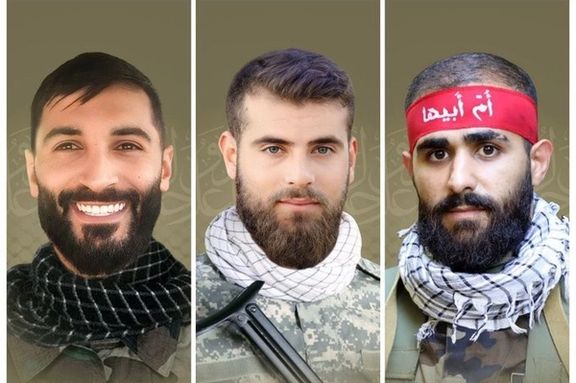
Amid recent escalation of military tensions, an Israeli drone strike in south Lebanon killed three Hezbollah fighters on Saturday.

Amid recent escalation of military tensions, an Israeli drone strike in south Lebanon killed three Hezbollah fighters on Saturday.
According to security sources in Lebanon, the incident unfolded on a coastal road near the town of Naqoura, targeting individuals traveling in a car. The Israeli military has stated that it is currently assessing the reports surrounding the incident.
The fighters have been reportedly identified as Mohammad Ali Ghobris, alias Karballa, hailing from Tyredebba; Mustafa Hussein Salman, known as Al-Hurr, from Majdal Zun; and Ali Abdul Nabi Qassem, alias Siraj, born in Mahrouna—all towns in southern Lebanon.
The strike marks another deadly episode amid ongoing Israeli airstrikes in Lebanon since October, resulting in the deaths of over 200 Hezbollah fighters and approximately 50 civilians. Hezbollah has been launching attacks from Lebanon into Israel that have claimed the lives of twelve Israeli soldiers and five civilians. The escalating violence has forced tens of thousands of Israelis and Lebanese to flee their homes along both sides of the border.
Israel rarely offers detailed information regarding individual strikes conducted within Syria or Lebanon, yet it has consistently affirmed its resolve to thwart Iran's efforts to extend its influence across the region.
Similar to the Palestinian Islamist group Hamas, Hezbollah maintains close ties with Iran. Hezbollah claims that its operations along the border aim to provide solidarity and assistance to Palestinians enduring Israeli attacks in the Gaza Strip.

A suspected Israeli strike hit a villa in Baniyas, Syria believed to have been inhabited by individuals affiliated with Iran-backed militia, A war monitor reported on Friday.
The Syrian Observatory for Human Rights said that three loud explosions were heard in the southern outskirts of Baniyas at dawn, which were caused by what it said were Israeli air strikes. According to Iranian Student News Agency, Reza Zarei, “a military advisor of the Revolutionary Guards,” was Killed in the attack.
Israel has intensified air strikes in recent weeks targeting Iran’s Revolutionary Guard senior personnel and bases, as well as affiliated militia forces in Syria. On Thursday, there were two suspected Israeli attacks, one targeting a truck belonging to the Lebanese Hezbollah that is a major part of the Iranian-led forces in Syria. Israel also hit a Syrian air defense unit that fired at its aircraft.
There were several attacks in late January and early February on IRGC targets in Damascus and elsewhere in Syria, killing several high-ranking Iranian officers.
Iran intervened in the Syrian civil war more than a decade ago to support strongman Bashar al-Assad against his armed opponents. Israel saw the entrenchment of Iranian forces in Syria as a direct threat and began regularly attacking their bases and weapons concentrations from 2017.

Iran has given Hezbollah the go-ahead to escalate attacks along Israel's northern border, according to reports.
The proxy militia in Lebanon backed by Iran is said to be poised to increase its cross-border assaults should it become certain Israel will invade the city of Rafah in the south of Gaza.
Hezbollah and Israeli forces have exchanged fire repeatedly in the months since the Gaza war began following the Hamas attack on Israel on October 7.
However, the Lebanon-based Shia militia have stopped short of all-out conflict with the Israeli Defence Forces (IDF) until now.
According to a report by the Arabic Post on Wednesday, high-level Iranian and Lebanese sources disclosed that Tehran has set conditions for Hezbollah, ordering the group to launch a large-scale attack on Israel only after confirming Israel's intentions to invade Rafah.
A meeting between Hezbollah Secretary-General Hassan Nasrallah and Iran's IRGC Quds Force commander Esmail Qaani was held to discuss “the latest developments,” a source from Iran's Revolutionary Guard revealed to Arabic Post.
Nasrallah reportedly expressed certainty about Israel's intentions to launch an assault on Hezbollah in Lebanon and sought Iran's support in responding effectively. "Nasrallah said that he is completely certain of [Israel's] intention to launch a large-scale attack on Lebanon, and he asked Qaani to give him complete freedom in how he intends to attack," a diplomatic source in Iran disclosed.
The report also highlighted Tehran's disapproval of Hezbollah's recent uncoordinated rocket launch on the northern Israeli city of Safed. The attack, which resulted in civilian and military casualties, led to Iranian calls for Hezbollah to exercise strategic patience.
The escalation in tensions underscores the volatile situation in the region, with fears of broader conflict looming large as Hezbollah gears up for potential retaliation against Israel.

Russia has successfully launched an Iranian satellite into orbit in the latest example of growing ties between the two rogue regimes.
The launch of Pars 1 satellite on a board a Soyuz rocket taking off from the far east Amur region of Russia was announced by Islamic Republic state media on Thursday.
The satellite, weighing 134 kg (295 pounds), is equipped with three cameras which officials claim will survey Iran's topography from its orbit approximately 500 km (310 miles) above the Earth's surface.
The launch occurred at the Vostochny Cosmodrome, near the border with China and approximately 1,500 km (930 miles) away from the port of Vladivostok.
"Our current domestic launch bases do not yet have the ability of injecting satellites at the right inclination for a sun-synchronous orbit, hence our use of a Russian launch base," Iran's Information and Communications Minister, Issa Zarepour told the state TV.
The collaboration follows Russia's previous launch of Iran's Khayyam sensing satellite into orbit in 2022 from Kazakhstan's Baikonur Cosmodrome, indicating a growing scientific partnership between the two countries despite US sanctions.
Iran's satellite initiatives have drawn attention from Western nations, particularly regarding concerns that they may be linked to Iran's missile development program, overseen by the aerospace division of the Revolutionary Guard Corps (IRGC).
While Iran asserts that its satellite endeavors aim to enhance communication capabilities, international security experts believe that they are closely intertwined with the country's missile development efforts.
Recent US intelligence assessments suggest that Iran's satellite launches could potentially expedite the development of its intercontinental ballistic missiles.

Israeli forces have hit Iran-backed militia in two locations near Damascus, the Syrian Observatory for Human Rights has reported.
According to the NGO, the attack resulted in the deaths of two Syrian Hezbollah supporters, while six other people were wounded.
Syria's defense ministry also reported Israeli strikes near Damascus Wednesday night, marking the latest in a series of attacks against Iran-backed forces in the region.
“The Israeli enemy launched air strikes from the direction of the occupied Syrian Golan, targeting a number of sites in the Damascus countryside,” the ministry said in a statement carried by state media.
The Israeli Defense Forces did not comment on the strike.
Lebanese television channel Al Maydeen, known for its pro-Iranian stance, reported a significant explosion heard in the heavily fortified Sayeda Zainab neighborhood of the Syrian capital, where a major Shiite shrine is located. No additional details were provided.
The neighborhood is in southern Damascus, where Iran-backed groups have a string of underground bases.
Since at least 2013, Israel has conducted numerous airstrikes in Syria, primarily aimed at pro-Iranian forces, including Hezbollah.
The frequency of the strikes has increased during the nearly five-month conflict between Israel and Hamas in Gaza. A number of Iranian Revolutionary Guard officers have been killed in suspected Israeli strikes on Syria since December.
Since the conflict began on October 7, Hezbollah has launched multiple attacks from Lebanon into northern Israel, prompting retaliatory strikes that have considerably escalated tensions along the border.
Israel seldom provides commentary on specific strikes within Syria but has consistently stated its determination to prevent Iran from expanding its influence in the region.
The Syrian Observatory For Human Rights is based in the UK with access to a wide network of sources in Syria.

A hacked document from the Iranian parliament reveals Tehran anticipated heightened global pressure post-Hamas's October 7 attack on Israel, including wider terrorist designation for the IRGC.
The document is a strategic report by the parliament’s monitoring department titled the Outlook on Regional Developments After the Gaza War, providing a rare glimpse into the Iranian regime's own thinking on the repercussions of the conflict that has engulfed the Middle East since Ocotber. The report was prepared in early December, about the time when Iran-backed regional militant groups intensified attacks on Israeli and US targets to pressure Israel into ceasing its offensive against Hamas.
Uprising till Overthrow, closely affiliated with the Albania-based opposition Mujahideen-e Khalq (MEK) organization, said they breached 600 of the main servers of the parliament, including those of commissions, assistants, the parliament bank, and other servers related to administrative functions, via the legislature's media arm, Khaneh Mellat News Agency.
The 13-page document highlighted that Tehran is aware of the US and Israel's plans to shift their focus to Iran after the Gaza war and is expecting mounting international pressure and further economic sanctions. The document claimed the US and Israel will adopt the “Octopus Doctrine,” which means taking up measures against Tehran instead of confronting its proxy tentacles across the region.

The document, however, predicted a low possibility for any direct confrontation with the US or Israel. But the report was prepared well before the attack by Tehran-funded Iraqi militants on a US base in Jordan in late January, which killed three US servicemen and injured about 40 others. After the attack, the Pentagon said, “We know that Iran is behind it, and we will certainly hold them responsible." The attack, along with Iran’s Houthi rebels’ attacks on Red Sea shipping, intensified the conflict, prompting the US to lead an international military coalition to blow up dozens of targets in Iraq, Syria and Yemen. The possibility of a direct confrontation with Iran was briefly elevated, but the attacks by Iran-backed militia suddenly decreased significantly after the early February flare-up.
The parliament’s report assessed that other countries would increase economic pressures on Iran, including through disrupting Tehran’s rising oil sales, and further European sanctions based on UN Security Council Resolution 2231, the foundation of the 2015 nuclear deal, whose military checks and balances expired in October 2023.
Among the consequences, the report predicted that Washington would push its allies to designate the Revolutionary Guards, the main outfit pulling the strings of most regional militia. There have been numerous calls by US lawmakers on other countries to follow suit and blacklist the IRGC as a terror group. The United States listed the IRGC as a Foreign Terrorist Organization in 2019.
In addition to years-long activism by Iranian dissidents to label the IRGC, the parliaments of the United Kingdom, Canada, and Europe have voted overwhelmingly to designate the group. However, no country has taken the step, each with different justifications, but in general, to keep a diplomatic dialogue open with Tehran.
The report also predicted that Iranian foreign resources, such as the revenues of its exports in foreign banks, can also be a target for the global community to put pressure on Iran. The report also envisioned a unified international coalition against Tehran, which ironically enough is what Iranian dissidents and opposition figures have been urging for a long time.
The report outlined various potential scenarios, exploring possibilities such as ending the Gaza war with the current status quo -- which the report described as a victory for Hamas – or the perpetuation of conflict without decisive outcomes.